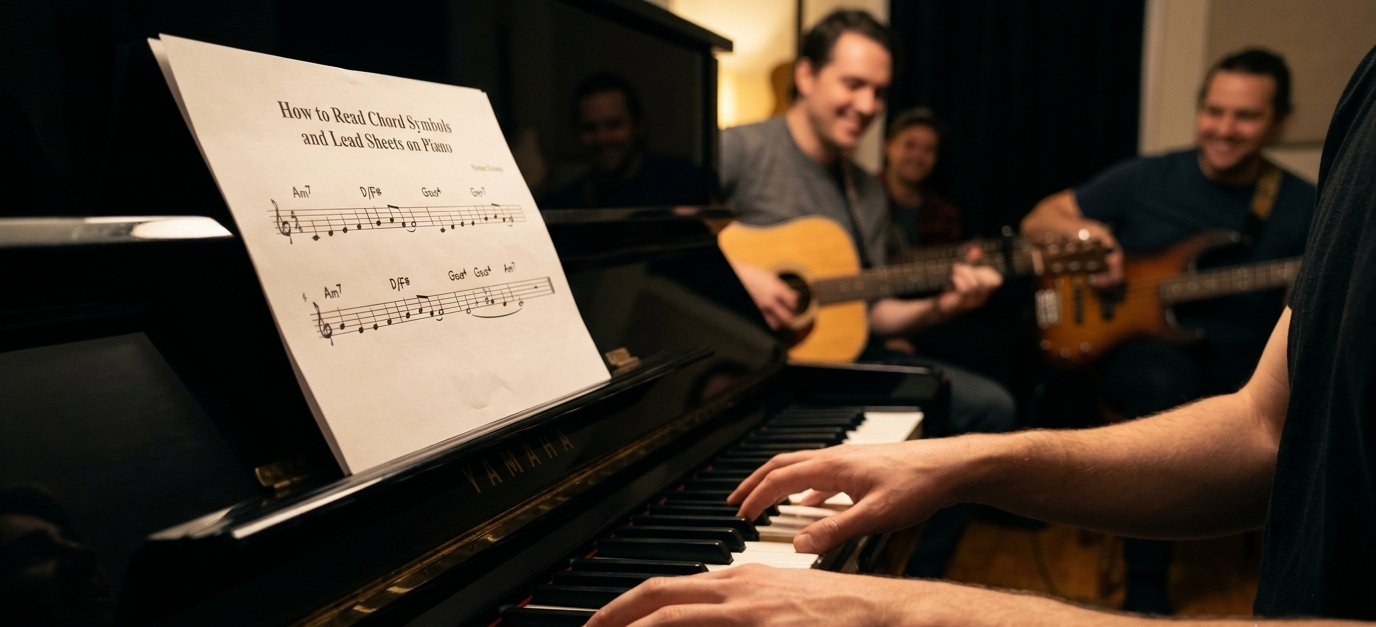
How to Read Chord Symbols and Lead Sheets on Piano
Am7, Csus4, D/F#: chord symbols look cryptic but they're a fast, flexible shorthand. Decode every part, turn symbols into chords, and learn to play from any lead sheet or fake...
Read MoreMaster essential piano techniques and music theory fundamentals.
Am7, Csus4, D/F#: chord symbols look cryptic but they're a fast, flexible shorthand. Decode every part, turn symbols into chords, and learn to play from any lead sheet or fake...
Read More
Scales are the DNA of music. Every melody you have ever hummed, every chord progression that has moved you, every improvised solo that has made your jaw drop, all of...
Read More
It is the single most Googled question in the world of piano education, and for good reason. Before investing hundreds of hours and potentially thousands of dollars in an instrument,...
Read More
Imagine sitting down at a beautifully tuned piano, the sunlight hitting the keys, and your favorite sheet music waiting on the stand. You reach out to play that first chord,...
Read More
The transition from a proficient sheet music reader to a spontaneous creator often feels like standing on the edge of a vast, silent ocean. For many pianists, the “score-bound” trap,...
Read More
A multidimensional analysis of failure factors in musical learning. The seemingly simple question “Why can’t I do it?”, asked in the context of piano learning, masks a profound diagnostic complexity....
Read More
Mastering the art of memorization is often the final hurdle between a piano student and true musical freedom. While many beginners rely solely on the physical repetition of notes, elite...
Read More
The transition from a hesitant beginner to a confident pianist is often marked by a single, audible quality: smoothness. Many pianist encounter a plateau where, despite knowing the correct notes,...
Read More
Standing before a piano, the transition from reading sheet music to creating a spontaneous melody often feels like a leap into the unknown. For many classically trained pianists or adult...
Read More
I still remember the first time I sat down with a complex piece of sheet music. The notes looked manageable, but the concept of time signatures felt like a mysterious...
Read More
I have always been captivated by how certain patterns in pianos seemed to dance up and down the keyboard with elegance and speed. I didn’t know what they were called...
Read More
Sight reading used to feel like solving a puzzle while riding a bicycle. My hands needed to keep moving, but my eyes struggled to decode the music fast enough to...
Read More
The journey of mastering the piano often begins with a fundamental realization: music is not a chaotic collection of sounds, but a structured language built upon specific patterns. For many...
Read More
The architecture of music is built upon the fundamental relationship between two notes. Whether you are listening to a haunting melody or a powerful chord, the primary element at play...
Read More
Mastering the piano is an evolution that moves from the fingertips to the feet. While the keys provide the pitch and articulation, the pedals provide the atmosphere, the resonance, and...
Read More
Mastering the piano involves far more than simply pressing the correct keys at the right time. The true essence of musicality lies in articulation, the specific way in which notes...
Read More
Mastering rhythm is the defining threshold between an amateur keyboard player and a professional pianist. While note accuracy provides the “what” of music, rhythm provides the “when” and the “how,”...
Read More
The transition from a mechanical pianist to a true musician is defined by a single, elusive quality: musicality. While technical proficiency involves hitting the correct notes and maintaining a steady...
Read More
I first came across the Circle of Fifths during my early days at the piano, and I’ll be honest: it looked like a confusing ancient wheel or a complex clock...
Read More
I was fascinated by how pressing just a few keys together could create such rich and beautiful sounds. Over time, I realized that chords are the foundation of most music,...
Read More
Music is a living, breathing entity that transcends the static ink on a page. While learning notes and rhythms provides the skeletal structure of a composition, it is the application...
Read More
The morning light usually hits the ivory keys of the grand piano with a cinematic glow, yet for many intermediate players, the initial contact with the instrument feels anything but...
Read More
Practicing with a metronome is one of the most effective ways for pianists of all levels to develop a rock-solid sense of timing and rhythm. The steady tick of the...
Read More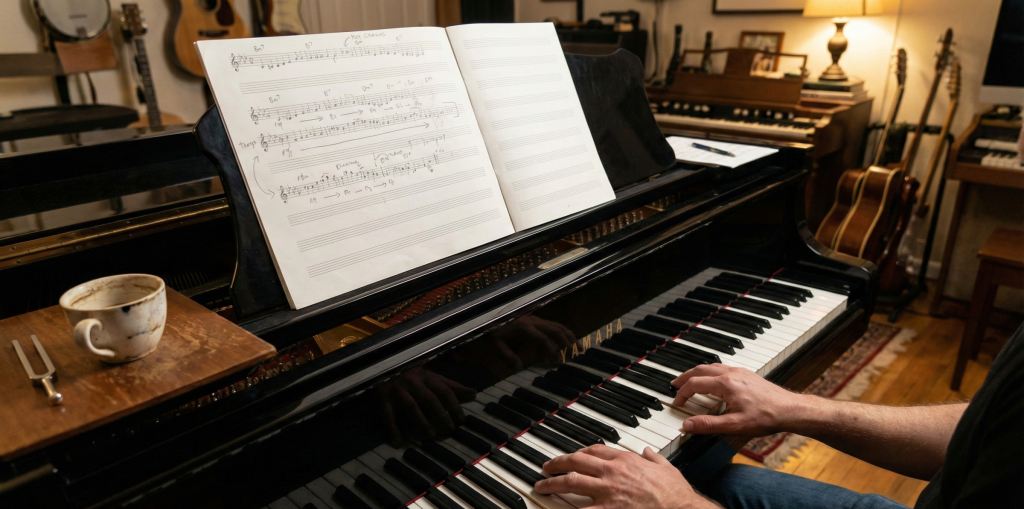
Transposition is one of the most transformative skills a pianist can acquire, bridging the gap between mechanical reproduction and true musical fluency. Whether you are adjusting a piece to fit...
Read More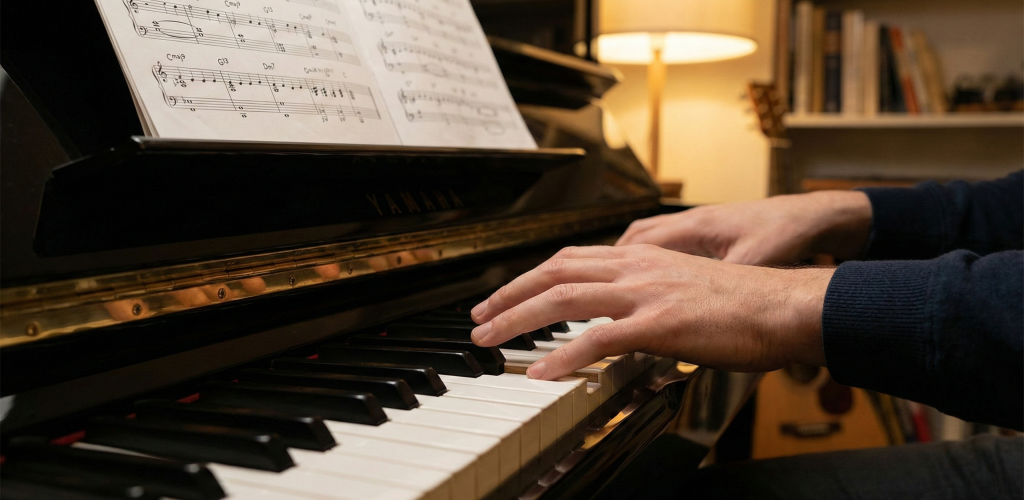
There is a very specific moment most pianists remember: you play a simple C major triad, then you add one extra note, and suddenly the harmony feels bigger than your...
Read More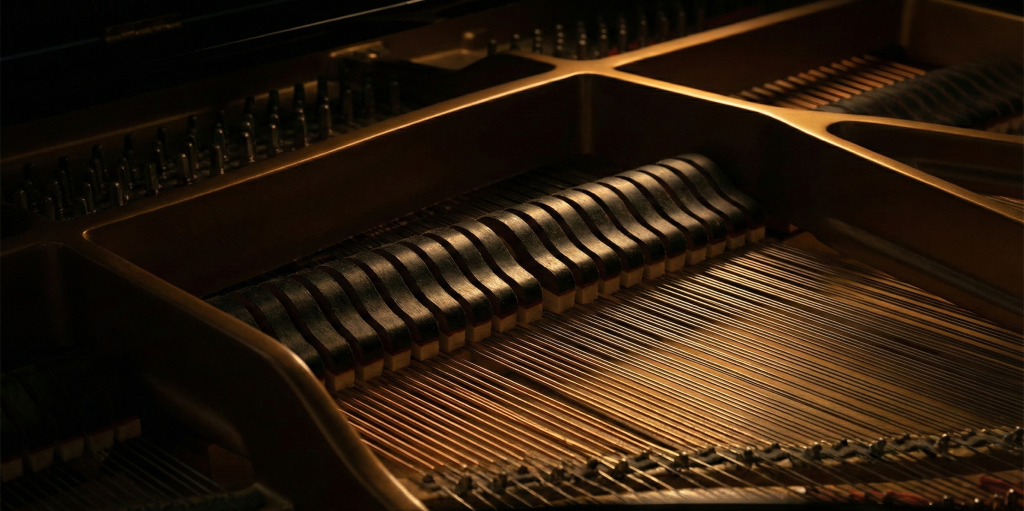
Imagine standing before a world-class choir of eighty-eight singers. If every singer shouted at the top of their lungs simultaneously, the result wouldn’t be music, it would be noise. For...
Read More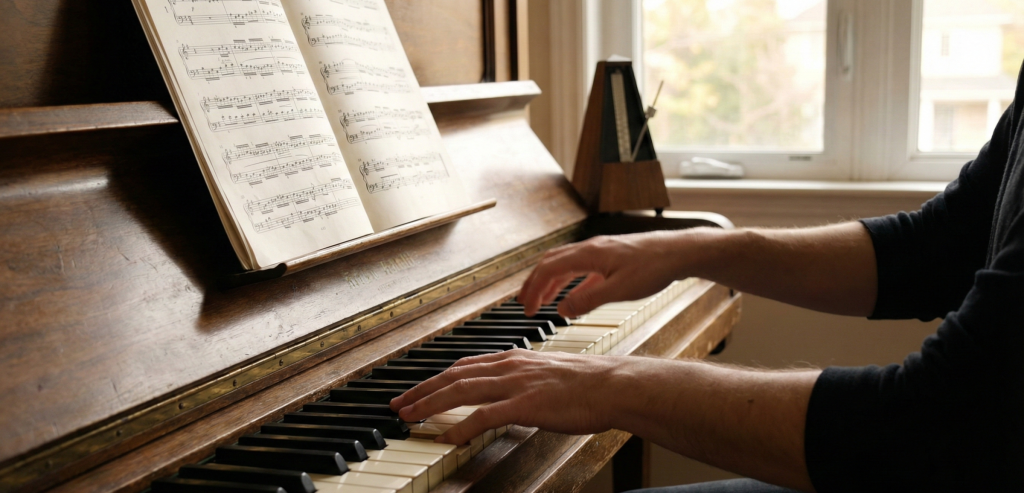
The journey of a pianist often reaches a critical crossroads the moment a piece requires the hands to perform two entirely different tasks. For many, this is the most significant...
Read MoreReading speed comes from repetition at tempo. Both of these put a staff in front of you and keep it moving.