As an Amazon Associate, PianoMode earns from qualifying purchases. Recommendations are made on their merits; the price you pay is the same.
It is the single most Googled question in the world of piano education, and for good reason. Before investing hundreds of hours and potentially thousands of dollars in an instrument, lessons, and method books, every prospective pianist wants a straight answer: how long does it take to learn piano?
The honest answer is that there is no single answer. The timeline depends on what you mean by “learn,” how often you practice, your age, your musical background, and the quality of your instruction. But that does not mean the question is unanswerable. It means the answer requires nuance, and nuance is exactly what this guide provides.
In this comprehensive breakdown, you will find realistic, milestone-based timelines for every stage of piano development, from playing your very first melody to tackling advanced repertoire. Each stage is defined not by vague feelings of progress but by concrete, measurable skills: the ability to read a lead sheet, to play hands together with independence, to perform a Chopin Nocturne with musical expression. We will also examine the variables that accelerate or slow your progress, and give you a framework to assess exactly where you stand on the journey.
Whether you are a complete beginner wondering if you can play a recognizable song by Christmas, or a returning adult curious about how long it will take to reach an intermediate level, this article gives you the data, the context, and the realistic expectations you need.
1. What Does It Mean to “Learn Piano”?
Before we can discuss timelines, we need to define what “learning piano” actually means. The phrase is dangerously vague, and the internet is full of misleading claims because different people use it to mean wildly different things.
For some, “learning piano” means being able to sit down and play a song that others recognize. For others, it means reading sheet music fluently. For a jazz musician, it means improvising over complex chord changes. For a classical conservatory student, it means performing Liszt from memory under concert conditions.
At PianoMode, we define piano learning across five progressive milestones, each of which represents a meaningful, measurable level of competence. This framework allows you to set a realistic target and track your progress against it.
Milestone 1: The First Song (1 to 4 Weeks)
What it looks like: You can play a simple, recognizable melody with one or two hands. Think “Ode to Joy” with a basic left-hand accompaniment, or a simplified version of “Let It Be.”
Skills acquired: Basic keyboard geography (finding C, D, E, F, G), understanding of finger numbers (1 through 5), ability to read a handful of notes on the treble clef, and rudimentary rhythm (quarter notes, half notes).
What determines the speed: If you have zero musical background, expect 2 to 4 weeks of daily practice (15 to 30 minutes per day). If you played another instrument previously, especially one that requires music reading, you may reach this milestone in under a week. The key accelerator at this stage is consistency, not duration. Five 15-minute sessions per week will outperform one 90-minute session every weekend.
Method book benchmark: Completing the first 3 to 5 units of Alfred’s Basic Adult All-in-One Course or Faber Adult Piano Adventures corresponds closely to this milestone. If you can play the pieces in these early chapters with reasonable fluency, you have arrived.
At PianoMode, we have a curated collection of beginner-friendly scores, including Ode to Joy and arrangements from our 10 Easy Songs to Play on Piano as a Newbie guide, specifically designed for this stage.
As an Amazon Associate I earn from qualifying purchases.
As an Amazon Associate I earn from qualifying purchases.
Milestone 2: Beginner Competence (3 to 6 Months)
What it looks like: You can play simple pieces with both hands simultaneously, read basic treble and bass clef notation, and you understand fundamental music theory concepts like major scales, basic chords (triads), and time signatures.
Skills acquired: Hands-together coordination for simple pieces, reading notes on both staves, understanding of key signatures (at least C, G, D, F major), basic pedaling technique, and the ability to count and maintain a steady rhythm independently.
What determines the speed: The main variable here is the quality of your practice, not just the quantity. A student who practices 30 minutes daily with focused, slow, hands-separate work will reach this stage faster than someone who plays for an hour but constantly restarts from the beginning of pieces. A teacher, even one session every two weeks, can dramatically accelerate progress through this stage by correcting hand position and reading habits before they calcify.
Repertoire benchmark: At this stage, you should be able to play simplified arrangements of pieces like “Someone Like You” by Adele, “Canon in D” in a beginner arrangement, or the main theme from “Forrest Gump.” You can also tackle beginner classical pieces like a simplified “Minuet in G” or the opening of “Fur Elise” (Section A only).
This is the stage where many adult learners decide whether piano will become a lifelong pursuit or a passing interest. The single greatest predictor of continued progress is having a structured practice routine, which is why we created our guide to the Best Practice Routine for Beginner Pianists.
Milestone 3: Late Beginner / Early Intermediate (6 Months to 2 Years)
What it looks like: You can learn and perform complete pieces of moderate complexity. You read music with increasing fluency (though not yet at sight-reading speed for unfamiliar pieces). Your hands operate with growing independence, and you begin to make musical choices about dynamics, phrasing, and tempo.
Skills acquired: All major scales hands together, basic chord progressions (I-IV-V-I, ii-V-I), rudimentary sight reading of simple melodies, understanding of intervals, an expanding chord vocabulary (seventh chords, inversions), and the ability to learn a new piece from sheet music without someone showing you each note.
What determines the speed: At this stage, what you practice matters enormously. Students who focus exclusively on learning songs plateau here. Those who balance repertoire with technical exercises (scales, arpeggios, Hanon exercises), theory study, and ear training continue to accelerate. The introduction of a metronome into daily practice is also a game-changer; many students at this stage play with uneven rhythm without realizing it.
Repertoire benchmark: Complete “Fur Elise” (all three sections), Satie’s “Gymnopedie No. 1,” “River Flows in You” by Yiruma, a simplified “Clair de Lune” arrangement, or beginner-level jazz standards from lead sheets. You can also begin to explore our Score Library, tackling pieces like the Clementi Sonatinas (Op. 36) or the Minuet in G Major, BWV Anh. 114.
This is the stage where the concept of “musical identity” begins to emerge. You start to have preferences, favorite composers, genres that excite you, pieces that move you. This is healthy and should be nurtured. At PianoMode, we believe that the emotional connection to music is what sustains long-term practice discipline.
Milestone 4: Solid Intermediate (2 to 5 Years)
What it looks like: You can learn and perform pieces that require genuine technical skill and musical interpretation. You can sight-read simple pieces at tempo and learn moderately complex pieces within a few weeks. Your playing has a recognizable “voice,” meaning listeners can detect musical intention, not just correct notes.
Skills acquired: Fluent reading of both clefs in common key signatures, ability to play scales and arpeggios in all keys at moderate speed, comfort with syncopation and compound time signatures, basic improvisation over simple chord progressions, understanding of form (binary, ternary, sonata), pedal technique including half-pedaling, and the ability to memorize pieces through a combination of muscle memory, harmonic analysis, and structural understanding.
What determines the speed: The biggest differentiator at this stage is whether you have systematic guidance (a teacher, a structured curriculum) or whether you are self-teaching by picking random pieces. Self-taught pianists often reach a “plateau” around the 2 to 3-year mark because they lack the theoretical framework to diagnose their own weaknesses. A teacher can identify issues like uneven finger strength, poor wrist alignment, or inefficient practice habits that the student cannot perceive.
Repertoire benchmark: The complete “Clair de Lune” by Debussy, Chopin’s Nocturne in E-flat Major, Op. 9 No. 2, Bach’s Two-Part Inventions, intermediate jazz standards with basic reharmonization, and the ability to learn a pop song “by ear” within a few sessions.
Milestone 5: Advanced (5 to 10+ Years)
What it looks like: You can tackle the major works of the piano repertoire. Your technique is reliable across a wide range of demands (speed, power, delicacy, polyphony). You can sight-read moderately complex pieces, transpose on the fly, and your musical interpretation is informed by a deep understanding of style, period, and harmonic language.
Skills acquired: Mastery of all scales, arpeggios, and technical patterns at high speed, ability to voice chords within complex textures, fluent sight-reading, advanced pedaling (including sostenuto and una corda), improvisation in multiple styles, understanding of advanced harmony (modal interchange, tritone substitution, secondary dominants), and the ability to analyze a piece independently and make informed interpretive decisions.
Repertoire benchmark: Chopin Ballades and Etudes, Beethoven Sonatas (Pathetique, Waldstein, Appassionata), Debussy Preludes, Bach Well-Tempered Clavier, Rachmaninoff Preludes, jazz standards with advanced reharmonization (Coltrane changes, quartal voicings).
A critical note about “mastery”: There is no endpoint to piano learning. Concert pianists who have played for 40 years continue to discover new depths in pieces they have performed hundreds of times. The question “how long does it take to learn piano” is, at its deepest level, a question with no final answer. The piano is a lifelong companion, not a destination.
2. The Variables That Speed Up (or Slow Down) Your Progress
Not all practice is created equal, and not all students progress at the same rate. Here are the key variables that affect your timeline, ranked roughly by their impact.
Practice Consistency (Impact: Very High)
Research in motor skill acquisition consistently shows that distributed practice (shorter, more frequent sessions) produces faster learning than massed practice (long, infrequent sessions). A student who practices 20 minutes every day will almost always outpace a student who practices 2 hours on Saturday. The reason is neurological: sleep consolidates motor memories, so each night of rest between sessions reinforces what was practiced that day. Our guide on How to Make Real Progress with Just 20 Minutes of Practice a Day explores this principle in detail.
Quality of Instruction (Impact: Very High)
A good teacher does not just correct mistakes. They prevent bad habits from forming, introduce concepts in the right order, assign repertoire that matches your current level, and provide the external accountability that most self-directed learners lack. Studies on piano pedagogy suggest that students with weekly instruction progress approximately 30 to 50 percent faster through the beginner and intermediate stages than comparable self-taught students. That said, self-teaching with excellent resources (structured method books, online courses, and tools like PianoMode) is entirely viable, especially for adult learners with strong self-discipline.
Prior Musical Experience (Impact: High)
If you already play another instrument, you bring transferable skills: rhythm, ear training, music reading (if applicable), and a general understanding of musical structure. Former singers, guitarists, and especially other keyboard players (organ, accordion) will find the early stages significantly easier. Even non-musical skills transfer: research suggests that experienced typists sometimes adapt to keyboard geography faster than non-typists.
Age (Impact: Moderate)
Children generally develop fine motor skills at the piano faster than adults, but adults have significant cognitive advantages: they understand abstract concepts like key signatures and chord theory more readily, they can structure their own practice sessions, and they have stronger motivation (they chose to learn, rather than being pushed by a parent). Adults between 30 and 60 should expect timelines roughly 20 to 40 percent longer than the benchmarks for young adults, primarily due to reduced neuroplasticity and competing demands on time and attention. But many famous pianists, as we explore in our article on Famous Pianists Who Started Late in Life, began their serious study well into adulthood.
Instrument Quality (Impact: Moderate)
Practicing on a low-quality keyboard with unweighted keys and poor touch response creates habits that do not transfer to a real piano. At minimum, beginners should invest in a digital piano with fully weighted, hammer-action keys, such as the Yamaha P-145 or the Roland FP-10. Our guide on Choosing the Right Digital Piano provides a thorough comparison. The instrument does not need to be expensive, but it must have a realistic key action.
As an Amazon Associate I earn from qualifying purchases.
As an Amazon Associate I earn from qualifying purchases.
3. The Honest Timeline Summary
Here is a consolidated view of the milestones and their typical timelines, assuming 30 minutes of focused daily practice and at least occasional instruction or guided study.
| Milestone | Timeline | Key Indicator |
| First Song | 1–4 weeks | Play a recognizable melody with basic accompaniment |
| Beginner Competence | 3–6 months | Both hands together, read basic notation, simple pieces |
| Early Intermediate | 6 months–2 years | Complete pieces, growing independence, basic theory |
| Solid Intermediate | 2–5 years | Sight-read simple pieces, play expressively, memorize |
| Advanced | 5–10+ years | Major repertoire, improvise, analyze independently |
4. How to Accelerate Your Progress
If you want to reach your goals faster, focus on these evidence-based strategies.
Practice slowly and deliberately. The most counterintuitive truth in piano pedagogy is that slow practice produces fast results. Playing a passage slowly enough that you make zero mistakes trains your brain to encode the correct motor patterns. Playing fast with mistakes trains your brain to encode the mistakes. Use a metronome, start at a tempo where you can play perfectly, and increase by 2 to 4 BPM per session.
Balance your practice. Divide your practice time into roughly three equal parts: technique (scales, arpeggios, exercises), repertoire (the pieces you are learning), and musicianship (sight-reading, ear training, theory). Students who only play pieces hit a wall. Students who only do exercises get bored. Balance is the key to sustained, rapid progress.
Record yourself. The single most powerful self-teaching tool is a recording device. Play a passage, listen back, and compare it to a professional recording. You will hear rhythmic unevenness, dynamic flatness, and phrasing issues that you cannot detect while playing. Our guide on How to Record Your Piano Playing at Home walks you through the setup.
Set measurable goals. “I want to get better at piano” is not a goal. “I want to play the A section of Fur Elise at 72 BPM with no mistakes by the end of this month” is a goal. Measurable goals create accountability and allow you to track your actual rate of progress.
Recommended Products
Digital Metronome Korg MA-2 Pocket : Essential for tracking tempo improvement over weeks
As an Amazon Associate I earn from qualifying purchases.
Yamaha P-225 Digital Piano : Upgrade path for committed intermediate students
As an Amazon Associate I earn from qualifying purchases.
Alfred’s Basic Adult All-in-One Course : Structured curriculum with clear milestones for self-assessment
As an Amazon Associate I earn from qualifying purchases.
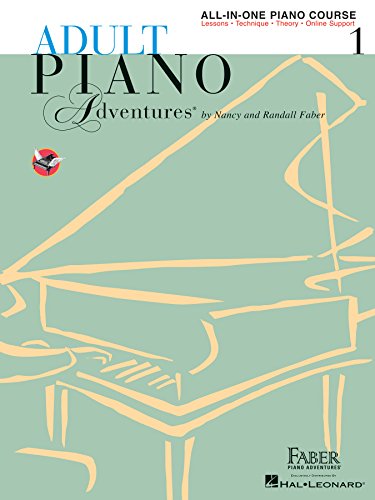
Faber Piano Adventures: Adult Piano Adventures All-in-One : Progressive difficulty with timeline-friendly chapters
 Kindle editionRead on Kindle ›
As an Amazon Associate I earn from qualifying purchases.
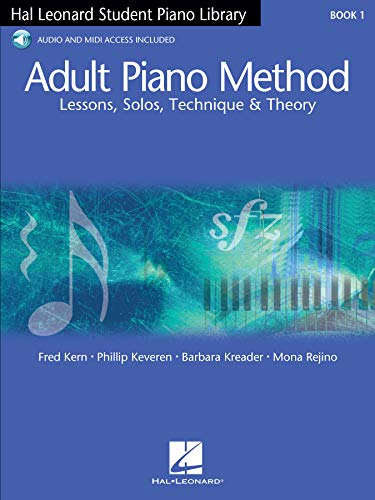
Hal Leonard Adult Piano Method Book 1 : Clear beginner pathway, completion = 3-6 months benchmark
 Kindle editionRead on Kindle ›
As an Amazon Associate I earn from qualifying purchases.
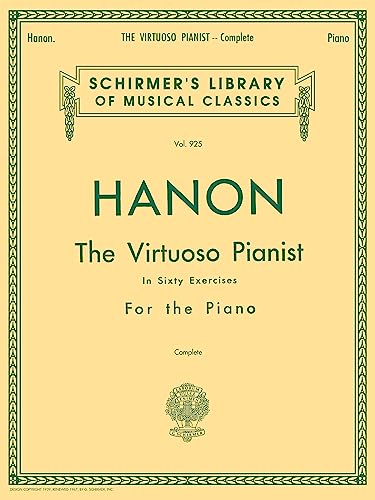
Hanon: The Virtuoso Pianist 60 exercises : Long-term technical development benchmark
 Kindle editionRead on Kindle ›
As an Amazon Associate I earn from qualifying purchases.
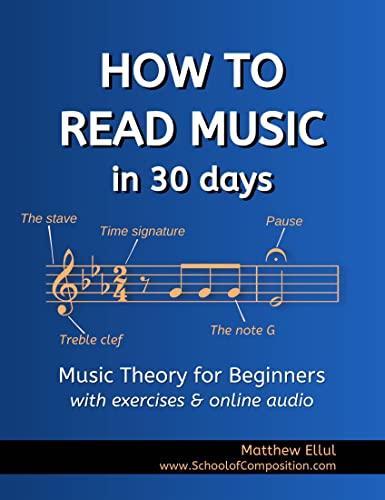
How to Read Music in 30 Days : Directly addresses the ‘reading’ milestone in the timeline
 Kindle editionRead on Kindle ›
As an Amazon Associate I earn from qualifying purchases.
Conclusion: The Journey Is the Destination
How long does it take to learn piano? The short answer: you can play your first recognizable song in a matter of weeks, reach a satisfying level of beginner competence in 3 to 6 months, and achieve a solid intermediate level in 2 to 5 years of consistent practice.
But the deeper truth is that “learning piano” is not a binary state you achieve and then possess. It is an ongoing process of refinement, discovery, and deepening understanding. Every professional pianist in the world is still learning. The question is not whether you will ever “finish” learning, because you will not. The question is whether the process of learning itself brings you joy.
If it does, the timeline becomes irrelevant. You are not trying to reach a finish line. You are building a lifelong relationship with an instrument that will grow, evolve, and enrich your life in ways you cannot yet imagine.
Start today. Be patient. Be consistent. And let the music carry you.
Can I learn piano in 3 months?
You can reach Milestone 1 (playing simple songs) and begin approaching Milestone 2 (basic both-hands coordination) within 3 months of consistent daily practice. You will not be an accomplished pianist in 3 months, but you will be able to play recognizable pieces and read basic notation.
Is 30 minutes a day enough to learn piano?
Yes. 30 minutes of focused, deliberate practice per day is the minimum recommended amount for steady progress. Research on motor learning consistently shows that short daily sessions outperform long weekly sessions. Many adult learners who practice 20 to 30 minutes daily reach early intermediate level within 12 to 18 months.
Is piano harder to learn than guitar?
Piano and guitar are different, not harder or easier in absolute terms. Piano has a lower entry barrier: the layout is logical, notes are arranged linearly, and producing a clean sound requires less physical technique than guitar. However, piano becomes increasingly complex as you advance, particularly in the area of hand independence and polyphonic playing. Guitar offers faster access to strumming and singing along, but its fretboard logic is less intuitive for reading music.
Can adults learn piano as fast as children?
Adults learn differently, not necessarily slower. Children have neuroplasticity advantages for motor skill development, but adults have cognitive advantages: they understand theory faster, they practice more efficiently, and they have intrinsic motivation. A dedicated adult beginner can reach intermediate level in roughly the same timeframe as a child, though the adult may take slightly longer to develop the fine motor fluency that children acquire more naturally.
Do I need a teacher to learn piano?
A teacher is not strictly necessary but is highly recommended, especially in the first 6 to 12 months. The main benefit of a teacher is not information delivery (books and online resources provide that) but habit correction. A teacher catches poor hand position, inefficient fingering, and rhythm inaccuracies before they become ingrained. Even bi-weekly lessons provide significant advantages over purely self-directed study. See our guide: Should You Learn Piano with or Without a Teacher.
How long does it take to learn a specific song?
This depends entirely on the song and your current level. A beginner can learn a simplified arrangement of a pop song in 1 to 4 weeks. An intermediate player can learn a moderately complex classical piece in 2 to 8 weeks. An advanced player can learn a major concert work in 1 to 6 months. The learning time decreases dramatically as your overall skill level increases, because you can sight-read more of the piece and have a larger library of technical patterns to draw from.
What is the fastest way to learn piano?
The fastest path combines four elements: (1) daily consistent practice of at least 20 to 30 minutes, (2) a structured method book or curriculum, (3) regular feedback from a teacher or high-quality recording self-assessment, and (4) a balanced practice routine that includes technique, repertoire, and musicianship. There are no shortcuts that bypass the need for repetition and time, but these four elements ensure that your time is maximally productive.
Is it too late to start piano at 40, 50, or 60?
Absolutely not. Adults at any age can learn to play piano at a satisfying level. The timelines may be 20 to 40 percent longer than for a young adult, primarily due to reduced fine-motor neuroplasticity and the time constraints of adult life. But adult learners often develop deeper musical understanding and emotional expressiveness faster than younger students, because they bring a lifetime of listening and emotional experience to the instrument.