As an Amazon Associate, PianoMode earns from qualifying purchases. Recommendations are made on their merits; the price you pay is the same.
The architecture of music is built upon the fundamental relationship between two notes. Whether you are listening to a haunting melody or a powerful chord, the primary element at play is the interval. For any pianist, mastering intervals is not just a theoretical requirement; it is the key to unlocking the ability to read music fluently, play by ear, and eventually improvise with confidence. This fundamental concept acts as the connective tissue of all musical composition, bridging the gap between simple sound and structured art. When we look at a piano keyboard, we see eighty-eight keys, but a seasoned musician sees a vast network of distances and potential harmonies. By shifting your focus from individual note names to the space between them, you begin to understand the “grammar” of music rather than just the “alphabet.”
This journey into intervals is often the first moment a student stops playing mechanically and starts understanding the emotional logic of the instrument. It is through these distances that tension is built and released, that a song feels “happy” or “sad,” and that a complex piece of sheet music suddenly transforms from a daunting wall of ink into a series of predictable, manageable patterns. Throughout this guide, we will explore how intervals function as the atomic units of piano playing, providing you with the pedagogical tools and technical insights needed to translate theoretical knowledge into physical mastery. Whether your goal is to sit down and play a piece perfectly from sight or to close your eyes and let your fingers find their own path across the keys, your success starts here, with the study of the interval.
In this guide, you will learn exactly what intervals are, how to name them with precision, the physical mechanics of playing them on a piano, and why they are the “atomic units” of all music theory.
1. What is an Interval in Music?
The Music Theory of Intervals: Distance and Quality
In technical terms, an interval is the “gap” in frequency between two pitches. On the piano, we quantify this gap using two distinct criteria: Numerical Quantity and Interval Quality.
- Numerical Quantity: This is the “distance” on the staff. To find it, you count the number of letter names from the first note to the last. For example, from C to E is a third because it spans three letters: C (1), D (2), and E (3).
- Interval Quality: This defines the “flavor” of the interval based on the exact number of half-steps (semitones). While C to E (4 half-steps) is a Major Third, C to Eb (3 half-steps) is a Minor Third. Both are “thirds” numerically, but their qualities create entirely different emotional responses.
Pedagogical Approach: Learning to “See” Sound
For a beginner, the piano is the ultimate visual aid. Pedagogy suggests three layers of learning intervals to ensure they stick:
- Visual Recognition: Train your eyes to see the spacing on the staff. Notes that move from a line to the very next space are always seconds. Notes that jump from a line to the next line (skipping a space) are thirds.
- Tactile Measurement: Learn the “feel” of intervals in your hand. A Perfect Fifth typically fits the natural span between your thumb (1) and pinky (5) in a standard position.
- Aural Identification (Ear Training): Associate intervals with famous melodies. For instance, the first two notes of “Star Wars” are a Perfect Fifth, while the beginning of “Jaws” is a Minor Second.
Piano Techniques: Melodic vs. Harmonic Execution
How you play an interval depends on its musical function.
- Melodic Intervals: Played one after the other, like a singer performing a melody. The technique here focuses on legato (smooth) transitions or staccato (detached) hops, requiring finger independence.
- Harmonic Intervals: Played simultaneously to create a “vertical” sound. This requires “dropping” the weight of the hand into the keys at the exact same moment, ensuring both notes sound with equal volume, a vital skill for building strong chords later on.
What Is It For? The Utility of Intervals
Why bother with this complexity? Intervals are the DNA of music.
- Building Chords: A Major triad is simply a Major Third stacked with a Minor Third.
- Understanding Scales: A Major scale is a specific sequence of whole-step and half-step intervals (W-W-h-W-W-W-h).
- Sight-Reading: Expert pianists don’t read every single note; they read the intervals between them. If they see a “jump” of a fourth, their hand automatically adjusts to that physical distance.
By mastering intervals, you stop “decoding” sheet music and start “reading” it, allowing for a much more fluid and expressive performance.
2. The Core Logic: How Intervals Are Named
The naming convention for intervals can initially seem complex, but it follows a strict logical structure based on two primary factors: the number and the quality.
1. The Numerical Distance
The number of an interval is determined by counting the letter names between the two notes, including the notes themselves.
- Second: From C to D (C, D)
- Third: From C to E (C, D, E)
- Fourth: From C to F (C, D, E, F)
- Fifth: From C to G (C, D, E, F, G)
2. The Interval Quality
Because the distance between a “second” can vary (for example, C to Db vs. C to D), we use “quality” to be precise. The five qualities are:
- Major (M)
- Minor (m)
- Perfect (P)
- Augmented (Aug)
- Diminished (Dim)
Intervals such as the unison, 4th, 5th, and octave are typically Perfect. Seconds, thirds, sixths, and sevenths can be Major or Minor. An interval that is one half-step larger than a Major or Perfect interval is Augmented, while one half-step smaller than a Minor or Perfect interval is Diminished.
3. Measuring Intervals: Half Steps and Whole Steps
To identify an interval correctly on the piano keyboard, you must first master the “unit of measurement” used in all Western music: the Half Step and the Whole Step. Without these, the naming of intervals like “Major” or “Minor” remains guesswork. Think of these as the millimeters and centimeters on your musical ruler.
The Half Step (Semitone): The Smallest Unit
A half step, or semitone, is the absolute smallest distance between two notes on the piano. In terms of music theory, it is the fundamental building block of the chromatic scale.
On the keyboard, a half step is the distance from one key to the very next key, with no keys left in between. This is where many beginners get confused: a half step does not always move from a white key to a black key.
- Chromatic Half Step: Moving from C to C# (White to Black).
- Diatonic Half Step: Moving from E to F or B to C (White to White).
Pedagogical Tip: When looking for a half step, simply ask yourself: “Is there any key, white or black, between these two?” If the answer is no, you have found a half step. This physical “closeness” is why minor seconds (the interval name for a half step) sound so crunchy and dissonant; the sound waves are literally vibrating against each other.
The Whole Step (Whole Tone): The Power of Two
A whole step, or whole tone, is a distance equivalent to two half steps. If the half step is a “single stride,” the whole step is a “double stride” that skips exactly one key.
On the piano, you will find whole steps in several configurations:
- White to White: C to D (skips C#).
- Black to Black: F# to G# (skips G).
- White to Black: E to F# (skips F).
- Black to White: Bb to C (skips B).
Technical Execution: When practicing whole steps, pay attention to the “bridge” of your hand. Because you are skipping a key, your fingers must maintain a slightly wider, more arched posture compared to the narrow squeeze of a half step. Mastering the “skip” is the first step toward developing the reach required for larger intervals like octaves.
The “Natural” Trap: E-F and B-C
One of the most important pedagogical hurdles for piano beginners is the absence of black keys between E and F, and B and C.
- In most places on the piano, moving from one white key to the next is a Whole Step (e.g., C to D, F to G).
- However, because there is no black key between E & F and B & C, these are Natural Half Steps.
Understanding this is vital for your “Mental Map” of the keyboard. If you assume all white-to-white movements are whole steps, your interval calculations will be wrong every time you cross these “natural” borders.
Why Does This Measurement Matter?
The relationship between half and whole steps is what creates the “DNA” of scales and modes. For example, the Major Scale follows a rigid formula of intervals: W-W-H-W-W-W-H.
By learning to visualize these distances, you aren’t just memorizing where to put your fingers; you are learning the geometric layout of music. This allows you to transpose songs into different keys instantly. If you know a melody starts with a “Whole Step followed by a Half Step,” you can start on any note on the piano and recreate that melody perfectly.
Interval Reference
| Interval Name | Number of Half Steps | Common Example |
| Perfect Unison | 0 | C to C |
| Minor Second | 1 | C to Db |
| Major Second | 2 | C to D |
| Minor Third | 3 | C to Eb |
| Major Third | 4 | C to E |
| Perfect Fourth | 5 | C to F |
| Tritone | 6 | C to F# (or Gb) |
| Perfect Fifth | 7 | C to G |
| Minor Sixth | 8 | C to Ab |
| Major Sixth | 9 | C to A |
| Minor Seventh | 10 | C to Bb |
| Major Seventh | 11 | C to B |
| Perfect Octave | 12 | C to C (next octave) |
4. Consonance vs. Dissonance: The Psychology of Sound
Intervals are often categorized by how “stable” or “unstable” they sound to the human ear. This is a concept known as consonance and dissonance.
- Consonant Intervals: These sound stable, pleasant, and complete. They include the Perfect Unison, Perfect Octave, Perfect Fifth, and Perfect Fourth, as well as Major/Minor Thirds and Sixths.
- Dissonant Intervals: These sound tense, “crunchy,” or in need of resolution. The most famous example is the Tritone (Augmented 4th or Diminished 5th), which was historically called the “Devil in Music” due to its extreme instability. Seconds and Sevenths are also considered dissonant.
In piano playing, dissonance is not “bad”, it is used to create tension that eventually resolves into a consonant interval, providing the emotional “pull” and “push” in a piece of music.
5. The Rule of 9: Understanding Interval Inversions
The Rule of 9: Master the Art of Interval Inversion
An interval inversion occurs when the relative position of two notes is swapped, typically by moving the lower note up an octave or the upper note down an octave. While the letter names of the notes remain the same, the musical relationship between them, both in terms of distance and character, undergoes a predictable transformation.
Inversion is a vital concept for pianists because it explains why a C Major chord (C-E-G) and its first inversion (E-G-C) sound related yet distinct. Mastering inversions allows you to navigate the keyboard with greater mental flexibility, enabling you to see “shortcuts” in fingerings and voice leading.
The Mathematics of Music: The Rule of 9
To calculate the new numerical value of an inverted interval, music theory provides a simple “hack” known as the Rule of 9.
The Rule of 9 states that the original interval number plus the inverted interval number will always equal nine.
This mathematical constant is a byproduct of the fact that the shared note (the one being moved) is counted in both the original and the new interval. Here is how the numbers shift:
- A 2nd becomes a 7th (2 + 7 = 9)
- A 3rd becomes a 6th (3 + 6 = 9)
- A 4th becomes a 5th (4 + 5 = 5)
- A 5th becomes a 4th (5 + 4 = 9)
- A 6th becomes a 3rd (6 + 3 = 9)
- A 7th becomes a 2nd (7 + 2 = 9)
Pedagogical Note: Understanding these “pairs” is essential for sight-reading. If your hand is comfortable with a 3rd, it is physiologically helpful to know that its “opposite” is a 6th.
Symmetry in Sound: Quality Transformations
When you invert an interval, the Quality (Major, Minor, Perfect, etc.) also changes in a consistent, symmetrical way. These changes reflect the complementary nature of the musical scale.
- Major becomes Minor (and vice versa)
- Perfect stays Perfect
- Augmented becomes Diminished (and vice versa)
Visual Example on the Piano:
Take a Major 3rd from C to E. It sounds bright and stable. If you move the bottom C up one octave, the interval is now E to C. Counting the semitones, you will find this is a Minor 6th. The “Major” quality flipped to “Minor,” and the “3rd” flipped to a “6th.”
Quick Reference Quality Chart:
| Original Quality | Inverted Quality |
| Major | Minor |
| Minor | Major |
| Perfect | Perfect |
| Augmented | Diminished |
| Diminished | Augmented |
Why Does Inversion Matter for Pianists?
Understanding the Rule of 9 isn’t just about passing a theory test; it has practical applications for your daily practice:
- Chord Voicing: When you play a chord in different positions (inversions), you are essentially stacking different inverted intervals. Knowing that a Major chord contains a Major 3rd and a Perfect 5th tells you that its inversions will involve Minor 6ths and Perfect 4ths.
- Transposition: If you need to move a melody to a different key, knowing the “mirror” of an interval helps you keep the melodic contour correct.
- Ear Training: It is often easier to identify a large interval, like a Major 7th, by thinking of it as an “inverted Minor 2nd.” A Major 7th sounds like a very wide, dissonant gap, but if you invert it, you hear the sharp “clash” of two notes just one half-step apart.
Technical Drill: The “Octave Flip”
To internalize this, try this exercise: Play a Minor 3rd (C to Eb) with fingers 1 and 2. Now, keep your thumb on C but move the Eb down an octave to play it with your pinky (finger 5). You are now playing a Major 6th. Observe how the physical stretch changes and how the “dark” sound of the Minor 3rd transforms into the “open” sound of the Major 6th.
6. Visualizing Intervals on the Piano Keyboard
For a beginner, the piano provides the best visual map for music theory. Because the layout is linear, you can see the intervals physically.
- Seconds: These involve “adjacent” fingers (like fingers 1 and 2). They appear as notes right next to each other on the staff.
- Thirds: These often feel like “skipping a finger” (fingers 1 and 3). On the staff, they go from line to line or space to space.
- Fifths: This is the natural span of a relaxed hand from the thumb to the pinky (fingers 1 and 5).
By associating the physical distance on the keys with the visual distance on the sheet music and the sound of the interval, you develop “Multi-Sensory Learning,” which is the fastest way to master the instrument.
7. Why Intervals Matter for Chords and Melodies
Intervals are the “DNA” of chords. A Triad (a basic three-note chord) is built by stacking thirds.
- Major Chord: A Major Third + a Minor Third (e.g., C-E-G).
- Minor Chord: A Minor Third + a Major Third (e.g., C-Eb-G).
If you understand the internal intervals of a chord, you can build any chord in any key without needing to memorize individual charts. This is the difference between “playing by rote” and “understanding the language.”
Recommended Products
To help your readers choose the best tools for mastering intervals and general piano theory, here is a detailed breakdown of the pros and cons for each recommended product. These are designed to be “copy-paste ready” for your article.
1. Tonal Harmony (Kostka & Payne)
The Academic Gold Standard.
Pros:
- Comprehensive Depth: This is the definitive university-level textbook. It covers everything from basic intervals to advanced chromatic harmony.
- Logical Progression: The chapters are structured to build a rock-solid foundation, ensuring no “knowledge gaps.”
- Exercise-Rich: Includes numerous workbooks and practical examples from actual classical literature.
Cons:
- High Price Point: As a textbook, it is significantly more expensive than “hobbyist” books.
- Dense Material: Can be overwhelming for a self-taught beginner without an instructor to guide them.
As an Amazon Associate I earn from qualifying purchases.
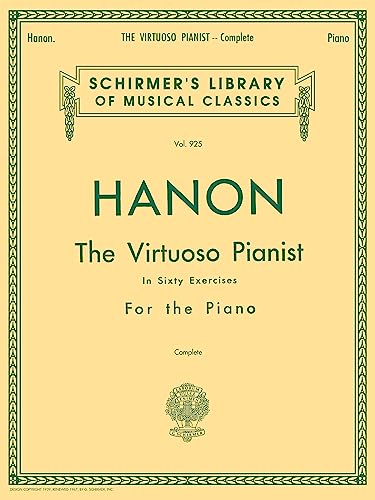
2. The Virtuoso Pianist (C.L. Hanon)
The Blueprint for Finger Dexterity.
Pros:
- Tactile Mastery: Essential for building the finger independence required to play wide intervals (like sixths and octaves) accurately.
- Universal Application: These exercises are used by jazz, classical, and pop pianists alike.
- Muscle Memory: Focuses on the physical “reach” between keys, which is the physical manifestation of interval theory.
Cons:
- Repetitive: Can become monotonous if not practiced with variety.
- Risk of Tension: Without proper form, these exercises can lead to strain; readers must be cautioned to stay relaxed.
 Kindle editionRead on Kindle ›
As an Amazon Associate I earn from qualifying purchases.
3. Alfred’s Basic Adult All-in-One Course
The Beginner’s Best Friend.
Pros:
- Integrated Learning: Combines lesson, theory, and technique in a single volume.
- Paced for Adults: Unlike children’s books, the progression and song selection are tailored for an adult’s cognitive speed.
- Immediate Application: You learn an interval (like a 5th) and immediately play a song that utilizes it.
Cons:
- Broad Focus: Because it covers everything, it may not dive as deep into interval “ear training” as a specialized theory book.
- Traditional Repertoire: Some students may find the song selection a bit dated.
As an Amazon Associate I earn from qualifying purchases.
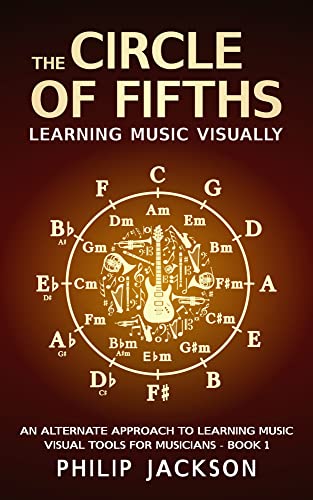
4. The Circle of Fifths (Visual Guide/Book)
Note: You likely meant the “Circle of Fifths,” not “Circle of Fight” (though music theory can feel like a battle sometimes!)
Pros:
- Visual Mapping: The best tool for understanding how intervals relate to key signatures and scales.
- Transposition Hack: Makes it incredibly easy to move a melody from one key to another once you understand the interval relationships.
- Essential for Composition: A “must-have” for anyone looking to write their own music or improvise.
Cons:
- Abstract Concept: It requires a basic understanding of scales before the “magic” of the circle really clicks.
- Not a “Method”: It’s a reference tool, not a step-by-step guide on how to play the piano.
 Kindle editionRead on Kindle ›
As an Amazon Associate I earn from qualifying purchases.
5. Music Theory for Dummies
The Jargon-Free Gateway.
Pros:
- Accessible Language: Breaks down complex concepts like “Augmented Fourth” into plain English.
- Broad Scope: Covers rhythm, melody, and harmony, providing a great “birds-eye view” of music.
- Humorous Tone: Makes the often-dry subject of intervals and theory engaging and fun.
Cons:
- Lacks Academic Rigor: It won’t prepare you for a conservatory exam as well as Tonal Harmony would.
- Generalist: Because it covers all instruments, it lacks piano-specific technical drills.
As an Amazon Associate I earn from qualifying purchases.
Final Reflections on Learning Intervals
Learning to identify and use intervals was one of the most important steps in my development as a pianist. At first, it felt like just another part of music theory to memorize. But over time, I discovered that intervals are the glue that holds all the elements of music together.
Intervals are the fundamental grammar of the musical language. By shifting your focus from “which note do I play?” to “how far is the next note?”, you move from being a mechanical player to a thinking musician.
Our Recommendations for Success:
- Daily Ear Training: Spend 5 minutes a day using an app or a piano to play an interval and sing it back.
- Analyze Your Music: Take a simple piece of sheet music and label every interval in the melody.
- Physical Awareness: Practice “blind” jumps on the piano, try to play a perfect fifth from any random note without looking at your hands.
Mastering intervals takes time, but it is the most rewarding investment a beginner can make. Keep practicing, stay curious, and soon the keyboard will no longer look like a sea of white and black keys, but a playground of limitless harmonic possibilities.
What is the hardest interval to play?
For beginners, the Major Seventh and Octave can be difficult due to the physical stretch required. Musically, the Tritone is the hardest to sing or identify by ear because of its lack of a clear tonal center.
Is a “Half Step” the same as a “Semitone”?
Yes. These terms are used interchangeably. “Half step” is more common in American English, while “semitone” is frequently used in British English and formal music theory.
Why are the 4th and 5th called “Perfect”?
They are called “Perfect” because their sound is extremely stable and they do not change quality (Major/Minor) within the context of a standard Major scale. Their mathematical frequency ratios are very simple, making them sound very “pure.”
Can I learn intervals without learning sheet music?
While you can learn them by ear or through keyboard patterns, learning to read them on a staff is highly recommended. It allows you to see the “shape” of the music, making complex pieces much easier to memorize.
Does a Perfect Octave invert?
Yes. A Perfect Octave (C to C) inverted becomes a Perfect Unison (0 half steps). Applying the Rule of 9: 8 (Octave) + 1 (Unison) = 9. The quality stays “Perfect.”
Why does a Perfect interval stay Perfect?
Perfect intervals (Unisons, 4ths, 5ths, and Octaves) are called “perfect” because of their high degree of consonance and mathematical simplicity. Their inversions remain within this stable “perfect” family.
Is the Tritone affected by the Rule of 9?
Interestingly, the Tritone is the “pivot point” of inversions. An Augmented 4th (Tritone) inverts into a Diminished 5th (Tritone). 4 + 5 = 9, and Augmented becomes Diminished. It is the only interval that stays essentially the same distance (6 half steps) when inverted!
Are a “Semitone” and a “Half Step” the same thing?
Yes. “Half Step” is the common term in North American pedagogy, while “Semitone” is more frequently used in British and European classical theory. They are functionally identical.
Can a Whole Step skip more than one key?
No. A Whole Step always skips exactly one key (which could be white or black). If you skip two or more keys, you have moved into the territory of Thirds or Fourths.
Why do some scales use half steps more than others?
The placement of half steps determines the “mood” of the scale. Major scales have half steps between the 3rd/4th and 7th/8th degrees, creating a bright sound. Minor scales shift those half steps, creating the “sad” or “mysterious” quality associated with minor intervals.
Sources & References
Feezell, Mark. Music Theory Fundamentals (High-Yield Music Theory, Vol. 1). LearnMusicTheory.net. This source was used to establish the technical definitions for Numerical Quantity and Interval Quality (Chapter 4), as well as the precise measurement of Half Steps and Whole Steps on the chromatic staff. The “Rule of 9” logic for inversions is also supported by Feezell’s systematic approach to interval transformations.
Martin, Lawrence. Basic Music Theory for Adult Beginner-Level Piano Players (Piano Syllabus). Lakeside Press. This text provided the primary pedagogical basis for Tactile Measurement and the Visualizing Intervals section. Specifically, Martin’s emphasis on “Natural Half Steps” (E-F and B-C) and the hand-span requirements for 2nds, 3rds, and 5ths (Section 10) was instrumental in developing the “Mental Map” strategy.
Pilhofer, Michael & Day, Holly. Music Theory For Dummies. Wiley Publishing, Inc. Consulted for the psychological and acoustic definitions of Consonance and Dissonance, as well as the historical context of the Tritone (the “Devil in Music”). This reference also informs the section on the aural identification of intervals through famous melodic associations.
Creative Commons / Anonymous. Music Theory v. 1.0. (Licensed under CC BY-NC-SA 3.0). This resource provided the structural framework for the “DNA of Chords” section, particularly the mathematical stacking of Major and Minor thirds to create triads and seventh chords.