The transition from a hesitant beginner to a confident pianist is often marked by a single, audible quality: smoothness. Many pianist encounter a plateau where, despite knowing the correct notes, their chord changes sound “choppy,” “staccato,” or disjointed. This disruption in the musical flow often stems from a lack of technical efficiency and a misunderstanding of how chords relate to one another spatially on the keyboard. Mastering fluid transitions is not merely about moving faster; it is about moving smarter.
I will try to provide a comprehensive pedagogical roadmap for achieving professional-level chord legato and to master smooth chord transitions. From the ergonomic foundations of hand posture to the theoretical application of voice leading and advanced sustain pedal techniques, the following sections will deconstruct the mechanics of smooth playing.
A smooth chord transition is achieved through Legato Playing, which is the physical and acoustic connection of one harmonic structure to the next without audible gaps. This is accomplished by utilizing Chord Inversions to minimize lateral hand movement, maintaining Finger Proximity to the keys, employing Syncopated Pedaling (legato pedaling), and mastering Voice Leading to ensure individual notes move by the smallest possible intervals.
1. Theory of Harmonic Intervals and Polyphony
A chord is fundamentally defined as three or more pitches sounding simultaneously, built upon specific harmonic intervals of thirds that dictate the tonal quality and function within a musical key.
Before physical movement can be optimized, the intellectual understanding of harmony must be solidified. Western tonal music relies heavily on polyphony, the simultaneous combination of multiple independent melodic lines.
When a pianist strikes a chord, they are not merely pressing a block of notes; they are temporarily pausing a group of individual voices that are moving horizontally through time.
Constructing Triads and Seventh Chords
The foundation of harmony lies in intervals measured by whole steps (tones) and half steps (semitones).
The quality of these chords is determined by the exact number of half steps between the constituent notes :
- Major Triad: Root + 4 half steps (Major 3rd) + 3 half steps (Minor 3rd). Provides a stable, consonant resolution.
- Minor Triad: Root + 3 half steps (Minor 3rd) + 4 half steps (Major 3rd). Conveys a darker, more somber emotional color.
- Diminished Triad: Root + 3 half steps (Minor 3rd) + 3 half steps (Minor 3rd). Highly unstable, demanding immediate resolution.
- Augmented Triad: Root + 4 half steps (Major 3rd) + 4 half steps (Major 3rd). Creates suspended, floating tension.
Adding a fourth note creates a seventh chord, which introduces functional dissonance and propels the harmonic progression forward. For example, a Dominant 7th chord consists of a major triad with an added minor seventh (10 half steps from the root), creating a tritone interval that strongly pulls toward a tonic chord.
The Mathematical Necessity of Chord Inversions
Playing every chord in “root position” (with the foundational note at the bottom of the stack) forces the hand to leap drastically across the keyboard, breaking the musical line and introducing physical panic. To achieve physical and auditory smoothness, pianists utilize chord inversions.
An inversion simply shifts the lowest note of the chord to a higher octave, rearranging the vertical structure while maintaining the identical harmonic identity:
- Root Position: C – E – G
- First Inversion: E – G – C
- Second Inversion: G – C – E
By mathematically manipulating these inversions, the physical distance between consecutive chords is drastically reduced. This reduction of distance is the absolute prerequisite for advanced voice leading and smooth chord transitions.
2. Voice Leading: The Secret to Seamless Transitions
Voice leading (or part-writing) is the linear progression of individual melodic lines (voices) that interact to create a cohesive harmony, ensuring that transitions between chords are smooth, logical, and musically satisfying.
In composition and arranging, voice leading describes the intentional consideration given to the manner in which individual notes move from one chord to the next. Notes in a chord are not static entities; they are like little magnets drawn toward the nearest resolution whenever the harmony changes.
Principles of Parsimonious Voice Leading
When executing a chord progression, such as a jazz ii-V-I (Dm7 → G7 → Cmaj7), playing all chords in root position results in disjunct, parallel leaps. Instead, music theory dictates that chords should be treated as a choir of four distinct voices: Soprano, Alto, Tenor, and Bass.
To achieve optimal voice leading, the following authoritative rules must be applied:
- Retention of Common Tones: If two adjacent chords share a note, that specific note must remain in the exact same physical voice part. This creates a stationary anchor around which the other notes pivot.
- Stepwise Motion: Voices that must move should do so by the smallest possible interval, preferably a half step or whole step. Skips of a third are acceptable, but larger leaps should be strictly avoided in the upper voices.
- Contrary and Oblique Motion: To maintain independence between voices and avoid hollow-sounding parallel fifths or octaves, outer voices (soprano and bass) should ideally move in opposite directions, or one voice should remain stationary while the other moves.
- Bass Line Freedom: While the upper voices (soprano, alto, tenor) must move smoothly, the bass line is permitted to leap. Leaps in the bass line provide foundational root motion and do not compromise the perceived smoothness of the upper harmony.
Comparative Analysis: Root Position vs. Voice-Led Progression
The following table demonstrates the profound difference between a beginner’s block-chord approach and a professional voice-led approach for a standard I – IV – V – I progression in C Major.
| Chord Progression | Root Position (Disjunct & Choppy) | Voice-Led (Smooth & Connected) | Physical Movement Analysis |
| C Major (I) | C – E – G | C – E – G (Root) | N/A (Starting Position) |
| F Major (IV) | F – A – C | C – F – A (2nd Inversion) | Minimal (C remains stationary, E→F, G→A) |
| G Major (V) | G – B – D | B – D – G (1st Inversion) | Minimal (All voices step down by one degree) |
| C Major (I) | C – E – G | C – E – G (Root) | Minimal (B→C, D→E, G remains stationary) |
As evidenced by the table, employing strict voice leading ensures that the fingers barely leave the keys. The result is a highly cohesive, legato texture where the transition between harmonic states feels entirely organic, projecting an aura of effortless mastery.
3. Ergonomics and Posture
In the pursuit of mastering how to play chords smoothly on the piano, one must first address the “machinery” of the human body. Before the first note is even struck, your physical relationship with the keyboard determines whether your transitions will be fluid or fragmented.
Piano Ergonomics
Piano Ergonomics is the science of optimizing physical movement to maximize efficiency while minimizing tension, the primary inhibitor of musical flow.
The Physiology of Smoothness: Tension vs. Release
Tension is the silent killer of the “Musical Line.” When the muscles in the hand, wrist, or forearm remain contracted after a chord is played, the nervous system cannot effectively “reset” for the next movement. This results in a “jerky” or “choppy” sound.
- The Accumulation of Lactic Acid: Static tension prevents blood flow, leading to rapid fatigue and stiff joints.
- Neural Lag: A tense hand moves slower. To play a series of chords smoothly, the hand must be in a state of “active relaxation”—ready to move the instant the weight is released from the previous keys.
Proper Hand Shape and Bridge Height (The “C-Shape”)
The C-shape position (often referred to in pedagogy as the “claw” or “holding an orange” position) is the structural cornerstone of chordal playing. By maintaining a natural, architectural curve in the fingers, the pianist ensures that the gravity of the arm is distributed evenly through the fingertips into the keybed.
Curved Fingers: Leverage and Proprioception
Playing with curved fingers is not merely an aesthetic choice; it is a mechanical necessity for leverage.
- Enhanced Fulcrum: Curving the fingers brings the “fleshy” part of the fingertip in contact with the key, providing maximum tactile feedback (proprioception).
- Independence of Action: Flat fingers often move as a single unit. Curved fingers allow the intrinsic hand muscles to depress the keys independently, which is vital for balancing the internal voices of a chord.
- The Thumb’s Role: In the C-shape, the thumb (Finger 1) is tucked slightly under the palm, allowing it to act as a pivot point for lateral transitions across the keyboard.
The Bridge: The Architectural Arch
The “Bridge” refers to the metacarpophalangeal joints (the knuckles where the fingers meet the hand). Keeping this bridge elevated and firm (but not rigid) is the secret to avoiding “collapsed” playing.
- Structural Integrity: An elevated bridge acts like the arch of a stone cathedral. It supports the weight of the forearm, preventing the hand from “bottoming out” and losing its ability to reposition rapidly.
- Vertical Space: A collapsed bridge forces the fingers to work harder to lift off the keys. By keeping the knuckles high, you create the vertical space necessary for fingers to “hover” over the next chord shape in anticipation.
Wrist Flexibility: The Universal Shock Absorber
The wrist is the most critical joint for connecting separate chords into a single phrase. A “stiff wrist” acts like a rigid bar, transferring every impact directly back into the arm, resulting in a harsh, percussive tone.
- The Breathing Wrist: As you play a chord, the wrist should “drop” slightly to absorb the impact, then “rise” gracefully as you prepare the next transition. This vertical breathing mimics the human voice.
- Lateral Fluidity: To connect two chords separated by distance, the wrist must lead the movement. Instead of “jumping,” the wrist should guide the hand in a smooth, elliptical arc. This ensures that the fingers arrive at the new keys with the correct “attack angle” for a legato entry.
The Tubman Approach
The Taubman Approach is a scientifically grounded piano pedagogy that emphasizes coordinate motion, forearm rotation, and arm weight transfer to produce a symptom-free, highly expressive, and physically effortless piano technique.
Dorothy Taubman and her foremost protégé, Edna Golandsky, revolutionized piano biomechanics. By aligning the skeletal structure and utilizing larger muscle groups, pianists can achieve flawless chord transitions without fatigue.
Coordinate Motion and Anatomical Alignment
The cornerstone of the Taubman Approach is that the fingers, hand, and forearm must remain properly connected and move together at all times. Attempting to stretch the fingers laterally to reach wide chords forces the hand out of its anatomically neutral position. This ulnar or radial deviation induces microscopic friction in the tendons, immediately reducing tonal control and speed.
To achieve smooth transitions, the forearm must constantly align directly behind the playing fingers. The wrist acts not as an isolated motor, but as a flexible shock absorber, ensuring that the alignment remains intact from the elbow down to the fingertip.
The Mechanics of Forearm Rotation
Forearm rotation is the subtle turning of the radius and ulna bones around their central axis (anatomically known as pronation and supination). In traditional playing, pianists lift individual fingers to strike keys, which triggers the weak extensor muscles.
In the Taubman Approach, the forearm rotates slightly to “deliver” the finger to the key. When moving from one chord to another, a minuscule preparatory rotation of the forearm shifts the entire center of gravity, allowing the hand to arrive at the new chord shape effortlessly. This rotation distributes the workload across the larger, more robust muscles of the arm, chest, and back, preventing the delicate intrinsic muscles of the hand from cramping.
Arm Weight Transfer and “Playing with Gravity”
A truly smooth, legato chord transition cannot be achieved by pressing the keys downward with isolated brute force. Instead, a resonant and connected tone is produced through the controlled release and transfer of arm weight.
The process of weight transfer involves three distinct phases:
- Resting Weight: The natural weight of the arm rests entirely on the keyboard, supported firmly by the skeletal structure of the fingers, not by muscular tension.
- The Lateral Transfer: When moving to the next chord, the arm initiates a lateral motion, transferring the resting weight from the old chord shape to the new one in a fluid, continuous sweep. The fingers act merely as the contact points.
- Shock Absorption: The wrist functions as a flexible fulcrum, absorbing the impact of the keybed and preventing harsh, percussive accents that would otherwise ruin the legato line.
By mastering weight transfer, the key descent is perfectly controlled. This creates a deep, warm, and highly resonant tone that naturally blends into the subsequent chord, producing a stunning cantabile (singing) effect.
4. Advanced Fingering and Tactile Techniques
Silent finger substitution and topographical positioning are advanced tactile techniques that allow pianists to maintain a physical legato connection between chords without relying on the sustain pedal.
Even with perfect arm weight and theoretical voice leading, incorrect fingering will inevitably cause a physical break in the sound. Strategic fingering requires the pianist to think several steps ahead, adopting hand shapes that not only fit the current chord but actively prepare the anatomy for the subsequent harmony.
Topographical Positioning and the Black Keys
The topography of the piano keyboard, the spatial arrangement of raised black keys and lower white keys, strictly dictates finger placement. Because the thumb and pinky (fingers 1 and 5) are significantly shorter than the middle fingers, placing them on the raised black keys forces the entire hand to thrust forward into the fallboard. This awkward spatial shift often results in jerky, uneven transitions.
A fundamental rule of smooth chord fingering is to reserve the longer fingers (2, 3, and 4) for the black keys whenever possible. This allows the hand to maintain a natural, relaxed, curved arch, keeping the thumb comfortably resting on the wider white keys. When the hand shape remains relaxed, the transition to the next chord occurs with minimal structural deformation.
Silent Finger Substitution
Borrowed directly from classical organ technique, where the strict absence of a sustain pedal makes physical finger legato an absolute necessity, silent finger substitution is the act of changing the finger that is holding down a key without re-striking the note.
Consider a scenario where a pianist plays a C Major chord (C-E-G) using fingers 1-3-5, but needs to transition smoothly to an F Major chord (C-F-A). The pianist can silently swap finger 1 for finger 2 on the note C while the key is still fully depressed. This subtle substitution immediately frees up the thumb and the rest of the hand to smoothly reach the F and A. This technique ensures a flawless physical legato and is highly recommended by elite pedagogues for executing the complex polyphony of J.S. Bach or the rich, cantabile chordal textures of Frédéric Chopin.
The Illusion of Legato
In instances where true physical legato is impossible (such as massive chordal leaps across multiple octaves), expert pianists utilize the “Illusion of Legato.” This technique involves listening intensely to the acoustic decay of the preceding chord and matching the attack velocity of the new chord perfectly to that decayed volume level. By carefully controlling the dynamic phrasing and transferring arm weight horizontally, the human ear is tricked into perceiving a continuous, unbroken line, even though the hand must physically leave the keys.
5. Acoustic Connectivity: Legato Pedaling
Syncopated pedaling (or legato pedaling) is an acoustic technique where the sustain pedal is depressed a fraction of a second after the keys are struck, seamlessly connecting chords while preventing dissonant blurring.
While fingers and arms provide the physical connection, the sustain pedal (damper pedal) acts as the acoustic “glue” that binds chords together. However, incorrect, uncoordinated pedaling is the primary cause of muddy, amateur-sounding chord progressions. The pedal must be used to enhance the legato, never as a crutch to cover sloppy physical technique.
The Mechanics of the Damper Pedal
Inside an acoustic piano, heavy felt dampers rest against the strings to prevent them from vibrating. Striking a key lifts its specific damper. Depressing the rightmost pedal (the sustain pedal) lifts all dampers simultaneously. This allows the strings to vibrate sympathetically, sustaining their sound indefinitely even after the pianist’s fingers release the keys.
To operate the pedal correctly, the right heel must remain firmly planted on the floor at all times, acting as a stabilizing anchor. The ball of the foot (not the toes) rests on the pedal, using the ankle as a smooth, controlled hinge. This prevents the mechanical “clunking” sound of the pedal hitting the floorboard.
The 4-Step Syncopated Pedaling Technique
To achieve a flawless transition where chords melt into one another without overlapping dissonance, pianists employ syncopated pedaling, also known as “after-pedaling”.
The procedure requires intense, deliberate counter-coordination between the hands and the right foot:
- Strike the Chord: The hands play the first chord with the pedal initially UP.
- Depress the Pedal: A split-second after the fingers strike the keys, the foot depresses the pedal to capture and sustain the sound.
- Prepare the Transition: The fingers gracefully release the keys and move to the next chord shape while the pedal independently sustains the acoustic resonance.
- The Quick Change: Exactly as the hands strike the new chord, the foot swiftly raises the pedal to the top to clear the old harmony, and instantly depresses it again to catch the new chord.
If the foot lifts too early, a dry, jarring gap of silence occurs. If the foot lifts too late, the two conflicting chords bleed into one another, creating dissonant “mud.” Perfect syncopated pedaling ensures that the exact moment of harmonic change is clean, crisp, yet perfectly seamless.
Advanced Pedaling Varieties
| Technique | Execution | Acoustic Result |
| Syncopated Pedaling | Full pedal release and immediate re-press exactly on the new chord strike. | Clean, 100% connected legato without any harmonic blurring. |
| Half-Pedaling | Depressing the pedal only partway so the dampers lightly brush the strings. | Sustains robust lower frequencies while allowing piercing higher frequencies to decay quickly, creating a transparent wash. |
| Flutter Pedaling | Rapidly vibrating the foot up and down on the pedal. | Continuously clears slight amounts of dissonance while maintaining overall resonance in dense, chromatic passages. |
6. Pedagogical Exercises for Chord Facility
Hanon and Czerny exercises provide the structured, repetitive technical drills necessary to build finger independence, topographical familiarity, and rapid chord recognition.
To internalize smooth chord transitions so deeply that they become unconscious reflexes, pianists have historically relied on structured technical exercises. These etudes build the neurological pathways required for rapid execution and coordinate motion.
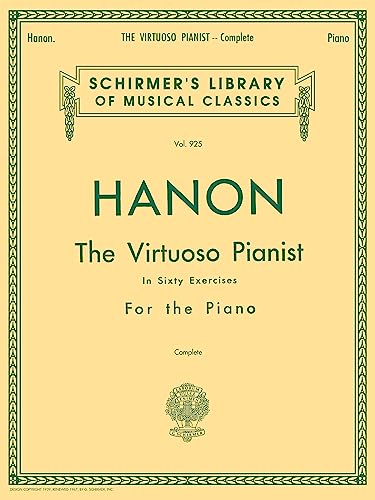
Charles-Louis Hanon: The Virtuoso Pianist
First published in 1873, Hanon’s The Virtuoso Pianist focuses on equalizing the strength, agility, and independence of all ten fingers. While heavily repetitive, practicing Hanon patterns trains the hand to maintain a highly stable, supportive arch structure.
When applied to chord playing, this finger independence is crucial. It ensures that all notes of a block chord strike the keybed at the exact same millisecond, preventing the sloppy, “flammed” or “rolled” sound that occurs when weaker fingers (like the 4th and 5th) lag behind. Advanced practitioners adapt Hanon exercises by playing the linear patterns as solid blocked chords, or transposing them into all twelve keys to build immense topographical familiarity.
 Kindle editionRead on Kindle ›
As an Amazon Associate I earn from qualifying purchases.
Carl Czerny: The School of Velocity (Op. 299)
Carl Czerny, a student of Ludwig van Beethoven and the teacher of Franz Liszt, composed thousands of etudes designed to tackle specific, high-level technical challenges. His School of Velocity, Op. 299 focuses heavily on rapid arpeggiation, broken chords, and scale passages.
Practicing Czerny forces the pianist to navigate wide chordal leaps and complex inversions at high speeds. Unlike the mechanical nature of Hanon, Czerny’s studies are highly musical. They require the student to practice dynamic phrasing, cantabile melody projection, and lateral weight transfer alongside raw velocity. This bridges the gap between rote mechanical drilling and true expressive performance.
 Kindle editionRead on Kindle ›
As an Amazon Associate I earn from qualifying purchases.
Finger Independence and Strength
Smoothly playing chords isn’t just about timing and coordination – it’s also about having independent, strong fingers so that each note of the chord sounds clear and balanced. If one finger is significantly weaker (often the ring finger, for instance), it might lift too slowly or not press firmly enough, causing uneven sound or delays in chord changes. Therefore, developing finger independence, dexterity, and strength is an important part of your training.
Targeting Weak Fingers: When doing technical exercises, it’s often the ring finger (4th) and pinky (5th) that need extra attention, as they tend to be weaker. Some specific exercises help these. For instance, try a five-finger pattern exercise: place your hand on C-D-E-F-G and play patterns like C-E-D-F-E-G-F-D-etc., which force the 4th finger (on F in this case) to lift and play in between stronger fingers. There are also independence exercises where you hold down some fingers while playing others – e.g., hold down notes with 1-3-5 and try playing something with 2 and 4. Such drills can be tedious but they truly isolate each finger’s movement. Exercises could be done for developing independence among the fingers – normally the ring fingers are the weakest and need the most training. Even simply doing trills (rapid alternation) between 3-4 or 4-5 can help strengthen the neural connection and stamina of those fingers.
Incorporate in Practice: It’s not necessary to spend hours on Hanon or Czerny daily (and beware of overuse ; doing these exercises excessively or with tension can lead to strain). But 10 minutes at the start of practice on a couple of Hanon patterns or a short Czerny etude can serve as both warm-up and technical training. Always play them with a metronome and aim for clarity and evenness, not just speed. As you improve, you can increase the metronome marking to challenge your fingers’ speed and control. And if you find them dull, remember: the goal is to make your fingers obey you on the piano. That way, when you tell your hand “move to that chord shape now,” it does so promptly and precisely.
7. Structuring a Practice Routine for Chord Fluidity
Mastery of smooth transitions requires deliberate, mindful practice. Mindless repetition of mistakes only ingrains bad habits deep into the muscle memory. A highly effective, scientifically structured practice routine for advanced chord fluidity includes the following five phases:
1. Warm-Up with Technical Exercises: Begin with a technical warm-up that loosens your fingers and reinforces even playing. Scales and arpeggios are excellent; they make you practice moving smoothly from note to note (which parallels moving between chord tones). For example, play a scale hands together and focus on a legato connection of each note – this same evenness is what you want between chords.
You can also practice a simple broken-chord exercise: pick a chord (say, D major) and play it broken (one note at a time up and down) slowly, listening for evenness, then increase speed. This builds familiarity with that chord shape under your fingers from different angles. Hanon exercises can be useful here too, as they develop finger agility and independence, which underpin smooth chord playing. A short Hanon pattern will get your fingers warmed up and responsive.
Chord Transition Drills: Devote time specifically to chord-changing drills. One effective drill is to take two chords and go back and forth between them repeatedly. For instance, practice switching between G7 and C major (a common resolution) 10–15 times slowly. Ensure you’re using good fingering and nearest inversions. This repetition isolates the transition and makes it second nature. Do this with various pairs, especially those you find difficult. Another drill is the 4-chord progression loop: choose a four-chord sequence (like the I–V–vi–IV pop progression or any sequence from a song you like) and loop it as smoothly as possible.
Start with whole-note chords (holding each for 4 counts) so you have time to think ahead. Once comfortable, try doing it in half-notes (2 counts each), then eventually on each beat. Use a metronome to maintain steady time and only increase speed when you can do a slower tempo consistently without hiccups.
Drills for Jumps: If your piece involves chords that require leaps (large jumps), try a targeted drill: practice the jump in isolation. For example, if you need to go from a chord in a low register to a chord an octave or more higher, practice just that leap – play the low chord, then quickly move and play the high chord. At first, ignore the rhythm and just focus on landing accurately and lightly. Then work it into proper timing.
You can even make a game of it: can you land 5 out of 5 times accurately? If not, slow down or figure out a guide point (perhaps your pinky aims for a certain key as a reference). Over time, these leaps become less intimidating, and you’ll execute them smoothly during performance.
Incorporate Inversions in Practice: Another routine element: choose a key and play the primary chords (I, IV, V, vi for example) in various inversions, one after the other. For example in F major: F (root), Bb (2nd inversion), C (1st inversion), Dm (?? inversion that’s close), etc. The goal is to train your hand to find the nearest chord shapes instinctively.
This exercise not only helps transitions in that key, but it teaches you generally how to think ahead and find efficient voicings. As you get better, expand to more chords or more complex progression (like the cycle of fifths around the circle of fifths, changing inversions each step to be near the last chord).
Cool Down with a Song: End your practice by playing a song or piece you love that uses a lot of chords, applying the techniques you drilled. Pay special attention to how improved your smoothness is. Use a recording device (as discussed in the next section) to capture yourself and see if the practice is paying off in musical context.
The key with these routines is consistency. Even 15–20 minutes a day focused on chord transitions will show results within a few weeks. Mix and match these drills to keep practice interesting. One day do the 4-chord loop and leaps, another day do inversion exercises and rhythmic variations. Always listen critically: are the chord changes even, on time, and connected? If not, slow down or isolate further. Over time, these routines will build the muscle memory and confidence needed for effortlessly smooth chord changes.
| Practice Phase | Method of Execution | Pedagogical Objective |
| 1. Topographical Blocking | Play complex, arpeggiated passages or broken chords as solid, simultaneous block chords. | Trains the brain to instantly recognize the underlying harmonic shape and prepare the hand position before focusing on individual finger movements. |
| 2. The “Slow Down” Method | Play the chord transitions at an excruciatingly slow, deliberate tempo. | Eliminates panic and hesitation, allowing the mind to consciously map the exact biomechanical pathway and rotation required. |
| 3. Pivot Point Isolation | Isolate only the two connecting chords. Play Chord A, move exactly to Chord B, and stop. | Ingrains deep muscle memory for the specific lateral shift, wrist adjustment, and weight transfer required for that single transition. |
| 4. Rhythmic Variation | Play the chord progression using varied chronological stress (e.g., swung rhythms, dotted rhythms, or fast triplets). | Tests the hand’s ability to execute transitions under varied chronological stress, guaranteeing deep neurological mastery. |
| 5. Metronome Discipline | Practice the progression with a metronome, gradually increasing the BPM notch by notch. | Forces strict rhythmic accountability, ensuring that the physical movements are efficient enough to occur strictly on the beat without rushing. |
Recommended Gear and Accessories for Pianists
To execute smooth chord transitions and practice effectively, a pianist’s physical setup and equipment must be optimal. Ergonomics, acoustic response, and practice tools play a massive role in technical development.
Digital Pianos for Beginners and Intermediates
To develop the finger strength and dynamic control required for smooth chords, a keyboard must feature 88 fully weighted, hammer-action keys that accurately simulate the escapement of an acoustic piano.
Roland FP-30X: Widely considered the gold standard for intermediate players. It features the PHA-4 Standard keyboard action, the SuperNATURAL sound engine, and Bluetooth MIDI/Audio connectivity. Its dynamic response is excellent for practicing delicate weight transfers.
As an Amazon Associate I earn from qualifying purchases.
Casio Privia PX-S1100: An incredible option for beginners or those with limited space. It features an ultra-slim, glossy design and Smart Scaled Hammer Action, providing a highly affordable entry point for fully-weighted keys.
As an Amazon Associate I earn from qualifying purchases.
Yamaha P-225: Ideal for classical training. It features the Graded Hammer Compact (GHC) action and Virtual Resonance Modeling, perfectly mimicking the heavy-to-light resistance of a grand piano.
As an Amazon Associate I earn from qualifying purchases.
Professional Sustain Pedals
A high-quality sustain pedal is absolutely mandatory for practicing syncopated legato pedaling. Cheap, lightweight square pedals slide across the floor, breaking concentration, and lack the mechanical resistance needed for advanced half-pedaling techniques.
Roland DP-10: Offers unmatched stability. It features an extended, non-slip rubber heel plate that sits under the foot to prevent the pedal from sliding away. Crucially, it supports continuous half-pedaling for advanced expression.
As an Amazon Associate I earn from qualifying purchases.
Yamaha FC4A: Delivers a highly realistic feel. It boasts a heavyweight, piano-style solid metal lever design that accurately mimics the physical resistance of a real acoustic damper pedal.
As an Amazon Associate I earn from qualifying purchases.
M-Audio SP-2: The ultimate “Swiss Army Knife” for gigging musicians. It features a universal polarity switch, allowing it to work seamlessly with virtually any brand of digital piano or MIDI controller on the market.
As an Amazon Associate I earn from qualifying purchases.
Ergonomic Adjustable Piano Benches
As highlighted by the Taubman Approach, correct seat height is a major factor in aligning the forearm and allowing coordinate motion. A fixed-height bench often leads to hunched shoulders or drooping wrists, which immediately causes tension.
Roland RPB-500: Premium traditional quality. Features solid wood construction, a thick cushioned vinyl seat, and an incredibly sturdy adjustable height mechanism.
As an Amazon Associate I earn from qualifying purchases.
On-Stage KB9503B: Built for professional gigging. It features a heavy-duty hydraulic or mechanical lift, a classic tufted design, and rock-solid stability.
As an Amazon Associate I earn from qualifying purchases.
Roland Adjustable Bench: The best budget option for home use.
As an Amazon Associate I earn from qualifying purchases.
Essential Practice Accessories
Metronomes for Rhythmic Discipline: For a budget digital option, the Korg MA-2 provides excellent reliability and visual beat indicators.
As an Amazon Associate I earn from qualifying purchases.
Bluetooth Page Turners: To maintain unbroken concentration and physical flow, the PageFlip or the AirTurn Duo 500 allows pianists to turn digital sheet music pages hands-free via a silent foot tap.
As an Amazon Associate I earn from qualifying purchases.
As an Amazon Associate I earn from qualifying purchases.
Digital Audio Recorders: Recording practice sessions is vital for auditory feedback, as the brain often masks mistakes in real-time. The Zoom H1n Handy offers world-class microphone quality, allowing pianists to objectively analyze their chord connectivity and pedaling clarity.
As an Amazon Associate I earn from qualifying purchases.
Conclusion
The ability to play piano chords smoothly is the hallmark of a refined, expressive, and technically secure musician. It is not merely a matter of moving the hands faster to cover up gaps; rather, it is a highly sophisticated interplay of intellectual harmonic theory, physical biomechanics, and acoustic sensitivity.
By deeply understanding and applying the principles of voice leading, a pianist can arrange chords parsimoniously, drastically reducing the physical distance the hand must travel across the keys. By adopting the coordinate motions championed by the Taubman Approach—specifically the use of arm weight transfer and forearm rotation—practitioners can eliminate all muscular tension and produce a deep, resonant, and singing tone. Furthermore, integrating advanced tactical skills like silent finger substitution and syncopated pedaling guarantees that the auditory illusion of a continuous, legato line is flawlessly maintained. Through deliberate, mindful practice of these concepts, any pianist can transform a series of disjointed, blocky chords into a sweeping, majestic musical narrative.lay it today using only the closest possible inversions. Notice how much less your hand has to move. That is the secret to smoothness.
When should I NOT play chords smoothly?
In specific styles like Jazz “comping” or Staccato passages in Classical music (like Mozart), a detached sound is required. However, mastering the ability to play legato gives you the control to choose.
How can Hanon and Czerny exercises improve my chord transitions?
Hanon’s The Virtuoso Pianist builds the strict finger independence required to ensure all notes of a chord are depressed evenly and simultaneously. Czerny’s School of Velocity (Op. 299) trains the hand to navigate wide inversions, arpeggios, and broken chords rapidly. When practiced with mindful attention to arm weight and phrasing, these exercises provide the immense technical facility necessary to execute complex harmonic progressions effortlessly.
How do I handle big jumps (over an octave) smoothly?
Move your hand quickly to the new position before the beat. Arrive early, “set” your fingers on the keys, and play on time. The “smoothness” comes from the preparation, not the jump itself.
Why do my piano chords sound disconnected and choppy?
Choppy chords are typically the result of three distinct errors: poor harmonic voice leading (leaping across the keyboard in root position instead of using close inversions), physical tension in the hands (lifting the arm vertically rather than shifting weight laterally), and lifting the sustain pedal at the exact moment the keys are struck, which instantly cuts off the acoustic resonance.
Should I rely entirely on the sustain pedal to make chords sound legato?
Absolutely not. The sustain pedal is an acoustic enhancement, not a substitute for proper physical technique. Pianists must strive to achieve the maximum physical legato possible through intelligent fingering, finger substitution, and fluid weight transfer. The pedal is used to bind the sound seamlessly, not to cover up sloppy, disjunct hand movements.
My hand hurts when I play large chords. How can I fix this?
This is likely due to tension. Ensure your wrist is not locked. Think of “dropping” the weight of your arm into the keys rather than “pushing” with your fingers.
How does forearm rotation help in playing block chords?
Forearm rotation, a foundational principle of the Taubman Approach, prevents the fingers from having to reach, stretch, and isolate awkwardly. By subtly rotating the forearm toward the direction of the next chord, the arm literally delivers the hand to the correct position. This eliminates tension and allows the arm’s natural weight to sink into the keys simultaneously, producing a rich, even tone.
Sources & References
PAMA (Performing Arts Medicine Association): Research papers on the biomechanics of piano playing and the prevention of musculoskeletal disorders in keyboard players
Hanon, Charles-Louis. The Virtuoso Pianist in 60 Exercises.
Czerny, Carl. The School of Velocity, Op. 299 and The Art of Finger Dexterity, Op. 740.
Neuhaus, Heinrich. The Art of Piano Playing.
Sandor, Gyorgy. On Piano Playing: Gestures, Abstraction, and Expression.
The Taubman Approach (Dorothy Taubman / Edna Golandsky)
The Alexander Technique
Fink, Seymour. Mastering Piano Technique.
Aldwell, Edward, & Schachter, Carl. Harmony and Voice Leading.
Feezell, Mark. High-Yield Music Theory, Vol. 1.
Piston, Walter. Harmony.