Mastering rhythm is the defining threshold between an amateur keyboard player and a professional pianist. While note accuracy provides the “what” of music, rhythm provides the “when” and the “how,” acting as the skeletal structure upon which all melody and harmony are built. For many developing musicians, the transition from mechanical playing to a professional, flowing performance requires a deep, internalized understanding of time.
This comprehensive report provides an exhaustive exploration of rhythmic mastery. It covers the foundational physics of the beat, the comparative advantages of various counting systems like Takadimi and Kodály, the mathematical execution of complex polyrhythms, and the physiological benefits of rhythmic entrainment. Furthermore, it analyzes the transition from metronomic rigidity to professional rubato and provides a curated guide to the professional tools, from mechanical Wittner metronomes to high-end benches, that facilitate a superior practice environment.
Rhythmic counting is the systematic process of vocalizing and internalizing the pulse and subdivisions of a musical piece to ensure temporal accuracy. Pro pianists use counting to bridge the gap between mathematical notation and expressive performance, utilizing tools like subdivision, metronome synchronization, and rhythmic vocalization (solfège or numerical) to maintain a steady tempo and execute complex patterns such as syncopation and polyrhythms.
1. The Core Foundations: Pulse, Beat, and Meter
Before a pianist can master complex syncopations, they must first distinguish between the fundamental components of musical time. These elements are often used interchangeably in casual conversation, but in professional practice, they serve distinct functions.
The Pulse (The Heartbeat)
The pulse is the underlying, invisible heartbeat of the music. It is constant, even when there is silence or sustained notes. A professional pianist does not just “know” where the pulse is; they feel it in their core. This is the “groove” in jazz or the “tactus” in Renaissance music.
Tempo refers to the frequency of these pulses, typically expressed in Beats Per Minute (BPM). Duration is the actual length of a specific sound or silence, measured in relation to the underlying pulse.
| Term | Definition | Practical Application for Pianists |
| Pulse | The steady “heartbeat” of the music. | The baseline for foot-tapping and metronome alignment. |
| Tempo | The rate of the pulse (BPM). | Determining the character (e.g., Adagio vs. Presto). |
| Duration | The length of a note or rest. | Proportional relationship (e.g., a half note is two quarter notes). |
| Meter | The grouping of pulses into patterns. | Establishing strong and weak beats via time signatures. |
The Beat and Meter
The beat is the primary unit of time in a piece, usually represented by a specific note value (like a quarter note). Meter refers to the organization of these beats into recurring patterns of strong and weak pulses, known as measures or bars.
Understanding Time Signatures
Professional rhythm counting begins with a precise reading of the time signature.
- Simple Meters: (2/4, 3/4, 4/4) Beats are subdivided into two equal parts.
- Compound Meters: (6/8, 9/8, 12/8) Beats are subdivided into three equal parts.
- Asymmetrical Meters: (5/4, 7/8) Beats are grouped irregularly (e.g., 2+3 or 3+4).
| Time Signature | Type | Division | Common Counting Pattern |
| 4/4 (Common Time) | Simple Quadruple | Binary (2) | 1, 2, 3, 4 |
| 3/4 | Simple Triple | Binary (2) | 1, 2, 3 |
| 6/8 | Compound Duple | Ternary (3) | 1-2-3, 4-5-6 (or 1-and-a, 2-and-a) |
| 5/4 | Asymmetrical | Mixed | 1-2, 1-2-3 |
2. Professional Note Values and Their Relationships
To count like a pro, one must view notes not as isolated durations but as mathematical ratios. The relationship between note values is the key to maintaining a steady tempo during complex passages.
The Hierarchy of Durations
- Whole Note (Semibreve): The foundational unit (4 beats in 4/4).
- Half Note (Minim): Exactly half the duration of a whole note.
- Quarter Note (Crochet): The standard pulse unit in most Western music.
- Eighth Note (Quaver): Two notes per beat; the first level of subdivision.
- Sixteenth Note (Semiquaver): Four notes per beat; essential for fast, virtuosic passages.
Dotted Notes and Ties
A dot increases a note’s value by 50%. A dotted quarter note, for example, equals three eighth notes. Ties connect two notes of the same pitch, sustaining the sound through the combined duration. Pros count the entire duration of a tied note mentally to ensure the subsequent note is not played early, a common amateur mistake.
3. The Pro Counting System: Subdivision Techniques
Professional pianists rarely count only the beats (1, 2, 3, 4). Instead, they count the smallest common denominator in a passage to maintain “micro-rhythmic” accuracy. This is known as Subdivision.
The Numerical System (The Standard)
The numerical system is the most prevalent for its precision:
- Quarter Notes: 1, 2, 3, 4
- Eighth Notes: 1 & 2 & 3 & 4 & (pronounced “One-and-Two-and…”)
- Sixteenth Notes: 1 e & a, 2 e & a (pronounced “One-e-and-ah…”)
- Triplets: 1 & a, 2 & a (or “1-la-li, 2-la-li”)
This system is highly effective for maintaining measure orientation and is the standard for orchestral and ensemble coordination. However, critics argue that it can become syllabically cumbersome at high tempos (Presto).
The Takadimi System
Developed in 1996 by Richard Hoffman, William Pelto, and John W. White, the Takadimi system is based on the functional placement of a note within the beat rather than its specific visual value. This system is highly regarded among professional pianists for its internal consistency and its roots in South Indian Carnatic music.
- Eighth notes: Ta – Di
- Sixteenth notes: Ta – Ka – Di – Mi
- Triplets: Ta – Ki – Da
| Meter Type | Beat | Division | Subdivision |
| Simple | Ta | Ta-Di | Ta-Ka-Di-Mi |
| Compound | Ta | Ta-Ki-Da | Ta-Va-Ki-Di-Da-Ma |
The primary advantage of Takadimi is that the syllables remain constant regardless of the notation. Whether a beat is represented by a quarter note in 4/4 or an eighth note in 4/8, the attack on the beat is always “Ta,” and the second half is always “Di”. This fosters a deep internalization of the rhythmic “grid”.
The Kodály Method and French Time Names
The Kodály system, frequently used in elementary and vocal training, is symbol-based. It evolved from the 19th-century French Time-Names system (Galin-Paris-Chevé), which used French duration words like “noir” (black/quarter) and “croche” (eighth).
Kodály assigns “Ta” to a quarter note and “Ti-Ti” to eighth notes. While excellent for early reading, it can be less adaptable to complex modern meters where a quarter note might not be the beat unit.
Why Pros Vocalize Out Loud
Speaking the rhythm engages the motor cortex and the auditory system simultaneously. If a pianist cannot say the rhythm in time, they cannot play it in time. Vocalizing forces the brain to process the rhythmic structure independently of the technical difficulty of the piano keys.
4. Mastering Advanced Rhythmic Challenges
Precision in piano playing is achieved not through counting the beats alone, but through the constant awareness of the smallest subdivision within those beats. This is known as “subdividing”.
Internalizing the Pulse
A professional pianist works to develop an “internal clock”, a mental metronome that remains steady without external cues. This is developed through physical entrainment. Tapping the foot, nodding the head, or swaying the body in time with the music are not merely stylistic choices; they are mechanisms to ground the timing in the body’s vestibular system.
The “Gap Click” Training Methodology
One of the most effective exercises for professional timing is the “Silent Beat” or “Gap Click” training. Using specialized apps, the pianist sets a metronome to play for a certain number of measures (e.g., two bars) and then go silent for a subsequent number of measures. The pianist must continue playing or counting through the silence and check if they are still perfectly synchronized when the click returns. This exercise reveals tendencies to rush or drag, which are often caused by unconscious physical tension or a lack of subdivision.
Vocalizing as a Bridge to Motor Execution
Vocal counting, speaking the rhythm out loud while playing, is a mandatory habit for professionals tackling complex repertoire. Vocalizing forces the brain to process the rhythm as a distinct “language” before it is translated into the finger movements required for execution. If a pianist cannot vocalize a rhythm accurately, they are unlikely to perform it accurately at the keyboard.
Once the basics are internalized, a pianist must tackle the elements that provide music with its character: syncopation, polyrhythms, and rubato.
Syncopation: Playing Between the Beats
Syncopation occurs when the accent is shifted from a strong beat to a weak beat or an off-beat.
Pro Tip: To master syncopation, always count the eighth-note subdivision (“&”) even when playing quarter notes. This creates a “rhythmic grid” that prevents the pianist from “falling” into the next beat prematurely.
Polyrhythms: The 3-against-2 and 4-against-3
A polyrhythm (or cross-rhythm) occurs when two or more conflicting rhythms are performed simultaneously. The most common are 2 against 3 (duplets against triplets) and 3 against 4.
To execute these precisely, a professional pianist uses the “Least Common Multiple” (LCM) method to create a synchronization grid.
Example: 3 Against 4
- Calculate the LCM: 3 times 4 = 12 small pulses.
- Right Hand (3 notes): Attack on pulses 1, 5, 9.
- Left Hand (4 notes): Attack on pulses 1, 4, 7, 10.
- Synchronization Points: Both hands land together only on pulse 1.
For many, mnemonics serve as a secondary aid. For a 2 against 3 rhythm, the phrase “Not Diff-i-cult” is often used, where the syllables represent the combined rhythm of both hands.
Hemiola
Common in Baroque and Classical music (especially in the works of Bach and Brahms), a hemiola gives the impression of a meter change (e.g., two bars of 3/4 sounding like one large bar of 3/2). Professional counting requires recognizing these patterns ahead of time to avoid rhythmic “stumbling” at cadence points.
5. The Metronome Masterclass: Professional Training
A metronome is not a crutch; it is a diagnostic tool. Professional pianists use it to identify “rhythmic rushing” (common in fast passages) or “dragging” (common in expressive adagios).
Step-by-Step Metronome Strategy
- Set the “Subdivision Click”: Instead of setting the metronome to 60 BPM for quarter notes, set it to 120 BPM for eighth notes. This provides more frequent “checkpoints” for accuracy.
- The “Ghosting” Technique: Play a passage with the metronome, then turn the volume down for four measures while continuing to play. Turn it back up to see if you are still in sync. This builds the “internal clock.”
- Gradual Acceleration: Increase the tempo by only 2–4 BPM at a time. This ensures that the muscle memory remains “rhythmically perfect” at every stage of speed.
The metronome is an indispensable tool, yet its improper use can lead to mechanical, “soulless” playing. Professional metronome practice follows a specific hierarchy of development.
The Stages of Metronome Practice
- Foundational Accuracy: Practicing at a slow tempo (e.g., 60 BPM) to ensure every note and subdivision is placed with mathematical precision.
- Incremental Velocity: Gradually increasing the tempo in small increments (5-10 BPM) only after the previous speed is mastered with 100% accuracy.
- Rhythmic Stability: Using “Off-Beat Clicks.” Setting the metronome to click only on the “and” of the beat, forcing the pianist to provide the “downbeat” themselves.
- Expressive Alignment: Checking for “Excessive Rubato.” A professional recording of a rubato passage should still allow the listener to tap along to the underlying pulse. If the beat is lost, the rubato is considered self-indulgent rather than expressive.
6. Genre-Specific Rhythmic Nuance
Counting “pro” also means understanding that rhythm is not always strictly mathematical.
The Classical “Strict” Pulse
In Mozart or Haydn, rhythmic precision is paramount. The counting must be crisp, and subdivisions must be exactly equal to maintain the “sparkle” of the compositions.
The Romantic “Rubato”
Rubato (stolen time) allows for expressive speeding up and slowing down. However, a pro pianist knows that rubato must be “paid back.” If you accelerate, you must eventually decelerate to keep the overall structure intact. You cannot play with rubato effectively until you can play the piece in perfect time.
The Jazz “Swing”
In jazz, eighth notes are not played equally. They follow a triplet-based “long-short” pattern. A pro pianist counts this as “1-and, 2-and” with a lilt, often feeling the pulse on beats 2 and 4 (the backbeat) rather than 1 and 3.
Recommended Gear for Rhythmic Excellence
To achieve professional timing, having the right tools is essential. Below are the top-rated products to support your rhythmic development.
Wittner Taktell (Mechanical Metronome)
- Pros: Features a reliable, battery-free wind-up mechanism with a crisp, organic click that cuts through the sound of the piano.
- Cons: Limited to basic beat patterns; lacks the advanced subdivision features (like triplets or 16th notes) found in digital models.
As an Amazon Associate I earn from qualifying purchases.
Korg MA-2 (Digital Metronome)
- Pros: Highly portable and versatile, offering a “Tap Tempo” function and specific rhythmic patterns for practicing complex subdivisions.
- Cons: The electronic beep can be piercing at high volumes and lacks the visual “pendulum” aid of a mechanical metronome.
As an Amazon Associate I earn from qualifying purchases.
Soundbrenner Pulse (Wearable Vibrating Metronome)
- Pros: A revolutionary tool that allows you to “feel” the pulse through haptic vibrations on your wrist or chest, fostering a deeper internal sense of timing.
- Cons: Requires a smartphone connection for full functionality and has a learning curve for those used to audible clicks.
Yamaha P-225: Reliable GHS (Graded Hammer Standard) action with a neutral, clear tone.
As an Amazon Associate I earn from qualifying purchases.
Roland FP-30X Digital Piano : Features the PHA-4 Standard action with an “Ivory Feel,” excellent for expressive touch.
As an Amazon Associate I earn from qualifying purchases.
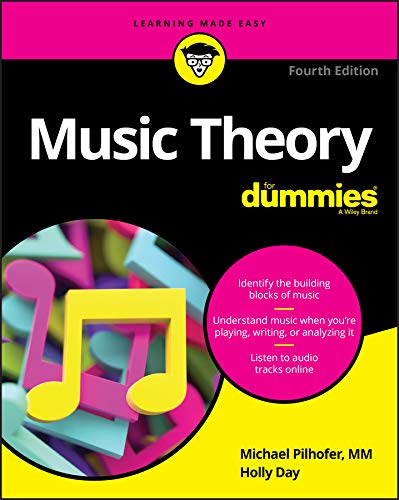
Music Theory For Dummies (Michael Pilhofer & Holly Day)
- This resource is exceptional for its pedagogical clarity, deconstructing intimidating rhythmic concepts like syncopation and compound meters into plain English for immediate practical application.
 Kindle editionRead on Kindle ›
As an Amazon Associate I earn from qualifying purchases.
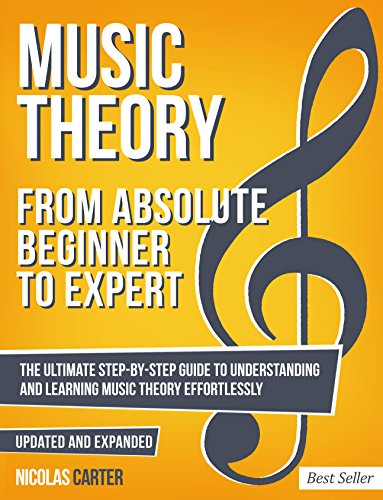
Music Theory: From Beginner to Expert – The Ultimate Step-By-Step Guide
- An authoritative and rigorous book that provides a structural, academic foundation for rhythm and notation, making it the gold standard for students aiming for conservatory-level precision.
 Kindle editionRead on Kindle ›
As an Amazon Associate I earn from qualifying purchases.
Conclusion: From Counting to Feeling
Mastering how to count rhythm like a pro pianist requires a transition from seeing rhythm as a series of numbers to feeling it as a physical pulse. By employing sophisticated systems like Takadimi, utilizing the “Gap Click” methodology to strengthen the internal clock, and understanding the mathematical foundations of polyrhythms, a performer moves beyond mere accuracy.
True rhythmic authority is found in the balance between metronomic precision and expressive freedom. The professional pianist uses the metronome to build a bedrock of stability, only to deviate from it with intentional rubato and agogic accents that breathe life into the score. The ultimate goal of learning how to count rhythm like a pro pianist is to reach a stage where you no longer need to count. By rigorously subdividing, vocalizing, and practicing with a metronome, the pianist internalizes the pulse. This “internal clock” becomes so strong that it operates subconsciously, freeing the mind to focus on the emotional and artistic nuances of the music.
Rhythmic mastery is a journey of discipline. Start slow, count aloud, and never underestimate the power of a single quarter note.
Why do I keep rushing when the music gets faster?
Rushing is usually a result of “anticipating” the next note due to physical tension or lack of subdivision. To fix this, practice at half-speed and count the smallest note value (sixteenth notes) aloud.
Should I count in my head or out loud?
Always start out loud. Counting in your head allows for “mental blurring” where you might skip a fraction of a beat without noticing. Vocalizing is an objective truth-teller for your timing.
How do I count a “rest” properly?
A rest is a rhythmic event, not a “break.” You must count rests with the same intensity as notes. Professional pianists often use a specific syllable for rests (like “shh”) to ensure they don’t cut the silence short.
Is it okay to tap my foot while playing?
While common, pro pianists try to internalize the pulse in their body (core/shoulders) rather than the foot. Heavy foot tapping can lead to unwanted noise during recording and may interfere with your pedaling technique.
What is the best way to practice difficult polyrhythms?
The most reliable method is the mathematical LCM (Least Common Multiple) grid. Break the rhythm down into a series of small pulses where both rhythms can be mapped. Practice this grid slowly with a metronome until the “interlocking” sound is internalized.
How do I know if my rubato is “correct”?
A professional check is the “Tap Test.” Record your performance and try to tap your foot or a metronome along to the underlying pulse. If you can still feel the beat through the expressive stretching of time, the rubato is successful. If you lose the beat, the timing is likely self-indulgent.
Can rhythm be taught, or is it an innate talent?
While some individuals have a natural predisposition for rhythm, scientific studies show that rhythmic perception and production can be significantly improved through structured training and musical exposure.
Why is the “Gap Click” better than a steady metronome?
A steady metronome acts as a “crutch.” The pianist follows the machine rather than internalizing the time themselves. The Gap Click forces the pianist to generate the pulse internally, which is essential for consistent tempo in performance.