As an Amazon Associate, PianoMode earns from qualifying purchases. Recommendations are made on their merits; the price you pay is the same.
Mastering the art of memorization is often the final hurdle between a piano student and true musical freedom. While many beginners rely solely on the physical repetition of notes, elite pianists utilize a multi-layered cognitive strategy that engages different neurological pathways. Memorizing music is not a passive act of “remembering” but an active process of encoding information through physical, aural, visual, and analytical lenses. This guide provides an exhaustive breakdown of professional techniques designed to accelerate this process, allowing for more secure performances and a deeper connection to the repertoire.
In this comprehensive exploration, readers will learn how to transition from rote repetition to strategic internalization. The discussion covers the four pillars of musical memory, the critical role of harmonic analysis in pattern recognition, and advanced neurological techniques like mental rehearsal and interleaved practice. By the end of this article, the path to faster and more reliable memorization will be clearly defined.
The Direct Strategy for Fast Piano Memorization
Memorizing piano music quickly requires a holistic approach that integrates four primary types of memory: kinesthetic (muscle), auditory (ear), visual (eyes), and analytical (brain). By breaking a piece into manageable segments (chunking), practicing at extremely slow tempos to solidify neural pathways, and performing a detailed harmonic analysis using Roman Numeral Analysis (RNA), pianists can create a robust, multi-dimensional mental map. This method moves beyond “finger memory” to a conceptual understanding of the music, ensuring reliable recall even under the stress of live performance.
1. The Four Pillars of Musical Memory
To memorize music effectively, one must understand that the brain stores musical information in various ways. Relying on only one type of memory, usually muscle memory, is the primary cause of memory “slips” or “blanks” during performance.
A. Kinesthetic (Muscle) Memory
Kinesthetic memory is the physical sensation of the fingers moving across the keyboard. It is the most common form of memory used by pianists, but also the most fragile.
- The Role of Fingering: Consistent fingering is the bedrock of muscle memory. If a student changes their fingerings with every repetition, the brain cannot “program” the physical movement.
- Tactile Awareness: This involves the sensation of the distance between keys, the “reach” for specific intervals, and the resistance of the piano action.
- Reflexive Action: While essential for fast passages, kinesthetic memory can fail if the pianist becomes consciously aware of their hands, leading to a “spiral” of doubt.
B. Auditory Memory
Auditory memory is the ability to hear the music in the “inner ear” before a note is even played.
- Internalization: A pianist must be able to “sing” the melody and the bass line internally. If you cannot hear the next note in your head, you do not truly know the piece.
- Active Listening: Listening to high-quality recordings of the piece helps imprint the “sound-image” into the subconscious.
- Error Detection: Strong auditory memory acts as an “early warning system,” alerting the player when a physical movement does not match the expected sound.
At the core of musical memory is pitch perception, which is predominantly processed in the auditory cortex located within the temporal lobe. The brain assess pitch based on sound frequencies; for example, Middle C (C4) vibrates at 261.6 Hz, while the A above it vibrates at 440 Hz. The auditory cortex features a “tonotopic map,” where specific regions are sensitive to distinct frequencies across the human hearing range of 20 to 20,000 Hz.
While auditory recognition memory is vital, studies suggest it has a lower capacity than visual memory. Trained musicians have superior auditory memory compared to non-musicians, yet they still benefit immensely from integrating visual cues from the score and the keyboard layout.
C. Visual Memory
Visual memory involves creating a mental snapshot of the sheet music or the topography of the keyboard.
- Score Visualization: Some pianists can “see” the page, including the location of specific dynamic markings or page turns.
- Keyboard Geography: Mapping out where the hands move in relation to the black and white key patterns is crucial for large leaps.
- Symbolic Recall: Remembering the specific “look” of a complex chord or a jagged melodic contour.
D. Analytical (Conceptual) Memory
Analytical memory is the highest form of musical encoding. It involves understanding the “why” and “how” of a composition.
- Harmonic Structure: Identifying chords and their functions (e.g., I – IV – V7 – I) provides a roadmap for the brain.
- Formal Organization: Recognizing sections like the “Exposition,” “Development,” and “Recapitulation” in a sonata allows the pianist to think in large blocks rather than individual notes.
- Pattern Recognition: Reducing a complex passage to its underlying scale or arpeggio.
Foundation Scale-Steps: The Building Blocks
The Western musical system is built on the chromatic scale, a collection of twelve equal semitones or “half steps”. A half step is the smallest distance between two adjacent keys on the piano, while a whole step spans two half steps.
| Scale Step | Definition | Piano Key Example |
| Half Step | Smallest distance (semitone). | E to F or B to C. |
| Whole Step | Two half steps (tone). | C to D or G to A. |
Memorization is accelerated when a pianist recognizes that a melody isn’t just a series of notes, but a specific pattern of these steps. For instance, all major scales follow the formula: W-W-H-W-W-W-H.
The Circle of Fifths and Key Recognition
The Circle of Fifths is a visual representation of the relationships between major and minor keys. It serves as a mental map for the pianist to anticipate which sharps or flats will appear in a piece.
- Sharp Keys: Proceed clockwise by perfect fifths (7 half steps). The order of sharps added is F-C-G-D-A-E-B.
- Flat Keys: Proceed counterclockwise by perfect fourths (5 half steps). The order of flats added is B-E-A-D-G-C-F.
Each major key has a “relative minor” found three half steps down from the tonic. Recognizing that C Major and A Minor share the same key signature allows the brain to “file” these pieces under the same structural category, reducing cognitive load.
As an Amazon Associate I earn from qualifying purchases.
Intervals and Chord Construction
Intervals are the distances between pitches, categorized by quantity (distance on the staff) and quality (major, minor, perfect, augmented, diminished).
| Interval Number | Major Quality (Half Steps) | Minor Quality (Half Steps) |
| Second | 2 | 1 |
| Third | 4 | 3 |
| Sixth | 9 | 8 |
| Seventh | 11 | 10 |
Chords, or triads, are built by stacking these intervals. A Major triad consists of a root, a major third, and a perfect fifth (4 + 3 half steps). A Minor triad consists of a root, a minor third, and a perfect fifth (3 + 4 half steps). When a pianist analyzes a passage and sees a “C minor triad” instead of three individual notes (C, Eb, G), they have “chunked” the information, making it much easier for the working memory to handle.
2. Strategic Practice Methodologies
The speed of memorization is determined not by how many times a passage is played, but by how much the brain is forced to work during each repetition.
A. The Power of “Chunking”
Chunking is the process of breaking intimidating musical passages into bite-sized, manageable units. Instead of playing a 47-bar piece from top to bottom, the pianist should isolate short sections of two to four measures that make sense musically.
- Selection: Identify a “problem area” or a logical phrase.
- Intense Focus: Play that chunk at a “snail’s pace” with total control until it is technically perfect.
- Synthesis: Gradually link mastered chunks together like pearls on a string.
B. Backward Chaining: Starting with the Finish
Most pianists suffer from “Strong Start, Weak End” syndrome because they always begin practice at measure one. Backward chaining is a revolutionary technique that flips this script.
- Process: Learn the final phrase of the piece first. Once mastered, move to the second-to-last phrase and play it through to the end. Then move to the third-to-last phrase.
- Cognitive Benefit: By practicing backwards, the pianist is always moving from less-familiar material toward material they know better. This “downhill” approach builds immense confidence and ensures the ending is the most secure part of the performance.
C. Interleaved Practice: The Genre Mixer
Blocked practice (working on one task for an hour) creates an “illusion of competence.” Interleaved practice involves switching between different tasks or pieces every 5–10 minutes within a single session.
| Practice Routine | Duration | Task |
| Block 1 | 7 mins | Classical Piece (Section A) |
| Block 2 | 7 mins | Scales/Arpeggios in a different key |
| Block 3 | 7 mins | Jazz Standard (Chords) |
| Block 4 | 7 mins | Classical Piece (Section B) |
The neuroscience reveals that constant switching forces the brain to “retrieve” motor patterns from long-term memory more frequently, creating stronger and more flexible neural connections.
3. Analytical Memory: The Glenn Gould Approach
The legendary pianist Glenn Gould was known for studying his scores away from the instrument, sometimes even in bed. This “Analytical Memory” provides a secondary backup system that functions when muscle memory fails.
A. Mental Mapping and Visualization
Pianists should strive to “play” the piece in their mind without the physical keyboard. This involves visualizing the hand positions, hearing the melody, and reciting the harmonic progressions.
- The “Hazy” Test: If a pianist finds a part of the piece they cannot visualize clearly, they do not truly know the score. They must refer back to the music and re-encode that specific section.
- Writing the Score: A powerful (though difficult) exercise is to attempt to write out the music on blank staff paper from memory. This reveals exactly which voices or harmonic shifts are not yet secure.
B. Roman Numeral Analysis (RNA)
Harmonic analysis using Roman Numerals identifies the function of each chord within the key.
| Roman Numeral | Chord Function | Emotional/Harmonic Quality |
| I (Tonic) | Home/Rest | Stability and resolution. |
| IV (Subdominant) | Movement | “Pre-dominant” pull toward tension. |
| V (Dominant) | Tension | Strongest desire to resolve to the Tonic. |
| vi (Submediant) | Relative | Often provides a deceptive “surprise”. |
By understanding that a sequence is a “ii-V-I” progression, the pianist memorizes the logic of the movement rather than just ten fingers’ worth of coordinates.
4. Mastering Polyphony and Fugues
The fugues of Johann Sebastian Bach represent the pinnacle of memorization difficulty due to their contrapuntal nature, where multiple independent melodies (voices) occur simultaneously.
A. The Strand-Separation Method
“Hands separate” practice is often insufficient for polyphonic music because middle voices are often shared between hands. Instead, the pianist should use the “Step-ladder Approach”:
- Voice Isolation: Learn each voice (Soprano, Alto, Tenor, Bass) individually with the final fingering.
- Strand Combining: Practice two voices at a time (e.g., Soprano + Bass, then Alto + Tenor) at an extraordinarily slow tempo.
- Voicing Exercises: Play through the section multiple times, each time bringing out one assigned voice forte while playing the others piano.
B. Subjects and Episodes
Fugues are organized into “Expositions” (where the theme or subject is introduced) and “Episodes” (where the subject is modified or absent). Highlighting the subject in yellow every time it appears in the score creates visual “anchors” for the memory.
5. Performance Cues and the Safety Net
Roger Chaffin’s research on performance cues (PCs) identifies the mental landmarks that experts monitor during a performance to track their progress and recover from mistakes.
A. The Hierarchy of Performance Cues
- Structural Cues: Boundaries between sections like the “Recapitulation” or a “Coda”.
- Expressive Cues: Emotional turning points where the musical “message” shifts.
- Interpretive Cues: Specific decisions regarding dynamics (crescendo), tempo (ritardando), or pedaling.
- Basic Cues: Critical technical markers, such as a difficult fingering shift or a large jump across the keyboard.
B. Creating content-addressable “Addresses”
By deliberately attending to these cues during practice, the pianist creates “addresses” in long-term memory. If a memory slip occurs, the expert pianist simply “jumps” to the next landmark, such as thinking “G section”, and continues without the audience realizing anything went wrong.
Image Prompt: A detailed 3D abstract rendering of a musical score transformed into a landscape. Gold lines represent the staff, and notes are obsidian black spheres. Glowing gold pillars rise at key points to represent “Performance Cues” or landmarks. The lighting is cinematic with high contrast between gold and black. Montserrat font style vibes, though no text.
6. Psychological Resilience: The Performance “Gauntlet”
Memorization in a quiet room is not the same as memorization under pressure. The final stage of faster memorization is “Gauntlet Training”, learning to play through physiological arousal.
A. Simulation Exercises
- The Distraction Test: Practice while a family member tries to distract you, or play with loud, unrelated music (like death metal) in the background.
- The “Freeze” Test: Have a teacher or friend call out “Freeze!” at random. You must stop instantly, point to where you are in the sheet music (while not looking at it), and then resume from that exact note.
- The Cold Start: Sit down at the piano after not playing all day and attempt to play your performance piece once, from start to finish, without any warm-up. This simulates the adrenaline of a real stage.
B. Managing Performance Anxiety
Anxiety tightens muscles and breaks the “string” of muscle memory. “Centering” involves finding a focal point, deep square breathing, and consciously releasing muscle tension before the first note. Reinterpreting physical jitters as “excitement” rather than “fear” can trick the brain into higher performance levels.
Recommended Gear for Serious Pianists
To optimize the memorization process, having the right tools is essential for maintaining focus, tracking progress, and ensuring physical comfort.
- Metronomes: Cultivate flawless rhythmic timing and reliable mental anchors by incorporating the Korg MA-2 or the venerable Wittner Taktell into your slow practice routine. It offers various rhythm patterns which is invaluable for internalizing complex time signatures like 5/8 or 7/8.
As an Amazon Associate I earn from qualifying purchases.
As an Amazon Associate I earn from qualifying purchases.
- Piano Benches: Maintain the ergonomic stability necessary for deep focus and tension-free playing with professional adjustable benches as the Roland adjustable bench or the On-Stage KT7800. A high-quality, padded adjustable bench ensures proper posture. Correct ergonomics prevent the physical tension that often blocks mental recall during long practice sessions.
As an Amazon Associate I earn from qualifying purchases.
As an Amazon Associate I earn from qualifying purchases.
- Digital Tablet for Sheet Music: An iPad Pro combined with the forScore app allows you to carry thousands of scores, annotate them with harmonic analysis (RNA), and use Bluetooth page-turner pedals (like the AirTurn DUO 500) to keep your hands on the keys.
As an Amazon Associate I earn from qualifying purchases.
As an Amazon Associate I earn from qualifying purchases.
- High-Fidelity Studio Headphones: For those practicing on digital pianos, Beyerdynamic DT 770 Pro headphones provide the clarity needed for deep “auditory memory” work, allowing you to hear every nuance of the tone. Or the studio-grade Sennheiser HD 280 Pro.
As an Amazon Associate I earn from qualifying purchases.
As an Amazon Associate I earn from qualifying purchases.
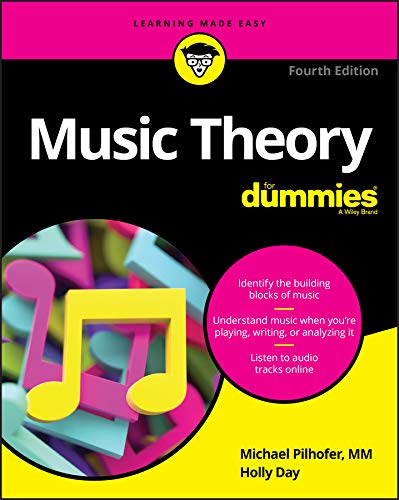
- Music Theory Reference Books: Keeping a copy of “Music Theory for Dummies” or “Music Theory” by James Bastien on your music stand provides instant answers when you encounter a complex interval or chord progression you can’t identify.
 Kindle editionRead on Kindle ›
As an Amazon Associate I earn from qualifying purchases.
As an Amazon Associate I earn from qualifying purchases.
Conclusion: The Path to Mastery
Memorizing piano pieces faster is not a matter of talent; it is a matter of technique. By moving away from mindless repetition and embracing a structured, analytical approach, any pianist can drastically reduce their learning time. The key is to engage the brain’s natural ability to recognize patterns through harmonic analysis, to strengthen the “four pillars” of memory, and to utilize disciplined practice strategies like slow practice and mental rehearsal.
Ultimately, the goal of memorization is to remove the barrier between the performer and the instrument. When the notes are internalized, the pianist is free to focus on the “timbre,” “dynamics,” and “expressive phrasing” that turn a sequence of pitches into a work of art. Consistency, patience, and a pedagogical mindset will turn the once-daunting task of memorization into a rewarding part of the musical journey.
Why do I keep forgetting the middle section of my piece?
This is typically due to “Serial Position Effect.” Most students practice from the beginning, making the start the strongest. To fix this, use “Random Access” practice: start specifically in the middle section for several days until it becomes as familiar as the beginning.
Can I memorize a piece without knowing music theory?
Yes, but it is much slower and less reliable. Without theory, you are memorizing thousands of individual “dots.” With theory (like Roman Numeral Analysis), you are memorizing a few dozen logical “patterns”.
How long does it take to memorize a standard piano piece?
For an intermediate student using these techniques, a 3-page piece can often be memorized in 1 to 2 weeks of focused, 30-minute daily sessions. Using only rote repetition, the same piece might take over a month and remain insecure.
Should I memorize the left hand alone?
Absolutely. The left hand often provides the harmonic “foundation.” If the left hand’s memory is weak, the right hand’s melody will lack a stable structural anchor, leading to performance slips.
Is muscle memory a bad thing to rely on?
Muscle memory is essential for speed, but it is “easy come, easy go.” Under stress, it is the first system to fail. You must back it up with auditory (hearing the melody) and analytical (knowing the chords) memory systems to be truly secure.
How many times should I repeat a measure to memorize it?
Research suggests that if you can repeat a short segment (one measure) approximately seven times perfectly without the score, it is encoded into short-term memory. However, to move it to long-term storage, you must revisit it using spaced repetition over several days.
Why do I always forget the left hand first?
The left hand is often neglected as the “background” accompaniment. Experts recommend memorizing the left hand alone, as understanding the bass line and harmonic foundation is crucial to internalizing the structural “logic” of the piece.
Can lead sheets help me memorize faster?
Yes. For non-classical music, lead sheets (melody + chord symbols) allow you to learn the “skeleton” of the tune. This provides a functional outline that is much faster to internalize than note-for-note traditional notation.