As an Amazon Associate, PianoMode earns from qualifying purchases. Recommendations are made on their merits; the price you pay is the same.
Imagine standing before a world-class choir of eighty-eight singers. If every singer shouted at the top of their lungs simultaneously, the result wouldn’t be music, it would be noise. For a masterpiece to emerge, specific voices must soar while others whisper, creating a hierarchy of sound that tells a story. This is the essence of the piano. Without voicing, the instrument is merely a percussion machine; with it, the piano becomes a living, breathing orchestra.
In this exhaustive guide, you will learn the scientific and artistic principles of piano voicing. We will explore how to decouple your fingers’ dynamics, the historical evolution of voicing from Bach to Evans, and the specific physical exercises required to turn a “flat” performance into a multi-dimensional sonic experience.
What You Will Learn:
- Practical exercises to implement in your daily practice routine.
- The precise definition of voicing in both performance and technical maintenance.
- Why voicing is the “secret sauce” of professional interpretation.
- Advanced physical techniques to achieve independence of touch.
- How voicing requirements change across different musical eras.
This isn’t just a matter of pressing keys with the right fingers, it’s about shaping the sound in a way that directs the listener’s ear and reveals the emotional essence of the music. Voicing gives the pianist the ability to craft nuance, clarity, and expression from a simple chord or a dense polyphonic texture. It’s not only a technical skill but a form of musical storytelling.
What Is Piano Voicing?
Piano voicing is the intentional control and balancing of the volume, tone, and duration of individual notes within a chord or a polyphonic texture. In a musical context, it allows the pianist to highlight the melody (usually the top note) while keeping accompanying harmonies subordinate. Technically, “voicing” also refers to the mechanical adjustment of piano hammers by a technician to ensure a consistent and desirable tonal quality across all 88 keys.
Voicing, in piano terms, refers to the way we balance the volume and tone of different notes played simultaneously. When a chord is struck, it contains multiple notes, but not all of them should sound equally prominent. In most cases, there’s a particular note, often the melody or the highest pitch, that needs to stand out. The supporting notes beneath it should blend softly to create harmony without overwhelming the main voice.
The difference voicing makes is immediate and profound. If all notes are played with the same intensity, the chord may sound muddy or lifeless. But when you emphasize the right note and temper the others, the sound becomes vivid and expressive. It’s almost like sculpting with sound, allowing certain parts to rise while others remain in the background.
1. The Dual Nature of Voicing: Performance vs. Mechanics
To truly master the instrument, one must understand that “voicing” exists in two realms: the physical state of the instrument and the technical skill of the performer.
The Technician’s Voicing
Before a pianist even touches the keys, the piano itself has a “voice.” Over time, the felt on the hammers becomes packed down and hard from hitting the strings. This results in a “bright” or “harsh” tone. A piano technician voices the instrument using specialized needles to prick the felt, softening it to create a mellower sound, or using chemical hardeners to brighten a dull tone.
- Why it matters: Even the best pianist cannot achieve a perfect ppp (pianissimo) on a piano with rock-hard, unvoiced hammers.
The Pianist’s Voicing
This is the “High-Yield” skill. It is the ability to strike three notes with the right hand simultaneously, say, a C major triad (C-E-G), and make the ‘G’ sound at a forte level while the ‘C’ and ‘E’ remain at a piano level. This creates a “3D” sound.
2. Why Voicing Is the Core of Musical Authority
Musical authority is the audible manifestation of a pianist’s intent. Without precise voicing, a performance sounds accidental, a byproduct of mechanical key-striking rather than a curated sonic experience. When a pianist masters voicing, they graduate from simply “playing the piano” to “conducting a ten-fingered orchestra.”
In the professional realm, voicing serves three non-negotiable functions that dictate the quality of a performance: Acoustic Clarity, Narrative Hierarchy, and Psychoacoustic Emotional Impact.
Establishing Clarity in Dense Textures: The “Sonic Spotlight”
The modern piano is a resonant beast. When multiple notes are played simultaneously, especially in the lower registers, the physical strings create a “wall of sound.” Without voicing, this wall becomes an impenetrable mud that obscures the composer’s intent.
The Physics of Acoustic Masking: In music theory, we deal with “Acoustic Masking,” where louder or lower-frequency sounds drown out softer, higher-frequency ones. A pianist with authority uses voicing to override this physical law.
- Polyphonic Transparency (The Bach Standard): In a four-voice fugue, the “Subject” (the main theme) must be audible regardless of which finger is playing it. Authority is shown when a pianist can make a middle-voice melody “sing” with the left-hand thumb while the other nine fingers provide a hushed, staccato framework. This requires a decoupling of the nervous system to allow for different “velocity inputs” across the hand.
- Harmonic De-Cluttering (The Rachmaninoff Challenge): Late Romantic composers often wrote chords with 6, 8, or 10 notes. If played with equal weight, the “color” notes (the 7ths, 9ths, and 13ths) clash with the root, creating a dissonant “cluster” effect. By voicing the top and bottom notes (the “frame”) and softening the “filling” notes, the pianist creates a transparent sound that feels massive yet clear.
Directing the Musical Narrative: The Hierarchy of Sound
Music is a temporal art form; it moves through time. To keep a listener engaged for ten minutes or an hour, the pianist must provide a “roadmap.” Voicing is the primary tool for building this structural hierarchy.
The “Three-Layer” Perspective: An authoritative performance typically organizes sound into three distinct planes:
- The Foreground (The Protagonist): This is usually the melody. It must possess a “cantabile” (singing) quality. It should be voiced 20-30% louder than any other element. This “ping” on the attack allows the note to sustain longer, mimicking the human voice.
- The Background (The Atmosphere): The bass line and the harmonic foundation. These provide the “ground” upon which the protagonist walks. They must be resonant but never “pointy” or intrusive.
- The Middle Ground (The Texture): These are the inner voices, the counter-melodies, or the broken-chord accompaniments (like Alberti bass). The ultimate test of authority is keeping these voices secondary without letting them disappear entirely.
Narrative Flow and Voice Leading: Authority is also found in how one note leads to the next. By slightly over-voicing the “leading tones” (notes that want to resolve), the pianist creates a sense of inevitable forward motion. This is known as Horizontal Voicing, where the pianist isn’t just balancing a static chord, but balancing a moving line of energy.
Emotional Coloration: The Psychoacoustic Effect
The most profound aspect of voicing is its ability to manipulate the listener’s subconscious through psychoacoustics. The way you balance a chord actually changes the “flavor” of the harmony in the listener’s brain.
The Harmonic Series and Tonal Balance: Every note played on a piano contains a series of overtones (the natural harmonic series). When you voice a specific note in a chord, you are emphasizing a particular set of overtones.
Extension Voicing (Sophistication): In Impressionist (Debussy) or Jazz (Bill Evans) styles, the emotional “meat” is in the dissonances, the 9ths and #11s. An authoritative pianist will voice these tensions to “shimmer” just above the rest of the chord, creating that signature “dreamlike” or “ethereal” atmosphere.
Root-Heavy Voicing (Stability): Highlighting the root of a chord (e.g., the low C in a C Major triad) creates a sense of “gravity” and “imperial strength.” It feels “final” and “grounded.” This is essential for the final chords of a Beethoven sonata.
Third-Heavy Voicing (Poignancy): The “Third” of a chord (the ‘E’ in C Major) determines whether a chord is major or minor. When a pianist voices the Third slightly more than usual, it draws the listener’s attention to the “quality” of the emotion. It can make a major chord sound “sweet” or “nostalgic” and a minor chord sound “tragic” or “pleading.”
3. The Physical Mechanics: How to Voice
The greatest hurdle in piano technique is the “grasping reflex.” Biologically, our hands are designed to close all fingers together to grip objects. Voicing requires the opposite: a radical fragmentation of the hand’s neurological impulses. To voice effectively, you must train your hand to be a collection of independent pistons, each capable of a different “velocity of descent.”
The Science of Weight Transfer (Gravity vs. Muscle)
Weight transfer in piano playing is the process of redirecting the gravitational force of the arm and shoulder into a specific finger while maintaining a neutral, tension-free state in the rest of the hand. Rather than using muscular “striking” force, the pianist “leans” their skeletal weight into the key to produce a deep, resonant tone.
The Kinetic Chain
To understand weight transfer, you must view the arm as a kinetic chain. The power starts in the large muscles of the back (latissimus dorsi), moves through the shoulder, down the humerus, through a flexible elbow, and finally into the wrist.
- The Wrist as a Hydraulic Valve: The wrist acts as the regulator. If the wrist is locked, weight cannot flow. For voicing, the wrist must be “buoyant”, capable of dropping to deposit weight and rising to release it.
- The “Lean” Principle: Imagine standing on two feet. If you shift your weight to your right foot, the left foot remains on the ground but carries no weight. Voicing is the exact same concept applied to five fingers. You “stand” on the melody finger and let the others simply “rest” on the keys.
The “Pinky” Advantage: Turning Weakness into Power
In 95% of piano literature, the melody resides in the highest note, which is almost always played by the 5th finger (the pinky). This presents a physiological irony: the smallest, weakest finger is tasked with producing the most authoritative sound.
A. The Structural Arch
The key to the “Pinky Advantage” is not the strength of the finger itself, but the integrity of the hand’s arch.
- Preventing the Collapse: Many students fail to voice because their 5th finger collapses at the first joint when they apply pressure. To voice, the 5th finger must remain a firm, curved pillar.
- Lateral Rotation (The “Outward Tilt”): To assist the 5th finger, the forearm should rotate slightly outward (supination). By tilting the hand toward the pinky side, you align the weight of the forearm directly behind that finger, giving it the “mass” of the whole arm.
B. The “Bell-Like” Attack
To achieve the famous “bell-like” quality in Romantic music (Chopin, Liszt), the 5th finger should strike the key slightly more “on its tip” than the other fingers. This smaller surface area, combined with the concentrated arm weight, creates a faster, cleaner key descent, resulting in a brighter, more carrying tone.
The Fulcrum: The Wrist and the Pivot Point
If voicing is a spotlight, the wrist is the technician holding it. The “Fulcrum” is the point around which your hand pivots to distribute energy.
- The Lateral Shift: When playing a wide chord (e.g., a 10th or a dense jazz voicing), the wrist should move laterally toward the note you wish to emphasize. If you want to voice the top note, your wrist should be aligned more toward the right side of your hand.
- The “Ghosting” Mechanism: While the voiced finger is engaged in a “deep sink” into the keybed, the other fingers must perform what is known as “ghosting.”
- Ghosting Definition: The act of depressing a key so slowly or with so little mass that it either makes no sound or produces a pianissimo (pp) tone.
- The “Point of Resistance”: Every piano key has a “bump” in its descent (the escapement). Ghosting fingers learn to feel this bump and stop just as it triggers, while the voiced finger pushes through it with velocity.
Independence of Dynamics: The “Holy Grail”
The “Holy Grail” of piano technique is the ability to decouple the speed of descent for each finger.
Physics Lesson: On a piano, Volume = Velocity. To make one note louder than another, that specific key must move down faster than the others.
Neural Decoupling
The brain naturally wants to send the same “velocity signal” to the whole hand. To break this, you must practice Neural Fragmentation:
- The “Preparation” Phase: Place your fingers on the keys without pressing them.
- The “Pre-Sensation”: Before you play, mentally “heavy-up” the finger that will voice. Imagine it is made of lead, while the others are made of feathers.
- The Simultaneous Strike: Press the chord. The “lead” finger will naturally fall faster and deeper than the “feather” fingers.
While technically all notes in a chord should land at once, many great masters (like Rachmaninoff or Horowitz) used a technique called Asynchrony. By playing the voiced melody note a microscopic fraction of a second before the accompaniment, the ear “locks onto” the first sound it hears as the primary voice. While this is a stylistic choice, it highlights the ultimate level of dynamic independence. The nervous system’s impulse to clench the hand as a single unit.
4. Historical Perspectives: Voicing Through the Eras
The requirements for voicing have evolved alongside the instrument itself.
| Era | Primary Goal of Voicing | Notable Example |
| Baroque | Counterpoint Clarity | J.S. Bach, The Well-Tempered Clavier |
| Classical | Melody vs. Alberti Bass | Mozart, Sonata in C Major K. 545 |
| Romantic | Cantabile (Singing) Style | Chopin, Nocturnes |
| Impressionist | Tonal Color & Wash | Debussy, Reflets dans l’eau |
| Modern Jazz | Chord Extensions & Tension | Bill Evans, Waltz for Debby |
Baroque: The Multi-Voiced Challenge
In Baroque music, the piano (or harpsichord) was often used for polyphony. You might have three or four independent melodies happening at once. Voicing here isn’t just about “Melody vs. Bass”; it’s about making sure the “Subject” of the piece is audible whenever it enters, even if it’s in the middle of the texture.
Romanticism: The “Singing” Piano
Chopin and Liszt treated the piano like an opera singer. They perfected the “Cantabile” technique. This requires extreme voicing—the melody must “ping” with a bell-like quality, while the left-hand arpeggios create a soft, blurred atmosphere of sound.
5. Advanced Exercises for Voicing Mastery
To develop the “3D” touch, integrate these exercises into your warm-up routine.
Exercise 1: The “Ghosting” Technique
- Place your hand on a C Major triad (C-E-G).
- Play the G (5th finger) at a fortissimo (FF) level.
- Simultaneously, press the C and E so slowly and lightly that they make no sound at all.
- Once you can do this consistently, begin to let the C and E sound just a tiny bit (ppp).
Exercise 2: Voice Rotation (The “Carousel”)
- Hold a four-note chord (e.g., C-E-G-C).
- Repeat the chord 4 times.
- In the first strike, bring out the Top C.
- In the second, bring out the G.
- In the third, bring out the E.
- In the fourth, bring out the Bottom C.This trains your brain to direct arm weight to any finger on command.
Exercise 3: The “Deep Sink”
Play a melody note. Instead of just hitting it, “sink” into the keybed using the weight of your entire arm. While holding that note, play a soft chord underneath. Feel the difference in the tension levels between the “singing” finger and the “supporting” fingers.
6. Voicing in the Digital Age: Can You Voice an Electric Piano?
A common question among modern students is whether voicing matters on digital instruments.
- The Answer: Yes, but it is harder.
- High-end digital pianos (with “Graded Hammer Action”) respond to velocity. Better sensors allow for more nuance. However, cheap keyboards with “unweighted” keys have a limited dynamic range, making true voicing nearly impossible. If you want to learn voicing, you need an instrument that allows for Variable Velocity Input.
7. The Role of the Sustain Pedal in Voicing
The sustain (damper) pedal is often called “the soul of the piano,” but it can be the enemy of voicing.
- The Trap: Many students use the pedal to hide a lack of legato or poor voicing. This creates a “muddy” sound.
- The Pro Tip: Voice your chords before you apply the pedal. If the balance is right in your fingers, the pedal will only enhance the resonance. If the balance is wrong, the pedal will magnify the noise.
8. Common Mistakes and How to Fix Them
Mistake: “Banging” the Melody
The Fix: Voicing isn’t about hitting the melody harder; it’s about playing the accompaniment softer. Most pianists play their background parts too loud. If you lower the floor of your volume, the ceiling (melody) doesn’t have to be harsh to be heard.
Mistake: Tense Wrists
The Fix: You cannot voice with a locked wrist. Tension acts as a barrier to weight transfer. Keep your wrist “springy” to absorb the shock of the forte melody notes while maintaining the delicate touch for the others.
Piano & Book Recommendations:
Yamaha P-145 Digital Piano: Affordable price, 88 weighted keys, Yamaha CFX sound, compact. Cons: No Bluetooth, modest speakers
As an Amazon Associate I earn from qualifying purchases.
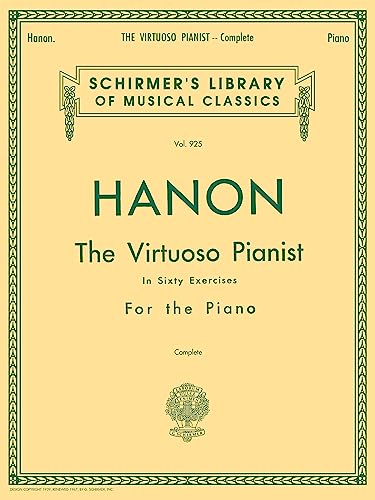
Hanon: The Virtuoso Pianist : The essential foundation for finger strength and independence.
 Kindle editionRead on Kindle ›
As an Amazon Associate I earn from qualifying purchases.
The Art of Piano Playing by Heinrich Neuhaus: The “Bible” of piano technique for those looking for authoritative, expert advice.
As an Amazon Associate I earn from qualifying purchases.
Fundamentals of Piano Practice by Chuan C. Chang: A deep dive into the mechanics of touch and memory.
 Kindle editionRead on Kindle ›
As an Amazon Associate I earn from qualifying purchases.
Conclusion
Voicing might seem like a subtle skill, but its impact is profound. It separates mechanical playing from artistry. It’s what allows pianists to move an audience, to draw them into the music, to reveal layers of meaning that aren’t written on the page.
Understanding what is piano voicing and why it matters isn’t just about improving technique. It’s about finding your voice as a musician, and using it to communicate with honesty, clarity, and emotion.
Voicing is the ultimate bridge between the physical act of playing and the metaphysical act of communicating. It is where your “musical personality” resides. Two pianists can play the same piece on the same piano, but their voicing choices will make them sound like two completely different artists.
By mastering the technical control of your fingers and understanding the harmonic hierarchy of your repertoire, you stop being a “player” and start being a “storyteller.”
Ready to elevate your sound? Start your next practice session by “ghosting” your left-hand chords. Listen to the space you create for your melody to breathe. That space is where the magic happens.
How do I know which note to voice in a chord?
In 90% of Western music, the “Soprano” or the highest note carries the melody. Start there. In Jazz, you might voice the “Extensions” (the 9th or 13th) to highlight the specific color of the harmony.
Does voicing affect the rhythm?
It shouldn’t, but it often does. Beginners often play the loud note slightly before the soft notes. Practice with a metronome to ensure that despite the difference in volume, all notes of the chord land at the exact same millisecond.
Is voicing the same as dynamics?
No. Dynamics refer to the overall volume of a passage (Piano, Forte). Voicing refers to the relative volume of notes played at the same time. You can have a “Voiced” chord within a pianissimo passage.
Can a beginner learn voicing?
Absolutely. In fact, learning voicing early prevents the development of “flat” playing habits. Start with simple two-note intervals and try to make one louder than the other.
Can I achieve “Authority” on a digital piano?
Authority comes from the intent and the velocity control. While a concert grand offers more overtones to work with, practicing the “Melody/Accompaniment” ratio is possible on any weighted-key instrument. However, for the “Psychoacoustic Effect,” a high-quality VST (Virtual Studio Technology) or an acoustic piano is preferred to hear the resonance of the overtones.
Is “Voicing” the same as “Balance”?
They are closely related. “Balance” is the general term for how the left and right hands interact. “Voicing” is more surgical, it refers to the balance of individual notes, often within the same hand.
Why does my melody sound “harsh” when I try to voice it?
This is a common mistake. Authority isn’t about striking the key harder with a stiff finger; it’s about “weight transfer.” You must use the weight of your forearm to “sink” into the melody note while keeping your wrist flexible. If you “hit” from the knuckle, the sound will be brittle rather than “singing.”
Why does my hand hurt when I try to voice the 5th finger?
Pain usually indicates tension masking. You are likely trying to “force” the 5th finger using muscular tension in the forearm (the extensors) rather than using arm weight. If you feel a “burn” in your forearm, stop. Shake out your hand and focus on “dropping” the weight from your elbow instead of “pushing” from your wrist.
Can I voice with “flat” fingers?
While some French schools (Debussy/Ravel) utilize flatter fingers for a “velvet” tone, voicing is much harder with flat fingers because the structural arch is gone. For most repertoire, a curved “bridge” in the hand is necessary to channel weight efficiently into the fingertip.
Does the “Size” of my hand matter for voicing?
Not for the mechanics, but for the reach. If you have small hands, you will need to use more Rotational Momentum. Instead of a static “lean,” you use a quick “flick” of the wrist (like turning a doorknob) to throw the weight onto the 5th finger.