Mastering the piano involves far more than simply pressing the correct keys at the right time. The true essence of musicality lies in articulation, the specific way in which notes are performed and connected. Among the various techniques available to a pianist, Legato and Staccato represent the two primary pillars of expression. Understanding the technical, physical, and emotional differences between these two styles is essential for any musician aiming to move beyond mechanical playing and into the realm of artistry.
In this comprehensive guide, you will learn the precise definitions of legato and staccato, the mechanical physics of the piano that allow these sounds to exist, the specific notation symbols used by composers, and advanced practice techniques to master your “touch” on the keyboard.
Legato and staccato represent the two primary pillars of musical articulation on the piano. Legato is an Italian term meaning “tied together,” indicating a style where notes are played smoothly and connectedly, with no audible gaps between them. Physically, this is achieved through weight transfer and overlapping finger movements that keep the piano’s dampers off the strings until the next note is sounded. Staccato, meaning “detached,” requires the notes to be significantly shortened and separated by brief silences. This is produced by a quick release of the key, allowing the damper to return immediately to the string to silence the vibration, creating a light, bouncy, or percussive effect.
1. Defining The Vocabulary
In the pedagogical tradition, articulation is taught as the musical equivalent of oratory. Just as a speaker uses varied inflections and pauses to emphasize ideas, a pianist employs a spectrum of touches. While legato and staccato are the most common, several other techniques reside in the intervening space, each with specific notation and mechanical requirements.
Primary Articulation Varieties
| Articulation Type | Notation Symbol | Physical Action | Audible Result |
| Legato | Curved slur line | Weight transfer; overlapping keys | Seamless, singing line |
| Staccato | Single dot above/below note | Quick release; wrist or finger bounce | Crisp, detached, rhythmic |
| Staccatissimo | Wedge or spike symbol | Extremely rapid release | Very short, sharp, “spiky” |
| Portato | Slur over staccato dots | Weighted, heavy release | “Carried” notes; separated but soft |
| Tenuto | Horizontal line | Holding for full value or extra weight | Sustained, emphasized, significant |
| Leggiero | Textual instruction (“lightly”) | Close to keys; light, delicate touch | Clear, pearly, detached but fluid |
The choice between these articulations often depends on the historical era of the composition. For instance, in the Baroque period, “ordinary legato” was often played as a slight non-legato, whereas the Romantic era favored a lush “over-legato” where sounds were intentionally blurred to create a rich atmosphere.
2. The Physics of Sound: How the Piano Action Produces Articulation
The piano is classified as a percussive instrument because the sound is initiated by a hammer striking a string. However, the pianist’s control over articulation is a result of a highly sophisticated mechanical assembly known as the action.
The Kinematic Chain of a Keystroke
When a pianist depresses a key, a complex series of events occurs within the instrument. The key acts as a lever, balancing on a balance rail. As the front of the key descends, the back rises, lifting a “capstan” which in turn pushes a “wippen”. This wippen engages an L-shaped part called the “jack,” which thrusts the hammer toward the string.
- Escapement (Let-Off): A critical component of the action is the “let-off” button. Just before the hammer strikes the string, the jack is tripped, allowing the hammer to fly the remaining distance on its own momentum. This “escapement” ensures that the hammer bounces off the string immediately, even if the key is held down, allowing the string to vibrate freely.
- Damper Interaction: Simultaneously with the hammer strike, the key mechanism lifts a felt “damper” off the corresponding strings.
- In Legato: The finger remains on the key, keeping the damper hovering above the strings. This allows the sound to sustain for its full duration or until the next note is struck.
- In Staccato: The pianist releases the key rapidly. This causes the damper to fall back onto the string instantly, absorbing the vibration and terminating the sound abruptly.
- The Backcheck: After the hammer rebounds from the string, it is caught by the “backcheck.” This prevents the hammer from falling all the way back to its resting position, facilitating rapid repetition of notes, which is vital for brilliant staccato passages.
Upright vs. Grand Action Articulation
The physical orientation of the action affects the precision of articulation. In a grand piano, the action lies flat, and gravity is used to reset the hammers and dampers. This natural reset, often enhanced by a “double escapement” mechanism, allows for faster repetition and more sensitive control over staccato and legato nuances. Upright pianos, with their vertical soundboards, rely on a combination of gravity and springs to return the components, which can result in a slightly less responsive touch for rapid, delicate articulation.
3. The Legato Touch
To the listener, a beautiful legato sounds like a continuous stream of sound. To the performer, it is a calculated illusion achieved through meticulous control of arm weight and finger timing.
The Mechanics of Weight Transfer
True legato playing is rarely a matter of finger strength alone; it is the result of transferring the weight of the arm from one finger to the next.
- The “Walking” Principle: One should imagine the fingers “walking” on the keys. Just as a person does not lift the trailing foot until the leading foot is firmly planted, a pianist does not release the current note until the succeeding note has reached the bottom of its travel.
- Relaxation Response: Tension is the primary enemy of legato. If the pianist maintains excessive pressure against the keybed after the note has sounded, the hand becomes rigid, and the transition of weight becomes “bumpy”. Immediate relaxation after the initial strike, maintaining just enough balance to keep the key depressed—is essential for a singing tone.
Advanced Legato: Finger Substitution and Overlap
In complex textures, such as the polyphonic works of Bach or the dense chords of Brahms, the pianist often encounters physical stretches that make standard fingering impossible.
- Finger Substitution: This involves silently changing fingers on a key while it remains depressed. For example, a pianist may strike a note with the 5th finger and then slide the 2nd finger onto the key to hold the damper open, freeing the 5th finger to reach for a distant melody note.
- Over-Legato (Finger Legato): In Romantic repertoire, specifically the Nocturnes of Chopin, a pianist may use an overlapping touch. By holding the first note slightly past the onset of the second, the acoustic decay of the first note blends into the attack of the second, creating a particularly “gluey” and rich connection.
4. Varieties of Staccato
While legato is a foundational goal, staccato is not a single technique but a collection of physical movements dictated by musical context. The source of the “bounce” changes depending on the tempo and dynamic requirements of the score.
Finger Staccato (The Scratch Technique)
For rapid, light passagework, such as the sixteenth-note runs in a Mozart or Haydn sonata, the wrist and arm are too heavy to move at the required speed.
- Mechanism: The fingers work independently from the knuckles. The fingertip makes a swift “scratching” or flicking motion inward toward the palm, plucking the key and releasing it instantly.
- Pearly Articulation: This technique produces a “harpsichord-like” delineation where every note is perfectly distinct, making the passage sound faster and clearer than if it were played legato.
Wrist Staccato (The Hinge Technique)
Wrist staccato is the standard approach for detached chords, octaves, and intervals.
- Mechanism: The wrist acts as a flexible hinge, allowing the hand to “dribble” off the keys like a basketball. The hand lands on the key with the weight of the forearm and rebounds naturally off the keybed.
- Efficiency: By using the natural rebound of the key and action, the pianist avoids the fatigue associated with “picking up” the fingers individually.
Arm Staccato (The Weight Drop)
For powerful, heavy, or fortissimo staccato notes, the entire weight of the arm is utilized.
- Mechanism: The pianist initiates a free drop of the arm from the shoulder or elbow, allowing the mass to strike the key before springing back on the rebound.
- Sound Quality: This provides a thick, percussive sonority that is essential for dramatic orchestral effects in late Romantic and 20th-century music.
5. Recognizing Symbols and Interpretations
Composers provide instructions for articulation through a system of dots, lines, and curves. However, the interpretation of these marks is often dependent on the “musical grammar” of the period in which they were written.
The Slur vs. The Phrase Mark
A curved line connecting notes of different pitches can serve two functions:
- Technical Slur: Indicates that the specific notes under the line must be played legato. For wind players, this means not “tonguing” between notes; for string players, it means playing them in a single bow stroke; and for pianists, it means connecting the fingers.
- Phrase Mark: Indicates a complete musical thought or sentence. While it often implies a general legato approach, it does not preclude the use of other articulations within the phrase.
Comparative Table of Staccato Symbols
| Symbol | Italian Term | Meaning/Interpretation |
. | Staccato | Shortened duration; detached from neighbors |
▼ | Staccatissimo | Extremely short and sharp; “wedge” touch |
_ | Tenuto | Full length; often indicates a “weighted” touch |
| Slur over dots | Portato | Separated but long; “half-staccato” |
6. Historical Evolution: From Oratory to Atmosphere
The physical approach to the piano has changed drastically as the instrument itself evolved from the delicate fortepiano of the 18th century to the powerful concert grand of today.
The Baroque and Classical Tradition
In the era of J.S. Bach and Mozart, the ideal of articulation was clarity.
- Speaking Touch: Articulation was compared to speech. Just as vowels are held and consonants provide the “stop,” performers used varied finger releases to highlight the rhythmic “skeleton” of the music.
- Non-Legato Default: In Baroque music, unslurred notes were traditionally played with a slight separation (non-legato). This allowed the intricate counterpoint—multiple independent voices—to be heard clearly by the listener.
The Romantic Revolution
With the 19th-century focus on emotion and atmosphere, the “long, singing line” became the supreme goal.
- Cantabile Style: Composers like Chopin and Liszt sought to make the piano “sing” like a human voice. This led to the development of the “cantabile” touch, characterized by a deep sinking into the keys and a heavy reliance on the sustain pedal to blur the percussive attack of the hammers.
- Unity and Forward Sweep: Romantic phrase marks are often very long, indicating a prevailing legato and a sense of forward momentum that unifies large sections of music.
7. The Psychological Impact: How Articulation Affects the Listener
Scientific studies in music psychology have explored how note separation influences the emotional perception of a melody.
Perceptual Cohesion and Preference
Research indicates that listeners perceive legato melodies as more “cohesive” than staccato ones.
- Temporal Proximity: When notes are proximal in time and sound, the brain’s auditory processing centers group them into a single “stream.” This is known as “perceptual fluency”, the ease with which stimulus is processed, and is often correlated with a listener’s preference for legato in lyrical passages.
- The Emotional Spectrum:
- Legato: Consistently rated as calmer, gentler, and more reflective. In minor modes, legato enhances feelings of sadness or fear.
- Staccato: Perceived as having greater tension, energy, and excitement. In major modes, staccato enhances feelings of happiness and playfulness, whereas in minor modes, it can sound surprising or even amusing.
The Neuroscience of Touch and Timbre
A breakthrough study confirmed that a pianist’s touch can directly alter the timbre (tone color) of a piano note mid-performance. High-speed sensors revealed that subtle differences in key movement, how fast the key reaches the bottom and how the finger interacts with the key top, align with the “brightness” or “velvety” quality that listeners perceive. This confirms that articulation is not just a metaphor for duration, but a scientifically grounded skill rooted in precise motor control.
8. Technical Analysis of Articulation in Masterpieces
Examining iconic works illustrates how legato and staccato are used to build structure and character.
Chopin: Nocturne in E-flat Major, Op. 9, No. 2
This piece is widely considered a masterpiece of legato phrasing.
- The Singing Line: The right-hand melody mimics the bel canto style of Italian opera. To achieve this, the pianist must use a weighted legato touch, ensuring the melody “sings” over the left-hand accompaniment.
- Symmetry and Phrasing: The work is built on balanced 4-bar phrases that end in perfect cadences (V7 to I), providing a satisfying “end-of-sentence” feeling to the listener.
- Ornamentation: Chopin’s use of chromatic passing notes and ornaments requires a “round” and nuanced touch. A “square” or overly metronomic performance of these articulations can make the piece sound prim and detached rather than expressive and Romantic.
Mozart: Rondo Alla Turca (Turkish March)
Mozart’s famous rondo is a study in the rhythmic use of staccato.
- Percussive Intent: Mozart was imitating the percussion-heavy music of Turkish military bands. The pianist must use a crisp, percussive articulation, particularly in the rapid sixteenth-note runs and the repeated “triangle-like” ornaments.
- Coordination Challenges: The main technical hurdle is maintaining an even staccato in the right-hand runs while the left hand provides a steady, march-like accompaniment. Performers are encouraged to use curved, strong fingers to ensure every note “pops” individually.
9. The Role of Pedaling in Articulation
While the fingers provide the primary articulation, the piano’s three pedals offer essential secondary control.
The Damper (Sustain) Pedal
This is the most frequently used pedal. When depressed, it lifts all the dampers off the strings simultaneously.
- Legato Support: The pedal is often used to connect notes that are physically impossible to reach with the fingers alone, such as large leaps or rapid arpeggios.
- Resonance: Holding the dampers open allows the strings to vibrate sympathetically, creating a richer, fuller “orchestral” sound.
The Soft (Una Corda) Pedal
On a grand piano, depressing the left pedal shifts the entire action to the right, causing the hammers to strike only two strings instead of three.
- Timbral Change: This not only reduces volume but also changes the tone color, making it “velvety” or “thin.” This is an invaluable tool for delicate pianissimo legato passages where a “bell-like” sonority is required.
The Sostenuto Pedal
The middle pedal, present on most concert grand pianos, sustains only the notes that are being held down at the exact moment the pedal is depressed.
- Selective Sustain: This allows a pianist to hold a long bass note (creating a “pedal point”) while the hands move freely to play articulate staccato or legato phrases in the higher registers.
10. Practical Exercises for Developing Superior Touch
Mastering articulation requires the isolation of physical movements to ensure they become automatic.
Legato Development: The Weight Transfer Drill
- Initial Contact: Place the 3rd finger on Middle C. Drop the arm weight into the key, ensuring the wrist is flexible and sinks slightly below the knuckles.
- The Transfer: Slowly depress the D key with the 2nd finger. As the 2nd finger reaches the bottom of the keybed, gradually release the weight from the 3rd finger. Imagine the weight “pouring” from one finger to another like water between cups.
- Expansion: Repeat this process across a 5-finger scale (C-D-E-F-G), focusing on the acoustic connection. There should be no “hiccup” or silence between the notes.
Staccato Development: The Woodpecker Tap
- Wrist Alignment: Keep the wrist level with the forearm. Avoid letting it collapse downward or arch too high, as both extremes create tension.
- The Bounce: Using a light “hand-bounce” motion, tap a single key repeatedly with the 2nd finger. The hand should feel like it is “dribbling” off the keybed. The goal is a light, hollow, and very short sound.
- The Finger-Snap: To develop finger staccato, place the hand in a rounded position. Perform a quick, sharp “pulling” motion toward the palm with the index finger, scratching the surface of the key. The finger should immediately resume its natural position.
Coordination: The “Contrary Motion” Challenge
Pianists often struggle when one hand must play legato while the other plays staccato.
- Exercise: Play a C Major scale with both hands in contrary motion (Right hand ascending, Left hand descending).
- Layering: Play the Right hand legato and the Left hand staccato. This is significantly more difficult than it seems, as the brain naturally wants the hands to mimic each other’s touch.
- Switching: Once mastered, reverse the articulations. This builds the neurological pathways necessary for independent phrasing in complex repertoire.
11. Common Pitfalls and Professional Solutions
Even advanced students can fall into “articulation traps” that hinder their musical progress.
The “Pedal Crutch”
Problem: Relying on the sustain pedal to hide a choppy or disconnected finger legato.
Solution: Practice legato passages without the pedal. If the connection sounds “bumpy” or has gaps when played purely with the fingers, the weight transfer technique is flawed. The pedal should be the “icing on the cake,” adding resonance to an already successful finger legato.
The “Locked Wrist”
Problem: Playing staccato with a stiff wrist, leading to a harsh sound and forearm pain.
Solution: Imagine palming a bubble or a small ball. This keeps the hand in a rounded, natural curve and prevents the wrist from “locking” low. Periodic “shake-outs” during practice sessions help release built-up tension.
Uneven Release
Problem: In rapid passagework, the notes are sounded correctly, but the releases are at varied durations, leading to a “messy” sound.
Solution: Practice with a metronome at a very slow tempo, focusing exclusively on the moment the finger leaves the key. All staccato notes in a sequence should have an identical duration of silence between them.
Recommended Gear
To master these subtle articulations, having the right equipment and resources is vital. Here are professional recommendations:
Sennheiser HD 490 PRO Headphones: If practicing on a digital piano, these studio-quality headphones allow you to hear the subtle “decay” and “release” of notes, which is crucial for refining your touch.
As an Amazon Associate I earn from qualifying purchases.
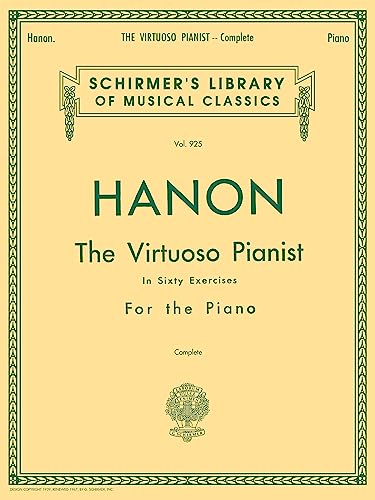
Hanon: The Virtuoso Pianist (Complete Edition): The gold standard for developing finger independence and the specific muscle groups required for both legato and staccato.
 Kindle editionRead on Kindle ›
As an Amazon Associate I earn from qualifying purchases.
Korg MA-2 Metronome: Essential for ensuring your staccato passages remain rhythmically precise and don’t “rush.”
As an Amazon Associate I earn from qualifying purchases.
Adjustable Piano Bench with Cushion: Proper posture is the secret to weight transfer in legato. A firm, adjustable bench allows you to sit at the correct height for optimal arm weight.
As an Amazon Associate I earn from qualifying purchases.
Conclusion
The distinction between legato and staccato is the foundation upon which all piano interpretation is built. While legato provides the emotional “glue” that allows melodies to soar and resonate with the human heart, staccato provides the rhythmic “spark” that gives music its life, energy, and wit.
True mastery involves more than just knowing these definitions; it requires a physical sensitivity to the piano’s mechanism. By developing a “quiet” hand for legato and a “bouncy” wrist for staccato, you unlock the ability to tell stories through your instrument. As you practice, always ask yourself: What is the character of this passage? Should it flow like a river, or tap like rain? The answer will guide your articulation and transform your playing from a series of notes into a work of art.
Recommended Action: Take a piece you are currently learning and intentionally reverse the articulations. Play the legato sections staccato and vice-versa. This “reverse-practice” will highlight exactly where your technical gaps lie and give you a much deeper control over your musical “touch.”
What is the main difference between legato and staccato?
Legato means the notes are smoothly connected with no audible gaps, achieved through weight transfer and overlapping touch. Staccato means the notes are shortened and detached, separated by brief periods of silence, usually produced by a bouncing wrist or flicking finger motion.
Can I play staccato with the sustain pedal down?
Technically, no. If the sustain pedal is down, the dampers are lifted, and the strings will continue to vibrate even after you release the key. This negates the “short” sound of the staccato. If a score asks for staccato while pedaling, it usually implies a rhythmic “accent” or a specific “detached” touch rather than actual silence.
Can I play staccato and legato at the same time?
Yes. This is a common requirement in intermediate and advanced repertoire (such as the works of Bach). It requires “hand independence,” where the right hand might play a flowing legato melody while the left hand provides a crisp, staccato bass line.
Is “Non-Legato” the same as Staccato?
No. Non-legato (sometimes called detache) is a middle ground. The notes are not “glued” together like legato, but they aren’t as short and “bouncy” as staccato. It is a neutral, clear touch common in Baroque music.
How do I stop my legato from sounding “muddy”?
Muddiness usually comes from holding notes too long (excessive overlap) or poor pedaling. Practice your legato without the pedal first. Ensure that your finger releases the previous note the instant the new one sounds. If you can’t hear the melody clearly, you are likely “smearing” the notes.
Why does my staccato sound weak or thin?
Weak staccato often happens when the pianist tries to play “from the air.” Instead, keep your finger close to the key. Use the “wrist-bounce” technique to add the weight of the hand to the note, ensuring it has “body” and “ping” even though it is short.
How do I know which finger technique to use for staccato?
Context is key. For very fast scales or runs, use “finger staccato” (scratching the keys). For chords, octaves, or slower detached notes, use “wrist staccato” (the hinge bounce). For heavy, loud notes, use “arm staccato” (weight drop).
Why is a relaxed wrist so important for articulation?
A locked wrist prevents the natural transfer of arm weight in legato and the rebounding bounce necessary for staccato. Chronic tension in the wrist leads to a harsh, mechanical sound and increases the risk of repetitive strain injuries like carpal tunnel.