As an Amazon Associate, PianoMode earns from qualifying purchases. Recommendations are made on their merits; the price you pay is the same.
Standing before a piano, the transition from reading sheet music to creating a spontaneous melody often feels like a leap into the unknown. For many classically trained pianists or adult beginners, the “blank page” of an empty measure is more intimidating than the most complex Rachmaninoff concerto. However, improvisation is not a mystical gift reserved for the few; it is a structured language built upon the foundations of music theory, active listening, and rhythmic discipline. By deconstructing the harmonic frameworks that underpin modern music, such as the I–IV–V, the ii–V–I, and the 12-bar blues, any musician can learn to “speak” through their fingertips.
Piano improvisation is the act of simultaneous composition and performance, where a musician creates melodic and rhythmic lines in real-time over a predetermined harmonic structure. It relies on a deep understanding of chord-scale relationships, the ability to internalize intervals, and the technical facility to translate “inner ear” ideas into physical movement. At its core, it is the musical equivalent of a conversation: it requires a vocabulary (scales), a grammar (theory), and a sense of timing (rhythm).
In this guide, you will learn how to navigate the keyboard with confidence, moving from basic triads to sophisticated jazz phrasing. We will explore the “target note” methodology, the essential scales for every genre, and the pedagogical insights of masters like Mark Levine and Hal Crook.
1. Understanding Chord Tones and Guide Tones
Before a pianist can weave intricate melodies, they must understand the skeleton of the music: the chords. Improvisation is essentially the art of “playing the changes,” which means your melodic choices must acknowledge and reflect the harmony occurring in the left hand or the rhythm section.
Defining Chord Tones: The Structural Anatomy of Harmony
A chord tone is a primary pitch that constitutes the vertical structure of a chord, typically built by stacking intervals of thirds from a foundational root. In the hierarchy of music theory, chord tones (1, 3, 5, and 7) are “consonant” or “inside” notes, providing the essential harmonic DNA that distinguishes one chord from another.
To master the piano, you must view these not as static dots, but as functional components with specific roles:
- The Root (The Anchor): The root is the “home base” or the identity of the chord. It provides the foundational frequency upon which all other intervals are measured. In a solo context, the root provides the strongest sense of resolution.
- The Third (The Emotional Pivot): This is the most important note for determining tonality.
- Major 3rd: 4 semitones above the root (e.g., C to E). It sounds bright and stable.
- Minor 3rd: 3 semitones above the root (e.g., C to Eb). It sounds somber or “blue.”
- Technical Detail: Changing just the third transforms the entire emotional landscape of a piece without changing the root.
- The Fifth (The Acoustic Support): Typically a Perfect 5th (7 semitones), this note reinforces the root’s overtones. While it provides “thickness” and volume, it is often considered the least descriptive tone because it remains the same in both major and minor triads. In advanced jazz “shell voicings,” the 5th is frequently omitted to reduce clutter.
- The Seventh (The Narrative Driver): The 7th adds a fourth layer that introduces “function.”
- Major 7th: Adds a lush, “dreamy” quality.
- Dominant 7th (Minor 7th interval over a Major Triad): Creates the “tritone” tension that demands resolution to the tonic (I) chord.
- Minor 7th: Reinforces the “darker” Dorian or Aeolian textures.
The Power of Guide Tones: The Navigational Compass
Guide tones are the 3rd and the 7th of a chord, serving as the essential “skeleton” that defines the chord’s quality and its functional direction within a progression. While the root and fifth provide stability, the guide tones carry the harmonic “flavor” and dictate how one chord transitions into the next through the smallest possible intervals (voice leading).
In professional piano improvisation and arranging, guide tones are used for three critical reasons:
A. Harmonic Definition
If you play only the 3rd and 7th of a chord (a “shell”), the listener’s brain will automatically fill in the root and fifth. For example, playing E and Bb over a C bass note immediately signals a C7 (Dominant) chord. This allows the pianist to use the other fingers for “extensions” (9ths, 11ths, 13ths) or melodic runs without losing the harmonic clarity.
B. Efficient Voice Leading
Guide tones are the “magnets” of music. In a standard ii-V-I progression (e.g., Dm7 – G7 – Cmaj7), the guide tones move by the shortest distance:
- The 7th of one chord typically resolves down a half-step to become the 3rd of the next chord.
- Example: In Dm7, the 7th is C. When moving to G7, that C drops just a half-step to B (the 3rd of G).
- This creates a “smooth” auditory experience, as the listener hears a logical, linear connection rather than a series of disjointed leaps.
C. Targeting and “Playing the Changes”
For improvisers, guide tones act as Target Notes. A professional solo often weaves through non-chord tones (tensions) but “lands” or “resolves” on a guide tone exactly when the chord changes.
- Authority Tip: To practice this, play a standard 12-bar blues and try to play only the 3rd and 7th of each chord in the right hand. Once you can hear these “guide tone lines,” your melodies will naturally sound more “inside” the harmony.
[Image showing the voice leading of guide tones in a ii-V-I progression]
2. Essential Harmonic Progressions for Improvisation
A harmonic progression is a succession of musical chords that establishes a tonal center and creates a sense of tension and resolution. In improvisation, these progressions provide the “road map” for the soloist. Understanding the functional relationship between these chords, how a “dominant” chord pulls toward a “tonic”, allows the pianist to craft melodies that sound intentional rather than accidental.
The I–IV–V Progression: The Core of Western Music
The I–IV–V progression is a sequence built on the first, fourth, and fifth degrees of a major scale. It is the primary harmonic engine for folk, rock, pop, and blues. Because all three chords are major triads and originate from the same parent scale, this progression offers a stable and consonant environment for beginner improvisers.
Functional Analysis of I–IV–V
Each chord in this sequence serves a specific emotional and structural purpose:
- The Tonic (I): The point of ultimate rest and “home.” All melodic lines aim to eventually resolve here.
- The Subdominant (IV): Provides a sense of departure. It moves away from the tonic but lacks the intense “pull” of the dominant.
- The Dominant (V or V7): The “Intervalles harmoniques” within this chord (specifically the leading tone) create significant tension that demands resolution back to the tonic.
Improvisation Strategies for I–IV–V
For example, emphasizing the note C over the C chord, F over the F chord, and B♭ (the 7th of G7) over the G chord will make your solo clearly “lock in” with the harmony. Good practice: play simple arpeggios (C–E–G, then F–A–C, then G–B♭–D) and try targeting those chord tones as you transition between chords
For a student practicing in the key of C Major (C – F – G), the following scale choices are recommended:
| Chord | Function | Scale Suggestion | Technical Rationale |
| I (C Major) | Tonic | C Major Pentatonic | Avoids the “half-step” tension for a clean, open sound. |
| IV (F Major) | Subdominant | F Lydian | The #4 (B natural) maintains the C Major key signature perfectly. |
| V (G7) | Dominant | G Mixolydian | The b7 (F) creates the necessary “Dominant” tension. |
The ii–V–I Progression: The Pillar of Jazz Harmony
The ii–V–I progression is a cadence consisting of a minor seventh chord (ii), a dominant seventh chord (V), and a major seventh chord (I). It is widely considered the most vital progression in the jazz repertoire. Unlike the I–IV–V, the ii–V–I utilizes “voice leading” more strictly, where notes move by the smallest possible intervals to create a smooth, sophisticated transition.
So you can start by thinking in one key. For example, improvise with the C major scale notes: D–E–F–G–A–B–C over all three chords, but emphasize the notes that spell each chord. A great habit is to move to the 3rd of each chord when it arrives: for Dm7 the 3rd is F, for G7 it’s B, and for Cmaj7 it’s E. In fact, as jazz educator Jens Larsen explains, “The strongest note for [hearing] the change is the 3rd” of each chord.
A. The “Target Note” Methodology in ii–V–I
To master this progression, the improviser must focus on Guide Tones (the 3rd and 7th of each chord). The 7th of one chord often resolves downward by a half-step to become the 3rd of the next.
- On Dm7 (ii): Focus on the F (3rd) and C (7th).
- On G7 (V): The C resolves to B (the 3rd of G7).
- On Cmaj7 (I): The F (from the previous G7) resolves to E (the 3rd of Cmaj7).
Hal Crook calls this method a “target approach”: you choose a target tone (like the 3rd of the next chord) and work your line toward it. Over Dm7, target F (its 3rd) on a strong beat before the chord changes, then approach B on G7, then E on Cmaj7. Later, you can add colour tones (like the 7th of each chord – C on Dm7, F on G7, B on Cmaj7) on weaker beats for tension. For a beginner-friendly start, keep all solos diatonic (within the C major scale) and focus on those chord tones. As you get comfortable, explore minor pentatonic (D minor pent over Dm7, G minor pent over G7, C major pent over Cmaj7) for bluesy lines.
B. Modal Application
In a jazz context, the pianist should shift between modes to highlight the “color” of each change:
- Dorian (ii): Over the Dm7, the Dorian mode provides a minor sound with a “bright” major 6th.
- Mixolydian (V): Over the G7, this mode emphasizes the dominant function.
- Ionian (I): The standard major scale for the final resolution.
The 12-Bar Blues: A Universal Language
The 12-bar blues is a cyclical structure consisting of three four-bar phrases, typically using dominant seventh chords on the I, IV, and V degrees. This framework is a “Universal Language” because it allows musicians who have never met to “jam” together instantly using a shared vocabulary of “Blue Notes” and “Polyphonie.”
In fact, Dan Haerle points out that certain scales, including the blues scale, are marked as having “no wrong notes” when used over their chords. That means you can play C blues scale freely over the blues progression and it will sound right (especially if you target chord tones on strong beats). In practice, try a C blues lick (for instance C, E♭, F, F#, G, B♭ on C7) then shift the same shape up to F (so F, A♭, B♭, B, C, E♭ over F7) and up to G (G, B♭, C, C#, D, F on G7). Notice how the patterns connect: for example, landing on B♭ (the flat 7) of C7 when the chord hits G7 gives a strong pull to F (the 3rd of G7), outlining the change.
A. Standard 12-Bar Structure (in C)
- Bars 1-4: C7 (The Tonic/Statement)
- Bars 5-6: F7 (The Subdominant/Departure)
- Bars 7-8: C7 (Return to Tonic)
- Bars 9-10: G7 to F7 (The Turnaround/Tension)
- Bars 11-12: C7 (Resolution or Turnaround)
B. The Blues Scale and Dissonance
The primary tool for improvising over this structure is the Blues Scale (1, b3, 4, #4, 5, b7).
- The #4 (Blue Note): This note creates a “gritty” dissonance. It is rarely held but used as a “sliding” tone to resolve into the perfect 4th or 5th.
- Rhythmic Phrasing: The blues relies heavily on “Call and Response.” A pianist might play a short melodic “question” in the first two bars and “answer” it in the next two.
Another approach: use major pentatonic scales on the I and IV chords. For instance, C major pentatonic (C–D–E–G–A) on C7, F major pentatonic on F7, and maybe G minor pentatonic on G7 for variety. These “happy” pentatonic scales overlay well on dominants and let you emphasize the “pretty notes” (3rds and 9ths). One of Jamey Aebersold’s tips is to “emphasize the thirds and sevenths of scales in your soloing” – these really spell out each chord. For example, hit E (the 3rd) and B♭ (the 7th) of C7 on strong beats. The blues scale’s blue note (F# on C7) can be a passing tone or on an off-beat for color. Keep the rhythm swinging by playing some lines slightly ahead or behind the beat (the shuffle feel), and remember to stop at the end: leave space on the final C7 to give a sense of resolution.
3. Scale Choices: Major, Pentatonic, Blues, and Modes
In the architecture of a piano solo, if chords are the structural beams, scales are the paint and texture that define the room’s atmosphere. A scale is a graduated sequence of notes, tones, or intervals divided by whole steps and half steps, used as the melodic basis for a piece of music. For the improviser, selecting a scale is not merely a technical decision but an emotional one. By mapping specific scales to specific harmonic functions, a pianist can shift a solo from “safe” and consonant to “outside” and tension-filled.
- Major Scale (Ionian) – Use the major scale of the chord’s root on major chords (e.g. C major scale over Cmaj7 or C major). This gives a simple, consonant sound.
- Minor Pentatonic – The 5-note minor pentatonic (1, ♭3, 4, 5, ♭7) works well on many chords and is easy to learn. For example, over C major, try C minor pentatonic (C–E♭–F–G–B♭) for a bluesy sound. Over Am7, use A minor pentatonic. Pentatonics avoid half steps, so there are “no wrong notes” in a broad sense.
- Major Pentatonic – The major pentatonic (1, 2, 3, 5, 6) is very safe on major chords. For instance, C major pent (C–D–E–G–A) over Cmaj7, or F major pent over Fmaj7. These give a sweet, open sound.
- Dorian Mode – For a minor chord (ii or iv chord, e.g. Dm7 in C major), use the Dorian mode (which is like a natural minor with a raised 6th). Example: D Dorian (D–E–F–G–A–B–C) over Dm7.
- Mixolydian Mode – For dominant seventh chords (V7 chords like G7 in C major), try Mixolydian (a major scale with a flat 7). Example: G Mixolydian (G–A–B–C–D–E–F) over G7.
- Blues Scale – Take a minor pentatonic and add a “blue note” (#4 or ♭5). E.g. C blues scale = C–E♭–F–F♯–G–B♭. Great for blues progressions and beyond – Haerle notes it has no dissonant notes when used correctly.
- Other Modes – Once comfortable, experiment with Lydian (major with #4, for a floating sound on IV or I chords), Aeolian (natural minor) on minor i chords, or altered scales over V7 for tension (these come later in learning).
The Major Scale (Ionian Mode): The Foundation of Consonance
The Major Scale, or Ionian Mode, is a heptatonic (seven-note) scale defined by the interval pattern of W-W-H-W-W-W-H (Whole-Whole-Half-Whole-Whole-Whole-Half). This scale is the “Gold Standard” of Western music theory and is primarily used to evoke feelings of triumph, clarity, and stability.
Application and Harmonic Fit
The Ionian mode is best applied over Major triads and Major 7th chords. When improvising over a Cmaj7 (C-E-G-B), the C Major scale provides every chord tone plus the 9th (D), 11th (F), and 13th (A) as color tones.
- Expert Note: Educators like Mark Feezell emphasize the importance of the “Leading Tone” (the 7th degree) in this scale. In C Major, the B natural acts as a powerful magnetic force pulling the listener back to the tonic C.
The Pentatonic Scales: The Improviser’s Safety Net
Pentatonic scales are five-note scales that remove the most dissonant intervals (the 4th and 7th in major, or the 2nd and 6th in minor), creating a “gap” that prevents harmonic clashing. These scales are frequently referred to as the “safety net” because they lack the “half-step” tensions that can sound “wrong” if played on the wrong beat.
A. Major Pentatonic (1-2-3-5-6)
The Major Pentatonic scale (e.g., C-D-E-G-A) is characterized by its open, airy, and “folksy” quality.
- Musical Context: It is the staple of Country, Gospel, and Bluegrass piano.
- Theoretical Advantage: By removing the 4th and 7th degrees, you eliminate the “tritone” (the interval of 3 whole steps), making the scale exceptionally consonant over major tonalities.
B. Minor Pentatonic (1-b3-4-5-b7)
The Minor Pentatonic scale (e.g., A-C-D-E-G) is the foundational “go-to” for Rock, Blues, and Funk.
- Emotional Impact: It provides a darker, more aggressive edge compared to its major counterpart.
- The “Avoid Note” Solution: In jazz and rock, the natural 4th can often sound “clashy” against a major 3rd. The minor pentatonic allows the soloist to navigate these waters with “soulful” dissonance that feels intentional.
The Modes of the Major Scale: Sophisticated Textures
For more sophisticated improvisational textures, pianists utilize Modes. A mode is simply the major scale started and ended on a different degree of the parent scale. This reshuffles the half-steps, completely changing the “flavor” of the melody.
A. The Dorian Mode (ii)
The Dorian Mode is the second mode of the major scale, possessing a minor quality but with a distinctive “bright” major 6th. – Formula: 1 – 2 – b3 – 4 – 5 – 6 – b7.
- Jazz Standard Use: It is the essential choice for the “ii” chord in a ii-V-I progression (e.g., D Dorian over Dm7).
- Pedagogical Tip: As noted in Music Theory for Dummies, the Dorian mode is often favored over the Natural Minor (Aeolian) because the major 6th provides a “lift” that prevents the solo from sounding too “heavy” or “sad.”
B. The Mixolydian Mode (V)
The Mixolydian Mode is the fifth mode of the major scale and is the definitive scale for Dominant 7th chords.
- Formula: 1 – 2 – 3 – 4 – 5 – 6 – b7.
- The “Dominant” Sound: The presence of the Major 3rd and the Minor 7th creates a “dominant” tension. It is the bridge between the stability of the tonic and the departure of the subdominant.
- Universal Application: Whether you are playing a C7 in a blues progression or a G7 in a classical cadence, Mixolydian provides the “Intervalles harmoniques” necessary to signal to the listener that a resolution is coming.
4. Technical Methodology: The “Target Note” Approach
In the realm of professional piano improvisation, the “Target Note” approach is a fundamental improvisational strategy that prioritizes melodic destination over scalar repetition. Popularized by legendary jazz educator Hal Crook in his seminal work How to Improvise, this method transforms a solo from a collection of “correct” notes into a purposeful narrative.
A Target Note is a specific, pre-selected pitch—usually a structural chord tone, that an improviser aims to reach at the exact moment a chord change occurs. By focusing on the “arrival,” the pianist creates a sense of inevitability and harmonic clarity that is the hallmark of advanced musicianship.
Defining the Target Note Strategy
The Target Note strategy is based on the psychological principle of “anticipation.” Instead of reacting to a chord once it has already begun, the musician looks ahead to the next harmonic event. This method effectively solves the problem of “musical wandering,” where a soloist plays notes within a scale but fails to outline the underlying harmony.
Why It Works: Solving “Musical Wandering”
Novice improvisers often suffer from “scale-itis”—the tendency to run up and down scales without a clear ending. The Target Note approach provides:
- Harmonic Definition: By landing on a 3rd or 7th of a chord, you “reveal” the chord’s quality to the listener.
- Logical Resolution: It creates a “Question and Answer” dynamic within the phrase.
- Confidence: Knowing exactly where your phrase will end allows you to be more adventurous with the notes leading up to it.
How to Execute the Target Approach
Executing this methodology requires a three-phase mental process: Identification, Approach, and Arrival. This systematic breakdown ensures that the solo remains grounded in the “Vocabulary of niche” jazz and contemporary theory.
A. Phase 1: Identifying the Target (The Destination)
The most effective targets are Guide Tones (the 3rd and 7th of the upcoming chord). These notes are the most “telling” in any harmonic structure.
- Example: If you are moving from a Dm7 to a G7, your target should be the note B (the Major 3rd of G7).
- Rationale: The B natural creates a strong “Intervalles harmoniques” contrast with the previous chord’s notes, signaling a clear shift in tonality.
B. Phase 2: The Approach (The Journey)
Once the destination is set, the improviser must decide how to get there. There are two primary techniques for the “wind-up”:
- Diatonic Approach: Using only notes from the current scale (e.g., in C Major, approaching B via A and G).
- Chromatic Approach: Using half-steps outside the key to create tension. Approaching B via Bb or C# creates a “magnetic” pull toward the target.
| Approach Type | Characteristic | Emotional Effect |
| Scalar (Diatonic) | Step-wise motion within the key. | Smooth, predictable, consonant. |
| Arpeggiated | Leaping through chord tones. | Energetic, athletic, wide range. |
| Chromatic | Half-step leading tones (neighbor tones). | Tense, “jazzy,” sophisticated. |
C. Phase 3: The Arrival (Rhythmic Placement)
The “Target Note” must land on a strong beat to be effective. In a 4/4 time signature, this is typically Beat 1 or Beat 3. LANDING on the target at the exact moment the chord changes creates a “lock-in” effect that satisfies the listener’s ear.
Advanced Applications: Neighbor Tones and Enclosures
Once basic targeting is mastered, the pianist can utilize “Enclosures.” An enclosure is a technique where you “surround” the target note from above and below before hitting it.
Impact: This adds a layer of “Polyphonie” and rhythmic complexity that characterizes the bebop and hard-bop styles of piano.
The Double Enclosure: If the target is E (the 3rd of C Major), you might play F (above), then D# (below), and finally resolve to E.
5. Rhythmic Phrasing, Motif Development and Expression
If scales are the colors and chords are the structure, then rhythm is the heartbeat of a piano solo. A sequence of notes played with robotic, uniform duration, regardless of how theoretically “correct” they may be, will quickly lose the listener’s attention. Rhythmic phrasing is the intentional arrangement of note durations, accents, and silences to create a sense of movement and narrative flow. To move beyond mechanical playing, an improviser must master the art of the “Motif” and the strategic use of silence.
The Art of Motif Development
A motif is a short, recurring musical fragment or “hook” that serves as the thematic seed for an improvisation. Instead of constantly generating new melodic material, expert improvisers take a simple 3 or 4-note idea and evolve it throughout their solo. This technique, often called “thematic development,” provides the listener with a familiar anchor, making the improvisation sound like a composed piece of music rather than a random stream of consciousness.
A. Rhythmic Displacement
Rhythmic displacement is the technique of repeating a melodic motif but starting it on a different beat or sub-beat of the measure. By shifting the starting point, the accents of the melody fall on different parts of the harmonic structure, creating a sense of “swing” or syncopation.
- Example: If a motif starts on Beat 1 in the first measure, try starting it on the “and” of Beat 2 in the next measure. This creates a refreshing “push and pull” effect without changing the actual notes.
You can also stagger short and long notes. As Hal Crook notes, varying phrase lengths and “rhythmic density” (how many notes per bar) is key to expressing different ideas. One phrase could be a slow, legato descent; the next, a flurry of eighth notes.
B. Swing vs. Straight Feel
If you’re in a jazz context, use a swing feel (slightly long-short eighths) or a driving eighth-note rhythm. In rock/pop, straight eighths or syncopated rhythm may suit better.
C. Melodic Inversion
Inversion is the process of “flipping” a motif upside down by reversing the direction of its intervals. If the original motif moves up a major third and down a perfect fourth, the inverted version would move down a major third and up a perfect fourth.
- The Benefit: Inversion allows the pianist to maintain a “Vocabulary of niche” thematic consistency while providing melodic variety. It is a favorite tool of both Baroque composers like J.S. Bach and modern jazz giants like Thelonious Monk.
D. Augmentation and Diminution
These techniques involve altering the “Rhythmic Values” of the motif as defined in standard theory texts like the Feezell Theory Book.
- Augmentation: Doubling the duration of each note (e.g., turning eighth notes into quarter notes). This gives the motif a grander, more relaxed feel.
- Diminution: Halving the duration of each note (e.g., turning quarters into eighths). This increases the energy and “density” of the solo.
The Use of Space: Silence as a Musical Note
In professional improvisation, what you don’t play is often as important as what you do. Space, or silence, is a functional musical element used to delineate phrases, build tension, and allow the harmony to “breathe.” As legendary trumpeter Miles Davis famously demonstrated, a single note preceded and followed by silence carries more emotional weight than a flurry of notes played without pause.
A. Call and Response (Internal Dialogue)
Call and response is a phrasing technique where a soloist plays a short “question” (the call) followed by a period of silence and then an “answer” (the response). * The Call: Often ends on a “tension” note (like the 2nd or 7th).
- The Response: Typically resolves to a “stable” note (like the 1st or 3rd). Using silence between the two allows the listener to process the “question” before the “answer” arrives, mimicking the natural flow of human speech.
B. Psychological Impact and “Breathing Room”
Continuous notes can lead to “ear fatigue” for the audience. By incorporating silence, the pianist:
Facilitates “Polyphonie”: In a piano context, silence in the right hand allows the left-hand chord voicings to stand out, providing a moment of harmonic clarity.esponse” feel within your own playing. As the legendary Miles Davis often suggested, it is not the notes you play, but the ones you leave out that define the masterpiece.
Highlights the Rhythm Section: Allows the bass and drums to be heard clearly.
Creates Suspense: The listener begins to wonder what the next note will be.
Expression: Dynamics and Articulation
Finally, think about how you play each note. Piano is percussion-based, so accenting or damping notes changes character. Try these tips:
- Dynamics: Don’t play everything at the same volume. Start softly on a quiet section of the solo, then grow louder as you reach a point of tension. For instance, play a phrase on ii–V softly, and then a soaring line on the resolution chord I.
- Staccato vs. Legato: You can emphasize a note by giving it a little extra attack (a light staccato or accent), and conversely add mystery by drawing notes out (legato). For example, legato lines on a sus chord can sound dreamy, while accented stabs on dominant chords can sound punchy.
- Accents and Rests: Use the sustain pedal or quick finger release to affect note length. A well-placed rest can be as powerful as a note – leaving space before a target tone can make that tone land with impact.
- Rubato: Stretch or squeeze rhythms expressively (slight rubato) if the feel allows it. Phrasing a note fractionally late can sometimes swing the groove.
Every phrase can have its own shape. L
Recommended Practice Books
To accelerate your progress, certain resources are indispensable, at least recommended.
The Jazz Piano Book by Mark Levine: The “Bible” of jazz piano. It covers everything from basic intervals to advanced “upper structure” triads.
As an Amazon Associate I earn from qualifying purchases.
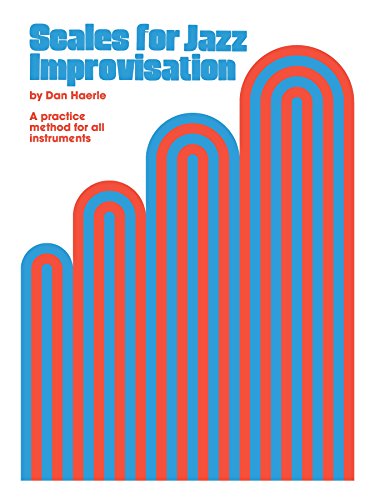
Scales for Jazz Improvisation by Dan Haerle: A practical workbook for mastering the scale-chord relationships discussed in this guide.
 Kindle editionRead on Kindle ›
As an Amazon Associate I earn from qualifying purchases.
Hal Crook’s How to Improvise (and its companion Ready, Aim, Improvise!) are excellent if you want to dive deeper into the “target tone” and motivic development methods outlined here.
As an Amazon Associate I earn from qualifying purchases.
As an Amazon Associate I earn from qualifying purchases.
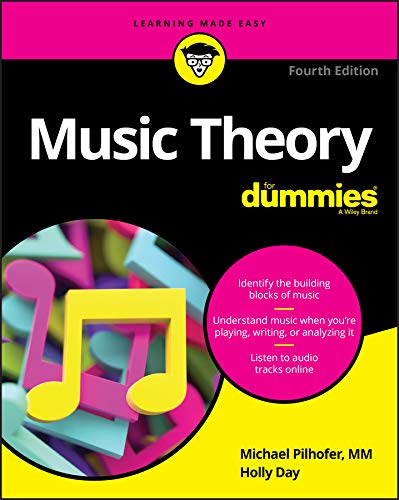
Music Theory for Dummies: An excellent resource for those needing to solidify their understanding of key signatures and staff notation.
 Kindle editionRead on Kindle ›
As an Amazon Associate I earn from qualifying purchases.
For guided ear training, consider courses like Improvise for Real’s Ear Training for Musical Creativity series.
As an Amazon Associate I earn from qualifying purchases.
Conclusion
Improvisation is the ultimate expression of musical freedom. It is the moment where the pianist stops being a “reproducer” of notes and becomes a “creator” of worlds. By grounding your practice in the “Golden Rules” of chord tones, focusing on the essential progressions (I-IV-V, ii-V-I, and Blues), and utilizing tools like looper pedals and ear-training software, you will bridge the gap between technical knowledge and artistic intuition.
Improvisation is a skill that improves through active listening and deliberate practice. By working slowly (think in small segments or “composed” licks) and gradually speeding up, you’ll build up a vocabulary of ideas. Mireia Aragon notes that learning to recognize any melody by ear and then playing it back is transformational for creativity. So when you listen to songs, try to predict the next chord tone by ear. Over time, this will reflect in your improvisation.
Remember the advice of the masters: listen more than you play, sing your melodies before you touch the keys, and never be afraid of a “wrong” note, as long as you resolve it with intention. The keyboard is your canvas; start painting.
How long does it take to learn how to improvise?
While you can start improvising with the C Major pentatonic scale in your first week, true mastery is a lifelong journey. Most students see significant progress in their “fluency” after 6 to 12 months of daily, structured practice focusing on “target notes” and “ii-V-I” patterns.
Do I need to know classical music theory to improvise?
Yes. Concepts like intervals, key signatures, and chord construction are the “grammar” of improvisation. Resources like the Feezell Theory Book or Music Theory for Dummies provide the necessary foundation.
Should I practice in all 12 keys?
Absolutely. Music doesn’t just happen in C Major. Practicing a “ii-V-I” in keys like Gb or E Major builds “keyboard topography” awareness, ensuring you don’t get stuck in “white-key-only” playing.
What is a “blue note”?
A blue note is a note played at a slightly different pitch than standard for expressive purposes, typically the b3, b5, or b7 in a major key. On the piano, we simulate this by “crushing” or sliding from the flat note to the natural note.
What is the difference between a “Scale” and a “Mode” in improvisation?
A scale is a sequence of notes (like the Major Scale). A mode is a variation of that scale starting on a different degree. For example, the D Dorian mode uses the same notes as the C Major scale but starts on D, giving it a unique minor-yet-bright character.
Why do we use Seventh chords instead of Triads in Jazz?
Seventh chords add a fourth note (the 7th interval), which creates more internal tension and “color.” This makes the harmonic resolution (the move from V7 to Imaj7) sound much more satisfying and complex than a simple triad change.
Can I use the same scale for the whole 12-bar blues?
Yes. The C Blues scale can be played over all the chords (C7, F7, G7) in a C blues progression. This is because the “clashes” between the scale and the chords are stylistically appropriate for the blues genre.
Sources & References
Levine, M. (1989). The Jazz Piano Book. Sher Music Co.
Crook, H. (1991). How to Improvise: An Approach to Guided Self-Analysis. Advance Music.
Haerle, D. (1975). Scales for Jazz Improvisation. Alfred Music.
Aragon, M. Improvise for Real Method. (Referenced for ear-training philosophy).
Feezell, M. (2011). Music Theory Fundamentals. LearnMusicTheory.net.
Martin, L. (2023). Basic Music Theory for Adult Beginner-Level Piano Players. Lakeside Press.