Transposition is one of the most transformative skills a pianist can acquire, bridging the gap between mechanical reproduction and true musical fluency. Whether you are adjusting a piece to fit a vocalist’s specific range, seeking to understand the underlying architecture of a composition, or simply expanding your improvisational toolkit, the ability to shift musical content between keys is essential. While the prospect of moving an entire song to a new tonal center often appears daunting to beginners, it is a logical process rooted in the fundamental relationships of music theory.
In this comprehensive guide, we will explore the technical mechanics of transposition, the theoretical frameworks that simplify the process, and practical exercises designed to build “on-the-fly” agility. By moving away from absolute note names and toward relative interval recognition, you will learn to view the keyboard not as a fixed map, but as a fluid landscape of harmonic possibilities.
What is Transposition?
Transposition is the process of shifting a piece of music, a melody, or a set of chords to a different key while maintaining the exact same intervals, melodic contours, and harmonic relationships between the notes. In technical terms, every pitch in the original key is moved up or down by a constant interval to arrive at its counterpart in the target key. If the original melody moves from the tonic to a perfect fifth, the transposed version must likewise move from its new tonic to its respective perfect fifth to preserve the song’s identity.
Why Transposition is Essential for the Modern Pianist
For the dedicated pianist, transposition is more than a convenience; it is a vital component of professional musicianship (E-E-A-T). Mastery of this skill provides several key advantages:
- Vocal Accompaniment Flexibility: Every singer has a “sweet spot” or tessitura. Transposing songs on piano allows you to move a piece into a key that highlights the vocalist’s strengths without forcing them to strain outside their natural range.
- Harmonic Depth and Ear Training: Transposition forces the brain to stop relying on muscle memory and start listening to intervals. This sharpens your relative pitch and helps you recognize common patterns like the ii-V-I progression across all twelve keys.
- Creative Composition: Sometimes a song simply “feels” better in a different key. E major might provide a bright, resonant quality, while D-flat major offers a rich, mellow texture. Transposition allows you to experiment with these sonic colors.
- Ensemble Performance: When playing with transposing instruments (like B-flat trumpets or E-flat saxophones), pianists often need to adjust their “concert pitch” parts to align with the ensemble’s notation.
1. Building a Foundational Knowledge of Key Signatures
Before attempting to transpose, a pianist must have an ironclad understanding of the twelve major and minor scales. Transposition is effectively the act of “translating” from one musical language (Key A) to another (Key B). If you do not know the vocabulary of the target key, the translation will fail.
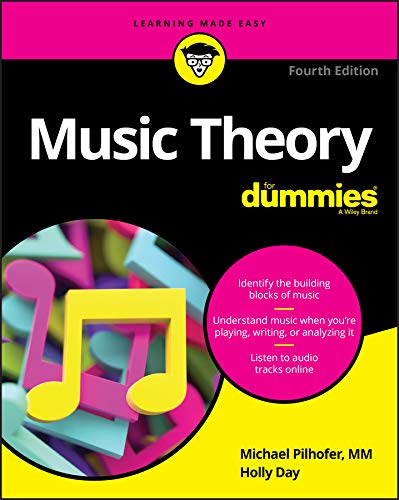
For a deep dive into these distances, I highly recommend consulting Music Theory for Dummies. It breaks down the physics of intervals in a way that is immediately applicable to the keyboard.
 Kindle editionRead on Kindle ›
As an Amazon Associate I earn from qualifying purchases.
The Anatomy of the Major Scale
Every major scale follows a specific pattern of half steps (H) and whole steps (W): W-W-H-W-W-W-H.
- Whole Step: The distance of two keys (e.g., C to D).
- Half Step: The smallest distance on the piano, from one key to the very next (e.g., E to F or C to C#).
To transpose effectively, you must be able to visualize this pattern starting from any note on the keyboard. For instance, in the key of D major, following this pattern requires the use of F# and C# to maintain the correct interval relationships.
Heptatonic Scales and the Major-Minor System
Most piano literature is based on heptatonic (seven-tone) scales, primarily the major and minor scales. Transposition requires the pianist to recreate the specific pattern of whole (W) and half (h) steps in the target key. The Major Scale follows the pattern W-W-h-W-W-W-h.
Minor keys are more complex, existing in three distinct forms that allow for melodic and harmonic flexibility. The “natural minor” follows the pattern W-h-W-W-h-W-W. However, composers often alter the sixth and seventh degrees to create stronger resolutions. The “harmonic minor” raises the seventh degree to create a “leading tone”. The “melodic minor” raises both the sixth and seventh degrees when ascending but reverts to the natural minor when descending.
| Scale Degree | Traditional Name | Function in Transposition |
| 1st | Tonic | The “home” note and tonal center. |
| 2nd | Supertonic | Leads toward the dominant or tonic. |
| 3rd | Mediant | Determines major or minor quality. |
| 4th | Subdominant | A primary harmonic pillar. |
| 5th | Dominant | Creates tension that resolves to the tonic. |
| 6th | Submediant | Often used in relative minor transitions. |
| 7th | Leading Tone | Pulls strongly toward the octave. |
Using the Circle of Fifths as a Transposition Map
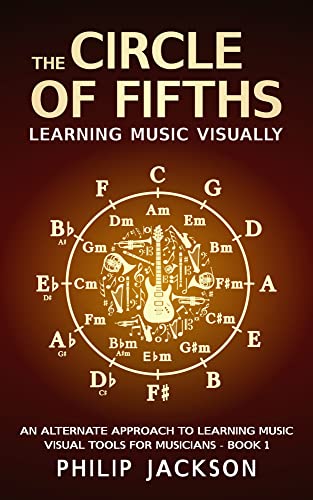
The Circle of Fifths is the ultimate reference tool for identifying how many sharps or flats are in a given key.
- Clockwise (Sharps): Moving clockwise from C major (0 sharps), each step adds a sharp: G (1), D (2), A (3), E (4), B (5), F# (6), C# (7).
- Counter-Clockwise (Flats): Moving counter-clockwise adds flats: F (1), Bb (2), Eb (3), Ab (4), Db (5), Gb (6), Cb (7).
Pro Tip: Use the mnemonic “Fat Cats Go Down Alleys Eating Birds” to remember the order of sharps (F, C, G, D, A, E, B). For flats, simply reverse it: “Battle Ends And Down Goes Charles’s Father” (B, E, A, D, G, C, F).
 Kindle editionRead on Kindle ›
As an Amazon Associate I earn from qualifying purchases.
2. Mastering Intervals – The DNA of Transposition
If scales provide the map, intervals provide the measurement. An interval is the distance between two pitches. To transpose a melody, you must identify the interval between each note in the original and recreate it in the new key.
Common Intervals and Semitone Counts
| Interval Name | Semitones | Mnemonic Example |
| Perfect Unison | 0 | Same pitch repeated |
| Minor 2nd | 1 | “Jaws” Theme |
| Major 2nd | 2 | “Happy Birthday” (first two notes) |
| Minor 3rd | 3 | “Greensleeves” |
| Major 3rd | 4 | “Oh When the Saints” |
| Perfect 4th | 5 | “Here Comes the Bride” |
| Tritone | 6 | “The Simpsons” Theme |
| Perfect 5th | 7 | “Twinkle Twinkle Little Star” |
| Minor 6th | 8 | “In My Life” (The Beatles) |
| Major 6th | 9 | “My Bonnie Lies Over the Ocean” |
| Minor 7th | 10 | “Somewhere” (West Side Story) |
| Major 7th | 11 | “Take On Me” (first jump) |
| Perfect Octave | 12 | “Over the Rainbow” |
Interval Inversion
Pianists often use interval inversion to simplify mental calculations during transposition. Inversion involves moving the bottom note of an interval to the top. A perfect interval remains perfect, major becomes minor, minor becomes major, augmented becomes diminished, and diminished becomes augmented. The number of the original interval and its inversion always adds up to 9 (e.g., a 3rd inverts to a 6th).
3. Harmonic Function and Roman Numeral Analysis
For transposing chords and progressions, the most efficient method is Roman Numeral Analysis (RNA). This system assigns a numeral to each chord based on its scale degree, allowing you to understand the function of the chord rather than just its name.
In a major key, the diatonic triads are always as follows:
- I: Major (Tonic)
- ii: minor (Supertonic)
- iii: minor (Mediant)
- IV: Major (Subdominant)
- V: Major (Dominant)
- vi: minor (Submediant)
- vii°: diminished (Leading Tone)
Transposition Example: The “Axis of Awesome” Progression
A very common progression in modern music is I – V – vi – IV.+1
- In C Major: C – G – Am – F
- In G Major: G – D – Em – C
- In Eb Major: Eb – Bb – Cm – Ab
By thinking in numerals (I, V, vi, IV), you can play the song in any of the twelve keys instantly, provided you know the scale degrees of the target key.
4. Practical Piano Transposition Methodologies
Success in transposition is often a result of selecting the right methodology for the specific musical context. Pianists typically move between the following three approaches.
The Pentascale and Finger Pattern Method
For beginners, the most accessible form of transposition is the “pentascale” approach. This method works best with melodies that do not require hand position changes. By placing the hand in a “C position” (C, D, E, F, G) and identifying a melody by its finger numbers (1-2-3-2-1), the student can move the entire hand to a “G position” and play the same finger pattern. This utilizes physical symmetry to achieve an accurate pitch shift without requiring deep theoretical calculations in the moment.
Sight-Transposition and Mental Key-Replacement
Experienced accompanists often transpose “at sight.” This involves a mental process where the player ignores the written key signature and conceptually “re-writes” the staff in real-time. For example, when moving a piece up a half-step from C major to Db major, the pianist reads the notes on the staff but applies five flats. Any natural sign in the original C major score must be mentally converted into a flat or natural in the new key.
Transposition by Ear and Memory
Transposition by ear engages auditory cognition and is a critical check against over-reliance on physical reflexes. The process begins with internalizing the tune in the “home” key, usually C major or A minor for visual simplicity. The musician then searches for the “home note” (tonic) in the new key and reconstructs the melody based on relative pitch.
5. Advanced Considerations for Session Musicians
In a professional recording or live ensemble environment, the requirements for transposition become more technical. Pianists must often bridge the gap between diverse instrumental notation systems.
Transposing Instruments and Concert Pitch
Pianists must understand that many wind and brass instruments are “transposing instruments,” meaning their written pitch differs from the sounding pitch (concert pitch).
- Bb Instruments (Clarinet, Trumpet): Sound a major second lower than written. To write a piano part for a Bb instrument, the music must be transposed down a major 2nd.
- F Instruments (French Horn, English Horn): Sound a perfect fifth lower than written. To align with an F instrument, the music must be transposed down a perfect 5th.
Chord Voicing and Smooth Voice Leading
A common mistake in transposition is moving every note of a chord in parallel motion, which can sound robotic or physically awkward. Skilled pianists use inversions to ensure “smooth voice leading,” where the individual notes of the chords move as little as possible.
| Chord Progression in C | Root Position Voicing | Inverted Voicing (Smooth) |
| C Major | C – E – G | C – E – G |
| F Major | F – A – C | C – F – A (2nd Inv) |
| G Major | G – B – D | B – D – G (1st Inv) |
Using inversions reduces the physical distance the hand must travel, which is essential when the brain is preoccupied with the cognitive demands of transposition.
6. Pedagogical Strategies for Building Muscle Memory
Mastering transposition is not a purely intellectual exercise; it requires the development of deep kinesthetic pathways. Pedagogical research suggests that “muscle memory” is only truly cemented after periods of sleep, which allows the brain to hardwire motor learning.
Repetitive Feedback Loops
The “action-reaction feedback loop” is the most effective way to train the ear for transposition. The musician hears a pitch, “guesses” the location in the new key, tests it, and corrects any errors. This cycle should be repeated 50-100 times for difficult passages until the movement becomes automatic.
Transposing the “Trouble Spot”
One do not need to transpose entire works to see progress. A more efficient use of time is to isolate technically challenging “trouble spots” and transpose them into three or four neighboring keys. This forces the fingers to solve the technical problem in different physical configurations of black and white keys, ensuring that the original key’s fingering is conceptually understood rather than just blindly memorized.
7. The Role of Technology in Modern Transposition
While developing internal skills is paramount, digital tools can enhance the learning process.
- Electronic Transpose Buttons: Digital pianos allow the user to play in a familiar key while outputting a different pitch. This is a useful “crutch” for live performance under extreme pressure, but reliance on it can inhibit the growth of theoretical skills.
- Notation Software: Platforms like Musescore and Noteflight provide “Transpose Chromatically” functions that can instantly shift a score to any key or interval.
- Ear Training Apps: Software like EarMaster or TonedEar provides functional ear training, where users identify scale degrees relative to a established tonic, a direct parallel to the mental process of transposition.
8. Troubleshooting Common Notation Mistakes
When writing out transposed music, accuracy in notation is vital to prevent confusion during performance.
Accidentals and Enharmonic Clarity
The most frequent error in transposition is the inconsistent use of accidentals. The rule of thumb is to choose a key signature that minimizes the total number of accidentals.
- Descending Chromaticism: Typically notated with flats (e.g., G to Gb to F).
- Ascending Chromaticism: Typically notated with sharps (e.g., F to F\# to G).
- Courtesy Accidentals: These should be used in the measure following a chromatic alteration to confirm that the pitch has returned to its natural diatonic state.
Rhythmic Accuracy and Beat Placement
Transposition can sometimes distract a musician from rhythmic precision. It is essential to ensure that each note’s duration aligns with the time signature. Utilizing a metronome during transposition practice helps internalize the “beat unit” (the specific rhythmic value that receives one pulse) and prevents the tempo from sagging during difficult shifts.
9. Practical Tempo and Dynamic Markings
A transposed piece must retain its expressive character, which is communicated through Italian tempo and dynamic markings.
| Marking | Literal Meaning | Speed/Volume Context |
| Grave | Solemn | Extremely slow and broad |
| Adagio | At ease | Slow |
| Andante | Walking | Moderate, flowing tempo |
| Allegro | Cheerful | Fast and bright |
| Presto | Very fast | Rapid and energetic |
| Forte (f) | Strong | Loud |
| Piano (p) | Small | Soft |
| Mezzo (m) | Middle | Medium (e.g., mf is medium-loud) |
When transposing, these markings remain constant, as they dictate the “emotional punctuation” of the composition rather than the pitch level.
10. Developing the “On-the-Fly” Skill
Ear Training: The Secret Weapon
You cannot transpose quickly if you cannot “hear” the next note before you play it. This is why ear training is critical. Using The Real Easy Ear Training Book can help you bridge the gap between the sheet music and your hands. It trains your brain to recognize intervals by sound, making transposition feel like “singing” through your fingers.
As an Amazon Associate I earn from qualifying purchases.
Sight Reading and Velocity
Transposition often happens while reading music. To improve your processing speed, you must work on your sight-reading agility. Improve your sight-reading! Piano Bible is fantastic for building the eye-to-hand coordination required to read in one key while playing in another.
 Kindle editionRead on Kindle ›
As an Amazon Associate I earn from qualifying purchases.
Additionally, technical proficiency is required to execute these shifts. Working through Hanon: The Virtuoso Pianist 60 exercises or Czerny’s The School of Velocity ensures that your fingers aren’t the bottleneck when your brain knows exactly where to go.
 Kindle editionRead on Kindle ›
As an Amazon Associate I earn from qualifying purchases.
 Kindle editionRead on Kindle ›
As an Amazon Associate I earn from qualifying purchases.
Summary of Actionable Strategies
To move from an overwhelmed beginner to a proficient transposer, a pianist should follow this developmental path:
- Master the Foundations: Memorize the W-W-h-W-W-W-h pattern for major scales and the formulas for all twelve major and minor key signatures.
- Focus on Intervals: Practice identifying the distance between two notes in half-steps to move beyond letter-name dependence.
- Adopt Functional Thinking: Use Roman Numeral Analysis for classical works and the Nashville Number System for contemporary styles to understand chords as “roles” rather than static entities.
- Practice Small: Transpose 8-measure phrases into neighboring keys before attempting full compositions.
- Engage the Ear: Always sing the melody while transposing to build a bridge between auditory imagination and physical execution.
Conclusion
Transposing songs on piano is the hallmark of a mature musician. It moves you past the “Typewriter Phase” of piano playing, where you merely press keys according to a page, and into the “Conversational Phase,” where you understand the language of music. By anchoring your practice in the study of intervals, scale degrees, and the Circle of Fifths, you will gain the freedom to play any song, in any key, at any time.
Start small. Transpose a nursery rhyme. Then a pop chorus. Eventually, the complex harmonies of jazz and classical music will reveal their patterns to you, and the keyboard will become a unified tool for your creative expression.
Is transposing the same as modulating?
No. Transposition moves the entire piece to a new key. Modulation is a process within a single piece of music where the key changes temporarily before often returning to the original tonic.+1
Why do some keys feel harder to transpose into?
Keys with many accidentals (like C# Major or Gb Major) are often perceived as difficult because they require more mental processing of sharps and flats. However, from a physical standpoint, these keys often fit the hand better because the black keys are raised, providing tactile landmarks.
Should I transpose the sheet music or just do it in my head?
For complex classical works, you may need to rewrite the score. However, for most pop, jazz, and worship music, learning to transpose “in your head” (mentally) is a far more powerful and versatile skill.
What is the primary difference between a half step and a whole step?
A half step is the smallest distance between two keys on a standard piano (e.g., $E$ to $F$ or $C$ to $C\#$). A whole step consists of two half steps (e.g., $C$ to $D$ or $E$ to $F\#$).
How do I find the relative minor of a major key?
The relative minor is always the sixth degree of the major scale. Alternatively, you can count down three half steps from the tonic of the major key (e.g., $C$ major down to $A$ minor).
Why is the Nashville Number System popular for session musicians?
NNS allows a song to be written in a “key-agnostic” format using Arabic numerals. This means the same chart can be used regardless of the final key choice, making it perfect for rapid adjustments in the studio or live on stage.
What is an “enharmonic” note?
Enharmonic notes are pitches that sound the same but have different names depending on the key signature. For example, $C\#$ and $Db$ represent the same physical key on the piano but are spelled differently based on whether the key uses sharps or flats.
Should I transpose a piece by ear or by reading the notes?
Both methods are valuable. Reading notes (sight-transposition) is better for complex classical scores, while transposing by ear is essential for improvisation and memorization. Experts recommend using ear-training to double-check sight-transposition.