As an Amazon Associate, PianoMode earns from qualifying purchases. Recommendations are made on their merits; the price you pay is the same.
The journey of a pianist often reaches a critical crossroads the moment a piece requires the hands to perform two entirely different tasks. For many, this is the most significant hurdle in early musical development. The phenomenon where the left hand instinctively mirrors the right, or vice versa, is a natural neurological response that must be systematically dismantled through focused technical training. Mastering hand independence on the piano, also known as hand decoupling or bilateral coordination, is the fundamental skill that separates a novice from an expressive, capable musician.
What is Hand Independence on the Piano?
Hand independence on the piano is the ability of a performer to execute distinct rhythmic, melodic, and dynamic patterns in each hand simultaneously without one hand involuntarily influencing the other. It involves the neurological “decoupling” of the motor cortex, allowing the brain to process multiple musical layers, such as a syncopated bass line in the left hand and a lyrical melody in the right, as a unified but multi-dimensional performance.
1. The Science of Bilateral Coordination in Piano Playing
Developing hand independence is as much a biological challenge as it is a musical one. In daily life, the hands often work in “parallel” (picking up a large object) or “sequence” (one hand holding a jar while the other twists). The piano demands “contratypical” motion, where the brain must send asynchronous signals to the fine motor muscles of the fingers.
The Role of Muscle Memory
Muscle memory, or procedural memory, is the bedrock of independence. When a specific movement pattern is practiced until it becomes automatic, the cognitive load shifts from the conscious “executive” part of the brain to the basal ganglia. By automating the movements of one hand, the pianist frees up mental “bandwidth” to focus on the complexities of the other.
Neural Plasticity and the Corpus Callosum
Studies in music psychology suggest that long-term piano practice actually strengthens the corpus callosum, the bridge between the left and right hemispheres of the brain. This physical adaptation allows for faster and more efficient communication between the areas responsible for motor control, enabling the “two brains” sensation that professional pianists describe.
The difficulty of hand independence is rooted in the biological architecture of the human brain. To master this skill, the pianist must undergo significant structural and functional neuroplastic changes.
Bimanual Coordination and symmetric Movement
Bimanual coordination is the brain’s ability to synchronize the movements of both hands. In non-musicians, symmetric movements (moving both hands in the same way) are significantly easier and require less mental energy than parallel or independent movements. This is because the motor cortex naturally tends to send identical signals to both limbs. To overcome this, the pianist must develop the ability to inhibit these mirrored impulses.
The Role of the Corpus Callosum
The corpus callosum is the bridge of white matter that carries signals between the left and right hemispheres of the brain. Research indicates that professional pianists possess a larger anterior portion of the corpus callosum than non-musicians. This structural adaptation allows for more efficient communication and better segregation of motor commands, facilitating the execution of distinct tasks with each hand.
Automaticity and Cognitive Load
Advanced hand independence is characterized by automaticity—the ability to perform a task without conscious thought. Neuroimaging shows that professional pianists exhibit lower brain activation during complex coordination tasks than beginners. This suggests that as the hands become independent, the motor tasks are offloaded to subcortical regions like the cerebellum, freeing up the primary sensory-motor cortex for expressive and artistic decision-making.
2. Foundational Steps: Rhythmic Decoupling Away from the Keys
Before attempting to play complex notes, a pianist must master the rhythmic logic behind hand independence. This is often best achieved through “table-top tapping” exercises.
- Simple Subdivisions: Using a metronome, tap quarter notes with the left hand while tapping eighth notes with the right. The goal is to keep the left hand steady regardless of the increased activity in the right.
- Rhythmic Displacement: Tap a steady beat in the left hand. In the right hand, tap on the “and” (the off-beat). This introduces the concept of syncopation, which is a major component of modern and jazz piano.
- Cross-Rhythms (Polyrhythms): Once simple subdivisions are comfortable, the student should practice “two-against-three.” This involves tapping three even beats in one hand against two even beats in the other within the same time frame.
Comparing Coordination Stages
| Stage | Focus | Difficulty Level |
| Unison | Both hands play the same notes and rhythms. | Beginner |
| Parallel Motion | Hands move in the same direction, different notes. | Easy |
| Contrary Motion | Hands move in opposite directions. | Moderate |
| Rhythmic Decoupling | Different rhythms, same dynamic level. | Intermediate |
| Dynamic Independence | Different rhythms and different volume levels. | Advanced |
3. Hands-Separate Practice: The Isolation Strategy
A common mistake among intermediate students is attempting to play “hands together” too early. Mastery of developing hand independence on the piano requires a strict “Isolate to Integrate” protocol.
Establishing the Subconscious Baseline
The goal of practicing one hand at a time is to reach a level of “over-learning.” For example, if the left hand is playing an Alberti bass (a broken chord pattern), it should be practiced until the pianist can have a conversation or read a book while playing it. Once the left hand is on “autopilot,” the brain can dedicate 90% of its conscious energy to the right hand’s melody.
Active Listening During Isolation
Isolating the hands allows the performer to focus on the “purity” of each line.
- Left Hand: Focus on rhythmic stability and “weight” (the physical depth of the keys).
- Right Hand: Focus on phrasing, legato connections, and expressive nuances.
4. Advanced Techniques for Rhythmic Independence
As a pianist progresses, the challenge shifts from simple coordination to managing complex rhythmic “conflicts.”
Mastering Polyrhythms
Polyrhythms occur when the hands play different beat subdivisions simultaneously (e.g., triplets against eighth notes).
- The “Pass the Golden Butter” Method: This is a classic mnemonic for a 3-against-4 rhythm.
- The “Nice Cup of Tea” Method: Used for 3-against-2.Using rhythmic syllables, as detailed in many theory fundamentals, helps the brain “map” where the notes fall in relation to each other. By counting out loud (“1-and-2-and” or “1-trip-let”), the pianist creates an external rhythmic grid that anchors both hands.
The Power of the Metronome
The metronome acts as the “third hand.” It provides an objective truth that prevents one hand from “pulling” the other.
- Start at 40-50 BPM: Slow practice is not about playing slowly; it is about processing information at a speed where the brain can catch errors before they become muscle memory.
- Incremental Speeding: Only increase the tempo by 2-4 BPM once the passage is played perfectly ten times in a row.
Rhythm is the most primary musical stimulus, serving as the organizational backbone upon which all independent movements are mapped. Hand independence relies on the pianist’s ability to navigate the complex relationship between pulse, tempo, and meter, providing a stable temporal grid for bimanual coordination.
Pulse, Tempo, and Meter
The perception of time in music is governed by three fundamental elements: pulse, tempo, and meter. Pulse, or the beat, is the regularly recurring background pulsation that provides the “heartbeat” of a composition. Tempo represents the rate at which this pulse flows through time, often determined by metronome markings or descriptive Italian terms. Meter, expressed through time signatures, dictates how these pulses are grouped into discrete segments and how they naturally subdivide into smaller values.
| Element | Definition | Practical Application for Independence |
| Pulse | The underlying steady beat. | The common denominator that aligns both hands. |
| Tempo | The speed of the pulse (BPM). | Regulates the difficulty of executing independent parts. |
| Meter | The grouping of beats into measures. | Establishes the accent patterns each hand must follow. |
Durational Values and Proportional Logic
Independence requires an intimate understanding of durational values—symbols that represent the relative length of sound and silence. These values exist in a proportional chain where each note is a division of a larger unit. For instance, in a standard 4/4 time signature, a whole note encompasses four beats, while a half note represents two. The ability to hold a half note in the left hand while executing four quarter notes in the right is the most basic form of independence, requiring the brain to process two different durational layers at once.
| Note Name | Proper Name (UK) | Proportional Value |
| Whole Note | Semibreve | 1 |
| Half Note | Minim | 1/2 |
| Quarter Note | Crotchet | 1/4 |
| Eighth Note | Quaver | 1/8 |
| Sixteenth Note | Semiquaver | 1/16 |
Meter Classification: Simple vs. Compound
Meter classification is essential for identifying how the hands should interact. Simple meter divides the background pulse into two equal portions, whereas compound meter divides it into three. In 6/8 time, a common compound duple meter, the pulse is a dotted quarter note that divides into three eighth notes. Hand independence in compound meter is often more challenging for beginners because it requires a “triple feel” that must remain steady even when the melody in the other hand utilizes duple subdivisions or syncopation.
5. Dynamic and Articulation Independence
True independence is not just about when the notes are played, but how they are played. This is where the artistry of piano playing truly begins.
Voicing: The Lyrical Right Hand
In most classical and pop music, the melody must “sing” above the accompaniment. This requires the right hand to play with more force (weight) while the left hand plays softly (piano). To develop this:
- Play a chord in both hands.
- Purposely make the right-hand note louder while “ghosting” (barely pressing) the left-hand note.
- Reverse the exercise to gain total control over finger pressure.
Contrasting Articulations
One of the most difficult skills is playing legato (smooth) in one hand and staccato (short/detached) in the other.
- Exercise: Play a C-Major scale in the right hand legato, while the left hand plays C-Major chords staccato on every beat. This forces the brain to manage two different physical “touches” simultaneously.
6. Repertoire Recommendations for Developing Independence
The selection of music is a vital tool for technical growth. Certain composers specifically wrote “teaching pieces” to solve coordination issues.
J.S. Bach: The Two-Part Inventions
Bach is the undisputed master of counterpoint. In his Inventions, both hands are treated as equals. There is no “accompaniment”; instead, there are two independent melodies weaving in and out of each other. Practicing Bach is the most efficient way to build “polyphonic thinking.”
Czerny and Hanon
Carl Czerny’s études (such as Op. 299) and School of Velocity is great to focus on rapid-fire independence and technical precision.
 Kindle editionRead on Kindle ›
As an Amazon Associate I earn from qualifying purchases.
Charles-Louis Hanon’s 1873 publication, The Virtuoso Pianist, is a staple of piano pedagogy. The first 20 exercises focus on improving finger agility and independence within a five-finger position.
- Mechanical Independence: These exercises require both hands to play the same pattern in octaves, strengthening the weaker fingers (4 and 5).
- Variations for Autonomy: Modern instructors often modify Hanon exercises to include contrasting articulations (staccato vs. legato) or dynamic levels (forte vs. piano) between the hands.
 Kindle editionRead on Kindle ›
As an Amazon Associate I earn from qualifying purchases.
Jazz and Blues
Jazz requires a “walking bass” in the left hand (steady quarter notes) while the right hand improvises syncopated melodies. This genre is excellent for developing a “swing” feel where the hands are rhythmically decoupled but harmonically linked.
7. Mental Visualization: The “Brain” Practice
Independence is not just a physical act; it is a mental state. “Mental Rehearsal” involves sitting away from the piano and visualizing the performance.
- Vertical Visualization: Seeing how the notes of both hands align on the staff at any given moment.
- Horizontal Visualization: Tracking the individual journey of the left hand from start to finish, then doing the same for the right.
By “hearing” the music in the mind’s ear before touching the keys, the pianist creates a neurological blueprint that makes physical execution significantly more reliable.
8. Overcoming the “Frustration Plateau”
It is common for students to feel that they have hit a wall. When the hands refuse to cooperate, it is usually a sign of Cognitive Overload.
Rest: Neurological connections are often consolidated during sleep. If a passage is difficult today, practice it slowly and correctly, then leave it. Often, the brain will have “fixed” the coordination by the next morning.
Simplify: If you cannot play a four-measure phrase, play two measures. If two measures are too much, play two beats.
Change the Rhythm: Practice the passage using different rhythmic variations (e.g., dotted rhythms) to “trick” the brain into breaking old habits.
9. Practical Methodologies for the Modern Pianist
Contemporary pedagogy has moved beyond simple scales to include creative methods that accelerate neuroplastic development and coordination.
The Left-Right-Together (L-R-T) Method
The L-R-T method is a powerful tool for breaking down complex measures. The pianist analyzes each beat and identifies which notes are played by the Left hand (L), the Right hand (R), or Together (T).
- Execution: Slow the tempo down significantly and verbalize “Left,” “Right,” or “Together” while playing.
- Benefit: This reinforces the “sound picture” in the brain, turning two independent parts into one coordinated sequence.
Tabletop and table-agnostic Practice
Practicing away from the piano on a tabletop or one’s knees allows the student to focus entirely on finger movement and rhythm without the distraction of pitch. This “rhythm training” can be done anywhere, even on a bus or in a meeting—to internalize the pulse and coordination through tactile repetition.
Visualization and Mental Rehearsal
The brain continues to reorganize motor tasks during sleep. Visualizing the hands moving correctly on the keyboard—picturing the finger positions and hearing the sound—forges neural pathways similar to actual physical practice. This mental rehearsal reduces frustration and helps “nail” the sequential motor tasks required for complex pieces.
Drum Beats vs. Metronomes
While a metronome provides a rigid mathematical pulse, drum beats offer a more musical context that mimics real playing scenarios. Practicing with drum tracks exposes the pianist to a variety of grooves and styles, enhancing their rhythmic vocabulary and making independence exercises more engaging.
10. Recommended Resources for Mastering Hand Independence
To complement the technical exercises outlined in this guide, it is vital to supplement your physical practice with authoritative literature. The following five recommendations have been selected for their specific contributions to the development of bilateral coordination, rhythmic literacy, and technical efficiency on the piano.
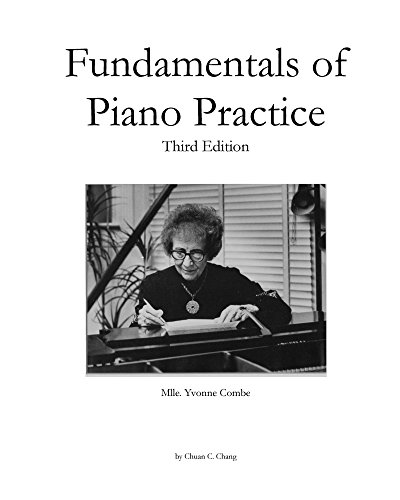
Fundamentals of Piano Practice – Chuan C. Chang
This is widely considered the definitive modern resource for technical efficiency. Unlike traditional methods, it focuses heavily on the “how” of practice rather than just the “what.”
- Relevance to Independence: Chang provides a deep dive into Hands-Separate (HS) Practice and the concept of Parallel Sets. By practicing small groups of notes as a single unit in each hand separately before combining them, you eliminate the physical tension that often blocks hand independence.
- Expert Insight: Use this book to learn how to practice at speeds faster than your “hands-together” limit to ensure each hand is completely autonomous.
 Kindle editionRead on Kindle ›
As an Amazon Associate I earn from qualifying purchases.
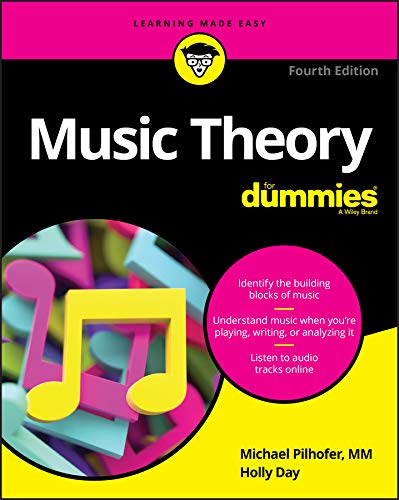
Music Theory for Dummies – Michael Pilhofer & Holly Day
While it covers general theory, this resource is excellent for pianists who struggle with the “vertical” alignment of the hands on the staff.
- Relevance to Independence: The chapters on Complex Time Signatures and Subdivisions are essential. Understanding the mathematical relationship between a quarter note in the left hand and a triplet in the right is the prerequisite for rhythmic decoupling.
- Expert Insight: Focus on the sections regarding Articulation (Staccato vs. Legato) to begin practicing contrasting touches in each hand.
 Kindle editionRead on Kindle ›
As an Amazon Associate I earn from qualifying purchases.
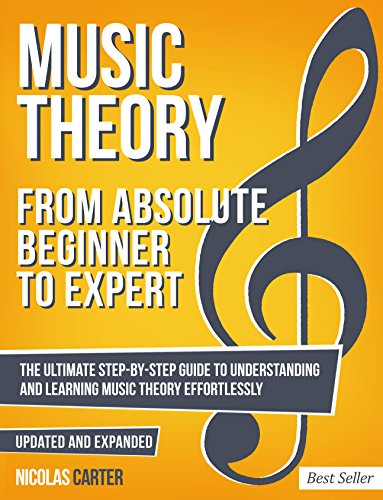
Music Theory: From Beginner to Expert – The Ultimate Step-By-Step Guide
This comprehensive guide is ideal for students who want to understand the architecture of the music they are playing, which reduces the cognitive load during performance.
- Relevance to Independence: It covers the basics of Counterpoint and Voice Leading. Understanding how individual melodic lines (voices) are constructed allows you to hear the piano as two or more separate “instruments” rather than one block of sound.
- Expert Insight: Use the step-by-step harmonic modules to predict where your left hand should resolve, freeing your conscious mind to focus on right-hand expression.
 Kindle editionRead on Kindle ›
As an Amazon Associate I earn from qualifying purchases.
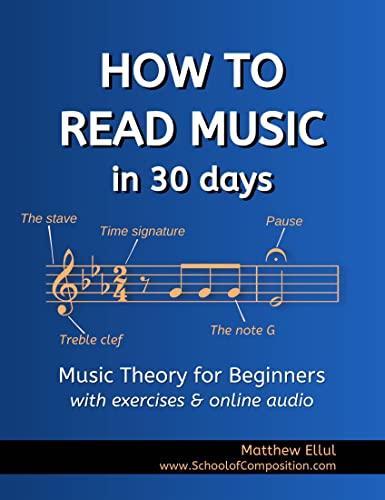
How to Read Music in 30 Days – Matthew Ellul
The primary barrier to hand independence is often Sight-Reading. If you are struggling to read two staves at once, your hands will never move independently.
- Relevance to Independence: This book accelerates your ability to recognize patterns across both the Treble and Bass clefs. By mastering “interval reading” instead of “note-by-note reading,” you enable your brain to process two separate streams of visual information simultaneously.
- Expert Insight: Fast-tracking your literacy allows you to spend less time “decoding” the page and more time focusing on the physical decoupling of your fingers.
 Kindle editionRead on Kindle ›
As an Amazon Associate I earn from qualifying purchases.
Conclusion
Developing hand independence on the piano is a transformative process that unlocks the instrument’s full potential. It is the bridge between playing “at” the piano and truly playing the piano. By combining rhythmic drills, hands-separate isolation, and the study of polyphonic repertoire like Bach, any student can overcome the natural tendency of the hands to mirror one another.
Key Recommendations for Success:
- Prioritize Accuracy over Speed: Never increase the tempo until the coordination is flawless.
- Use a Metronome: It is the only way to ensure your rhythmic independence is objective.
- Study Music Theory: Understanding how rhythms are subdivided (simple vs. compound meters) makes the “mental map” of independence much clearer.
- Stay Patient: Frustration is a sign that your brain is re-wiring itself. Embrace the challenge.
The freedom to express two different emotions, rhythms, and voices simultaneously is the ultimate reward for the dedicated pianist. Start small, stay consistent, and your hands will eventually find their own unique voices.
How long does it take to develop hand independence?
While basic independence can be achieved in a few months of daily practice, true mastery—allowing for complex polyrhythms and dynamic voicing—is a multi-year process. Consistency is more important than the duration of individual sessions.
Can adults learn hand independence as well as children?
Yes. While children have higher neuroplasticity, adults often have a better grasp of the logic and theory behind rhythms, which allows them to use analytical strategies (like counting and visualization) to compensate.
Should I always practice hands separately?
Initially, yes. However, you must also practice the “transition” to hands-together. Once each hand is secure, begin combining them in very small segments (one or two beats at a time).
Why does my left hand always get louder when my right hand plays fast?
This is a lack of dynamic independence. Your brain is associating “speed” with “intensity” across both hands. Practice playing the right hand fast and light while the left hand plays slow, heavy chords to break this association.