As an Amazon Associate, PianoMode earns from qualifying purchases. Recommendations are made on their merits; the price you pay is the same.
The morning light usually hits the ivory keys of the grand piano with a cinematic glow, yet for many intermediate players, the initial contact with the instrument feels anything but poetic. There is a specific, often frustrating sensation that accompanies the transition from a casual hobbyist to a serious student: the realization that the fingers are no longer capable of executing what the mind conceives. On one particular Tuesday, after attempting a difficult passage in a Chopin Nocturne, the realization dawned that the “stiffness” was not a lack of talent, but a lack of preparation. The fingers felt like lead, the wrists were locked, and the mental connection to the keyboard was fragmented. This prompted a deep dive into the world of technical pedagogy, not just to “move” the fingers, but to tune the entire physical and neurological apparatus. What follows is an exhaustive exploration of the best warm-up exercises for players, designed to bridge the gap between mechanical repetition and artistic mastery.
In this comprehensive report, you will learn the biomechanical secrets of the Taubman and Russian schools, the systematic logic of Alfred Cortot and Charles-Louis Hanon, and the neurological benefits of a structured routine. We will dissect how to integrate music theory, such as the Circle of Fifths and chord inversions, directly into your physical drills to foster a unified musical mind.
The best warm-up exercises for piano players combine physical loosening (wrist rotations and arm swings), technical drills (Hanon variations and finger pedaling), and theoretical application (scales in all 12 keys and arpeggiated chord progressions). For the intermediate student, an effective routine must move beyond simple five-finger patterns to address finger independence, lateral hand mobility, and dynamic control, ideally spanning 20 to 30 minutes to prepare the hand for advanced repertoire while preventing repetitive strain injuries.
1. The Biomechanics of Piano Performance
Understanding the “why” behind an exercise is the first step toward the “how.” Piano technique is often hindered by a fundamental misunderstanding of hand anatomy. Many students believe that fingers contain the muscles responsible for their movement, when in reality, the fingers are largely controlled by tendons connected to muscles in the forearm. We are not “strengthening” fingers in the way an athlete strengthens a bicep; we are refining the coordination of the forearm and the efficiency of the neural pathways.
Forearm Rotation and the Taubman Approach
The Taubman Approach is a groundbreaking methodology that emphasizes physical efficiency as the precursor to musical expression. Its core principle is “coordinate motion,” which posits that the fingers, hand, and forearm must move together as a single unit. For the player, the most transformative concept is forearm rotation, a subtle, invisible twisting motion that allows the weight of the arm to support the playing finger.
| Anatomical Fulcrum | Function in Technique | Optimal Alignment |
| The Bridge (Knuckles) | The primary fulcrum for finger descent. | Must be visible like a “little mountain range,” never collapsed. |
| The Wrist | Acts as a shock absorber and conduit for weight. | Must remain level with the hand and arm, avoiding “ulnar deviation” (sideways twisting). |
| The Elbow | Regulates lateral movement across the keyboard. | Should be level with the keys or slightly higher to maintain mechanical advantage. |
| The Forearm | Provides the power through rotation rather than force. | Must follow the playing finger to prevent isolation and strain. |
The risks of finger isolation cannot be overstated. When a student attempts to play a rapid scale by moving only the fingers, they create excessive “co-contraction,” where the agonist and antagonist muscles work against each other. This leads to the “Flying Pinkie” syndrome, where the 5th finger sticks straight out when not in use, a classic sign of technical tension. Warm-ups should therefore begin with exercises that reintegrate the arm weight into the fingertips.
The Russian Piano School: Flexibility and Whole-Arm Action
Contrasting slightly with the strict rotational focus of the Taubman method, the Russian Piano School emphasizes “flexibility”. In this tradition, the wrist is viewed as a loose, breathing joint that “anticipates” the layout of the musical text. A key exercise in this school involves thumb-under crossings during scales. Rather than keeping the wrist rigid, the student is taught to move the wrist slightly upward as the thumb crosses under, facilitating a smooth transition and preventing the “hiccup” often heard in amateur scale playing.
2. Technical Pedagogy: The Great Masters
Students are the primary beneficiaries of the “Big Three” of piano technique: Hanon, Czerny, and Brahms. However, the expert application of these exercises requires more than just playing the notes on the page.
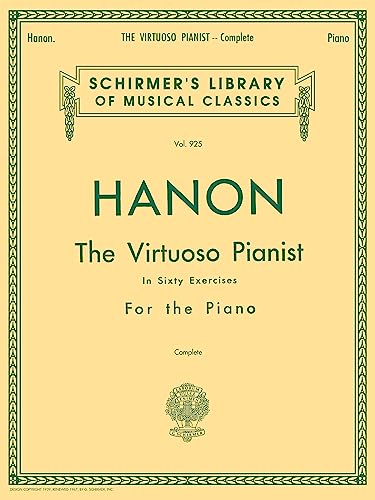
Charles-Louis Hanon: The Virtuoso Pianist (1873)
Hanon’s exercises are a staple of the piano world, designed to build precision, speed, and agility. For the player, the first 20 preparatory exercises are essential. They focus on repetitions of specific finger patterns that isolate each finger pair (1-2, 2-3, 3-4, 4-5).
Advanced Hanon Variations:
- Transposition: The original exercises are written in C Major. Playing Hanon Exercise No. 1 in F# Major or Db Major forces the hand to adapt to the black keys, significantly improving keyboard geography.
- Rhythmic Displacement: Converting the standard 4/4 meter into 3/4 or utilizing dotted rhythms (“long-short”) challenges the brain’s rhythmic stability.
- Articulation Contrast: Playing the right hand legato while the left hand plays staccato (and then switching) is a premier exercise for hand independence.
- Dynamics and Touch: Practicing “Slow and Loud” (focusing on high finger lift) vs. “Fast and Soft” (staying close to the keys) develops both strength and sensitivity.
 Kindle editionRead on Kindle ›
As an Amazon Associate I earn from qualifying purchases.
Carl Czerny: The School of Velocity and Finger Pedaling
While Hanon is mechanical, Carl Czerny’s studies bridge the gap into repertoire. His exercises often incorporate “finger pedaling,” a technique where specific notes are held down (as if using a sustain pedal) while other fingers continue to move. This creates the “illusion of pedal” necessary for Baroque and Classical music where the actual damper pedal would cause too much blur.
Students should focus on Op. 802, No. 10, which introduces pattern skips. While holding a whole-note C with the thumb, the other four fingers play sixteenth-note skips (C-E-G-F-D, etc.). This exercise targets the resistance of the hand and is the “antidote” to fingers wanting to “pop up” during complex passages.
 Kindle editionRead on Kindle ›
As an Amazon Associate I earn from qualifying purchases.
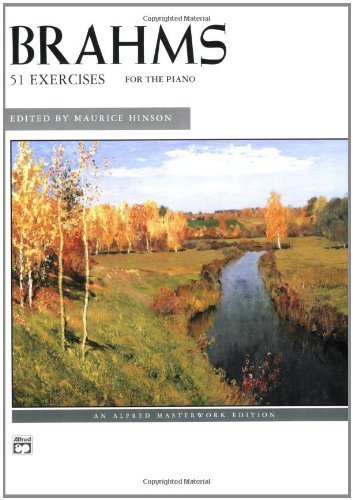
Johannes Brahms: 51 Exercises (WoO 6)
Brahms’s exercises are not for the faint of heart; they are “technical-musical meditations” for the advanced-intermediate player. Brahms was obsessed with “economy of motion” and polyphonic awareness.
- Polyrhythms: The first six exercises in the set involve separate rhythms for each hand (e.g., 2 against 3), which is a prerequisite for much of the Romantic repertoire.
- Held-Note Acrobatics: Brahms takes finger pedaling to the extreme, often requiring three fingers to be held while the remaining two play complex chromatic patterns.
- Charming Modulations: Unlike the dry repetitions of Hanon, Brahms’s exercises evolve into different keys, training the ear to follow harmonic shifts during technical work.
 Kindle editionRead on Kindle ›
As an Amazon Associate I earn from qualifying purchases.
Alfred Cortot: The Rational Principles
Alfred Cortot, one of the 20th century’s greatest pedagogues, believed that technique should be learned through “logical analysis of the difficulty”. His Rational Principles of Pianoforte Technique divides technique into five categories: evenness, the thumb, double notes, finger stretches, and wrist technique.
Cortot’s “Daily Formula” involves nine exercises done for 15 minutes a day. He insisted on “daily chromatic transposition,” meaning an exercise mastered in C Major today must be played in C# Major tomorrow. This ensures that the hand becomes comfortable with the “weight” of its own movement across varying topography.
As an Amazon Associate I earn from qualifying purchases.
3. Theory as a Warm-Up: The Mind-Finger Connection
A piano player should never separate the physical warm-up from theoretical understanding. The keyboard is a visual tool that maps out the fundamental structures of Western music.
The Circle of Fifths and Scale Mastery
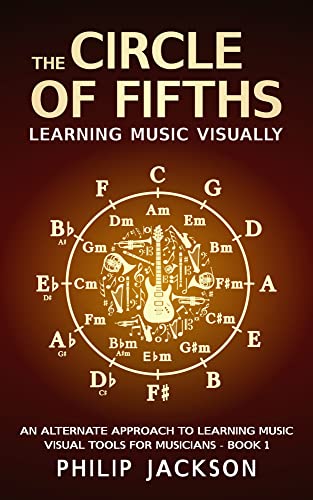
The Circle of Fifths is the “clock” of music theory. It is a visual representation of how keys are related. Clockwise movement from C adds sharps; counterclockwise adds flats.
| Key | Sharps/Flats | Mnemonic for Order |
| Sharps | F, C, G, D, A, E, B | “Father Charles Goes Down And Ends Battle”. |
| Flats | B, E, A, D, G, C, F | “Battle Ends And Down Goes Charles’ Father”. |
Scale Variations:
- Parallel Minor Scales: After playing a C Major scale, immediately play C Natural Minor, C Harmonic Minor (+7th), and C Melodic Minor (+6th/7th ascending).
- Contrary Motion: This is a “brain-buster” for intermediates. Both hands start on the same note and move in opposite directions, requiring the player to maintain symmetry while the fingers on each hand execute different patterns.
 Kindle editionRead on Kindle ›
As an Amazon Associate I earn from qualifying purchases.
Chord Inversions and Arpeggios
Chords are the building blocks of harmony, but playing them only in root position is a beginner’s limitation. Warm-ups should cycle through inversions.
- Root Position: C-E-G
- 1st Inversion: E-G-C (C/E)
- 2nd Inversion: G-C-E (C/G)
Practicing these as arpeggios (broken chords) is essential for developing “lateral mobility”—the ability to move the hand across large spans of the keyboard without tension. arpeggios demand precise finger control and are the “secret backdoor” to playing virtuosic repertoire.
4. The Rhythmic Foundation: Meter and Pulse
Intermediate level repertoire frequently introduces complex time signatures and tuplets that require a sophisticated sense of internal pulse. Warm-ups are the ideal time to sharpen this “rhythmic precision.”
Pulse, Tempo, and Meter
Pulse (the “beat”) is the regularly recurring background pulsation. Tempo is the speed of that pulse, and Meter is the ratio of how those pulses are grouped.
Rhythmic Drills:
- Simple vs. Compound: Practice switching between a 2/4 meter (simple duple) and a 6/8 meter (compound duple) while keeping the same constant background pulse.
- Syncopation: Practice patterns that place accents on the “off-beats” or weak beats.
- Tuplets: Work on “artificial divisions” like triplets (3 notes in the space of 2) or duplets (2 notes in the space of 3).
| Meter Type | Pulse Subdivision | Example |
| Simple | Divides into two portions. | 4/4 Time (Common Time). |
| Compound | Divides into three portions. | 6/8, 9/8, 12/8 Time. |
| Asymmetrical | Mix of simple and compound. | 5/8 or 7/8 Time. |
5. The Art of Tone: Expressive Nuance in Technical Drills
To reach the “E-E-A-T” level of authority at the piano, one must treat warm-ups as musical performances. Every exercise has an “envelope” or shape.
The ADSR Envelope of Piano Sound
The “envelope” generator of a sound includes four stages: Attack, Decay, Sustain, and Release.
- Attack: The moment you strike the key. For a sharp, percussive sound, use a fast attack; for a singing tone, use a cushioned arm-weight attack.
- Decay: The natural decrease in sound after the attack. The piano has a natural decay that the player cannot control after the strike, making the initial attack even more critical.
- Sustain: How long you hold the key.
- Release: How you lift off the key. A slow release creates a gentle fade, while a fast release results in a crisp ending.
During Hanon or scale practice, an intermediate player should experiment with the “Attack” and “Release” to vary the timbre, the tone color. This transforms a “dry” exercise into a study of sound production.
6. Building Faster “Neural Roads” With Practice
Why does slow practice work? Neuroscience suggests that learning a new motor skill requires structural changes in the neurons of the frontal lobe. This process, called “myelination,” insulates the neural pathways, allowing electrical signals to travel faster and more accurately.
Spaced Repetition and Mental Practice
- Spaced Repetition: Instead of one five-hour practice session, breaking work into 20-minute intervals throughout the day maximizes retention.
- Mental Practice (MP): Visualizing yourself playing the exercises away from the piano has been shown to produce the same plastic changes in the motor system as physical practice. Intermediate pianists can improve accuracy and timing by simply “hearing” and “feeling” the exercise in their mind’s eye.
Achieving the “Flow State”
The goal of a warm-up is to enter a “Flow State”, the zone where self-criticism decreases and focus increases. This state releases endorphins and dopamine, which not only makes practice more enjoyable but also combats the stress and anxiety often associated with difficult repertoire.
Recommended Gear
To execute these high-level exercises, the physical environment must be ergonomically optimized. Here is our expert-curated list of recommended gear.
Adjustable Piano Benches (The Posture Essential)
A fixed bench is the enemy of progress. If you are too low, your arm weight falls into your elbows; too high, and you hunch your shoulders.
- Premium Choice: This traditional design offers a robust mechanism and high-density cushioning for long practice sessions.
As an Amazon Associate I earn from qualifying purchases.
- Artist Choice: Features height adjustment for and a solid hardwood skeleton.
As an Amazon Associate I earn from qualifying purchases.
- Portable/Budget Choice: Inexpensive, sturdy, and excellent for digital piano setups.
As an Amazon Associate I earn from qualifying purchases.
Essential Technical Books
- The Foundation: The Schirmer Library edition is the gold standard for finger independence.
As an Amazon Associate I earn from qualifying purchases.
- Musicality & Technique: Focuses on rapid passagework and evenness of touch.
As an Amazon Associate I earn from qualifying purchases.
- The Romantic Master: Essential for those moving into advanced-intermediate Romantic repertoire.
As an Amazon Associate I earn from qualifying purchases.
Conclusion
Warming up at the intermediate level is a transition from the physical world to the metaphysical world of music. It is not merely about “getting the fingers moving,” but about aligning the body’s biomechanical fulcrums, the mind’s theoretical patterns, and the soul’s expressive intent. By integrating the forearm rotation of the Taubman approach, the flexibility of the Russian school, and the rigorous logic of Cortot and Brahms, the pianist creates a resilient technical foundation.
Piano players should remember that “mediocre music starts with mediocre preparation”. Rushing through a warm-up just to get to a piece of repertoire is a recipe for technical plateaus and potential injury. Instead, treat those initial 20 minutes as a sacred space for discovery. The goal is not to repeat until you “get it right,” but to repeat until you “cannot get it wrong”. In this state of effortless mastery, the piano truly becomes an extension of the heart.
Why do my hands hurt after playing Hanon?
Pain is a warning from the body. It usually indicates that you are isolating your fingers and creating tension in your wrist. Switch to using forearm rotation and arm weight rather than relying solely on finger force.
Should I use the pedal during my warm-up?
Generally, no. Warm-ups should be done “dry” to ensure you can hear every detail of your articulation and evenness. Using the pedal can hide technical gaps.
Is it okay to skip scales if I play them in my repertoire?
While repertoire provides context, dedicated scale practice ensures you are comfortable in all 12 keys, even those you aren’t currently playing. This builds long-term “keyboard security”.
How do I fix a “weak” 4th finger?
Biologically, the 4th finger is the least independent. Don’t try to “strengthen” it; instead, focus on “finger pedaling” exercises (like Czerny’s) to train the brain to isolate its movement without tension.
Should I warm up with scales every day?
Yes, but variety is vital. Cycle through different keys daily (e.g., Circle of Fifths). One day focus on flat keys (F, Bb, Eb), and the next on sharp keys (G, D, A). This ensures total keyboard familiarity.
Can I skip the warm-up if I only have 30 minutes to practice?
If time is limited, do a “compressed” 5-minute warm-up consisting of one scale, one arpeggio, and some wrist stretches. Never jump directly into a difficult, fast piece “cold,” as this is the primary cause of piano-related injuries like tendonitis.