As an Amazon Associate, PianoMode earns from qualifying purchases. Recommendations are made on their merits; the price you pay is the same.
Sight reading used to feel like solving a puzzle while riding a bicycle. My hands needed to keep moving, but my eyes struggled to decode the music fast enough to keep up. When I first sat at the piano with unfamiliar sheet music, I’d either play in slow motion or make so many mistakes that the melody was unrecognizable. I felt like I was failing at the very “language” of music. Over time, I realized that sight reading isn’t about playing flawlessly, it’s about training the mind and body to respond to music as it’s being read, in real time. In this article, I’ll take you through my personal journey and strategies on how to improve your sight reading skills, step by step, so you can unlock any piece of music with confidence.
Sight reading is the ability to read and perform a piece of music at first sight without prior study or practice. It is a multi-sensory skill that requires the simultaneous processing of pitch, rhythm, and articulation while maintaining a steady tempo. To improve, musicians must transition from “note-by-note” decoding to pattern recognition, focusing on intervals (the distance between notes) and rhythmic “chunks” rather than individual symbols.
 Kindle editionRead on Kindle ›
As an Amazon Associate I earn from qualifying purchases.
The Cognitive Science of Musical Literacy
To improve sight reading, one must understand how the brain processes information on the page. Research into “Eye-Hand Span” (EHS) suggests that proficient sight readers look several beats, or even measures, ahead of the notes they are currently playing. This creates a “buffer” in the short-term memory, allowing the brain to prepare for upcoming technical challenges while the hands execute the current passage.
Effective reading relies on Saccadic Movements: the rapid, intermittent eye movements that allow a musician to scan vertical stacks (chords) and horizontal lines (melodies) almost simultaneously.
1. The Science of Musical Literacy: Understanding the “Why”
Musical literacy is the cognitive ability to decode musical notation into fluid physical movement and sound without conscious deliberation. To master sight reading, one must stop treating music as a series of isolated “letters” (individual notes) and begin treating it as a language composed of “words” (intervals) and “sentences” (musical phrases).
Understanding the science behind this process is the first step toward moving from a slow, “stuttering” reader to a fluent musical communicator.
Texture and Polyphony: Processing Layers
In the context of piano performance, texture describes how melodic, rhythmic, and harmonic materials are combined. Unlike most instruments, the piano is polyphonic, meaning it produces multiple independent sounds simultaneously.
- The Literacy Challenge: Beginners often try to read the treble and bass clefs as two unrelated streams of data. This causes “cognitive overload.”
- The Professional Solution: Advanced readers identify the relationship between the hands. They see the Homophony (a melody supported by chords) or Counterpoint (two competing melodies).
- Tutorial Tip for Beginners: Look at the “vertical alignment.” Instead of reading the Right Hand and then the Left Hand, look at which notes fall on the same beat. This synchronizes your internal clock and simplifies the data your brain needs to process.
Harmonic Intervals: The Geometry of the Page
A harmonic interval is the vertical distance between two notes played at the same time. High-level sight reading relies on Shape Recognition rather than note identification.
- Pattern Matching: The human brain is a “pattern-matching machine.” When you see two notes stacked directly on top of each other with one line in between, your brain shouldn’t think “C and E.” It should think “Third.”
- Tactile Mapping (Proprioception): Once you recognize a “Third” or a “Fifth” visually, your hand should automatically adopt that shape on the keys without you looking down.
- Visual Guide for Intervals:
- Seconds: Notes are “squashed” together, one on a line and one in the space immediately above/below.
- Thirds: Both notes are on lines (with one line empty in between) or both are in spaces.
- Fifths: These look like “open” thirds, with two lines or two spaces between the notes.
Saccades and the “Eye-Hand Span” (The Buffer)
Saccades are the rapid, intermittent eye movements that allow a reader to scan a score. Proficiency in sight reading is determined by your Eye-Hand Span (EHS), the distance your eyes are ahead of your fingers.
- The Mental Buffer: When you read this sentence, your eyes are likely a few words ahead of where your voice would be if you were reading aloud. In music, this creates a “buffer” in your short-term memory.
- Preventing the “Stutter”: If your eyes stay fixed only on the note you are currently playing, any complex chord or rhythm will cause you to pause (stutter).
- Tutorial Tip for Beginners: Try the “Measure Ahead” drill. While playing Measure 1, consciously force your eyes to look at Measure 2. Trust your brain to hold the information of Measure 1 in its “temporary storage” while your fingers execute it.
2. Step-by-Step Tutorial: Developing Your “Reading Eyes”
To move from theory to practice, beginners should follow this daily 5-minute cognitive warm-up:
- The Shape Scan (30 Seconds): Pick a simple piece. Do not play. Simply point at the stacks of notes and call out “Third,” “Fifth,” or “Second.” Do not name the note letters; only name the shapes.
- The Shadow Play: Place your hands on the keys. Look at the score. Find an interval (e.g., a Fourth) and move your hand to that shape on the keys without looking down. This builds the link between the “Visual Shape” and the “Hand Feel.”
- The Rhythm Tap: Before playing with pitch, tap the rhythm of both hands on your lap. This offloads the rhythmic processing so that when you sit to play, your brain only has to focus on the “Saccades” and “Intervals.”
The STARS System: Your Pre-Reading Checklist
A common mistake is beginning to play the moment the sheet music is placed on the stand. Professional sight reading requires a disciplined “scanning” period. The STARS acronym is a pedagogical standard used to analyze a piece in under 30 seconds.
- S – Sharps and Flats (Key Signature): Identify the tonal center immediately. Internalizing the key signature prevents “forgetting” accidentals. For instance, in E Major, the fingers must automatically gravitate toward F#, C#, G#, and D#.
- T – Time Signature: Determine the meter. Is it a simple meter (4/4, 3/4) or a compound meter (6/8, 9/8)? This dictates the “feel” of the pulse.
- A – Accidentals: Scan the score for naturals, sharps, or flats that deviate from the key signature. These often signal a modulation or a melodic minor scale.
- R – Rhythm: Identify the shortest note value in the piece. If the score contains sixteenth-note runs, the initial tempo must be slow enough to accommodate them.
- S – Signs and Symbols: Look for dynamics (p, f), articulations (staccato, legato), and structural markers like Da Capo (D.C.) or Dal Segno (D.S.) markings.
Developing Tactile Awareness (Playing “Blind”)
One of the primary physical barriers to sight reading is the habit of looking down at the hands. Every time a pianist looks at the keyboard, they lose their place on the score, breaking the cognitive “buffer.”
The “Blind” Practice Technique
To achieve fluency, a musician must develop Tactile Awareness. This is the ability to navigate the keyboard by feeling the patterns of two and three black keys.
- Interval Feeling: Instead of thinking “C to G,” the hand should “feel” the physical span of a perfect fifth.
- Peripheral Vision: Use the edges of the visual field to maintain awareness of the keyboard while the central focus remains fixed on the sheet music.
Sight Reading vs. Repertoire Practice
| Feature | Sight Reading Practice | Repertoire Practice |
| Primary Goal | Continuity and Flow | Technical Perfection |
| Material Difficulty | 2-3 levels below current grade | At or above current grade |
| Eye Focus | Always on the page | Often on the hands/memorized |
| Handling Errors | Keep moving; never stop | Stop and correct immediately |
| Frequency | New material every session | Same material for weeks/months |
Strengthening Rhythmic Integrity
A “wrong” note at the right time is often better than a “right” note at the wrong time in a sight-reading context. If you break the rhythm, you lose the music.
- Pulse and Tempo: Use a metronome to keep an honest, steady beat.
- Counting Syllables: Use systems like “1-e-and-a” for sixteenth notes or “1-and-2-and” for eighth notes to internalize the duration.
- The “Lid” Drill: Before playing, tap the rhythm of both hands on the piano lid to ensure your brain understands the coordination required.
- Prioritize the Downbeat: If a passage becomes too complex, skip the “filler” notes and ensure the notes on the main beats (1, 2, 3, 4) are played. This maintains the flow and allows for a recovery.
Leveraging Patterns and Chords
Instead of seeing C-E-G, see a “C Major Triad.” Recognizing chord shapes and inversions (root position, 1st inversion, 2nd inversion) reduces the cognitive load.
- Seventh Chords: Be aware of more complex structures like dominant 7ths, which are common in many genres.
- Triad Patterns: Major, minor, and diminished triads have distinct visual shapes on the staff.
- Scale Degrees: Understand the function of notes (tonic, dominant, etc.) to anticipate harmonic shifts.
Fluent readers do not see individual notes; they see shapes and functions. This is known as “chunking.” Just as a reader sees the word “Piano” rather than P-I-A-N-O, a musician should see a C Major Triad rather than three separate dots.
Recognizing Intervals and Chords
- Vertical Recognition: Recognizing the distance between notes in a chord (thirds, fourths, fifths) allows the hand to adopt the correct “grip” or shape instantly.
- Linear Recognition: Identifying scales and arpeggios. If a passage follows a G Major scale pattern, the brain can offload the processing to muscle memory rather than reading every note.
- Harmonic Function: Understanding that a piece in C Major will frequently use G7 (Dominant) and F (Subdominant) allows for “predictive reading.”
Recommended Gear
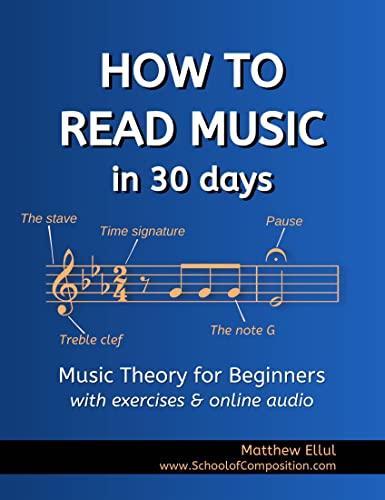
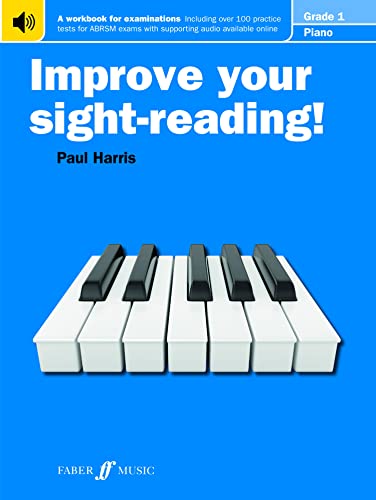
Sight Reading Theory: An excellent book to learn Sightreading, tailored to specific difficulty levels.
 Kindle editionRead on Kindle ›
As an Amazon Associate I earn from qualifying purchases.
Metronome (Digital or Mechanical): A metronome is non-negotiable for sight reading. It enforces the “don’t stop” rule.
As an Amazon Associate I earn from qualifying purchases.
As an Amazon Associate I earn from qualifying purchases.
Adjustable Piano Bench: Proper posture ensures that the eyes are at the correct angle relative to the music stand, facilitating better peripheral vision.
As an Amazon Associate I earn from qualifying purchases.
Conclusion
Sight reading is the gateway to musical freedom. By moving away from perfectionism and focusing on the “flow” of intervals and rhythms, you transform the piano from a machine you must program into an extension of your own voice. Be patient; fluency takes time.
My Top Recommendations:
- Daily Discipline: Spend 10 minutes every day on new music. Never play the same sight-reading exercise twice in one session.
- Diversify: Read hymns, jazz leads, pop songs, and classical minuets. Each genre offers different patterns to learn.
- Collaborate: Playing duets is the best “pressure cooker” for sight reading because you cannot stop for the other person!
Why am I still struggling even though I practice every day?
You might be practicing material that is too difficult. Sight reading practice should involve music 2–3 levels below your current repertoire level to build confidence and flow.
How much time should I spend practicing sight reading?
Consistency is more effective than duration. 10 to 15 minutes of daily practice with new, unfamiliar material is far more beneficial than a single two-hour session once a week.
Should I practice hands separately?
Initially, yes. However, true sight reading improvement happens when you practice hands together, as it forces the brain to manage the vertical alignment of notes.
How do I stop looking at my hands?
Place a piece of cardboard or a cloth over your hands while you play. This forces you to rely on tactile feel and the map of the keyboard you’ve built in your mind.
Does learning music theory help with sight reading?
Absolutely. Music theory provides the “grammar” for the language. Knowing that a specific key usually uses certain chords allows your brain to “predict” the music, making it easier to read.