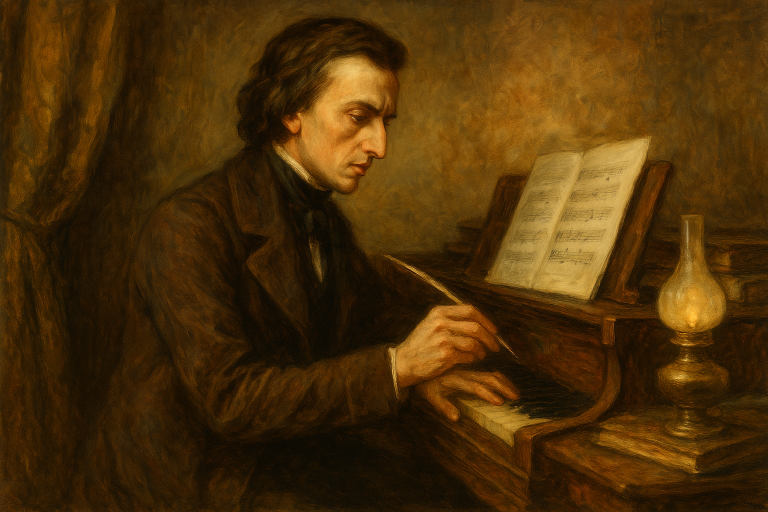

There comes a moment in many pianists’ journeys when the gentle, moonlit strains of Chopin’s Nocturne in E-flat Major, Op. 9 No. 2 begin to drift from their piano for the first time. This beloved nocturne, with its singing melody and rippling accompaniment, has captivated generations of musicians and listeners. Often one of the first Chopin pieces an intermediate player tackles, it offers a perfect introduction to the Romantic style, intimate, lyrical, and emotionally rich. Its opening melody seems to float in the air, evoking the stillness of night and the heartfelt introspection that nighttime inspires. Over the years, this piece’s timeless charm has made it a staple not just in piano recitals and teaching studios, but also in popular culture. Chopin’s No. 2 in E-flat has sounded in countless films and television shows, often accompanying scenes of nostalgia or deep reflection. Despite its fame (or perhaps because of it), the Nocturne in E-flat Major retains an almost magical ability to move the heart – whether played in a grand concert hall or by a student at home.
In this in-depth article, we will explore the nocturne from all angles. We’ll begin with the historical background of the work, placing it in the context of Chopin’s early career and the origins of the nocturne genre. Next, we’ll delve into a stylistic and structural analysis – examining the piece’s form, harmony, and melodic design, with references to the sheet music’s performance indications. Building on that, we’ll offer practical interpretation advice, discussing fingering choices, phrasing, the use of rubato, appropriate tempo, left-hand voicing, and pedaling for an intermediate pianist. For those ready to learn the piece, we’ll even walk through the score bar by bar, highlighting technical tips and musical nuances measure-by-measure. By the end, we’ll see why this nocturne remains an enduring favorite, and how its emotional depth continues to resonate nearly two centuries after it was composed. Prepare to immerse yourself in one of Chopin’s most iconic night songs – a short piece that offers a wealth of insight into expressive piano playing.
The History of the Piece and the Composer Behind it
Chopin composed the Nocturne in E-flat Major, Op. 9 No. 2 between 1830 and 1832, when he was around twenty years old. These years were a time of dramatic change in the young composer’s life. In late 1830, Chopin left his homeland of Poland in the wake of political upheaval, eventually settling in Paris by mid-1831. Paris, with its vibrant musical salons and cosmopolitan atmosphere, became Chopin’s new home and the cradle of his early fame. It was here, as a recent exile in his early twenties, that Chopin crafted his first set of published nocturnes Opus 9. The three Nocturnes Op. 9 were published in 1832 in Paris, marking an important milestone in Chopin’s burgeoning career. They revealed to the world a composer of extraordinary poetic sensitivity, one who could make the piano sing as no one had before.
The Nocturnes Op. 9 were dedicated to Madame Marie Pleyel, née Marie Moke, a prominent French-Belgian pianist of the era. Marie Pleyel was a virtuoso who had been a child prodigy – she first performed in public at age 8 – and by the 1830s she was regarded as one of Europe’s finest pianists. Chopin was an admirer of her talent (the two were acquaintances in the Parisian music circle, and Chopin even briefly gave her piano lessons). In offering the dedication of his nocturnes, Chopin paid tribute to a fellow pianist he respected. Madame Pleyel’s name appears on the title page of the Nocturne in E-flat Major’s first edition, a signal of the piece’s intended artistry. Chopin’s choice of dedicatee also hints at how he viewed these nocturnes: not just simple salon pieces, but works of depth to be interpreted by an accomplished pianist. Marie Pleyel indeed was known for her refined playing; the critic François-Joseph Fétis described her as a model of perfection on the piano. By dedicating Op. 9 to her, Chopin aligned his new compositions with the highest standard of piano performance of the day.
When this nocturne first appeared, Chopin was still establishing himself in Paris. He was a recent immigrant, a talented pianist from Warsaw making a name among the Parisian elite. His two piano concertos had been premiered to acclaim, and he was beginning to publish the solo pieces that would cement his reputation. The nocturne, a genre focused on intimate expression, was perfectly suited to Chopin’s style and the salon culture of Paris. The Nocturne in E-flat Major quickly became popular, admired for its beauty and approachable modesty. Even though it is technically less demanding than Chopin’s virtuosic showpieces, Chopin himself held this piece in very high regard. In fact, one of his students recalled that Chopin was extremely picky about how this nocturne should be played; he believed few could do it justice. When student Wilhelm von Lenz praised Chopin’s own performance of the piece (“You play it so beautifully… can no one else?”), Chopin replied that only Franz Liszt could interpret it on the same level. This little anecdote reminds us that expressive simplicity can be as challenging as virtuosity – and that Chopin poured much of himself into this nocturne.
Historically, Op. 9 No. 2 holds a special place as one of Chopin’s early triumphs. It was part of the first group of nocturnes he ever published – essentially introducing Chopin’s nocturne style to the public. Critics and audiences were charmed. Over time, the piece’s fame only grew. Today it is often the first Chopin nocturne pianists encounter, beloved for its singing melody and dreamy atmosphere. Though short and not fiendishly difficult, it encapsulates many features of Chopin’s mature style. To better appreciate what Chopin achieved with this nocturne, it helps to know where the nocturne genre came from and how Chopin made it his own in the early 19th century.
The Nocturne in 19th-Century Piano Literature
The term nocturne means “night piece.” In the 19th century, nocturnes became a popular genre of solo piano music characterized by a quietly expressive, dreamy mood, as if depicting the tranquility of night. Interestingly, Frédéric Chopin did not invent the nocturne – that credit goes to an earlier composer. The Irish pianist John Field (1782–1837) is widely regarded as the originator of the piano nocturne. Field wrote a series of 18 nocturnes starting in the early 1810s, decades before Chopin’s works. These pieces established the blueprint: a singing, bel canto-style melody in the right hand over a gently rolling left-hand accompaniment, with a focus on expressive, cantabile playing. Field’s nocturnes were revolutionary in their day for their freer form and poetic ambiance. They featured lyrical chromatic melodies accompanied by arpeggiated left-hand chords with sensitive pedaling, a sound world quite new at the time. The young Chopin became a great admirer of John Field, studying and drawing inspiration from these pieces. In fact, by the time Chopin met Field in 1832, he had already composed several nocturnes of his own, clearly influenced by Field’s style.
What Chopin did was to popularize and expand the nocturne, elevating it to new heights. If Field invented the form, Chopin perfected it. Chopin’s nocturnes took Field’s idea of a “night song” and infused it with greater emotional range, richer harmonies, and more daring expression. He maintained the essential features – a vocal, expressive melody (often compared to an operatic aria) and a calm, rocking accompaniment pattern, but introduced innovations that became hallmarks of the Romantic nocturne. One such innovation was Chopin’s use of freer rhythm or rubato. In many of his nocturnes, including Op. 9 No. 2, Chopin allows the right-hand melody to swell and recede in tempo slightly while the left hand keeps a steady underpinning. This gives the music a natural, speech-like expressiveness. Chopin also explored more complex harmonic modulations in his nocturnes, venturing into distant keys or using chromatic tones for color – all while keeping the pieces relatively short and intimate. We hear in Chopin’s nocturnes the influence of Italian opera (particularly the bel canto style of Bellini) in the long-breathed melodies. At the same time, Chopin sometimes incorporated a hint of classical form or counterpoint, lending the pieces structural integrity alongside their poetic free flow.
By expanding the nocturne’s expressive scope, Chopin essentially made it one of the 19th century’s quintessential character pieces, standalone piano works that convey a particular mood or scene. Chopin’s nocturnes were immediately popular and inspired many later composers. Pianists like Liszt greatly admired them, and by mid-century the nocturne had become a staple genre. Composers such as Gabriel Fauré and Claude Debussy (later in the 19th and early 20th centuries) would also write pieces called “nocturnes,” exploring the atmospheric, nocturnal idea in new ways. But it was Chopin who firmly established the nocturne’s place in piano literature. His Op. 9 No. 2 is a shining example of why: it is short and seemingly simple, yet profound in its effect. In Chopin’s hands, the nocturne became a poetic confession at the piano – an intimate musical soliloquy that can enchant a small room of listeners. Understanding this legacy adds meaning to playing the E-flat Nocturne: when you perform it, you are participating in a Romantic-era tradition of night music that began with John Field and reached its highest expression in the works of Chopin.
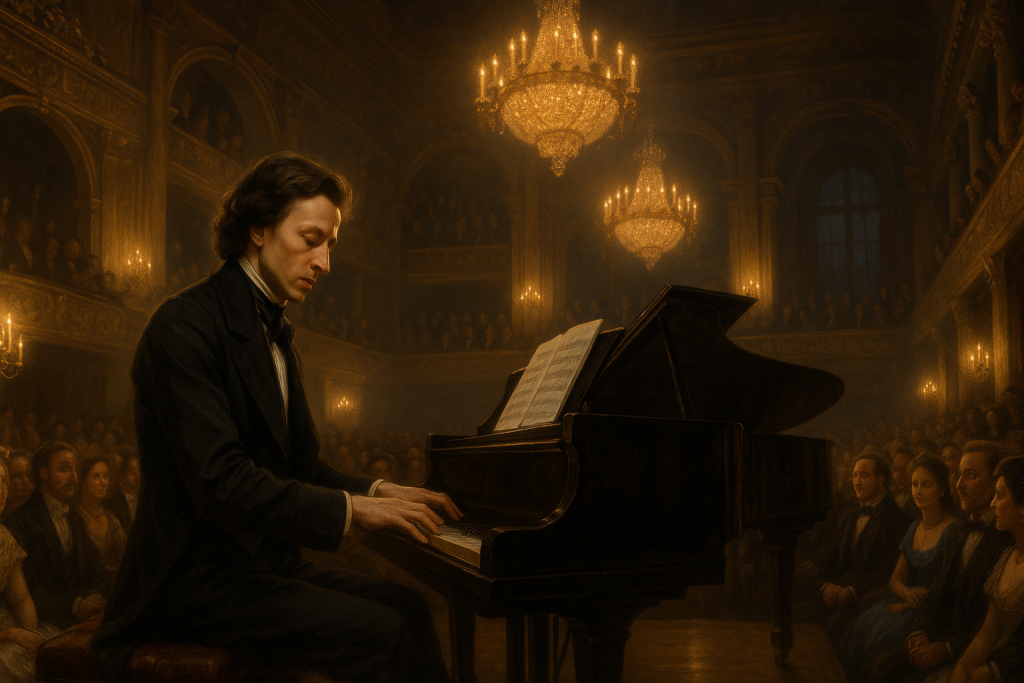
Musical Structure and Style of the Nocturne
Form and Melodic Design
Chopin’s Nocturne in E-flat Major, Op. 9 No. 2 has a delicately balanced structure that underpins its lyrical flow. The piece is composed in a type of rounded binary form, which can be charted as A, A, B, A, B, A, plus a coda. In simpler terms, there are two principal themes (let’s call them A and B) that alternate, with each return bringing new embellishments, and finally a short concluding section. Despite these alternations, the music feels seamless and organic – much like a series of verses with variations. In total, the nocturne is only 34 measures long, structured as a set of 4-bar phrases that create symmetry and order within the expressive freedom. In fact, almost every phrase in the A and B sections lasts four measures, and many of them conclude with a clear cadence (musical punctuation). For example, the A theme’s phrases often end with a classical perfect cadence (Bb^7 to Eb, V^7–I in E-flat major) that gives a satisfying sense of repose This use of balanced four-bar phrases and strong cadences lends the nocturne an underlying elegance and clarity, reminiscent of Classical-era phrasing even as the style is thoroughly Romantic. It’s as if Chopin “broke the rules by observing them” – working within a conventional phrase structure, yet adorning it with his own imaginative touches.
The main theme (A) is stated at the very beginning (measures 1–4) and immediately repeated (measures 5–8) with slight variation. This A melody is one of Chopin’s most famous cantabile lines. It sings out legato and softly (piano), marked dolce (sweetly) and espressivo, as indicated on the score. The melody has a yearning quality, partly due to its graceful upward leaps. It begins on the third scale degree (G, in E-flat major) and rises gently, at one point leaping by a sixth, then an octave, reaching for notes that feel just out of emotional grasp. These widening intervals as the line unfolds create a sense of longing and expansion in the melody. Yet the dynamic remains restrained (mostly piano), conveying tenderness. When the A theme repeats (the second A), Chopin starts to decorate it: you’ll notice delicate chromatic passing tones and grace notes introduced into the melody line. These added notes give a slight tug of yearning – an almost sighing effect – and build a touch of anticipation. For instance, a simple note from the first phrase might become two or three faster notes in the repeat, as if the melody is luxuriating in a little more expression. This is a pattern Chopin follows throughout the nocturne: each time theme A or B returns, it is more ornamented and elaborate than before. The ornaments are never mere show; they feel natural, like a singer adding spontaneous embellishments to express heightened emotion on a repeat of a verse.
The secondary theme (B) offers contrast while maintaining the nocturne’s reflective mood. It first appears in measures 9–12. Here the music momentarily shifts out of E-flat major, exploring more shadowed territory – Chopin moves to the relative minor (C minor) and other neighboring keys, giving the B section a wistful, longing character. The melody of the B section is a simple, elegant line, played perhaps a bit more rubato (freely) as Chopin indicated. In fact, Chopin writes poco rubato at the start of one of the B sections in the score, signaling that the pianist can take a little rhythmic freedom to make this “subordinate” melody very expressive. Harmonically, the B section is where Chopin “lets his hair down” with modulations. In the span of a few bars, the music journeys through a series of chords that temporarily darken the key. Listen for a move into C minor and even a poignant hint of B♭ minor or other minor colors that cast a gentle melancholy over the music. Yet this darkness is fleeting. Chopin masterfully guides the harmony back toward E-flat major by the end of the B section. Notably, he uses a chord progression of F major to B♭ major (IV–V in E-flat’s relative minor, or II–V in E-flat itself) which serves as a pivot back to the light. Then comes a lovely chromatic descent – all the notes move downward in half-steps – landing on a B♭_7 chord (the dominant of E-flat). This dominant chord creates a sense of tension and expectation, perfectly setting up the return of the home key and the A theme. The way Chopin connects the end of the B section to the return of A is very smooth: by ending on B♭_7 (V^7 of E-flat), he makes the resolution to the E-flat chord that opens the A section feel inevitable and satisfying. In essence, despite the adventurous modulation, Chopin ensures the listener never feels lost; the harmonic journey, though “fun” and twisty, leads naturally back to familiar ground.
After the first A–B–A sequence, the nocturne continues with a second wave: another B and A. The A theme’s later returns (measures 13–16 and again 21–24) are increasingly ornamented and slightly more forceful. By the third time we hear A, Chopin adorns the melody with what one might call a “descending waterfall” of notes – rapid descending runs that embellish the tail end of the phrase. These flowing passages of 32nd-notes add a gentle virtuosity to the otherwise simple tune. They should sound like a delicate cascade, providing a beautiful filigree around the melody. The dynamic rises subtly – perhaps to a mezzo-piano – giving a bit more passion, though never breaking the nocturne’s essentially poised character. The final time the A melody appears (just before the coda), it is quite similar to the previous embellished version, save for an intensified ending pattern. Here Chopin inserts a prolonged decorative figure: a succession of shorter, even notes (even a brief staccato touch) followed by a sudden burst of quick notes (a rapid ornament or mini-cadenza). This moment stands out and effectively leads into the climactic coda.
Structurally, it’s fascinating that Chopin built almost the entire nocturne from such small building blocks: two themes, each just four bars long, repeating with variation. The piece’s symmetry and brevity (each section neatly four bars until the coda) make it easier to analyze and memorize – much like poetry with a regular stanza length. Yet within that form, Chopin achieves a tremendous range of expression by decorating and re-harmonizing the melodies each time. The overall mood stays tender and reflective, except in the coda where the passion briefly surges. This shows Chopin’s restraint and taste: the piece never devolves into sentimentality or melodrama. Instead, as one commenter nicely put it, Chopin was a master at reaching the fine line separating drama and melodrama. In this nocturne he gives us drama in miniature – heartfelt but always elegant.
Accompaniment, Rhythm and Expressive Markings
One of the signatures of Chopin’s nocturnes is the accompaniment texture, and Op. 9 No. 2 is a textbook example. The piece is written in 12/8 meter, which means each measure has a compound, lilting division (essentially four beats, each subdivided into three eighth-notes). Chopin uses this 12/8 almost like a slow waltz rhythm, and indeed the left-hand accompaniment gently emphasizes a “1-2-3, 1-2-3” sway throughout. In each measure, the left hand typically plays a widely spaced broken chord: often a low bass note on the first beat (the “oom” of an oom-pah-pah) followed by two higher chord tones on the second and third parts of the beat (the “pah-pah”). This pattern repeats for each of the four main beats in the 12/8 measure. The effect is a rolling arpeggio that provides a soothing, continuous backdrop of sound. Chopin sustains this flowing accompaniment unbroken almost the entire piece – an unceasing ripple of eighth-notes that creates rhythmic consistency and harmonic clarity under the expressive treble line. He intended the left hand to be played very legato and connected with the help of the damper pedal, which merges the widely spaced notes into a sonorous blur. The pedal allows those low bass notes and mid-range chords to ring together, supporting the melody with a rich harmonic bed, like a guitar’s strummed chords under a singer.
Chopin was meticulous in marking expression and dynamics in this score, guiding the performer’s interpretation. The tempo is indicated as Andante, suggesting a walking pace, not too slow, flowing and natural. (Some editions also include a metronome marking; an early French edition gives ♪=132, likely meaning about 132 eighth-notes per minute, which corresponds to a moderate andante feel.) The character marking dolce espressivo at the opening sets the tone: play “sweetly and expressively.” Throughout the piece, Chopin annotates dynamic swells and fades. For instance, phrases often start piano (soft) and have subtle crescendos toward their peak before tapering off. In the sheet music, you’ll find hairpin cresc.< and dim. markings indicating these shaping gestures (e.g., a cresc. appears as the melody rises). The goal is a singing line with natural ebb and flow, much like a vocalist’s phrasing.
Chopin also directly indicates rubato. In one edition of the score, at the transition into the middle section, the instruction poco rubato (“a little robbed time”) is written. This tells the pianist to allow slight flexibility in timing, stretching some notes and compressing others, to enhance the expressiveness. Importantly, Chopin’s approach to rubato, as taught to his students, was that the left hand (accompaniment) should keep a steady pulse while the right hand (melody) can hesitate or hurry slightly, like a singer tugging against the accompaniment. This creates a subtle push-pull effect that makes the melody feel improvised and heartfelt. In Op. 9 No. 2, you might apply poco rubato especially in the B sections, where the melody is more speech-like. For example, stretching the peak of a phrase or lingering on a dissonant note briefly before resolving can heighten the emotion. Just be sure the left-hand “heartbeat” remains gently steady underneath.
As the nocturne proceeds, Chopin introduces a few more markings. In the coda (measures 25 to the end), there are the most striking instructions. The coda begins softly, echoing earlier material, but soon we see con forza (“with force”) in the score. At this moment, the music swells into a sudden fortissimo (ff) outburst. The right hand plays passionate octaves at the top of the keyboard – reaching the highest note of the piece – while the left hand supports with broad chords. It’s a brief surge of intensity, over almost as soon as it begins. Chopin doesn’t linger at this dramatic climax; true to his “less is more” ethos, he immediately pulls back. Right after the ff octaves, Chopin writes a stretto and then senza tempo marking. Stretto here implies a slight pressing forward – a quickening of pace – as if the music is rushing toward its final resolution. Senza tempo means “without tempo,” indicating a moment of complete rhythmic freedom. Indeed, in the penultimate bar, the right hand has a flowing cadenza-like passage (a “mini-cadenza”) where the notes are meant to be played freely, without counting strict beats. The left hand holds a chord (often a dominant seventh) while the right hand plays a rippling figuration of perhaps four notes repeated or trilled, creating a haunting effect. This is the emotional high point of the nocturne’s ending: a final heartfelt cry that remains understated and controlled, rather than an all-out virtuoso cadenza. As one analysis observes, Chopin could have written a grand sweeping finale here, but instead he “keeps everything contained,” adding just a little drama, the right amount, so as not to overwhelm the piece’s delicate character.
Finally, the nocturne closes with a return to calm. After the senza tempo flourish, the indication Tempo I appears, telling us to resume the original tempo for the last bars. The final measures descend in an arpeggiated E-flat major chord, marked ritardando – slowing down slightly – and diminuendo to pianissimo (pp). The left hand plays the last notes sempre pp (always very soft), and we are left with a gentle resolution, like a sigh fading into silence. This exquisite ending, with its mix of poetry and precision, showcases the hallmarks of Chopin’s style: expressive freedom within a clear structure, and emotion conveyed through meticulously notated details. By studying the score’s indications (from dolce and rubato to con forza and ritard.), one gains insight into how Chopin himself imagined the piece. He provides a roadmap of expression – a guide to shape each phrase and dynamic swell. For the interpreter, the challenge is to realize these markings faithfully while also infusing the performance with personal feeling. In the next section, we’ll translate these stylistic insights into practical interpretation advice, so that you can bring this nocturne to life at the piano in an idiomatic, sensitive way.
Playing Tips
Playing Chopin’s Nocturne in E-flat Major is a rewarding experience, especially for intermediate pianists ready to develop their expressive skills. The piece is often rated around an upper intermediate level (for instance, RCM Grade 9), certainly attainable with practice, though it demands musical maturity. In this section, we’ll discuss how to approach the nocturne from a pedagogical standpoint. We’ll cover proper fingering, effective phrasing, the use of rubato and setting a suitable tempo, how to balance and voice the left-hand accompaniment, and judicious use of the pedal. The goal is to help you play with both ease and musicality, respecting Chopin’s style. As Chopin’s students discovered, performing a seemingly “simple” nocturne beautifully can be just as challenging as tackling a flashy etude – it tests your control, tone production, and emotional communication. Let’s break down the key aspects of interpretation one by one.
Fingering and Phrasing
Choosing comfortable fingering is essential for executing the nocturne’s flowing lines and ornamentations. In the right-hand melody, aim for fingerings that promote a smooth, legato touch. Chopin’s melodic lines often have wide intervals and embellishments, so you may need to employ finger substitutions or extensions. For example, in the opening bars, the melody rises with a leap (say, from a G up to an E♭ an octave above). Rather than jumping and risking a gap in sound, try to slide or substitute fingers if possible: play the lower note with a stronger finger (like 1 or 2) and catch the higher note with 5, then connect with a bit of pedal to mask any break. In some cases, a slight break is inevitable (Chopin likely expects a breath between phrases), but always strive for a singing legato where the notes overlap seamlessly.
When tackling the ornaments – the grace notes, turns, and trills – take time to experiment with fingering that fits your hand. A common approach for trills is to use fingers 2 and 3 or 3 and 4, as these pairs can rapidly alternate. For instance, there is a delicate trill or turn figure in the later repeats of the A theme where using 2–3 or 3–4 can yield a even, controlled trill without excessive tension. If the trill is long, remember you can lighten your touch and let the weight of the arm assist a relaxed oscillation of the fingers. For the quick descending runs (the “waterfall” passages), a scale-like fingering works: use standard scale fingerings (with 3-2-1 groups) and tuck the thumb under smoothly where needed. One tip is to group the fast notes in your mind (for example, think of them in blocks of three or four notes) and practice each group slowly and accurately. Over time, link the groups into a continuous run. Avoid the temptation to use one finger to glide through multiple notes (except perhaps for certain grace-note slides); generally, proper alternating fingering will give you better control and clarity.
Now, phrasing in this nocturne should mimic the natural breathing of a singer. Each 4-bar phrase has a contour – usually rising to a peak and then falling to a resolution. Identify the climax note of each phrase (often the highest or loudest point) and shape the phrase toward it, then relax after it. For example, in the first phrase, as the melody climbs, let the intensity and volume grow slightly (a small crescendo), reaching a nuanced emphasis on the top note, then gently let the sound fall off by the phrase’s end (a diminuendo). This creates a “question and answer” feeling, especially in the pairs of phrases. Chopin’s phrases frequently come in pairs where the second phrase answers or echoes the first. In the A section, you might consider the first four bars a “question” – ending on a half-cadence (incomplete resolution), and the next four bars (the varied repeat) an “answer” that ends more conclusively on the E♭ major chord. Reflect this in your playing: perhaps the first phrase is a touch more yearning or uncertain, and the second phrase more resolved or warm.
Pay attention to breathing between phrases. At the end of a 4-bar phrase, it’s often effective to lift slightly (both hands and the pedal) to delineate the phrase ending – like a singer taking a quick breath. Don’t make it a long pause, just enough of a break that the listener perceives a comma in the musical sentence. Chopin wrote clear cadences, so honor them by not smearing one phrase into the next. However, within a phrase, aim to connect every note (unless a phrase includes deliberate staccato or rests, which in this piece are rare). Use finger legato and subtle pedal to carry the line. If you find a spot where you must use the same finger on consecutive notes (for example, some editions suggest a same-finger substitution in the coda’s repeated notes), practice the technique of finger substitution: play the note, then quickly slide the new finger onto the key while keeping it depressed, allowing you to release the old finger. This helps maintain the sound without a gap. Same-finger legato often results in a slight break (which in some cases Chopin might have wanted to achieve a certain articulation), but if a true legato is musically needed, use substitution or a bit of pedal to fake the connection.
In summary, use fingering that supports fluency and precision – avoid awkward stretches that could cause uneven tone or hesitation. Mark your score with fingering solutions once you find what works, especially for tricky spots like the runs and trills. And shape each phrase with intention: know where you are going (the high point) and where to ease off. The better you phrase the melody, the more it will “speak” to your audience in that poetic, singing manner that Chopin intended.
Tempo and Rubato
Setting the right tempo for this nocturne is crucial. As an Andante, it should feel like a gentle stroll, not a drag nor a race. Many intermediate players err by playing too slowly, thinking it will sound more “expressive,” but excessively slow tempos can actually make the piece feel heavy or overly sentimental – what one might call the “drunk friend” interpretation of Chopin’s music (too much swaying and gushing). On the other hand, playing too fast will rob the nocturne of its dreamy, contemplative character. Aim for a moderate pace where the underlying 12/8 rhythm has a lilting flow. You might think of it as four gentle beats per measure, where each beat is a triplet. You should be able to easily sway or nod along to those four pulses. If we interpret ♪=132 as printed in one edition, that means about 66 beats per minute for the dotted quarter (since there are four dotted quarter beats in a 12/8 bar). In practical terms, try a tempo where each measure lasts just under 4 seconds. That typically yields a total performance time around 4 to 5 minutes for the piece, which is in line with most interpretations. When practicing, find a comfortable tempo where you can play the most ornate sections (like the coda run and trills) evenly – that might be a bit slower than performance tempo at first. Once you can manage the hardest parts, maintain a consistent tempo across the piece, with flexibility only where marked or stylistically appropriate.
Rubato is a defining ingredient in Chopin’s music, and using it tastefully will elevate your interpretation. The famous principle of Chopin’s rubato is that the left hand acts “like a conductor”, keeping an almost metronomic underlying beat, while the right hand can sing freely, stretching and compressing the timing of the melody slightly. In practice, this means if you linger on a decorative note or arrive a tad late on a downbeat with the right hand, the left hand should not also slow down drastically; it should continue its gentle 1-2-3 pulse, thereby creating a momentary separation or suspension. This independence of hands is subtle and requires a good internal sense of rhythm. One way to practice rubato is to first play a passage in strict time with both hands together, then identify spots where a tiny hold or hurry in the melody feels right emotionally – perhaps a poignant appoggiatura, a dissonant note begging for resolution, or the peak of a phrase. Then, practice executing that while keeping your left hand steadily moving. For example, in the B section in C minor, you might take a little extra time on the first beat of a phrase (where Chopin wrote poco rubato) to emphasize the plaintive entry of the melody. Let the right hand sing that note slightly longer, but ensure the left hand’s accompanying triplets keep flowing softly. The effect, when done well, is almost unnoticeable to a listener – they will just sense that the melody breathes. Avoid overdoing rubato; it’s a “little stolen time,” not big rhythmic distortions. Constant exaggerated slowing and speeding will turn the piece mushy. Instead, use rubato sparingly at key expressive moments, and always return to Tempo I as marked or as the phrase settles. Chopin often explicitly writes a tempo or tempo primo after a rubato section, reminding you to restore the original pace.
One specific place to be mindful of tempo is the coda. With the marking stretto, Chopin indicates a slight quickening as the excitement builds, followed by senza tempo where you can momentarily abandon the beat for the free run. In the senza tempo bar, focus on expressivity rather than counting – this is your moment of personal expression, like a spoken exclamation in the music. Immediately after, though, ritardando and calm are the watchwords: the final arpeggios should gently slow and settle into silence. The final measure or two can stretch just a touch (a little rallentando) to let the ending resonate.
In sum, choose a tempo that feels natural and songlike, neither too slow to drag, nor too fast to sing. Incorporate rubato in the right hand to enhance the lyrical quality, but keep the underlying pulse with your left hand. This balanced approach will capture that cool, clear elegance that characterizes the best Chopin performances – where the music is deeply felt but not indulged to excess. Remember that Chopin’s music often “holds back” a little of its emotion ; aim to express passion within a framework of refinement. That restraint will make the moments where you do broaden or surge (like the coda) all the more powerful.
Left-Hand Voicing and Pedaling
The left hand in this nocturne provides the harmonic foundation and rhythmic motion, and it must be handled with care so as to support the right hand without ever overpowering it. Voicing refers to how you balance the tones within the left-hand chords and how prominently you project the left hand versus the right. In Chopin’s nocturne, the melody absolutely must sing above the accompaniment. To achieve this, play the left-hand arpeggios very softly and evenly, almost like a harp murmuring in the background. A good exercise is to practice the left hand alone with a quiet, relaxed tone, aiming for an even pp (pianissimo) across all the notes. Make sure no single note in the left hand “spikes out” – oftentimes, the pinky playing the low bass note tends to produce a heavier sound simply because it’s a stronger finger or one might attack it too firmly on the downbeat. Work on softening the bass note attack; you can think of stroking the key rather than striking it. Some pianists even imagine they are playing under the melody, as if the left-hand notes are a soft cushion on which the right-hand notes sit.
Within each left-hand broken chord, you can subtly voice the top notes vs. bottom notes depending on context. In many measures, the left hand pattern might be something like: lowest note (bass), then two higher chord notes. Often, it’s effective to play the lowest note slightly louder than the middle notes – but still soft overall – to provide a clear harmonic anchor (the listener’s ear catches the bass harmony) without making those inner notes too prominent. Then let the middle notes be very light, just filling in texture. However, in other spots, Chopin might have written the left hand to have an inner moving line or a duet with the melody. If you notice any interesting inner voice in the left hand (for example, a chromatic inner line created by the changing middle notes of the chord), you could gently bring that out provided it doesn’t compete with the main melody. Generally, though, the left hand should stay in the background : accompaniment role.
Another aspect of voicing is making sure the right hand’s lower notes don’t get drowned by left hand. Sometimes the melody dips into the middle register where left-hand notes are also ringing. Here, consciously keep the left hand extra subdued, and use a bit of finger pressure in the right hand for those lower melody notes to make them speak. Chopin was a master of piano pedaling, and he counted on the damper pedal to blend the left-hand pattern into a warm wash of sound. You should use pedal, but intelligently. The general guideline is to change the pedal with each harmony change. In this nocturne, that often means changing pedal roughly every measure, or even twice a measure if the harmony shifts mid-bar. For instance, in the B section with quicker harmonic movement, you might need a pedal change at the half-measure point. Listen critically: if the harmonies are clashing or previous notes blur into the next chord in an ugly way, you waited too long to change pedal. Ideally, the pedal should refresh just as you play the new bass note or chord, so that the previous harmonies are cleared. A common technique is to use syncopated pedaling: as you press the new left-hand bass note, lift and re-depress the pedal almost instantaneously. This catches the new sound and releases the old. It takes practice to coordinate, but it’s vital for clarity.
In sections where the harmony stays the same for a full measure, you can often hold the pedal through the measure to connect all the left-hand notes and give a dreamy resonance (for example, many measures of the A theme can be pedaled once per bar). Be cautious in the ornamented repeats and coda: when the right hand plays fast runs or trills, excessive pedal can blur those details. During a very fast ornamental run, you might even momentarily lift the pedal to let the flurry of notes come out clear, then depress it again on the next bass note. In the con forza octaves part of the coda, you will likely want pedal to enhance the power, but beware, too much pedal at ff with octaves can turn to mush. Consider doing partial pedal (not fully down) or rapid flutter pedaling to avoid a muddy sound, since the register is high and the dissonance (like the C♭ to B♭ suspension Chopin uses) could be too harsh if held. As the piece ends, use the pedal to vibrate the final chord – you might change pedal on the final arpeggios to match the changing harmony (there’s a moment of a diminished chord resolving to E-flat). Then perhaps release the pedal on the very last note or chord to let it decay naturally and not blur any unintended tones.
One more pedaling tip: observe if Chopin wrote any specific pedal marks. Early editions sometimes did not notate much pedal, trusting performers’ judgment. In some modern scores, editors have added pedaling suggestions. Use them as a starting point, but always let your ear be the guide. The acoustics of your room and your instrument’s resonance will influence how often you need to clear the pedal. In a very resonant hall or on an instrument with lots of overtones, you may pedal a bit more frequently. In a dryer sound, you can afford slightly longer pedals.
To summarize, make your left hand the model of smooth, quiet accompaniment. It should be steady in rhythm but supple in sound – no accents, no harsh tones, just a gentle undulation. Bring out the right-hand melody by contrast, using weight and finger control in the right hand. Pedal enough to connect and enrich the tone (Chopin’s wide-spaced chords practically require pedal to sound full), but not so much that you lose definition. Strive for that ideal where the left hand and pedal together create a “sonorous foundation” over which the melody floats and shines. When achieved, the listener hears one integrated musical fabric: a singing voice at the forefront and a hushed nocturnal atmosphere underneath.
Bar-by-Bar Technical Walkthrough
Now let’s go measure by measure (or phrase by phrase) through the nocturne, translating all the analysis and advice into specific practice tips. In this guided tour of the score, we’ll highlight the key challenges and suggestions for each section of the piece. This way, as you practice, you can focus on each group of bars with a clear idea of what to listen for and how to tackle any hurdles. We’ll follow the structure we outlined: the piece falls naturally into phrases of four measures. Use these as manageable practice chunks. Master one chunk, then move to the next, and so on – soon you’ll stitch them together into the complete nocturne with confidence.
Measures 1–4: Opening Theme (A1)
Musical overview: The piece begins in E-flat major, with the right hand singing the main theme (A) and the left hand laying down the soft triplet accompaniment. This first phrase sets the mood: dolce, cantabile. It ends on a half-cadence (Bb major chord), leading into the next phrase.
Technical challenges & tips: Start by getting comfortable with the left hand pattern here. In measure 1, the left hand likely plays an E♭ octave (E♭ in the bass and possibly E♭ an octave above) followed by a B♭ and G (the other chord tones of E♭ major) in triplet rhythm. You must play this broken chord very evenly. Practice it slowly, listening to each note: E♭ – B♭ – G – (B♭ – G – E♭ etc., depending on arrangement). Aim to have each note equal in softness and connected. Use finger legato within the left hand as much as possible (e.g., 5 on low E♭, 2 on B♭, 1 on G, just an example fingering, use what is comfortable, but this is common). Where you can’t connect with fingers (because of the wide stretch), rely on pedal to bind the notes. Check that your wrist is relaxed and moving slightly in a rocking motion to accommodate the jump from low bass to mid-range notes. A relaxed wrist will help you land the bass softly and move up to the chord smoothly.
For the right hand melody, notice the slur markings – Chopin wants a true legato line. The melody might start on a G (the 3rd of the chord) and leap up to a high E♭. There is a graceful leap of a sixth here; to play it, don’t try to jerk your hand upward. Instead, prepare by moving your hand in advance. As soon as you play the G, already let your wrist and arm begin moving toward the high E♭, so that by the time you need to play it, your hand is almost there. Use a finger like 5 for the high note to maximize reach. This upward leap is a poignant moment, give the high note a gentle emphasis (perhaps slightly more weight, and a very mild lingering) to let its sweetness ring out. Then the melody descends stepwise. Play these descending notes with a connected, singing tone. Use the advised fingerings in your edition; often it will be something like 5-3-2-1 or similar to go down the scale. Ensure each note melds into the next.
Expression: Begin piano, and think “warm” rather than “weak.” The sound should be soft but supported (imagine singing quietly but with good breath support). Phrase toward the peak (likely the highest note you hit in measure 2) and then let the melody ease downward. Since this phrase doesn’t fully resolve, keep a sense of yearning at the end, maybe don’t die away completely; maintain a slight suspense into the next phrase.
Measures 5–8: Embellished Repeat of Theme (A2)
Musical overview: This is the second A phrase, essentially repeating the melody of mm. 1–4 but with added ornamentation and a more resolved cadence at the end (finishing on an E♭ chord). Chopin introduces chromatic tones here to intensify the expression.
Technical challenges & tips: Compare the sheet music here to the opening – identify the ornaments that were not present in mm. 1–4. Commonly, Chopin adds little grace notes or passing tones. For example, where the first phrase might have had a single F note, now Chopin might write F–E♮–F as a quick triplet ornament around it (this is illustrative). These chromatic notes (like E-natural in the key of E♭ major) create beautiful tension. Practice the ornament slowly first: figure out the exact rhythm or placement. A typical approach is to play grace notes quickly so they lead into the main melody note on the beat. If you have something like an acciaccatura or small note with a slash, play it almost simultaneously with the left hand beat, but just before, so the main note still lands on the beat. If it’s a notated small group (like two or three little notes), space them evenly before you land on the principal note. This can be tricky – use a metronome at very slow tempo if needed to map out where the ornament fits. Gradually speed up until the embellishment sounds fluid and expressive, not mechanical.
The left hand pattern remains the same as before, but be mindful: sometimes when right hand gets busier (with more notes), the left hand can unintentionally get louder or rush. Keep the left hand in check – it should remain just as soft as in the beginning, if not softer, to allow the increased right-hand activity to shine through.
Watch out for any finger switches or extensions needed due to the ornament. For instance, if you have to play a quick turn (say A♭–G–F in the middle of the melody), plan which fingers will handle that (e.g., 4–3–2) and how you’ll then land on the next main note (maybe thumb on E♭ after the turn). Practice the turn by itself several times, then in context.
Expression: Those added chromatic notes are like sighs or graceful appoggiaturas – make them expressive. Often a good rule is to lean a tiny bit on the dissonant note (like the E-natural against the E♭ harmony) and resolve gently to the consonant note. For example, if the ornament is F–E–F (with E natural being the expressive dissonance), you might give the E a hair more weight, then lightly ascend back to F. These nuances are small – don’t accent, just shape. Listeners might not consciously notice, but they will feel the increased yearning or “reaching” quality. Dynamics can swell slightly more in this phrase – maybe reaching a strong mezzo-piano at the peak before resolving. By measure 7–8, as you come to the E♭ major cadence, you can let the volume subside, resolving dolcissimo. Ensure the final chord of measure 8 is gentle and releases the tension, completing this opening section’s thought with a sense of repose.
Measures 9–12: First B Section (Contrasting Theme in C Minor)
Musical overview: Now we move to the B theme, which offers contrast. Chopin shifts to the minor mode, likely C minor, given E♭ major’s relative minor; imparting a more melancholic tone. The melody here is simpler in contour, perhaps a repeated figure or a more stepwise line, and Chopin marks poco rubato, inviting rhythmic flexibility. The harmony goes on a bit of a journey, setting up a return to E♭ major.
Technical challenges & tips: In C minor, you’ll have a different set of accidentals (A♭ and B♭ are still there as in E♭ major, but now E♭ is the third of the key, etc., and Chopin may introduce others like F♯ or natural signs for expressive coloring). Pay attention to accidentals – there may be many courtesy accidentals as chords shift. Practice hands separately here to get the new chord shapes in the left hand and the altered notes in the right. The left hand pattern might adjust if the chord qualities change (for example, you might play a C octave, then G and E♭ for a C minor arpeggio). Ensure you learn the left hand thoroughly so it remains steady even as the key changes. The leap distances might be similar, but your hand has to recalibrate to minor intervals.
The right hand might have some expressive leaps or sighing figures. A common pattern in such nocturne B sections is a decorative resolution, e.g., the melody might rise and then fall by a half-step resolution, giving a poignant touch. For instance, you might see a figure like D♭ resolving to C over a G in the bass (just hypothetical). If something like that appears, treat it like a little plea – perhaps play the D♭ slightly softer and lingering, then resolve to C warmly. Technically, such half-step moves are easy for the fingers but require control to avoid poking the keys. Keep your fingers close to the keys and caress them.
Rhythmically, since Chopin wrote poco rubato, you have license to bend the tempo. However, ensure the left hand doesn’t speed up with the right. A trick: practice the left hand alone with a metronome through this passage. Then, practice the right hand alone with rubato – slowing in some places, quickening in others – while tapping your foot or counting to maintain an inner pulse. Finally, put hands together: let the left hand act as that inner pulse (no foot-tapping now, just feel it), and the right weave around it. Specifically, you might delay certain right hand notes. If the melody has longer notes with ornaments, you can slightly delay resolving them. For example, if there’s a written turn figure (say, E♭–D–C–D–C over a bar), you could stretch the first few notes and then catch up. Don’t overdo it – keep it poco rubato.
Expression: Think of this section as a wistful confession. The dynamic likely stays soft (maybe pianissimo or a contained piano). Even though it’s minor and perhaps more intense emotionally, Chopin often keeps the dynamic low here to create contrast not through loudness but through harmonic tension. Let the melody sigh and yearn. Use gentle rubato to let the music breathe – perhaps a slight lingering at the peak of a phrase or before a resolution. The left hand’s steady rhythm will act like a heartbeat under a plaintive voice. Also, this phrase is leading into the next A return, so it will end on a dominant that begs resolution (likely a B♭7 chord in measure 12). In measure 12, as you approach that dominant chord, you might feel a natural crescendo – the harmony is intensifying (Chopin often has a chromatic bass line descending here into B♭7). Let the volume swell a bit and the tension increase. This sets up excitement for the return to E♭.
Measures 13–16: Return of A Theme (A3, ornamented)
Musical overview: Back in E-flat major, the A melody returns after the sojourn in minor. This time, however, it’s more elaborate. Chopin likely writes an even more ornate right hand – possibly including the famous “waterfall” run he incorporates in the third iteration. The emotional intensity edges up slightly compared to the opening, but it’s still marked by lyricism and grace.
Technical challenges & tips: When you hit measure 13, ensure your key signature mindset flips back to E♭ major (A♭, B♭, E♭). It’s easy to accidentally carry over a flattened or naturalized note from the previous section, so reset mentally: we’re back home in the warm key of E♭. The left hand resumes the original pattern. Check alignment: after the more rhythmically free B section, now the A theme likely resumes a tempo. You might have a tendency to drag from the rubato section – resist that by possibly counting the first measure or two very cleanly to re-establish the beat.
The right hand at this stage might include a rapid descending scale or arpeggio (the “waterfall”). For example, Chopin could have written a long line of 16th or 32nd notes that spill down from a high point. These runs are a hallmark of Chopin’s style – they need to sound effortless and fluid. To master them, break the run into sections. If it’s a scale-like run (say, spanning an octave or more), practice it in groups of four notes: play 4 notes, pause, next 4 notes, pause, etc. This lets you check evenness. Use proper fingering (likely a standard scale fingering where possible, e.g., 3-2-1 crossing under on E♭ to D to C, etc., depending on context). Make sure each note is clear – don’t blur them with pedal initially. Gradually increase the speed and link the groups. Another helpful technique is rhythmic practice: play the run in swung rhythms (long-short-long-short) then the opposite (short-long-short-long). This builds control and evenness. Once you can play it cleanly at a slower tempo, try to “throw” the run – that is, think of it as one gesture. Often these runs can be executed with a light touch and a slight rotation or sweep of the hand. If you find yourself stiffening up, stop and shake out tension. These fast notes actually require less force than slow ones – let the momentum of your hand carry them.
During this A section, the right hand might also incorporate more trills or turns around the melody notes. Approach them similarly to before: assign good fingering, and practice slowly before integrating.
Expression: This iteration of A is a bit more urgent and passionate. The analysis notes that it’s “a little more forceful” than earlier, though still not loud. You might play this around mezzo-piano to mezzo-forte at the peak. Definitely, any crescendos Chopin wrote can be a bit broader here. When the descending run comes, you might use it to create a swelling effect – for instance, start the run a bit louder and then diminuendo as it cascades downward, like a wave crashing then dispersing. Conversely, some pianists do a crescendo through a run into a climax note – interpret based on context (look at the dynamic markings around it). The left hand should perhaps come up from pp to p or mp to support a fuller tone, but stay in the background relatively. Feel free to infuse more emotion here: a touch more pedal, a slight rubato to savor the decorations, and a sense of forward motion driving toward the next section.
At the end of measure 16, listen to the harmony – likely we’re once again preparing a move (maybe a B♭7 if the pattern repeats). Chopin might be about to go into another B section or into the coda depending on how he structured it. In Op. 9 No. 2’s case, the form suggests another B (17–20) then final A (21–24). So measure 16 probably ends on something that propels into the next B. Emphasize that by perhaps not relaxing completely – keep some suspense so the listener knows more is to come.
Measures 17–20: Second B Section (Chromatic Journey)
Musical overview: Another pass through the contrasting theme – call it B2. This likely mirrors the character of mm. 9–12 but could be even more harmonically adventurous. Chopin might sequence the melody through different keys or do a dramatic chromatic descent here to intensify the urgency before the final return of A. By measure 20, we expect a strong dominant that will resolve to E♭ for the last A.
Technical challenges & tips: Treat this similarly to the first B section with respect to rubato and voicing. However, since this is like a development of it, the harmonies might change more rapidly. You might encounter chords or accidentals you haven’t seen yet in the piece (for example, Chopin could use a diminished 7th chord or a surprise modulation). Take hands separate, figure out the new accidentals, and drill the left hand so it’s secure. If there’s a particularly weird left-hand leap or unfamiliar chord (like an E natural in the bass unexpectedly, which would imply a shift to some mode), isolate that movement. Practice jumping from the previous bass note to the new one without looking too much – train the distance.
The right hand might have some sequential patterns (where a motif repeats a step lower or higher). If you notice a sequence, once you learn the first instance, the rest follow the pattern – leverage that to memorize faster. But also sequences often trick people into complacency – make sure each sequence step’s fingering and notes are correct as accidentals may alter each repetition slightly.
One hallmark of this section, as per analyses, is a downward chromatic line leading to the dominant. Often, this is in the bass or inner voices. If it’s in the left hand (like each measure the lowest bass note goes down by half step – e.g., C, B, B♭), try to bring that out a tiny bit within your soft playing. It gives a really satisfying tension. From a technical viewpoint, chromatic bass movement means frequent pedal changes to avoid muddiness – change pedal at least at each new bass note. Also, coordinate the chromatic notes: if both hands are moving chromatically (say the right hand has a chromatic line too), line them up correctly. Slow practice helps align any non-diatonic stuff cleanly.
Expression: This section should feel like a brief darkening or intensifying before the sun comes out again. Perhaps play slightly louder than the first B section, or use a tad more rubato, as if the emotion is heightening. There may be an element of crescendo through these bars – Chopin is leading to the climax of the piece soon. If you see forte or a swell marked toward measure 20, follow that. The end of this phrase (measure 20) is crucial: it should clearly signal anticipation. Often it ends on a V7 chord (B♭7) that might even be marked with a fermata or just a pause implied by a breath. You might choose to stretch the timing slightly on the penultimate beat of measure 20, then perhaps do a gentle rit. into 21. For example, if measure 20 has a dominant chord, you can linger just a touch (not too long, we’re not at the final cadenza yet, but enough to let listeners feel “we’re about to arrive”).
Also, ensure that you don’t lose control here: sometimes when music modulates and builds, players rush. Keep the underlying pulse, even if swelling – “not too much pepper,” as some teachers say. Emotional intensity should not equal loss of rhythmic integrity. A well-placed rubato or rallentando is fine; unintended rushing is not.
Measures 21–24: Final A Section (A4, climax preparation)
Musical overview: The A theme returns for the last time. By now it’s richly ornamented and likely played with the greatest passion of the piece. It might be nearly identical to mm. 13–16, or have slight differences (some editions show virtually the same notes for the last A as the previous, with only the ending being different to lead into the coda). The end of this phrase will flow directly into the coda (measure 25 onward), possibly with a seamless connection or overlapping.
Technical challenges & tips: Because this final A is the culmination, it’s easy to get carried away and play too loud or fast. Maintain control. Technically, apply everything from the prior A section (13–16) here: careful execution of runs, trills, and leaps. If the material is a copy of 13–16, you should rely on your practiced fingerings and approaches from before. If there are any new flourishes (some performers add tiny personal turns or the edition may have a slight variation), integrate them in advance.
One common thing: the transition into the coda might have a tempo or character change marking at measure 25 (like poco piu mosso or allargando, depending on Chopin’s notation). In this piece, Chopin wrote con forza at 26 and ff, but the actual transition from measure 24 to 25 might be more implicit. In any case, you should prepare mentally that after 24, something different comes. So when practicing 21–24, always continue a bit into 25 so you know how to dovetail into the coda. That might mean, for example, not taking a full stop at 24 but practicing the flow. Some editions might slur 24 into 25 to show legato connection. If measure 24 ends with a short note or a rest, notice if the left hand immediately starts the coda without break.
Finger-wise, by this point your hand might feel a little tired from repeated similar figurations. Take note of any tension accumulating and release it whenever you stop for practice. During performance, you won’t stop, so instead incorporate micro-relaxations: between phrases, loosen your shoulders; while the left hand has repeated easy patterns, let it remain loose.
Expression: Think of this as the zenith of the nocturne’s singing quality. You want a full, round tone in the melody – probably around mezzo-forte at the most intense point, but watch that it doesn’t become harsh. Chopin rarely wants a true forte in a nocturne’s melody until maybe the coda. So keep it intense yet sweet. One could liken it to an opera singer delivering the climax of an aria with passion but not screaming. You might employ the broadest rubato here (aside from the cadenza). For instance, stretching the high note of the phrase, or taking time on an ornament that really yearns. Just ensure it doesn’t disturb the accompaniment’s flow.
As you approach measure 24’s end, get ready for the upcoming con forza. Often, measure 24 will include a rapid lead-in to the coda. Some editions show measure 24 ending with a series of fast notes (like a rapid descent) that essentially launch into measure 25’s downbeat. If so, play that launch clearly and with direction. Don’t slow down too much – often this bit should propel you forward (stretto feel). Think of it as creating momentum that will explode in the next bar.
This is a good place to check your pedaling: leading into the coda, you may want to clear the pedal right at the end of measure 24 so that when you hit the big chord in 25, it’s clean and powerful. Some pianists even lift the pedal slightly before the final note of 24, if that note is a pick-up to a loud section, to ensure maximum clarity. Experiment with that when you practice the transition.
Measures 25–34: Coda and Cadenza (Conclusion)
Musical overview: The coda is the dramatic final section of the nocturne. In Op. 9 No. 2, the coda (measures 25–34) introduces new material (“C theme” as some analysis calls it) but also echoes earlier ideas. It typically starts softly, then has a surprising passionate outburst (con forza, ff) with a high climax and octave runs, and then subsides into a brief cadenza senza tempo before the final bars. The piece ends with a return to the calm E♭ major resolution.
Technical challenges & tips: The coda can be divided into a couple of parts:
- Measures 25–28 (first part of coda): This might recall the B section’s harmony or theme initially, but quickly something new happens. For instance, Chopin could start measure 25 similarly to a B phrase (quiet, in E♭ or still C minor?), but by measure 26 he marks con forza and you play a bold upward leap to a high note. Let’s tackle measure 26 specifically: it contains a big upward leap to the highest note of the piece (perhaps a high G or higher E♭?) in octaves, marked fortissimo. To hit this accurately and powerfully, you need to coordinate arm movement and pedal. Practice the leap in octaves slowly first: identify the lower octave note and the target upper octave note. Drill the motion: play the low octave (likely an E♭ or B♭), then move your arm and hand quickly to the high octave key, aiming to land both pinky and thumb together. Use arm weight to produce a big sound, rather than just finger strength – drop onto the high octave with a controlled fall of the arm. Keep your wrist aligned and firm enough so both notes sound together. Now, dynamic: since it’s ff, you want a rich tone but not banging. Achieve this by using velocity (speed of attack) and weight, not by stiffening up and slapping. Also, the pedal can help here: if you pedal through the leap, the lower notes will carry into the upper, adding resonance. However, too much pedal might blur if the harmony changes. Likely, Chopin intended the pedal down through these octaves for sonority (like a big pedal wash). You might depress the pedal just as you start the upward leap, then release and re-pedal after if harmony requires. Check the score if any pedal mark or phrase mark is given.
After the initial leap, measure 26-27 probably have the right hand playing octaves or big chords in a bravura manner. Work on evenness of octaves: practice the right hand alone on octaves, ensuring both notes sound together and that your hand isn’t tensing excessively. A common exercise is to play loud octaves with a loose wrist and forearm rotation (like turning a doorknob motion between notes). That might be more applicable in fast octave scales; here you might have fewer but still ensure flexibility. If there’s a long held octave (like Chopin might have written a dramatic long trill in octaves or a suspension like C♭ resolving to B♭), make sure to count and sustain it the proper length and then release exactly when needed – these timing details add to the drama (Chopin left a long suspended dissonance to create tension).
- Measures 28–30 (climax and resolution): By measure 28 or 29, the intense section peaks. Chopin might have notated a long trill or a rapid arpeggio here. For example, one account mentions an extended trill in the C section that shows virtuosity. If you have a trill in octaves (say, trill between C♭ and B♭ with the right hand 5–1, which is quite difficult), an alternative is that he expects you to trill with 2–3 or 3–4 on a single note if it’s not an octave – but if it’s an octave trill, it’s more of a tremolo effect (alternating the two notes). More likely, Chopin wrote something like a descending chromatic scale in both hands or a rapid rolled chord downward. Whatever the virtuosic element, isolate it. If it’s a trill, practice it slowly first to get even oscillation. If it’s in one hand, use the usual trill fingers and ensure a loose wrist (you can accent every 4th or 6th note slightly just in practice to check evenness). If it’s an arpeggio or scale in both hands, practice hands separate, then together at a slow tempo for coordination.
A special mention: Some editions show a famous 17-note run in the penultimate bar (Chopin often wrote fancy runs that don’t fit neatly into rhythm). In Op. 9 No. 2, there is indeed a point where the right hand has a florid quick run while left holds a chord – hence the senza tempo marking. This is effectively a cadenza. To practice that run of 17 (or however many) notes: figure out the pattern (often they are ascending or descending scales or broken chords). Once fingered, practice slowly, then try to group them into maybe 3-3-3-3-3-2 pattern (just to have a mental structure). When performing senza tempo, you actually don’t need to worry about fitting it into a strict count, but you do need to play it beautifully and confidently. So practice until you can rip through it smoothly. One tip: sometimes accent every 3rd or 4th note in practice, then in performance play with no accents, just a flowing line.
- Measures 31–34 (final resolution): After the fireworks, Chopin brings us down to earth. Typically the last two measures (33–34) are ritardando and diminuendo. The left hand likely plays an E♭ major arpeggio or chord spread over the bar. The right hand might mirror or just play the last notes of the melody. Technically this is easier, but mind voicing: often the final chord will have the melody note on top ; make sure that sings even in the soft ending. If the last chord is rolled (arpeggiated), roll it slowly and gracefully with the pedal catching the whole chord. If the last note is marked staccato or something (some nocturnes end with a detached grace – but Op. 9 No. 2 I believe ends legato), follow that articulation. Use a gentle wrist to release the final notes – the sound should just evaporate.
Expression: The coda is where you can really display emotional contrast. Start measure 25 piano, maybe with a reflective echo of the earlier music. Then measure 26 – unleash that sudden passion! The marking con forza, ff means let yourself play with full energy and a big sound. The audience should feel a jolt of excitement, as if a night breeze suddenly gusted, or a surge of emotion that was held back now bursts forth. Still, be musical: “with force” doesn’t mean ugly or banging. It means a focused intensity. You might lean in with your upper body slightly (ensuring weight transfer into the keys) and really project those octaves. Enjoy the drama, it’s a short moment of extroversion in an otherwise introverted piece.
As soon as it came, Chopin pulls it away. When you hit the long suspended note or trill, milk the suspense. That dissonance (like C♭ against B♭, essentially a leading tone clashing) is the height of drama – hold it just long enough to create yearning, then resolve it exactly when indicated, so we feel the relief.
Then the senza tempo run: here, expressivity and freedom are key. Since you’re not bound by tempo, shape the run – maybe start it a hair slower, accelerate in the middle, and slow slightly at the end (like a mini rallentando within the run) to land beautifully on the next chord. This is subjective – some prefer to play it straight but simply ritard at the very end. What matters is that it sounds fluid, improvisational, and ends in sync with the left hand chord (the left hand often has a long note or chord that you might hold and release together with the end of the run). Chopin marked senza tempo to indicate it’s like a cadenza, so channel your inner Chopin improvising at the piano.
Once that flurry is done, settle back into Tempo I for the final measure or two. The emotional storm has passed; we’re left with the tranquil night once more. So dramatically drop the dynamic to piano or pp. The poco ritardando in the last bar will help signal closure – do slow down a bit, as if the music is coming to rest. But don’t drag each note; it’s more of an easing into silence. The final chord: play it very softly (una corda if you like, if on piano). If it’s written pp, aim for a delicate sound that still has core (not a blank ghost of a sound – you want it audible but gentle). Listen to the chord balance: bring out the E♭ (root) and G (third) clearly so the major quality is warm.
Hold the final chord/pedal as long as the score indicates (or if none, for a musical breath). Let the overtones dissipate in the air. Only release the pedal when the sound is almost gone, to avoid an abrupt cut.
Emotionally, in these last moments think of the opening mood returning: serene, affectionate, perhaps with a touch of the nostalgia that this piece often conveys. Many listeners have heard this nocturne countless times, yet a sensitive rendition of the ending can still give them goosebumps, that feeling of contented resolution after an emotional journey.
Take a quiet pause after finishing before lifting your hands, the piece ends in a whisper, and the silence after is part of the music in a way.
Conclusion: A Timeless Nocturne of Enduring Beauty
Frédéric Chopin’s Nocturne in E-flat Major, Op. 9 No. 2 has earned its place as one of the most enduringly popular piano pieces of all time – and now we can appreciate why. In this relatively short work, Chopin distilled an atmosphere of night-time reverie and heartfelt emotion that speaks to pianists and audiences across generations. For the intermediate pianist, learning this nocturne is much more than a technical exercise; it is a lesson in expressive playing, poetic interpretation, and stylistic nuance. We’ve seen how its simple A–B alternating form provides a stable canvas, while Chopin’s inventive ornaments and harmonic shifts add layers of romantic depth. We explored how to shape its elegant 4-bar phrases, voice a singing melody over a velvet-soft accompaniment, and use techniques like rubato and pedal to bring out the nocturne’s unique character. By walking through each measure, we uncovered the myriad details – from fingerings for tricky runs to dynamic shadings – that make the difference between a mechanical performance and a truly musical one.
What makes this nocturne so beloved? Perhaps it’s the emotional honesty that emanates from every bar. The music feels like an intimate conversation – at moments a gentle reassurance, at others a passionate declaration, and finally a tender goodnight. Chopin’s gift was to infuse such sincerity into his music that even a novice listener can sense the poetry in it. At the same time, he crafted the piece with consummate skill, giving it structural clarity and instructive value. As students practice it, they inadvertently absorb principles of phrasing, pedaling, and tone control that will benefit all their repertoire. In a way, this “night song” becomes a teacher itself, showing us how to sing on the piano and how to balance passion with restraint – how to find that fine line between drama and melodrama, as Chopin so expertly did.
The enduring popularity of Op. 9 No. 2 is also evident in how often it appears in movies, television, and even popular arrangements. Its melody has become a symbol of classical piano music – recognizable and evocative in just a few notes. While some might dismiss it as overplayed, those who truly listen (or perform it with fresh ears) discover that it never loses its charm. Each performer can find something personal in it: a phrase that particularly resonates, a rubato that feels like one’s own heartbeat, a color in the harmony that paints an image of dusk or moonlight. Chopin himself might have been astonished at how his nocturne has traveled the world and entered the collective consciousness, but perhaps not – he knew he had written something special (“Je le trouve très beau,” he supposedly said of one of his nocturnes).
In conclusion, Chopin’s Nocturne in E-flat Major, Op. 9 No. 2 remains an essential gem of the piano repertoire. Its timeless beauty lies in the perfect marriage of simplicity and sophistication: an unforgettable, singing melody supported by sumptuous harmony and delicate craft. For the intermediate pianist, mastering this piece is a milestone that brings not only improved technique but also a deeper understanding of musical storytelling. And for any listener, its emotional depth, from the gentle opening bars to the passionate climax and peaceful resolution, offers a moment of reflection and nocturnal serenity that is as moving today as it was in 1832. In the quiet night of your practice room, when you finally play that last chord and let it fade, you might sense, as countless pianists have before, that you’ve communed with the soul of Chopin, and that is a profoundly rewarding experience.