
Christian Sinding’s Rustle of Spring (Frühlingsrauschen), Op. 32 No. 3, is one of those piano pieces that can stop a listener in their tracks. From the first few seconds, a stream of sparkling notes creates an impression of movement, while a warm, expressive melody rises above the flowing accompaniment. The result is brilliant without being purely showy, lyrical without losing its energy, and unmistakably Romantic in character.
Published in 1896, the composition became Sinding’s best-known piano work. Its appeal is easy to understand: the music sounds impressive, yet its technical demands are closely connected to a clear musical idea. The pianist must make the rapid arpeggios feel effortless, keep the melody audible, and guide the music through its changing textures without losing its natural momentum.
For anyone ready to move beyond straightforward intermediate repertoire, Rustle of Spring is a particularly rewarding piece to study. It develops coordination, finger control, melodic voicing and the ability to manage a full, expressive piano sound. It also teaches an important lesson about Romantic piano playing: speed and volume alone do not create brilliance. The quality of the touch, the shape of the phrase and the balance between musical voices matter just as much.
This guide takes you through the complete learning process. You will discover the story behind the composition, understand its musical structure, identify its main technical challenges and learn how to approach the score section by section. The practical advice is designed to help you work at the keyboard, whether you are learning the piece with a teacher or preparing it independently.
Rustle of Spring is a solo piano composition in D-flat major by the Norwegian composer Christian Sinding. It was published in 1896 as the third piece in his Six Pieces, Op. 32. The work is generally considered suitable for pianists with a solid intermediate foundation or stronger technical experience. Henle classifies it as Level 5, Medium, while Schott places its own edition in the Advanced category. The difference reflects the fact that difficulty classifications are editorial assessments rather than universal examination grades. The historical score can be consulted and downloaded through IMSLP.
1. Score Overview: Rustle of Spring, Op. 32 No. 3
Before sitting down to learn Rustle of Spring, take a moment to understand what makes this particular composition challenging. Its technical difficulty does not come from one exceptionally complicated passage. Instead, the pianist must maintain a consistent level of control across a continuous stream of notes while bringing out a melody that frequently shares the same musical space as the accompaniment.
The opening is especially interesting because the left hand carries the melody while the right hand plays the flowing arpeggios. Later, the right hand takes on a more prominent melodic role through chordal writing. This change in hand responsibility is central to the interpretation and should influence the way you practise each section.
General Information
| Element | Details |
|---|---|
| Composer | Christian Sinding |
| Full title | Frühlingsrauschen |
| English title | Rustle of Spring |
| Opus | Op. 32 No. 3 |
| Collection | Six Pieces (6 Stücke), Op. 32 |
| First publication | 1896 |
| Original publisher | C. F. Peters, Leipzig |
| Instrumentation | Solo piano |
| Key | D-flat major |
| Time signature | 2/4 in commonly catalogued score references |
| Musical period | Late Romantic |
| Approximate performance time | 3 minutes |
| Main technical focus | Arpeggios, melodic voicing and coordination |
The approximate duration comes from the PTNA Piano Music Encyclopedia, which lists a performance time of three minutes. Your own performance may be shorter or longer depending on tempo and interpretation.
What Makes This Piece Worth Learning?
There is a reason why Rustle of Spring has remained popular with pianists for so long. It gives the listener an immediate impression of virtuosity, but the performer has to develop several musical skills to achieve that effect convincingly.
The first is arpeggio control. The right hand must travel across the keyboard with an even touch, without allowing individual notes to become unexpectedly loud or accented. The second is melodic independence. In the opening, the left hand must sing naturally while the right hand provides a continuous flow of notes. Later, the pianist must reverse the balance and bring out the melody within the right-hand chords.
The piece also offers useful experience with:
- Coordinating different musical patterns between the hands.
- Managing changes in keyboard position.
- Playing rapid passages without unnecessary tension.
- Controlling the balance between melody and accompaniment.
- Shaping longer crescendos and expressive phrases.
- Using the sustain pedal to enrich the harmony without blurring the texture.
These are skills that extend well beyond this one composition. They are useful throughout the Romantic repertoire, particularly in works where a lyrical melody is surrounded by continuous movement.
Recommended Piano Level
Rustle of Spring is not an ideal choice for someone who is still learning basic scales, arpeggios and hand coordination. The music requires enough technical confidence to manage rapid passages while concentrating on the expressive character of the composition.
However, it should not automatically be reserved for concert pianists. Henle’s Level 5 classification, described as Medium, suggests that a well-prepared amateur can approach the piece with appropriate technique and careful practice. Schott classifies its edition as Advanced, illustrating how different publishers can assess the same work differently.
For PianoMode, I would place it at Intermediate to Advanced, with the understanding that a polished performance requires considerably more musical control than simply playing the notes.
2. History and Composer: Christian Sinding (1856–1941)
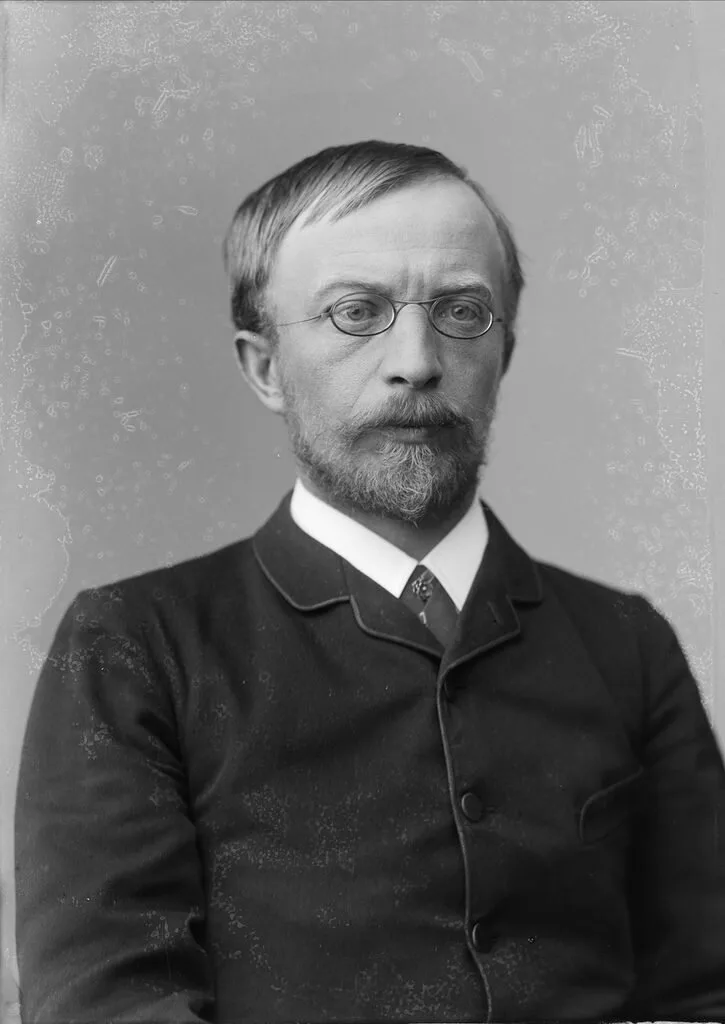
Christian August Sinding was born on January 11, 1856, in Kongsberg, Norway. He became one of the prominent Norwegian composers of the late nineteenth and early twentieth centuries, alongside figures such as Edvard Grieg and Johan Svendsen.
Sinding’s musical education took him to Leipzig in 1874, where he studied at the conservatory. He initially concentrated on violin, but also studied piano and music theory. His time in Germany exposed him to an important part of the European musical tradition and helped shape his development as a composer.
His career was not limited to piano music. Sinding wrote symphonies, concertos, chamber music and a substantial collection of songs. Nevertheless, Frühlingsrauschen became the work most closely associated with his name outside Norway.
He died in Oslo on December 3, 1941, aged 85.
Sinding and the Late Romantic Piano Tradition
Sinding’s music belongs to a period when composers were exploring increasingly rich harmonies, expressive melodies and more elaborate instrumental textures.
The influence of the German Romantic tradition can be heard in his writing, particularly in the way he combines lyrical melodic material with harmonic movement and brilliant keyboard passages.
Unlike a purely technical showpiece, Rustle of Spring depends on the relationship between its different musical layers. The arpeggios create movement, but they also provide harmonic support. The melody gives that movement direction and character.
This distinction is important when learning the piece. If every note is played with the same weight, the music can quickly sound like a mechanical exercise. The pianist must understand which notes carry the musical message and which ones support it.
The Story Behind Frühlingsrauschen
The German title Frühlingsrauschen is commonly translated as Rustle of Spring. It suggests the sound and movement of nature as spring returns, with an image of continuous activity rather than a literal musical description.
The composition was published by C. F. Peters in Leipzig in 1896 as the third piece in Sinding’s Six Pieces, Op. 32. The original publication is documented in the catalogue of the Bibliothèque nationale de France, which also identifies Adolf Ruthardt as the editor responsible for the fingering in that edition.
The work soon became one of Sinding’s most successful compositions. Its combination of flowing arpeggios, expressive melody and brilliant piano writing made it particularly attractive to both performers and audiences.
The title is useful when thinking about interpretation. Rather than approaching the opening as an aggressive display of speed, imagine a continuous movement that has its own natural energy. The notes should shimmer, but the musical line should remain expressive.
3. Musical Structure and Theory
Understanding the musical structure will make learning Rustle of Spring considerably easier. The piece should not be approached as one long sequence of rapid notes. It contains contrasting musical textures that return throughout the composition, giving the pianist several recognizable landmarks.
The PTNA Piano Music Encyclopedia describes the main contrast clearly: the opening features a left-hand melody surrounded by right-hand arpeggios, while the contrasting passage gives the melody to the right-hand chords before the opening material returns.
This change in texture is more useful to the learner than memorizing a simplified formal label without understanding what actually happens in the music.
The Opening Musical Idea
The opening establishes the sound that most listeners associate with Rustle of Spring. The right hand creates a continuous pattern of rapid arpeggios, while the left hand carries the melodic line.
This arrangement requires a careful balance. The right hand must remain light and even, while the left hand needs enough expressive weight to make the melody recognizable.
Try listening to the two parts separately. The right hand should sound like a flowing harmonic background, not a series of isolated notes. The left hand should have a clear phrase, with a direction that the listener can follow.
The Contrasting Middle Passage
The middle section introduces a fuller texture. The melody moves into the right hand, where chordal writing gives it a stronger and more dramatic presence.
This is a significant change for the pianist. Instead of concentrating primarily on the independence of the left-hand melody, you now need to control the balance between notes within the right-hand chords.
The highest melodic note in a chord often needs a little more projection than the accompanying notes. However, this should not be achieved by striking it harshly. A controlled transfer of weight and careful finger balance will produce a much more musical result.
The Return of the Opening Material
When the opening idea returns, the pianist should recognize its character immediately. The flowing texture needs to feel familiar, but the return should not sound like a simple mechanical repetition.
Think about how the music has developed before this point. The contrast in the middle section changes the listener’s perspective, so the return of the original material can feel like a renewed statement of the main idea.
The final part of the piece should bring the music to a convincing conclusion. Keep the flow alive, but do not allow the final passages to become rushed or unnecessarily heavy.
Understanding the Key: D-flat Major
The composition is written in D-flat major, a key containing five flats:
- B-flat
- E-flat
- A-flat
- D-flat
- G-flat
If you are more accustomed to C major or G major, the notation may initially look demanding. Take time to recognize the notes that belong to the key signature before starting hands-together practice.
D-flat major also has a practical advantage for certain piano movements. The black keys can provide useful reference points for the hand, particularly in passages that travel across several positions.
Do not assume that playing on black keys automatically makes a passage easier. The hand still needs to move efficiently, and the fingering must allow the notes to flow without awkward stretching.
Rhythm and Musical Pulse
The rhythmic writing contributes significantly to the character of the piece. The rapid figurations must remain consistent, even when the melodic line moves more freely.
Avoid treating every note as an independent rhythmic event. Instead, identify the larger beat structure and understand how the smaller note groups fit within it.
If the rhythm feels unstable, use a metronome at a comfortable tempo. Once the passage is secure, gradually reduce your dependence on the metronome and listen to the natural movement of the musical phrase.
4. Section-by-Section Analysis and Learning Guide
The following analysis focuses on the actual musical roles described in the published score references. It deliberately avoids assigning measure numbers because the exact PDF used on PianoMode has not yet been supplied.
A. The Opening: The Left-Hand Melody
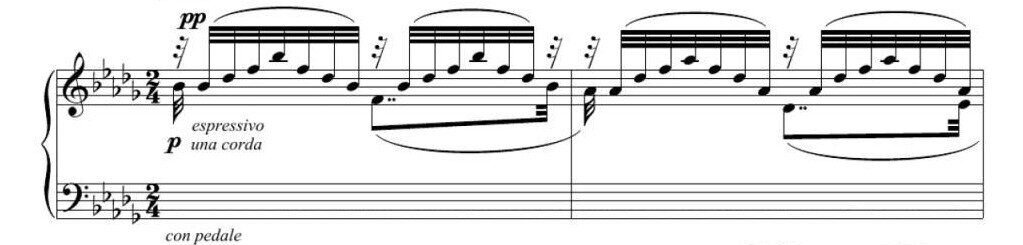
The opening is perhaps the most important passage to understand before learning the rest of the composition.
The left hand carries the melody while the right hand plays rapid arpeggios. This is not the usual arrangement that many pianists expect, since the right hand is often associated with the main melodic line.
Start by learning the left-hand melody on its own. Listen to the direction of each phrase and identify where the music seems to move forward or settle. You should be able to sing the melody away from the piano before trying to combine it with the accompaniment.
Then practise the right hand independently. The objective is to develop a consistent, relaxed movement across the keyboard. Pay attention to the evenness of the notes, particularly when the hand changes position.
When you bring the hands together, resist the temptation to give the right hand too much attention simply because it contains more notes. The listener should hear the melody first.
A practical way to learn this passage:
- Play the left-hand melody slowly, following its phrasing rather than treating it as an exercise.
- Practise the right-hand arpeggios separately, maintaining an even touch.
- Combine the hands at a tempo where both remain completely comfortable.
- Gradually bring out the left-hand melody without making the right hand sound weak or disconnected.
- Record the passage and listen without looking at the score.
A useful test is to ask someone to identify the melody while you play. If they hear only a stream of rapid notes, the balance between the hands needs more work.
B. The Development: Building Musical Momentum
As the composition develops, the pianist must maintain the same quality of touch while allowing the music to gain energy.
This is where the temptation to rush becomes particularly strong. The notes are moving quickly, the texture is becoming more animated, and it is easy to confuse increased intensity with increased speed.
Instead, concentrate on the dynamic markings and the direction of the phrases. A crescendo should develop over time, not appear as a sudden change in volume.
Work on the transitions between the musical ideas separately. These passages are often more difficult than the main patterns because the hands have to adjust to a new position or a different relationship between melody and accompaniment.
When practising, pay attention to:
- Consistent rhythm during the rapid passages.
- Smooth movement between keyboard positions.
- A gradual increase in musical intensity.
- Clear articulation.
- Relaxed shoulders, wrists and forearms.
Do not practise a difficult passage twenty times at the same tempo if the same mistake keeps occurring. Reduce the speed, isolate the movement that causes the problem and rebuild the passage carefully.
C. The Contrasting Section: Melody in the Right-Hand Chords
The contrasting passage changes the way the pianist must think about the music. The melody moves into the right hand and is supported by chordal writing.
This is a good opportunity to practise chord voicing. When you play several notes simultaneously, they should not all have the same importance. The melodic note needs to emerge, while the other notes provide harmonic depth.
Start by identifying the melodic line within the chords. Play those notes separately and listen to how the phrase develops. Then add the remaining notes, keeping them slightly lighter.
The left hand must also support the harmony without becoming too prominent. The goal is a fuller sound, but one in which the melody remains clear.
A practical exercise:
- Identify the top melodic notes in the right-hand chords.
- Play those notes alone and memorize the phrase.
- Add the remaining chord notes at a softer dynamic.
- Practise the left hand separately.
- Combine both hands and listen for the melodic line.
This approach is particularly useful if the chords sound heavy or if the melody disappears into the texture.
D. The Return of the Main Theme
The return of the opening material should remind the listener of the original musical character.
Although the notes may be familiar by now, the pianist should pay attention to the way the phrase connects with the preceding section. The return needs to sound natural, not like the beginning of another unrelated passage.
Use the same careful balance between the hands that you established at the start. The left-hand melody should remain audible, and the right-hand arpeggios should retain their fluidity.
As you approach the ending, listen to the direction of the final phrases. The composition needs a sense of arrival, not simply a gradual loss of energy.
Practise the final passage separately, then reconnect it with the preceding material. This will help you avoid an ending that feels rushed or insufficiently prepared.
5. Technical Challenges: What You Need to Master
The technical work in Rustle of Spring is closely connected to its musical character. There is little benefit in developing fast fingers if the result is an uneven accompaniment or a melody that cannot be heard.
Four areas deserve particular attention: arpeggio technique, hand independence, chord voicing and pedal control.
Arpeggios: Developing an Even and Relaxed Touch
The right-hand arpeggios are the most immediately recognizable feature of the piece. They must sound continuous, but that does not mean every note should be played with identical mechanical precision.
The notes need an even foundation, while the musical phrase still needs room to breathe.
Begin by practising short groups of notes. Use a comfortable fingering and allow the hand to move naturally across the keyboard. Avoid holding the wrist rigid or stretching the fingers beyond what feels comfortable.
When the passage becomes faster, the movement should remain efficient. If the forearm begins to tighten, slow down and identify where unnecessary effort is entering the movement.
Hand Independence: Giving Each Hand a Different Role
The opening provides an excellent exercise in hand independence because the left and right hands have clearly different musical responsibilities.
The left hand carries the melody, while the right hand maintains the flowing accompaniment. You need to control both parts without allowing one to interfere with the other.
Practise the hands separately until you understand the shape of each part. Then combine them in short sections, listening for the relationship between the melodic line and the arpeggios.
This is also a good opportunity to practise dynamic independence. The left hand may need a more expressive tone, while the right hand remains lighter and more restrained.
Chord Voicing: Making the Melody Stand Out
The middle section introduces a different challenge. Instead of bringing out a melody played by the opposite hand, you must project a melodic note within a chord.
This requires a more refined sense of touch.
A useful exercise is to play the chord very softly, concentrating on the melodic note. Gradually increase the overall volume while preserving the difference in weight between the notes.
The aim is not to exaggerate the melody with an abrupt accent. It should emerge naturally from the chord.
Pedalling: Supporting the Harmony
The sustain pedal plays an important role in Romantic piano music, but it must be used with care.
In Rustle of Spring, the rapid notes can become blurred if the pedal is held too long. This is particularly noticeable when the harmony changes or when the music moves into a different register.
Begin by practising without pedal. Listen to how much connection you can achieve through your fingers alone. Then introduce the pedal in small amounts, changing it with the harmony according to the score and the sound of your instrument.
Do not rely on the pedal to hide uneven notes. Clear finger technique should come first.
Dynamic Control: Building Without Forcing
The musical development depends on changes in intensity. A successful performance needs more than a constant loud sound.
Think about how each phrase contributes to the larger direction of the piece. Some passages should feel more intimate, while others need greater projection.
When the music becomes more dramatic, use controlled movement and appropriate arm weight rather than simply pressing harder with the fingers.
A good performance should sound full without becoming harsh.
6. How to Learn Rustle of Spring from the PDF
Learning a piece from a PDF is not simply a matter of reading from the first page to the last. The most effective approach is to understand the score, establish reliable fingering and work on difficult passages before attempting complete performances.
The following method is designed for someone who already reads piano music comfortably.
Step 1: Study the Score Before Playing
Look through the entire PDF and identify the main musical sections.
Notice where the opening texture returns, where the chordal writing becomes more prominent and where the final passage begins.
Check the key signature and accidentals carefully. D-flat major contains five flats, so make sure you recognize the notes that are already altered by the key signature.
Step 2: Mark the Fingering
Choose fingering that allows your hand to move naturally.
The original historical editions may include editorial fingerings, particularly the C. F. Peters edition associated with Adolf Ruthardt. These are useful starting points, but they should not be treated as mandatory if a different fingering works better for your hand.
Avoid changing fingerings randomly from one practice session to another. Consistency helps build reliable movements.
Step 3: Learn the Hands Separately
Start with the left-hand melody. Learn its phrasing, note patterns and changes in position.
Then work on the right-hand arpeggios. Concentrate on evenness and a relaxed movement across the keyboard.
Do not move to hands-together practice simply because you can play each part once. You should be reasonably comfortable with both before combining them.
Step 4: Combine Short Musical Passages
Start with a small section rather than attempting an entire page.
Play slowly enough to maintain accurate coordination. If you make the same mistake repeatedly, stop and identify its cause.
Sometimes the problem is a fingering choice. In other cases, it may be a difficult change of hand position or an unclear understanding of the rhythm.
Fix the specific problem before continuing.
Step 5: Work on the Melody and Accompaniment Separately
Once the hands are coordinated, focus on the musical balance.
In the opening, make the left-hand melody more prominent. In the contrasting section, work on bringing out the melody within the right-hand chords.
This is where the piece begins to sound like music rather than a collection of technical patterns.
Step 6: Introduce the Pedal and Dynamics
Add the pedal only when the notes and hand coordination are reasonably secure.
Follow the written indications in your edition, adjusting the pedal to suit the harmony and the acoustic environment.
Then work on the dynamic development. Do not leave all expressive decisions until the final practice sessions.
Step 7: Practise the Complete Piece
When the individual sections are secure, begin playing the composition from beginning to end.
At first, stop when necessary to correct a problem. Later, practise complete run-throughs without stopping.
Recording yourself is particularly useful at this stage. You may notice that the arpeggios are less even than they feel while playing, or that the melody is not projecting as clearly as you intended.
These observations will help you decide what to work on next.
7. Four-Week Practice Plan
The following programme provides a realistic framework for learning Rustle of Spring. It assumes that you already have experience with intermediate piano repertoire and can practise consistently.
Four weeks is a planning target, not a guarantee of mastery. If a passage requires more time, continue working on it rather than increasing the tempo before the technique is secure.
Week 1: Reading and Fingering
Objective: Become familiar with the score and establish reliable fingerings.
Start by studying the complete PDF. Identify the recurring musical ideas, the opening melody and the contrasting chordal passage.
Practise each hand separately, paying particular attention to the opening. Learn the left-hand melody as a musical phrase rather than as a collection of notes.
Practice tasks:
- Study the key signature and accidentals.
- Identify the main musical sections.
- Practise the left-hand melody.
- Establish right-hand arpeggio fingering.
- Mark difficult changes of position.
- Begin working on the most challenging passages.
What to listen for: Accurate notes, an even touch and relaxed movement.
Weekly milestone: You can play the main sections separately with reasonable accuracy and understand the musical role of each hand.
Week 2: Coordination and Structure
Objective: Develop reliable hands-together playing.
Begin combining the hands in short sections. Pay particular attention to the opening, where the left-hand melody must remain clear while the right hand maintains its flowing accompaniment.
Work on the transitions between the different textures. Do not spend the entire week repeating the opening while leaving the contrasting material untouched.
Practice tasks:
- Combine the hands in short passages.
- Practise difficult transitions.
- Maintain a stable pulse.
- Work on the relationship between melody and accompaniment.
- Use a metronome where rhythmic accuracy needs attention.
- Extend the passages gradually.
What to listen for: Stable rhythm, accurate coordination and a recognizable melody.
Weekly milestone: You can play the principal sections with both hands at a controlled tempo.
Week 3: Technique and Interpretation
Objective: Develop fluidity, dynamic control and musical expression.
This is the stage where you should begin thinking more seriously about the sound of the piece.
The arpeggios should become smoother, the melody should project more naturally and the contrasting section should have its own expressive character.
Practice tasks:
- Increase the tempo gradually.
- Work on the melodic notes within the chords.
- Introduce appropriate pedal changes.
- Shape crescendos and dynamic contrasts.
- Record difficult passages.
- Correct any recurring unevenness.
What to listen for: A clear melodic line, balanced accompaniment and controlled harmonic changes.
Weekly milestone: You can play longer sections with a consistent sound and a recognizable musical interpretation.
Week 4: Performance and Refinement
Objective: Bring the complete composition together.
The final week should focus on continuity rather than simply learning more notes.
Practise the piece from beginning to end, paying attention to the transitions and the overall musical direction. Make sure the ending feels prepared rather than rushed.
Practice tasks:
- Perform complete run-throughs.
- Refine the opening and closing passages.
- Check the balance between the hands.
- Review pedal use.
- Record a complete performance.
- Play for another person if possible.
What to listen for: Continuity, musical direction, clarity and a natural sense of movement.
Weekly milestone: You can perform the complete piece with a coherent interpretation and without losing control of the main technical challenges.
Suggested Daily Practice Time
A session of 45 to 60 minutes can be divided as follows:
| Practice activity | Time |
|---|---|
| Warm-up and technical preparation | 5-10 minutes |
| Hands-separate practice | 10 minutes |
| Difficult passages | 10-15 minutes |
| Hands-together practice | 10-15 minutes |
| Interpretation and dynamics | 5-10 minutes |
| Recording and review | 5 minutes |
The schedule is flexible. If a passage is particularly demanding, give it the time it needs rather than rushing through the remaining activities.
8. Interpretation: How to Make the Music Come Alive
Once the notes are reasonably secure, the next challenge is to develop an interpretation that reflects the character of the composition.
This is where Rustle of Spring becomes especially interesting. Its technical surface is brilliant, but the musical result should remain light, expressive and controlled.
Think About the Melody First
Before deciding how fast or how loudly to play, make sure you understand the melody.
In the opening, follow the left-hand line. Notice where it rises, where it relaxes and where a phrase seems to lead naturally into the next one.
When the melody moves into the right-hand chords, approach it with the same attention. The change in texture should not make you forget the underlying melodic direction.
Let the Arpeggios Support the Music
The rapid notes create the characteristic atmosphere of the piece, but they should not dominate every moment.
Keep the accompaniment light enough to allow the melody to emerge. Avoid unnecessary accents, especially when the hand moves to a new keyboard position.
The goal is a continuous sound that remains flexible and expressive.
Use Dynamic Contrast with Purpose
The music needs a sense of development.
Rather than making every return of the opening louder, think about how each passage contributes to the overall structure. Some phrases may need more restraint, while others can build towards a fuller sound.
Listen to the harmony as well as the dynamics. The expressive character often comes from the relationship between the two.
Be Careful with Rubato
Romantic music often allows flexibility in tempo, but that does not mean the pulse should become unpredictable.
Small expressive adjustments can help a phrase breathe. However, excessive slowing and rushing can destroy the continuous movement that makes the piece so effective.
Establish a reliable underlying pulse first. Once the rhythm is secure, introduce expressive flexibility where it genuinely helps the musical line.
Listen to Different Performances
If possible, listen to several professional recordings before finalizing your interpretation.
Compare how pianists handle the opening arpeggios, the melodic balance and the contrasting chordal passage. Pay attention to the amount of pedal they use and how they build the dynamic intensity.
You may find that different performers approach the same passage in noticeably different ways. This is useful because it helps you understand the range of expressive possibilities without feeling that you must copy one particular recording.
9. Common Mistakes and How to Correct Them
Some problems appear repeatedly when pianists learn Rustle of Spring. They are usually easier to solve when you identify the musical cause rather than simply repeating the passage.
| Problem | What is happening | Practical correction |
|---|---|---|
| Uneven arpeggios | Some notes receive more weight than others | Practise short groups slowly |
| Melody disappears | Accompaniment is too prominent | Practise the melodic line separately |
| Left hand feels uncomfortable | The melodic role is not sufficiently prepared | Learn the left-hand phrase alone |
| Chords sound heavy | Every note is played with equal force | Practise individual chord voicing |
| Pedal blurs the harmony | Pedal changes are too slow or excessive | Practise without pedal, then add it carefully |
| Performance becomes rushed | The underlying pulse is unstable | Use a metronome at a comfortable tempo |
| Crescendos lack direction | Dynamic development is not planned | Shape the phrase over a longer span |
Rushing the Arpeggios
This is one of the most common mistakes. The pianist becomes comfortable with the notes and immediately tries to play them faster.
The problem is that unevenness becomes more noticeable as the tempo increases. A passage that sounds acceptable slowly may become uncontrolled when played quickly.
Stay at a tempo where every note is clear. Increase the speed only when the movement feels comfortable.
Forgetting the Left-Hand Melody
The opening can be misleading because the right hand plays the more visibly active part.
Do not let the number of notes determine which hand receives the most attention. The left hand carries the melody and must be treated as a musical voice.
Playing Chords Too Heavily
When the right hand moves into chordal writing, the temptation is to strike every note with the same intensity.
This often produces a harsh sound. Work on the melodic note within each chord and keep the remaining notes supportive.
Using the Pedal to Cover Technical Problems
The pedal can create a beautiful sound, but it cannot correct poor coordination or uneven fingering.
Practise the passage without pedal first. If the notes do not sound connected or controlled, work on the finger technique before adding resonance.
Conclusion
Rustle of Spring is a wonderful example of how a relatively compact piano composition can combine technical brilliance with genuine musical expression.
Christian Sinding creates much of the piece’s character through the contrast between flowing arpeggios and a lyrical melody. The pianist must understand how these elements work together, particularly when the melody moves from the left hand to the right-hand chords.
For pianists with a solid intermediate foundation, the work offers an excellent opportunity to develop coordination, melodic voicing, dynamic control and a more refined Romantic touch. It is also a rewarding recital piece, provided that the technical preparation is matched by careful attention to phrasing and sound.
Take your time with the opening, learn the contrasting section thoroughly and resist the temptation to rush the arpeggios. Once the technical movements become reliable, you can concentrate on what makes the composition special: its sense of continuous movement, its expressive melody and its bright, unmistakably Romantic character.
Who composed Rustle of Spring?
Rustle of Spring (Frühlingsrauschen), Op. 32 No. 3, was composed by Christian Sinding (1856–1941), a Norwegian composer associated with the Late Romantic period. It was published in 1896 as part of his Six Pieces, Op. 32.
What key is Rustle of Spring written in?
The composition is written in D-flat major, a key with five flats: B-flat, E-flat, A-flat, D-flat and G-flat.
What is the difficulty level of Rustle of Spring?
The piece is generally suitable for pianists with a solid intermediate foundation or stronger technical experience. Henle classifies its edition as Level 5, Medium, while Schott classifies its edition as Advanced. The main challenges are rapid arpeggios, hand coordination, melodic voicing and expressive control.
How long does it take to learn Rustle of Spring?
The learning time depends on your previous experience and the amount of focused practice you can dedicate to the piece. A pianist who already plays intermediate Romantic repertoire may make good progress over four to eight weeks, while others may need longer to develop an even, controlled performance.
Is Rustle of Spring suitable for a piano recital?
Yes. Its flowing texture, expressive melody and brilliant sound make it a popular recital choice. It works particularly well when the pianist can maintain a clear melodic line without allowing the rapid accompaniment to dominate.
Can beginners learn Rustle of Spring?
It is generally not recommended for early beginners. The piece requires reliable note reading, comfortable arpeggio technique, hand independence and the ability to control different musical voices. A developing pianist should first become comfortable with scales, arpeggios and intermediate repertoire.
Can I download Rustle of Spring sheet music for free?
Yes. Historical editions of the composition are available through IMSLP, including the original C. F. Peters publication and an early Schirmer edition. Check the copyright status of the specific edition and PDF before redistributing it.
How can I make the arpeggios sound smooth?
Start slowly and practise short groups of notes with consistent fingering. Keep the wrist flexible and allow the hand to move naturally across the keyboard. Gradually increase the tempo while maintaining an even sound. Introduce the sustain pedal only after you can play the passage clearly without it.
Why does the left hand play the melody at the beginning?
Sinding places the opening melody in the left hand while the right hand plays the flowing arpeggios. This creates an unusual but effective balance between the two hands. In the contrasting passage, the melodic responsibility moves to the right-hand chords, giving the composition a fuller sound.
What does Frühlingsrauschen mean in English?
The German title Frühlingsrauschen is commonly translated as Rustle of Spring. It suggests the movement and gentle activity of nature during springtime, an image that fits the continuous, flowing character of the piano writing.v
Sources
G. Henle Verlag, Rustle of Spring, Op. 32 No. 3, HN 8246. Editorial information, edition details and difficulty classification.
https://www.henle.de/en/Rustle-of-Spring-op.-32-no.-3/HN-8246
Bibliothèque nationale de France, Frühlingsrauschen, Klavierstück, Op. 32, No. 3. Historical bibliographic record of the C. F. Peters edition, published in Leipzig in 1896, including Adolf Ruthardt’s editorial contribution.
https://catalogue.bnf.fr/ark:/12148/cb432737757
International Music Score Library Project (IMSLP), 6 Stücke, Op. 32 (Sinding, Christian). Historical editions, publication information and downloadable scores.
https://imslp.org/wiki/Rustles_Of_Spring_(Sinding,_Christian)
PTNA Piano Music Encyclopedia, Frühlingsrauschen, Op. 32 No. 3. Musical commentary describing the relationship between the left-hand melody, right-hand arpeggios and contrasting chordal passage.
https://enc.piano.or.jp/en/musics/812
Store norske leksikon, Rune J. Andersen, Christian Sinding. Biography, education, musical career and historical context.
https://snl.no/Christian_Sinding
Schott Music, Rustle of Spring, Op. 32 No. 3, Edition Schott, ED 0 9994. Publisher’s edition and difficulty classification.
https://www.schott-music.com/en/rustle-of-spring-noc442799.html