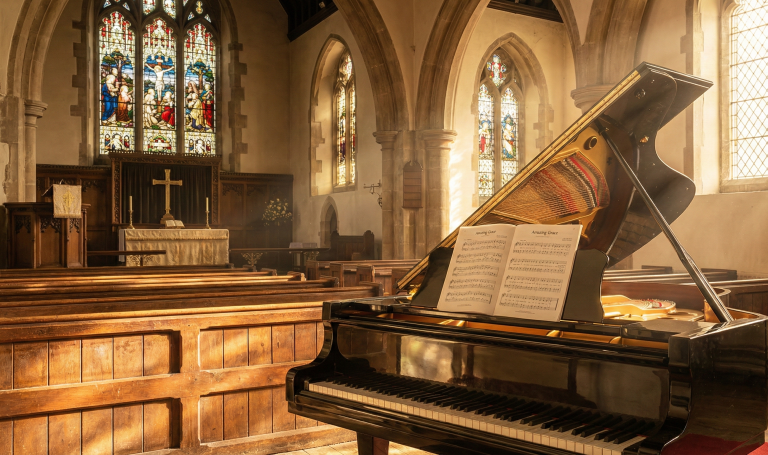
Like you sat down at the bench, cracked your knuckles, and placed your hands on C Major. Your brain remembered the melody of Für Elise, but your fingers felt like frozen sausages. You stared at the sheet music, and the notes looked like alien hieroglyphics.
Does this sound familiar? If so, you are not a beginner. You are a “False Beginner” (or a “Restarter”). And frankly, most piano books are not written for you.
Buying a method book designed for an 8-year-old when you are 40 is demoralizing. You don’t need nursery rhymes; you need a bridge to reconnect your adult intellect with your dormant muscle memory.
In this guide, we cut through the noise to find the best resources specifically designed for returning pianists in 2026.
Definition: A “False Beginner” is a student who has had previous musical training (often in childhood) but has taken a significant hiatus (5+ years). They typically possess latent “muscle memory” and aural understanding but have lost their sight-reading fluency.
The “Restarter’s Gap”: Why It Feels So Hard
The biggest frustration for returning pianists is the synchronization gap.
- Your Adult Brain: Understands theory, structure, and emotion instantly.
- Your Adult Hands: Are stiff and lack independence.
- Your Eyes: Struggle to decode multiple staves simultaneously (vertical reading).
Most beginners’ books move too slowly for your brain but the repertoire is too simple for your taste. You need a “boot camp” approach: high-density learning that respects your intelligence.
1. The Best Books for Returning Pianists
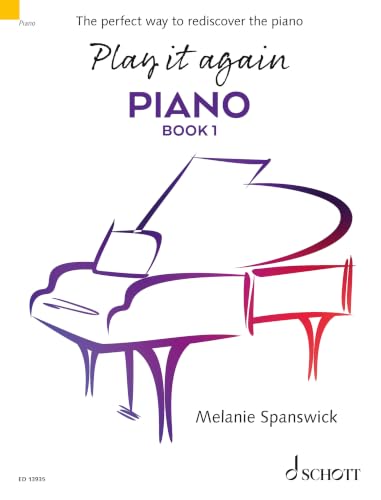
1. The Gold Standard: Play It Again: Piano (Melanie Spanswick)
If you buy only one book, make it this one. Unlike generic “Adult Methods” that are just re-packaged kids’ courses, Melanie Spanswick’s series is built psychologically for the restarter.
- The Approach: It’s a 3-book series. Book 1 takes you from “I barely remember Middle C” to intermediate Grade 4 pieces.
- Why It Works: It doesn’t just give you songs; it gives you Practice Tips for every single bar. It treats you like a student who wants to understand how to practice, not just what to play.
- Best For: The serious returner who wants a progressive, classical-focused structured path.
- Verdict: ⭐⭐⭐⭐⭐ (Essential)
 Kindle editionRead on Kindle ›
As an Amazon Associate I earn from qualifying purchases.
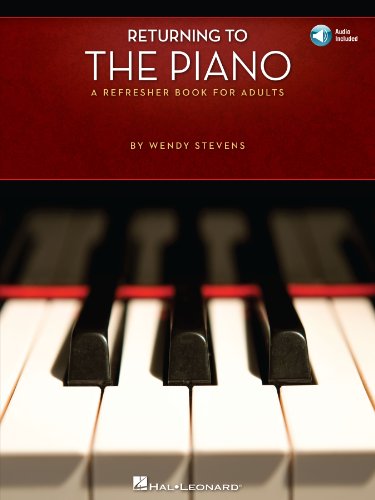
2. The “Refresher” Choice: Returning to the Piano (Wendy Stevens)
Wendy Stevens identified a massive gap in the market: people who don’t want a “course,” but just want to play music they recognize immediately to get their confidence back.
- The Approach: This is not a method book. It is a “Refresher” book. It dives straight into arrangements of famous tunes (Amazing Grace, Spinning Song) that sound rich but lie easily under the hands.
- Why It Works: It bypasses the boring drills. It satisfies the need for “Instant Gratification” which is crucial for keeping motivation high in the first month.
- Best For: The casual player who wants to sit down on Sunday mornings and make a nice sound immediately.
- Verdict: ⭐⭐⭐⭐½ (The Confidence Booster)
 Kindle editionRead on Kindle ›
As an Amazon Associate I earn from qualifying purchases.
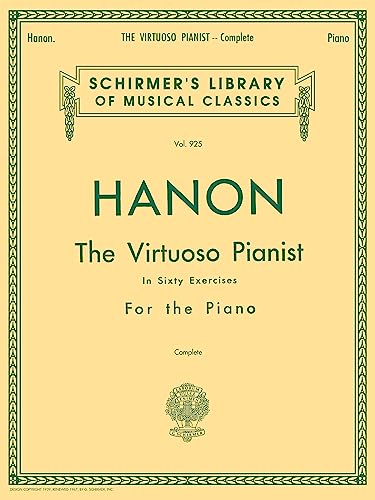
3. The Technique Builder: Hanon: The Virtuoso Pianist (With a Warning)
You probably remember this book from childhood. The endless runs. The repetition. Is it still relevant in 2026? Yes, but with a major caveat.
- The Controversy: Many modern teachers argue Hanon can cause tension if played mechanically.
- How to Use It: Treat Hanon as Yoga for fingers, not a weightlifting competition. Use Exercises 1–20 to “wake up” the independence between your 4th and 5th fingers.
- Pro Tip: Do NOT aim for speed. Aim for evenness and relaxation. If your forearm tightens, stop immediately.
- Best For: Pure physical rehabilitation of finger dexterity.
- Verdict: ⭐⭐⭐⭐ (The Finger Gym)
 Kindle editionRead on Kindle ›
As an Amazon Associate I earn from qualifying purchases.
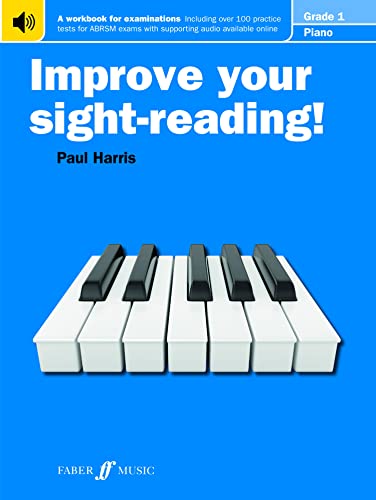
4. The Curriculum Choice: Improve Your Sight-Reading! (Paul Harris)
If you feel overwhelmed by “just playing,” you need a system. Paul Harris is the undisputed king of sight-reading pedagogy in the UK/USA exam systems, but his books work wonders for autodidacts too.
- The Approach: This series is graded (Level 1–8). For a “False Beginner,” start at Level 2 or 3. Do not start at Level 1 (too boring) or Level 5 (too hard).
- Why It Works: It forces you to pause before you play. Harris teaches the “Stage 1: Preparation” method—scanning rhythm, key signature, and patterns before your fingers touch the keys. It cures the habit of “stuttering” (stopping when you make a mistake).
- Best For: The analytical thinker who needs a step-by-step daily checklist to feel progress.
- Verdict: ⭐⭐⭐⭐½ (The Disciplinarian)
 Kindle editionRead on Kindle ›
As an Amazon Associate I earn from qualifying purchases.
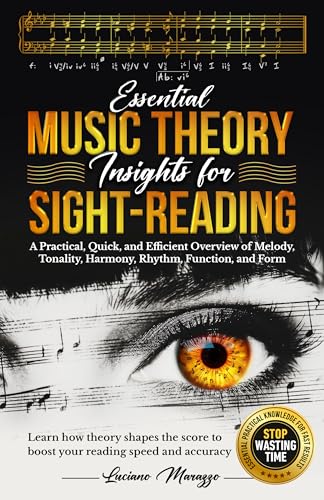
5. The Modern “Smart-Cut”: Essential Music Theory Insights for Sight Reading (Luciano Marazzo)
Published late in 2025, this book is rapidly becoming the go-to resource for the analytical adult student. If you suspect that a lack of theoretical understanding is what’s slowing down your reading eyes, this is your solution.
- The Approach: Marazzo challenges the idea that sight-reading is just “practice, practice, practice.” Instead, he argues that it’s about pattern recognition based on theory. He provides a “quick and efficient overview” of harmony, tonality, and function specifically tailored to help you decode sheet music faster.
- Why It Works: Adults often learn better when they understand the logic behind the dots. This book doesn’t drown you in academic theory; it gives you the essential “insights” needed to recognize common musical structures instantly. It turns a page of random notes into a map of familiar patterns.
- Best For: The intellectual “restarter” who wants a “hack” to speed up the learning curve by using their brainpower rather than just brute-force repetition.
- Verdict: ⭐⭐⭐⭐⭐ (The 2026 Intellect Choice)
 Kindle editionRead on Kindle ›
As an Amazon Associate I earn from qualifying purchases.
2. Apps to Accelerate Reading
Books are great for repertoire, but for the specific skill of Sight-Reading (decoding notes fast), technology is superior because it prevents you from memorizing the music.
| App Name | Best Feature | Price Model |
| SightReadingFactory | Generates infinite new music. You never play the same measure twice. Pure reading drill. | Subscription (Cheap) |
| Piano Marvel | Gamified assessment. Hooks up to your digital piano (MIDI) and grades your accuracy in real-time. | Monthly Sub |
| flowkey | Visual learning with a huge library of pop songs. Great if you prefer watching hands over reading scores. | Freemium |
Note: Integrating an app like SightReadingFactory for just 5 minutes a day can double your reading recovery speed compared to books alone.
Conclusion: The “Restart” is a New Start
Returning to the piano is an act of self-care. It is not about proving anything to your parents or an examiner anymore. It is about you and the music.
Don’t judge your current self against your past self. Your journey in 2026 starts where you are today. Pick up Play It Again: Piano, set aside 15 minutes a day, and watch how quickly that muscle memory unlocks.
Ready to start?
Will I ever be as good as I was when I was 16?
Yes, and likely better. While your raw finger velocity might be slightly lower initially, your interpretive maturity and patience are far superior now. Adult “restarters” often play with more emotion and understanding than they did as teenagers.
Should I get a teacher or can I self-teach?
You can self-teach using the books above (especially Spanswick’s). However, checking in with a teacher once a month (even online via Zoom) ensures you aren’t building tension in your shoulders. Adults carry a lot of physical stress that affects tone.
I have an old keyboard, is that enough?
Be careful. To regain finger strength, you need Weighted Keys (Hammer Action). A cheap, unweighted synthesizer will not help you regain your technical facility and may actually frustrate you because it lacks dynamic control.