Playing spiritual and religious music on the piano is a deeply rewarding experience, allowing you to connect with centuries of musical tradition and faith. As a pianist with a love for sacred melodies, I remember the first time I played “Amazing Grace” on the piano, the notes filled the room with a sense of peace and purpose. In this comprehensive guide, we’ll explore a variety of religious piano sheet music books and resources across major faiths, including Christianity (Protestant, Catholic, Evangelical), Judaism, and even Islam (where applicable). Whether you’re seeking gentle hymns for beginners or elaborate arrangements for advanced players, this article will help you find the right sheet music collections to enrich your repertoire.
We’ll start by diving into Christian hymn and worship collections, then highlight Jewish songbooks, and discuss options for Islamic spiritual music. Along the way, you’ll find sheet music books with notes on skill level (beginner, intermediate, advanced) and a brief commentary for each. A dedicated “Recommended Resources” section will point you to extra materials like compilations and lesson series to further support your journey.
1. Christian Piano Sheet Music Collections
Christian sacred music offers a rich tapestry of hymns, worship songs, and gospel pieces. In this section, we’ll cover Protestant hymns and gospel songs, Catholic liturgical music, and Evangelical praise & worship collections. Each sub-section highlights popular sheet music books that are readily available and suited for different skill levels.
Traditional Protestant Hymns and Gospel Songs (Protestant)
For pianists interested in classic hymns – the cornerstone of Protestant worship – there are excellent compilations to choose from. One highly regarded collection is The Essential Hymn Anthology: The Best of the Phillip Keveren Series. This comb-bound anthology features over 50 beloved hymn arrangements for piano solo, curated by renowned arranger Phillip Keveren. It’s an intermediate to advanced level book (Hal Leonard), ideal for church pianists or anyone looking to enrich their repertoire with timeless hymns. The anthology even includes a few new arrangements written especially for this edition, alongside classics like “Amazing Grace,” “Be Thou My Vision,” and “Great Is Thy Faithfulness.” According to the publisher, “Church pianists will treasure this beautiful collection”, and its sturdy spiral binding ensures it lies flat on your music stand during practice.
If you’re a beginner or early intermediate player, you might start with a simpler hymn book such as Super Easy Piano Hymns for Beginners by Scott Currier. This book contains 30 praise and worship songs in “Big Letter Notes”, meaning the note names are printed inside the note heads – a great aid if you’re still learning to read music. Familiar tunes like “Amazing Grace,” “Blessed Assurance,” and “Just As I Am” are included, arranged in extra-large notation with letters to help beginners play confidently. The focus is on the right-hand melody (often one note at a time) with basic left-hand accompaniment, making these hymns truly accessible for kids and adult beginners alike. Users praise such collections for helping new pianists recognize notes quickly and enjoy hymn melodies without getting bogged down by complex chords.
For those interested in gospel music or contemporary Christian hits, consider Top 50 Christian Hits: Easy Piano arranged by Carol Tornquist. This Alfred Publishing collection offers 50 easy piano arrangements of contemporary Christian songs, including popular worship hits by artists like Matt Maher, Casting Crowns, Chris Tomlin, and more. The arrangements “sound great both as piano solos and for sing-alongs,” and importantly, lyrics and chord symbols are included. That means you can sing along or even accompany others, making it perfect for church gatherings or home worship. Song titles range from modern classics (“How Great Is Our God”, “10,000 Reasons (Bless the Lord)”) to upbeat anthems (“God’s Not Dead (Like a Lion)”, “Lord, I Need You”), giving you a broad taste of the last few decades of Evangelical worship music. Skill-wise, this book suits late beginner to intermediate players – the arrangements simplify the originals but still include rich-sounding chords. It’s a fantastic way to bridge from traditional hymn-playing into the contemporary style.
Another excellent resource for traditional hymns is The Giant Book of Christian Sheet Music: Easy Piano (arranged by Carol Tornquist). As the title suggests, it’s a big volume compiling many popular hymns and worship songs in easy piano format. You’ll find a mix of old and new: classic hymns like “His Eye Is on the Sparrow” and gospel favorites alongside newer praise choruses. Tornquist’s arrangements keep the pieces accessible (melody in one hand, simplified harmonies in the other) while preserving the heartfelt sound of each song. This makes the book suitable for early intermediate players or even dedicated beginners looking to challenge themselves gradually. At over 200 pages, The Giant Book serves as a lasting repertoire source – you can keep coming back to learn more songs as you progress. Many church piano teachers use it for students because of the large selection and prolific arranger Carol Tornquist’s reliable, pianistic arrangements.
In summary, Protestant and gospel piano collections abound. If you’re just starting, big-note hymn books and easy piano anthologies will build your confidence. As you advance, you can explore comprehensive collections like the Keveren Essential Hymns (intermediate/advanced) or dive into specialized albums (for example, books focusing on Southern gospel, African-American spirituals, or contemporary Christian chart-toppers). These resources ensure that pianists of all levels can enjoy the rich heritage of Christian hymnody – from gentle melodies for quiet devotion to joyful songs for congregational singing.
Catholic Hymns and Liturgical Music (Catholic)
Catholic sacred music on piano often overlaps with general Christian hymnody, but there are books tailored specifically to Catholic traditions. These include beloved Marian hymns, Mass settings, and other songs frequently heard in Catholic liturgy. One wonderful entry-level book is Catholic Hymns for the Young Pianist, Book 1 by Kathleen and Steven Massoud. This collection is truly designed for beginners (early elementary level) – all pieces are arranged in easy 5-finger positions (many centered on Middle C), with optional teacher duets for a richer sound. It’s part of the FJH Piano Teaching Library and is “a treasure of Catholic hymns selected and arranged for the beginning pianist,” featuring favorites like “Faith of Our Fathers,” “Holy God, We Praise Thy Name,” “Immaculate Mary,” “Come Holy Ghost,” and more. The arrangements include colorful illustrations and even duet parts, making it engaging for young learners. As an added bonus, this slim volume (about 32 pages) keeps things approachable – a young pianist can learn their first church hymns without feeling overwhelmed. Priced under $10, it’s an affordable addition to any student’s music shelf.
As an Amazon Associate I earn from qualifying purchases.
For older beginners or intermediate players, The Catholic Pianist: An Illustrated Prayerful Piano Book by Robert Myers is a unique resource. This book spans a range of levels (roughly Late Beginner through Intermediate), gradually increasing in difficulty as you progress through the songs. It includes famous Catholic hymns such as “Sweet Sacrament Divine,” “Amazing Grace,” “Ave Maria,” and others, arranged in a sequence that starts very simply and becomes more challenging in later pieces. The idea is that a pianist can grow technically while deepening their repertoire of devotional music. Each piece is accompanied by beautiful religious illustrations, adding a prayerful, reflective element to your practice. Reviewers note that the concept is wonderful for self-study or church music programs – students learn both music and the stories or prayers behind them. (One reviewer did mention some engraving issues in the first edition, like lyrics alignment, but overall found it a “decent print” with “beautiful and holy” artwork.) Difficulty-wise, expect the early pieces to be very easy (simple melodies with basic harmony) and the later ones to approach early intermediate piano skill. By the end, you might be playing fuller arrangements of hymns, suitable for offertories or reflection moments in a service.
As an Amazon Associate I earn from qualifying purchases.
In addition to these, there are other Catholic-focused piano resources worth mentioning. The John Thompson’s “Favorite Catholic Hymns” (Late Elementary) book is a classic that has introduced generations of students to Catholic liturgical songs. It typically contains simplified arrangements (with lyrics) of hymns often sung at Mass or Benediction, like “Panis Angelicus,” “Ave Maria,” “Jesus, My Lord, My God, My All,” etc. If you prefer something comprehensive, hymnals from Catholic publishers (like GIA’s Gather Comprehensive or OCP’s Music Issue) often have companion keyboard books, but those are geared for accompaniment (usually organ/piano with vocals) and can be quite advanced and expensive. For solo piano enjoyment, sticking to collections like The Catholic Pianist or Catholic Hymns for the Young Pianist is a great start.
As an Amazon Associate I earn from qualifying purchases.
Finally, remember that many Catholic hymns overlap with Protestant ones (for example, “Holy God, We Praise Thy Name” is widely sung across denominations). So Catholic pianists shouldn’t hesitate to use the broader Christian books mentioned in the Protestant section as well. Conversely, Protestant pianists might enjoy the specifically Catholic books for their unique selections (Marian hymns or Latin chant adaptations) not found elsewhere. The cross-pollination of repertoire can enrich your playing – music truly bridges communities of faith.
Evangelical Praise & Worship Songs (Contemporary Christian)
Modern praise and worship music – as often heard in Evangelical churches and Christian radio, has become very popular for piano arrangers. These songs typically feature contemporary melodies, simple chord progressions, and heartfelt lyrics, making them appealing for pianists to learn and perform. If you’re eager to play worship hits from the last few decades, there are several key resources to consider.
One of the best collections for beginner to intermediate pianists is the Worship Anthology for Easy Piano (Hal Leonard). This songbook contains 40 of the most iconic modern worship songs, all arranged at an easier level for piano. You’ll find powerful favorites like “How Great Is Our God,” “Mighty to Save,” “10,000 Reasons (Bless the Lord),” “Oceans (Where Feet May Fail),” “Lord, I Need You,” and many more in this anthology. Each song is arranged with streamlined left-hand patterns and manageable chord stretches, while still keeping the spirit and energy of the original. For instance, big anthems like “Cornerstone” or “Because He Lives (Amen)” are arranged so you can play the driving rhythms and chord progressions without advanced technique. The book is nicely laid out with large notation and includes lyrics and chord symbols, which is great if you want to sing along or if you’re accompanying a small group. As a beginner or early intermediate player, you’ll appreciate that these arrangements make otherwise complex band-driven songs playable on a single instrument. It’s perfect for personal worship, informal church gatherings, or even just jamming along with recordings.
As an Amazon Associate I earn from qualifying purchases.
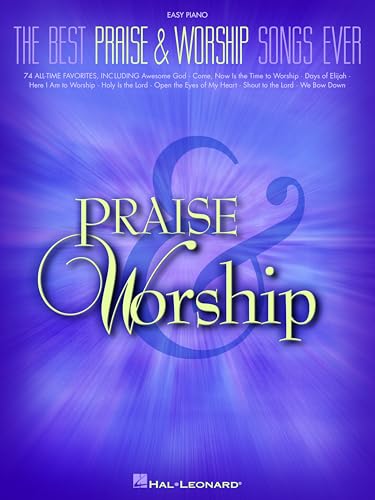
For a broader selection that skews slightly more advanced, The Best Praise & Worship Songs Ever is a popular pick. This is usually available in a Piano/Vocal/Guitar format or Easy Piano format – be sure to choose the one that fits your skill. The Easy Piano version simplifies 70+ worship hits from across the years. It features well-known songs from Hillsong, Chris Tomlin, Michael W. Smith, Matt Redman, and more. Expect classics like “Shout to the Lord,” “Open the Eyes of My Heart,” “Here I Am to Worship,” and “Blessed Be Your Name.” The arrangements are aimed at late beginner to intermediate level: the melodies might be split between hands at times, and the rhythm is simplified but captures the groove. With lyrics and chords included, this collection doubles as a tool for worship leading – you can lead congregational singing straight from the piano. The sheer number of songs (often around 70 in these compilations) means you’re getting a huge repertoire in one book, which is great value for money.
 Kindle editionRead on Kindle ›
As an Amazon Associate I earn from qualifying purchases.
Another notable series is the “Top 50” praise collections by Alfred Music, arranged by Carol Tornquist (who we mentioned earlier). Beyond the Top 50 Christian Hits (which covers mostly CCM and radio hits), Carol also arranged Top 50 Praise & Worship Songs (a slightly different mix, focusing on church worship standards). If you come across Top 50 Praise & Worship: Easy Piano, you’ll find it similarly useful – it contains 50 popular worship songs sung in churches everywhere, and the arrangements are in Carol’s reliable easy-piano style. This might include songs like “Here I Am to Worship,” “Revelation Song,” “How He Loves,” etc., all in singable keys and comfortable piano ranges.
As an Amazon Associate I earn from qualifying purchases.
For advanced pianists who want to tackle worship music with a concert-style approach, keep an eye out for arrangers like Phillip Keveren, Mark Hayes, and Lorie Line. For example, Phillip Keveren has books like “Praise & Worship for Piano Solo” (with lush, fully developed piano solos of worship songs), and Lorie Line’s “Heritage Collection” volumes include beloved hymns and inspirational songs with a distinctive, challenging flair. These are often marked at advanced level and require more sophisticated technique and expression, but the result can be truly breathtaking arrangements suitable for preludes or performances.
Lastly, the Evangelical tradition also includes Southern gospel and contemporary gospel music (influenced by jazz, blues, and soul). If that style speaks to you, you might explore Gospel piano collections like “Gospel Piano” by Hal Leonard, your ultimate resource for mastering the art of gospel piano.
As an Amazon Associate I earn from qualifying purchases.
These can be intermediate to advanced, and they add a joyful, soulful dimension to religious piano music.
In summary, for praise and worship songs, start with curated easy piano books that pack lots of hits (like Worship Anthology for Easy Piano). They’ll give you immediate access to the music you’ve heard on Sundays or Christian radio. As you grow, you can branch into more complex arrangements or specific sub-genres. The key is that today’s worship music is very piano-friendly, and playing these songs can be a fulfilling way to express your faith and improve your chord-reading skills at the same time.
2. Jewish Piano Sheet Music Collections
Moving from church to synagogue – let’s explore Jewish spiritual and religious music for piano. Jewish music encompasses a wide range, from ancient liturgical chants (like those sung in synagogue services) to lively folk songs and holiday tunes passed down through generations. Many of these melodies adapt beautifully to the piano, and there are dedicated sheet music books to help you learn them.
A standout resource is The Ultimate Jewish Piano Book (Tara Publications), edited by Velvel Pasternak and arranged by Edward Kalendar. This extensive collection (256 pages) contains over 100 songs covering the breadth of Jewish musical heritage. As described, “this huge collection features piano/vocal arrangements of over 100 songs of Israel; songs in Yiddish, Ladino and English; Sabbath songs; Hanukkah songs; festival songs; and selections for the Passover Seder”. In short, it’s truly comprehensive. You’ll find everything from well-known Hebrew folk tunes to liturgical pieces. For example, included songs range from “Hava Nagila,” “Yerushalayim Shel Zahav (Jerusalem of Gold),” and “Siman Tov” to Yiddish theater classics like “Donna, Donna,” and even the Passover Seder melodies like “Adir Hu”. The arrangements are piano/vocal, meaning they have a piano part (with melody and accompaniment) plus lyrics and chord symbols. They are suitable for an intermediate player – not overly difficult in terms of notes, but rich enough to perform for gatherings or accompany singing. One great feature: the book “also includes a key to transliteration”, helping those not fluent in Hebrew or Yiddish to pronounce the lyrics correctly. Published in 1998, The Ultimate Jewish Piano Book has become a staple reference; it even earned a place in some public library music collections. If you want a single book that covers Shabbat songs, High Holy Days tunes, and popular Israeli songs in one volume, this is it.
As an Amazon Associate I earn from qualifying purchases.
For those starting out or who prefer easier arrangements, Jewish Favorites for Easy Piano (Santorella Publications, arranged by Jonathon Robbins) is highly recommended. As the title suggests, it’s focused on well-loved Jewish songs and is tailored to easy piano level. What sets this book apart is that it “includes all the lyrics written in Hebrew,” in a phonetic or native Hebrew script form. That means as you play instrumental arrangements of songs like “Hava Nagila,” “Adon Olam,” “Avinu Malkeinu,” or “Eliyahu Hanavi,” you can also follow or sing the original Hebrew words. For learners who want to connect with the cultural and linguistic aspect of the music, this is a wonderful feature. The arrangements are simple, typically with melody in the right hand and chordal accompaniment in the left, suitable for late beginners. You can enjoy playing during holidays (imagine leading a family sing-along for Hanukkah or Passover!) or just for personal enjoyment. It’s also a useful book for piano teachers who have Jewish students – they can teach familiar tunes that the students might know from home or synagogue, reinforcing learning with culturally relevant music.
As an Amazon Associate I earn from qualifying purchases.
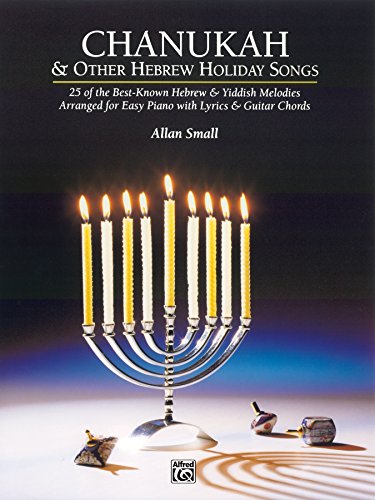
Another popular book is Chanukah and Other Hebrew Holiday Songs: 25 of the Best-Known Hebrew & Yiddish Melodies Arranged for Easy Piano (by Hal Leonard). This collection zeroes in on songs for Jewish festivals. It features the staple Chanukah pieces like “Ma’oz Tzur (Rock of Ages),” “I Have a Little Dreydl,” “Hanukkah O Hanukkah,” as well as songs for other holidays and folk tunes. Each is arranged for easy piano, and often includes lyrics in both English and transliteration. Having 25 songs, it’s a focused set – perfect around the holiday season to quickly pick up the must-know melodies. For a pianist in the USA, Canada, or Europe, this book is an accessible way to bring Jewish holiday spirit into your home through music.
 Kindle editionRead on Kindle ›
As an Amazon Associate I earn from qualifying purchases.
For more advanced pianists interested in Jewish liturgical music, there are publications like “The Jewish Piano Book” by Zalman Chaim Bernstein (which contains Cantorial melodies and davening tunes arranged for piano) or “Hebrew Melodies for Piano” by various arrangers. However, these can be harder to find and often assume a good knowledge of the melodies already. They are also more about transcriptions of vocal lines with piano accompaniment.
It’s also worth noting the crossover between Jewish and classical music: composers like Ernest Bloch and Darius Milhaud wrote piano pieces influenced by Jewish themes, and those are available in classical sheet music collections. For example, Bloch’s “From Jewish Life” (originally for cello and piano) or his “Visions and Prophecies” for solo piano contain beautiful, serious interpretations of Jewish spiritual themes – though these are definitely in the realm of advanced classical repertoire.
In summary, Jewish piano sheet music books like The Ultimate Jewish Piano Book and Jewish Favorites for Easy Piano provide a gateway into a vibrant musical tradition. Through these songs, you can experience the exuberance of a Hora dance, the poignancy of a Yiddish ballad, or the reverence of a Sabbath hymn – all under your fingertips. They are wonderful for cultural education, community events, or personal reflection. Don’t worry if you don’t speak Hebrew; the music itself is a universal language, and many books include transliterations or English translations to guide you. Embrace the opportunity to broaden your repertoire and connect with the joy and history in Jewish piano music.
3. Islamic and Middle Eastern Spiritual Music (Islam)
When it comes to Islamic religious music, the options for piano are a bit different from the Christian and Jewish traditions. In Islamic worship, music is traditionally vocal – for example, the melodic recitation of the Quran (tajweed) or the call to prayer (adhan) – and often instrumental music is not used in formal religious settings. Because of this, there aren’t many mainstream published piano books of Islamic liturgical music in the way there are hymn books for other faiths. However, that doesn’t mean pianists interested in Islamic spiritual themes are out of luck. There are a few avenues to explore:
Nasheeds and Spiritual Songs: Nasheeds are Islamic devotional songs, usually performed a cappella or with minimal percussion. Some nasheeds have become popular worldwide, and modern artists (like Sami Yusuf, Maher Zain, Harris J, etc.) incorporate instruments including piano in their recordings. While official sheet music books for these artists are rare, you can often find individual song transcriptions or arrangements floating around. For example, the classic nasheed “Talaʽ al-Badru ʽAlaynā” – an ancient song reportedly sung to welcome the Prophet Muhammad in Medina – has been arranged for easy piano by some educators, making it accessible to beginners. One YouTube tutorial even showcases “Tala al Badru Alayna” in a simplified piano version, indicating the growing interest in adapting such songs for learners. If you search online sheet music platforms (like Musescore or sheet music sharing sites), you may find user-arranged piano sheets for popular nasheeds like “Ya Rasulallah” or Sami Yusuf’s “Al-Muʽallim.” Just be sure any arrangement you use is legally shared or purchased.
Middle Eastern Songs Collections: Another approach is to look at Arabic and Middle Eastern songbooks that, while not explicitly “religious,” contain many traditional songs beloved in predominantly Muslim cultures. These songs often carry spiritual or moral themes and can serve as a cultural bridge. A great example is the collection Favorite Arabic Songs for Piano by The Musicians LLC. This book contains “some of the best-loved Arabic songs, by Fairuz and Amr Diab, arranged for piano”. Fairuz, a legendary Lebanese singer, has many songs with spiritual undertones (she even has albums of Christian hymns in Arabic, interestingly), and Amr Diab’s hits, while pop, are iconic in the Middle East. While these are not religious hymns, they reflect the musical heritage of the Islamic world and can be quite moving to play. The arrangements in such a collection are typically intermediate level, aiming to preserve the unique scales (Maqamat) and rhythms (like those 7/8 or 10/8 patterns in folk dances) in a pianistic way. By learning these, you not only expand your technical skills with new tonalities, but you also honor the cultural expressions of faith and life in Muslim-majority regions.
For a more classical angle, consider pieces inspired by Islamic culture. French composer Claude Debussy wrote “La puerta del vino,” a piece influenced by Moorish Spain, and more directly, John Williams composed “Arabesque No. 1” (not Debussy’s famous Arabesque, but a modern piece on the album “The Piano Album”), which is based on an Islamic chant. These are individual pieces rather than collections, but they show how Islamic themes have permeated piano repertoire.
It’s important to note the distinction: while one might not find a “Muslim Hymn Book for Piano”, there are plenty of “spiritually themed” or “culturally Islamic” music pieces you can enjoy on piano. Even Sufi music, known for its spiritual poetry and melodies (like those of Rumi’s poems or the qawwali music of South Asia), can be interpreted on piano if you find or create arrangements of famous pieces (e.g., the song “Mast Qalandar” or instrumental Sufi whirling melodies).
In terms of published material, one might find educational books on Arabic music theory for piano, or general anthologies of Middle Eastern folk songs. For example, the Arabic Melodies series or the “Arabic Real Book” (a lead sheet collection) could be useful if you want to explore improvisation in that style. These are more advanced resources and often assume knowledge of music theory.
As an Amazon Associate I earn from qualifying purchases.
Skill Level and Approach: If you’re a beginner interested in Islamic songs, start with something simple like a well-known folk tune (e.g., a children’s song or nursery rhyme from an Islamic culture) and see if you can find a basic arrangement. If you’re intermediate, you could handle the arrangements of Arabic love songs or patriotic songs (many have a spiritual feel). Advanced players might transcribe directly from recordings of nasheeds or Sufi music.
One more thought: Ethnomusicologists have compiled and transcribed some Islamic liturgical music (like the Turkish Mevlevi Sufi ceremonies or Indonesian Islamic songs). These transcriptions can sometimes be found in academic publications. They might not be idiomatic for solo piano, but an adventurous pianist could adapt them.
While you won’t see a thick “Islamic Piano Hymnal” on the shelf, you can still bring the spirit of Islamic devotion to the piano by focusing on cultural music and contemporary spiritual songs. It’s a lovely way for Muslim piano players (or any pianist curious about this area) to connect their musical hobby with their faith or cultural background. And for non-Muslim players, it’s an opportunity to learn melodies that millions around the world hold dear – a step toward musical diversity and understanding.
Recommended Resources for Further Learning
Beyond the main books above, here are a few extra resource types that can really support your journey into spiritual piano music, whether you play at home or in a faith community:
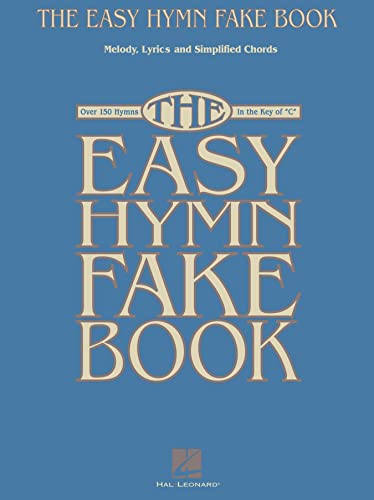
- The Easy Hymn Fake Book (Hal Leonard): 150+ hymns in a very simple lead sheet format: melody, lyrics, simplified chords, often in C. Great for beginners, for learning chord symbols, and for “faking” your own accompaniment. Examples mentioned: “Be Thou My Vision,” “In the Garden,” “Nothing But the Blood.”
 Kindle editionRead on Kindle ›
As an Amazon Associate I earn from qualifying purchases.
- Method book hymn supplements (graded): If you follow a method (Alfred’s Basic, Bastien, Faber Piano Adventures), use their matching hymn or sacred supplements. Examples mentioned: Faber “Hymn Favorites,” Alfred “Sacred Songs.” Useful as progressive lesson material even if less comprehensive than big anthologies.
As an Amazon Associate I earn from qualifying purchases.
As an Amazon Associate I earn from qualifying purchases.
- Sacred Performer style advanced collections (Alfred Music): Early advanced solo arrangements with a fuller concert sound. Example mentioned: Tom Fettke “Spirituals with a Velvet Touch” (10 early advanced spirituals). Other examples mentioned in the same line: “Hymns with a Velvet Touch” (Fettke), Cindy Berry “What Can I Play on Sunday?”, and collections by Mark Hayes, Marilynn Ham, Pepper Choplin. Expect arpeggios, key changes, expressive dynamics, and medleys, with a big payoff for church performance or recital.
- Resources for accompanists and choir directors: Not purely solo piano books, but practical for services: official denominational books and accompaniment editions with verses, intros, vetted usage. Examples mentioned: Catholic Psalter books, Reform Jewish songbooks like “Shireinu.” Also mentioned: “Praise & Worship Fake Book” for worship band style chord chart use.
- Online sheet music and communities: Free public domain hymn scores and sacred repertoire online. Examples mentioned: Hymnary.org (hymns), IMSLP (sacred and classical, including things like Bach “Jesu, Joy of Man’s Desiring” arrangements), and Musescore for community arrangements (with quality and copyright caution for modern songs).
- Educational videos and lesson series: YouTube channels that teach hymns and worship step by step, plus paid gospel focused courses for richer voicings and improvisation. Examples mentioned: “Piano Hymn Creations,” “Let’s Play Piano, Worship Tutorials,” and paid courses by Jamal Hartwell or Jonathan Powell.
- Cross religious inspiration collections: Explore multi culture devotional repertoire to widen musical vocabulary and fit diverse communities. Examples mentioned: “World Songs for Piano,” “Multicultural Christian Songs.”
Each of these recommended resources can help you deepen your repertoire and skills. Remember, the goal is not just to play the notes, but to connect with the spirit of the music. So whether you’re using a fake book to lead a sing-along at a retreat, or practicing an intricate arrangement alone at home, approach it with the heart as much as the hands. That’s where the true reward of spiritual piano playing lies.
Conclusion: Embracing the Music of Faith on Your Piano
Learning to play spiritual and religious music on the piano is more than just an artistic endeavor, it’s a journey that touches the heart and soul. We’ve explored an array of resources, from the sturdy old hymns of Protestant churches to the lively songs of Jewish holidays, and even ways to approach the rich musical heritage of the Islamic world. Along the way, we highlighted books like The Essential Hymn Anthology for timeless hymns, Santorella’s Jewish Favorites for cultural classics, and many more, each with its unique flavor and level. No matter your background or skill, there’s something in this tapestry of music for you – whether it’s the simple comfort of a beginner’s hymn, the sweeping arrangement of a worship ballad, or the festive rhythm of a folk song that makes your foot tap.
As you add these pieces to your repertoire, you’ll likely find that practicing them can be a form of meditation or joy in itself. Imagine ending your day by playing a gentle lullaby like “Silent Night” or greeting a weekend morning with the upbeat strains of “Ode to Joy” – your piano can become an instrument of peace, praise, and positivity in your home. If you perform or share your music, you’ll also be touching others – perhaps bringing back a cherished memory when they hear a familiar hymn, or introducing someone to a beautiful melody they hadn’t heard before.
Choose one song or book mentioned in this guide and give it a try this week. Order that book, download that sheet, or dig out an old hymnal and learn a piece that speaks to you. Start with just one. As you grow comfortable, set a little goal – maybe to learn one new spiritual piece each month. Over time, you’ll have built a personal library of music that not only improves your piano skills but also feeds your spirit and maybe even your community’s.
At Pianomode, we’re passionate about helping you learn the music you love. If this guide inspired you, consider checking out our other articles and resources on related topics – and feel free to reach out or comment with your own favorite books or pieces of spiritual piano music. Happy playing, and may your piano journey be filled with harmony and inspiration!
What are some easy hymns or religious songs for beginner pianists?
Start with melodies that stay in a five finger position and use simple rhythms. Good first picks include “Amazing Grace,” “Jesus Loves Me,” “What a Friend We Have in Jesus,” and “Kumbaya.” For Jewish repertoire, “Hava Nagila” and the Chanukah tune “Sevivon (S’vivon)” are repetitive and beginner friendly. For Islamic themed material, a simplified “Tala’ al Badru ‘Alayna” works well because it is short and lyrical. Look for books labeled beginner or easy, and consider big note editions if you are still learning note reading.
How can I use these sheet music books in a church or worship setting?
Use easy arrangements for sing alongs and congregational moments, and richer intermediate to advanced arrangements for preludes, offertories, meditation, or postludes. If you accompany singing, choose books that include lyrics and chord symbols so you can follow the structure and adapt on the spot. For choirs, piano reductions from choral scores are ideal, but you can sometimes adapt a solo arrangement if the key and structure match. In any setting, keep the tempo steady, simplify when needed, and be ready to extend an intro or repeat a section naturally.
Where can I find free or additional sheet music for hymns and spiritual songs?
Public domain hymns are widely available online. Hymnary.org often provides hymn scores, and IMSLP is a strong source for classical sacred repertoire. Community platforms like Musescore and 8notes can help, but quality varies and newer worship songs may be copyrighted. For modern songs, it is usually safer to buy legal single sheets from reputable retailers or use your church or community library music collections.
What is the difference between a hymn, a worship song, and a gospel song on piano?
Hymns are older, structured, and often harmonized in a chorale style, so a legato touch and clear voicing of the melody usually fits best. Worship songs are modern and groove based, often built on repeating chord loops, so arpeggios, rhythmic patterns, and dynamic builds feel more authentic. Gospel and spiritual styles tend to use syncopation, richer chords, and expressive energy, so you can lean into swing, embellishments, and stronger contrasts in dynamics.
I’m not from a particular religious background. Can I still play and enjoy this music?
Yes. Many pianists play sacred repertoire for its beauty, history, and emotional depth. The main guideline is to approach the music with respect for its context, especially if you perform it publicly. Musically, it is also a great way to build skills such as chord reading, accompaniment patterns, and expressive phrasing.