As an Amazon Associate, PianoMode earns from qualifying purchases. Recommendations are made on their merits; the price you pay is the same.
The intersection of cinematic storytelling and musical composition has rarely been as influential as within the Disney archive. For pianists, these scores represent more than mere nostalgia; they are a sophisticated pedagogical resource that spans genres from classical waltzes to contemporary jazz and pop-rock anthems. Analyzing these compositions reveals a wealth of technical challenges, ranging from intricate arpeggios to complex syncopation, that serve to elevate a player’s proficiency while maintaining high levels of engagement. This guide examines seven essential Disney pieces, providing technical analysis and practice strategies for the dedicated learner.
Disney piano music refers to keyboard adaptations of scores originally composed for animated or live-action features, characterized by lyrical melodies, diverse harmonic structures, and emotional resonance. These pieces are frequently used in piano pedagogy to teach dynamic control, phrasing, and expressive touch due to their familiar narrative arcs.
Disney compositions are uniquely suited for development because they often mirror the structural complexity of classical forms while remaining accessible to intermediate players. From the leitmotifs of Alan Menken to the rhythmic drive of Lin-Manuel Miranda, these songs offer a “high-yield” return on practice time, focusing on essential skills like sight-reading, interval recognition, and pedal dynamics
Disney piano repertoire refers to a specialized genre of contemporary transcriptions that bridge the gap between academic method books and professional performance. These seven “must-know” songs are selected based on their technical breadth: ‘A Whole New World’ (Legato phrasing/Arpeggios), ‘Let It Go’ (16th-note bass density/Dynamic range), ‘Part of Your World’ (Fluid arpeggiated motifs), ‘Colors of the Wind’ (Wide intervals/Expression), ‘You’ve Got a Friend in Me’ (Swing rhythm/Syncopation), ‘Reflection’ (Nuanced articulation), and ‘How Far I’ll Go’ (Ostinato patterns/Modern pop modulation). Mastery of these pieces indicates a Grade 3 to Grade 5 proficiency on the global examination scale, requiring the pianist to manage independent hand coordination, sophisticated pedaling, and a deep understanding of the grand staff.
Before engaging with the technical development of the specific songs, it is imperative to establish a comprehensive theoretical framework. Music theory is defined as the study of the organizational characteristics of organized sound, encompassing the perception of pitch, duration, timbre, and intensity. For the pianist, this involves a visual and aural mastery of the keyboard, where the arrangement of black (#0B0B0B) and white (#FFFFFF) keys facilitates the recognition of whole steps and half steps.
The Architecture of the Grand Staff
The Grand Staff is a system of two five-line staves—the treble and bass clefs—connected by a brace and a shared, invisible ledger line representing middle C (C4). The treble clef, or G-clef, circles the second line up on the staff, designating it as the pitch G4, while the bass clef, or F-clef, positions the pitch F3 on the fourth line.
| Clef Type | Nominal Range | Primary Function in Disney Music |
| Treble Clef | Above C4 | Melodic leadership and upper-register harmonies. |
| Bass Clef | Below C4 | Rhythmic foundations, ostinati, and harmonic roots. |
| Ledger Lines | Extrapolated | Extending the range for high-soprano melodies or deep-bass pads. |
Mastery of sight-reading requires the student to decode these clefs simultaneously, a task that is particularly critical in the Disney repertoire, where the left hand often performs complex broken chords while the right hand manages lyrical melodies.
Harmonic Intervals and Polyphony
Harmonic intervals are the vertical measurement of pitch distance between two notes played simultaneously, forming the building blocks of chords. In contrast, melodic intervals occur in a horizontal sequence. The Disney soundscape often relies on perfect fourths and fifths to create a sense of nobility or “magic,” while minor seconds and tritones (the “Devil in music”) are utilized to create dissonance and tension, particularly in character-driven villain themes.
Polyphonic texture, or polyphony, involves the coexistence of multiple independent melodic lines. While much of the Disney repertoire is homophonic (a lead melody supported by chords), advanced solo piano arrangements often introduce polyphonic elements during bridges or developmental sections where the left hand takes on a counter-melodic role.
Rhythmic Complexity and Temporal Flow
The organization of time in music is perceived through pulse, tempo, and meter. The pulse is the regularly recurring background pulsation, while tempo represents the rate at which this pulse progresses, typically measured in beats per minute (BPM). Meter, expressed through time signatures, dictates the grouping of these pulses into measures.
Syncopation, a hallmark of modern Disney music, occurs when the rhythmic stress is placed on unexpected “off-beats”. This creates the “push” or rhythmic drive essential for the jazz-inspired works of Randy Newman or the modern pop structures of Lin-Manuel Miranda.
 Kindle editionRead on Kindle ›
As an Amazon Associate I earn from qualifying purchases.
1. A Whole New World (Aladdin)
‘A Whole New World’, the central masterpiece of the 1992 film Aladdin, is a lyrical pop ballad composed by Alan Menken with lyrics by Tim Rice. It represents a significant pedagogical step for the intermediate pianist due to its reliance on expressive legato phrasing and the management of multiple tonal centers.
Harmonic Structure and Key Sensitivity
While simplified arrangements are frequently transposed into C major (zero sharps/flats) to facilitate easier reading for early intermediate students, the original vocal key is E major. For the serious student, performing the piece in its intended key of E major is essential to capture the “shimmering” quality of the melody, which revolves around the E4 to G4 range in the right hand.
The harmonic progression follows a classic I–V–vi–IV pattern in the verses (C–G–Am–F in the C major arrangement), which provides a stable tonal foundation. However, the analysis reveals that the bridge shifts significantly, often modulating to Ab major to evoke the expansive, “world-opening” narrative of the lyrics, before resolving into F major for the final celebratory chorus. These sequential modulations require the pianist to possess a high degree of “key sense,” the ability to recognize and adapt to new accidentals without losing the rhythmic flow.
Technical Hurdles and Metronomic Precision
The tempo of ‘A Whole New World’ is generally marked as Andante, which translates to a “walking pace,” typically interpreted at 108 BPM for standard performance. Pedagogical strategies suggest that students initially practice at 60 BPM to master the left-hand accompaniment patterns.
| Technical Aspect | Pedagogical Requirement |
| Fingering | Standard 1–5 numbering; thumb (1) on the tonic C to anchor the hand position in simplified versions. |
| Articulation | Lyrical legato phrasing that mimics the drawn-out syllables of the vocal line. |
| Pedaling | Judicious use of the sustain (damper) pedal on downbeats to enhance resonance without creating a muddled harmonic field. |
| Chordal Voicing | Utilizing root position triads (I, IV, V) while integrating first and second inversions to minimize hand leaps. |
The bridge section often features clustered triplet passages or repeated eighth-note ostinati that shift from descriptive accompaniment to an emotional driver, creating a “push” or syncopated effect that evokes the sensation of flying.
2. Let It Go (Frozen)
The power ballad ‘Let It Go’ from the 2013 film Frozen has become a global phenomenon and a standard for modern piano performance. Composed by Kristen Anderson-Lopez and Robert Lopez, the piece is a masterclass in dynamic growth and rhythmic intensity.
Tonality and Modal Perspectives
The song is primarily established in the key of Ab major, which offers a “bright” and expansive tonality. However, to reflect the protagonist’s initial state of isolation, the verses begin in the relative minor key of F minor (F Aeolian). As the character experiences liberation, the music shifts to the relative mode of Ab Ionian for the chorus.
The pre-choruses can be conceptualized as Eb Mixolydian, creating a bridge between the introspective minor verse and the triumphant major chorus. These modes are enharmonically equivalent, allowing the tonality to shift perspectives rather than locations, which ensures the transition sounds fluid and natural to the listener. For the pianist, this requires familiarity with both the G major and B major scales (and their relative pentatonics) to navigate the occasional chromatic “tricks” that add weight to these key changes.
Rhythmic Energy and Dynamic Range
With a fast tempo of 137 BPM (allegro), ‘Let It Go’ demands significant technical facility in the left hand. The quarter-note pulse is overlaid with 16th-note subdivisions in the bass line, requiring the player to maintain a “groove” that remains “in the pocket”.
- Dynamic Contrast: The song follows a four-part rhetorical growth: narratio (introduction), probatio (verse), dubitatio (pre-chorus), and peroratio (climatic chorus). The pianist must mirror this growth by starting with delicate pianissimo (pp) passages and building to a powerful forte (f) or fortissimo (ff) in both hands during the chorus.
- Legato Phrasing: Despite the rhythmic density of the 16th-note patterns, the bass line must be played legato with full weight to provide the necessary textural warmth.
- Coda Articulation: The final bars require the player to hold the final chord for the exact duration indicated, while the single eighth-note chords in the preceding coda must be articulated crisply against defined rests.
3. Part of Your World (The Little Mermaid)
‘Part of Your World’ is the quintessential Disney “I Want” song, characterized by its vulnerability and its use of musical motifs to reflect the character Ariel’s aspirations.
Character motifs and the “Flowing Water” Theme
The introduction to ‘Part of Your World’ features a recurring “flowing water theme,” which is an ascending arpeggio that visually and aurally represents Ariel’s desire to ascend to the surface. These arpeggios typically utilize a three-note pattern (E, C#, A) repeated across the treble clef.
Pedagogical analysis suggests that transcribing these notes as an A/E chord (an A major triad with an E bass note) is a more accurate representation of the harmonic content than the occasionally used “E6add4” label, which can be confusing for intermediate students. This piece is particularly effective for teaching students how to read and execute broken chords (arpeggios) that span multiple registers.
Articulation and Phrasing
The piece is marked by its tenderness and “lush” orchestration, requiring the pianist to use an elegant and “economized” approach rather than mechanical finger technique.
- Round-offs: Educators suggest applying “round-offs” at the end of right-hand phrases—a subtle lifting of the wrist to ensure a graceful release of the note.
- Wrist Flexibility: A relaxed wrist is essential for the left-hand accompaniments to prevent tension during the repetitive arpeggio figures.
- Mode Mixture: The song utilizes mode mixture, where a major IV chord is preceded by a minor iv chord borrowed from the parallel minor scale, adding a poignant “darkness” to the otherwise hopeful melody.
4. Colors of the Wind (Pocahontas)
‘Colors of the Wind’ is recognized for its soulful melody and profound narrative, winning both the Academy Award and a Grammy for its composition. For the pianist, it offers a rigorous study in wide intervals and expressive phrasing.
Melodic Contour and Harmonic Richness
The song is primarily composed in F major (one flat) with a moderately slow tempo of 70-80 BPM. The melody features wide intervals that require the pianist to manage large leaps accurately while maintaining a lyrical, vocal-like phrasing.
The harmonic progression utilizes a blend of major and minor chords to create emotional depth. Optimism is reflected in the major chords, while minor chords provide introspection. The frequent use of secondary dominants and passing chords adds a layer of complexity that enhances the song’s poignancy. A critical transition occurs in the bridge, where the music modulates to the relative minor key to match lyrics addressing the destruction of nature.
Pedagogical Issues and Performance Techniques
The arrangement presents several “tactile challenges” that require careful attention from both teacher and student.
| Challenge Area | Pedagogical Solution |
| Register Shifts | Mastery of hand placement during abrupt transitions between the low and high registers of the grand staff. |
| LH Thirds | The left-hand thirds must remain “lucid and buoyant,” avoiding a muddy or heavy sound that might overpower the melody. |
| Syncopation | Both sections are “brimming” with syncopation; students must practice with a metronome to ensure the rhythmic accents land precisely. |
| Textural Warmth | Judicious pedaling is required to “grace” the textural warmth of the piece, particularly during the bridges. |
The interaction between melody and harmony often involves dissonant intervals resolved onto consonant ones, mirroring the lyrical theme of exploration and ultimate understanding.
5. You’ve Got a Friend in Me (Toy Story)
Randy Newman’s ‘You’ve Got a Friend in Me’ is unique within the Disney repertoire for its emulation of turn-of-the-century American musical styles, including ragtime, honky-tonk, and jazz.
Swing Style and Rhythmic “Feel”
The most significant technical hurdle for the pianist is the mastery of the swing rhythm. Unlike the straight eighth notes of a standard ballad, the swing style utilizes a “shuffled” feel, often conducted with a strong upbeat (arsis) and downbeat (thesis) emphasis. The tempo is typically marked as Moderato Swing at a metronomic pulse of 112-132 BPM.
Pedagogically, this song is used to teach students how to identify pulses and rhythmic patterns, such as the 8th-quarter-8th syncopation that defines the “hook” of the melody. The use of triplets in the eighth-note runs adds a sense of joyful movement that aligns with the film’s animation.
Harmonic Sophistication and Lead Sheet Analysis
Newman’s harmonic language is rich with altered dominant seventh chords, which are frequently used to create jazzy tensions that want to resolve. For example, the first bars of the verse utilize a Bb7(#5) chord that resolves to an Eb7, a sophisticated progression that provides the song’s signature “soulful” resolution with a hint of country music influence.
- Left-Hand Foundations: Many arrangements utilize an Alberti bass or a repeated melodic ostinato in the left hand to ground the rhythmic drive.
- Chord Voicing: While the song can be played with simple block chords, more advanced versions incorporate single bass notes or two-note harmonies that allow the right-hand riffs to stand out.
- Formal Roadmap: The piece utilizes first and second endings and repeat signs, providing an excellent opportunity for students to learn how to navigate a professional musical “roadmap”.
6. Reflection (Mulan)
‘Reflection’ is a poignant, introspective ballad that requires the pianist to demonstrate exceptional control over articulation and phrasing to capture its nuanced meaning.
Phrasing and Articulation
The song is set in common time (4/4) with a moderate tempo of 88-90 BPM. The primary challenge for the student is to transition away from a mechanical, note-by-note approach and toward a “singing” tone on the keyboard.
- Diatonicism: The piece is primarily composed within the C major or G major scales, making the initial pitch placement relatively straightforward for intermediate players.
- Articulation and Nuance: The player must thoughtfully interpret the musical syntax to convey the character’s internal conflict. This involves subtle variations in key attack (attack and decay) to mirror the breathy quality of the vocal performance.
- Dynamic Shades: Effective performance of ‘Reflection’ requires a mastery of pianississimo (ppp) and sotto voce (barely audible) dynamics, which build into mezzo-forte as the character finds their voice.
Advanced Interpretative Skills
Because ‘Reflection’ is deeply tied to the visual and emotional arc of the film, students should be encouraged to use “expressive freedom” when performing. This includes the use of rubato, slight tempo fluctuations, to emphasize lyrical points and a deep awareness of how the melodic contour (the rising and falling pitch) interacts with the underlying harmony to induce emotion in the listener.
7. How Far I’ll Go (Moana)
Lin-Manuel Miranda’s ‘How Far I’ll Go’ is a modern Disney anthem that challenges the pianist with driving rhythms and pulsating accompaniments.
Modern Pop Structures and Ostinati
The song’s piano accompaniment mimics the repetitive, pulsating style of modern pop-rock, consisting of simple three-to-four chord cycles played using inversions that require minimal finger movement. These patterns are technically known as ostinati (singular: ostinato), which provide a steady foundation for the melodic line.
Pedagogically, this song is an excellent introduction to “rote learning”, learning through repetition and ear training, before transferring the patterns to Western notation. The melody often features two iterations: a regular version followed by an almost identical one that adds higher-note flourishes for dramatic effect.
Technical Hurdles: Modulation and Syncopation
- Modulation: ‘How Far I’ll Go’ is full of harmonies that extend beyond the standard diatonic scale, presenting a significant modulation point, often in the final chorus—that students must learn to identify and navigate correctly.
- Syncopation: The rhythmic feel of the song depends on precise syncopated accents, particularly the management of the “push” into the chorus.
- Hand Independence: The final chorus offers an opportunity for advanced students to manage quick and complicated chord changes while maintaining a driving tempo of 82-84 BPM (though 200 BPM is sometimes used as a pulse marker for 8th-note subdivisions).
Comparative Analysis of Skill Level Benchmarks
To assist educators in the selection of repertoire, the following table aligns the seven Disney masterworks with established global examination standards, such as the Associated Board of the Royal Schools of Music (ABRSM) and the Royal Conservatory of Music (RCM).
| Song Title | Estimated Grade | Henle Level | Technical Primary | Harmonic Primary |
| A Whole New World | Grade 3 | Easy (2) | Legato | Diatonic Triads |
| Let It Go | Grade 4 | Medium (4) | 16th density | Power Chords |
| Part of Your World | Grade 3 | Easy (3) | Arpeggios | Mode Mixture |
| Colors of the Wind | Grade 4 | Medium (4) | Wide Intervals | Secondary Dominants |
| You’ve Got a Friend | Grade 5 | Medium (5) | Swing feel | Altered 7ths |
| Reflection | Grade 3 | Easy (2) | Phrasing | Diatonic Scales |
| How Far I’ll Go | Grade 4 | Medium (4) | Ostinati | Modulation |
.
These benchmarks serve as a guide; actual difficulty may vary depending on the specific arrangement chosen, with simplified versions catering to early beginners (Level 1) and full solo transcriptions challenging mid-to-late intermediate players (Level 6).
Recommended Products and Resources
The selection of high-quality transcriptions is essential for both student motivation and technical accuracy. Inferior arrangements often strip away the harmonic nuances that define the “Disney Sound,” leading to a less satisfying pedagogical experience.
Contemporary Disney: 50 Favorite Songs for Piano
The Contemporary Disney: 50 Favorite Songs for Piano volume is the definitive collection for the modern pianist. This book is a hallmark of the gold-standard (#C59D3A) educational market, featuring authoritative arrangements that remain faithful to the original orchestrations.
- Design and Durability: The volume features a professional black (#0B0B0B) cover with high-contrast white (#FFFFFF) typography, designed with a binding that allows the book to lie flat on the music stand, a critical feature for long-form ballads like ‘Let It Go’.
- Comprehensive Repertoire: Includes all seven songs discussed in this analysis, ranging from the classical romanticism of ‘Part of Your World’ to the modern pop drive of ‘How Far I’ll Go’.
- Harmonic Accuracy: Unlike many “easy piano” books, this collection includes full chord symbols above the staff, allowing the student to engage in harmonic analysis and improvisation based on the chord/scale equivalency model.
Kindle editionRead on Kindle ›As an Amazon Associate I earn from qualifying purchases.
Essential Pedagogical Tools
To complement the repertoire, the student should utilize the following tools to enhance their practice:
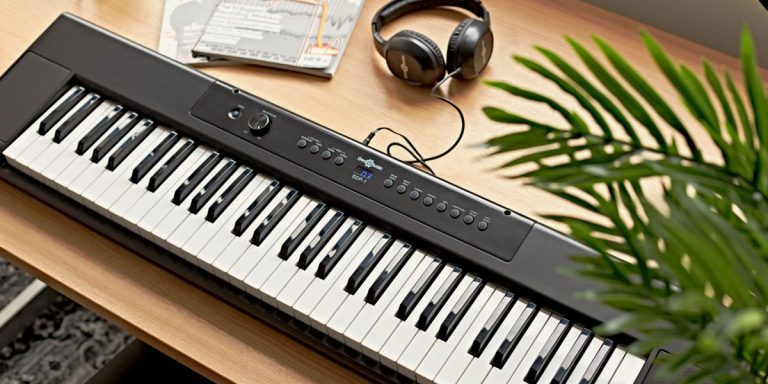
Digital Keyboards: High-end models like the Yamaha P-515 or Roland FP-90X are recommended for their realistic “graded hammer action,” which is necessary for developing the touch sensitivity required for Alan Menken’s expressive legato passages.
As an Amazon Associate I earn from qualifying purchases.
As an Amazon Associate I earn from qualifying purchases.
Metronomes: Necessary for mastering the 137 BPM pulse of ‘Let It Go’ and the 112 BPM shuffle of ‘You’ve Got a Friend in Me’.
As an Amazon Associate I earn from qualifying purchases.
Instructional Guides: Series such as Alfred Adult Teaching or Faber Piano Adventures provide the foundational theory of intervals and scales needed to approach the Disney songbook.
As an Amazon Associate I earn from qualifying purchases.
As an Amazon Associate I earn from qualifying purchases.
Conclusion
The “Must-Know” Disney piano repertoire represents a profound pedagogical landscape for the 21st-century musician. From the ragtime-inflected sophistication of ‘You’ve Got a Friend in Me’ to the modern, mode-shifting power of ‘Let It Go’, these compositions provide a comprehensive masterclass in modern piano technique. By analyzing these works through the lens of music theory, focusing on the grand staff, harmonic intervals, and rhythmic syncopation, the pianist develops the technical facility and emotional sensitivity required for professional-level performance.
The enduring place of these cinematic masterworks in the global classroom is a testament to their craftsmanship. For the student, they are a bridge between the “tyranny” of standard finger exercises and the “shimmering” potential of modern music. For the educator, they are invaluable tools that make the study of complex music theory an engaging, visceral experience. Through the study of these seven essential songs, the pianist truly enters a “whole new world” of musical possibility
Read More
How can a student effectively manage the modulation in ‘How Far I’ll Go’?
The analysis indicates that the modulation often occurs at the beginning of measure 5 of a phrase. Students should practice the “pivot chord”, the chord that exists in both the old and new keys, to ensure a seamless transition between tonalities.
Why is ‘You’ve Got a Friend in Me’ rated at a higher difficulty than other Disney songs?
While the melody is straightforward, the “swing” rhythm and the use of altered dominant 7th chords require a rhythmic independence and harmonic sophistication typically found in Grade 5 students or those with a background in jazz piano.
What is the significance of the “Water Motif” in ‘Part of Your World’?
The ascending arpeggio in the introduction serves a narrative function, using the physical upward motion of the notes to symbolize the character’s desire to reach the surface. For the pianist, this is a technical exercise in maintaining a fluid, weightless touch during repeated register shifts.
Can these songs be used for formal piano examinations?
Yes. Many of these pieces are listed in the syllabi for RCM, ABRSM, and Rockschool (RSL). ‘Let It Go’ and ‘You’ve Got a Friend in Me’ are standard repertoire for Grade 4 and Grade 5 contemporary piano exams, respectively.
How should a student approach the wide intervals in ‘Colors of the Wind’?
Wide intervals (such as sixths and octaves) should be practiced hands-separately. The player should focus on “wrist rotation”, using the rotation of the forearm to help the hand span the distance without straining the fingers.
What is a “leitmotif” in Disney music?
While not explicitly a “theory” term for beginners, a leitmotif is a recurring musical theme associated with a particular character or idea. In Aladdin, for example, specific intervals or melodic fragments represent the “magic” or the “carpet,” helping the listener (and player) connect with the story through the score.