
LeThere is something special about a piano piece that can create a clear musical atmosphere with very few notes. A Morning Sunbeam by Florence B. Price is a charming example of this approach. Written for elementary pianists, the piece uses a gentle melodic line, sustained notes, contrasting rhythmic patterns, and carefully spaced musical phrases to create a quiet and reflective character.
The composition belongs to 3 Sketches for Little Pianists, a collection of short piano pieces by the American composer Florence B. Price. Although the title may suggest a simple descriptive miniature, the score offers several useful learning opportunities. Students must coordinate different rhythmic activities between the hands, maintain a steady pulse, control the duration of sustained notes, and pay attention to rests and changes in texture.
For beginner pianists, these are valuable skills. Playing a piece slowly does not necessarily make it easy: holding a note while the other hand continues moving, observing rests accurately, and maintaining musical continuity all require concentration and control. A Morning Sunbeam offers an opportunity to develop these abilities through a complete musical composition rather than an isolated technical exercise.
This guide explores the history of the piece, its place within Florence B. Price’s piano music, and the musical features visible in the supplied score. It also provides a practical, step-by-step learning method, a four-week practice plan, and advice on the main technical challenges.
A Morning Sunbeam is the third piece in Florence B. Price’s 3 Sketches for Little Pianists, originally published in 1937. The supplied score is in 3/4 time and carries a tempo marking of quarter note = 69 BPM. The original publication in The Etude identifies the piece as Grade 1 and gives the tempo indication Andantino.
1. Score Overview
A Morning Sunbeam is a short elementary piano composition by Florence B. Price. It was published in October 1937 in The Etude magazine as part of a series titled Delightful Pieces for Junior Etude Readers. The original publication identifies it as a Grade 1 piece, making it suitable for early piano study.
The score provided for this tutorial is a one-page version containing 50 numbered measures. It uses a two-staff piano layout, with separate notation for the right and left hands. The time signature is 3/4, and the tempo marking is quarter note = 69.
Score Information
| Detail | Information |
|---|---|
| Title | A Morning Sunbeam |
| Composer | Florence B. Price |
| Collection | 3 Sketches for Little Pianists |
| Position in collection | No. 3 |
| Original publication | 1937 |
| Original publication source | The Etude, October 1937 |
| Instrumentation | Solo piano |
| Time signature | 3/4 |
| Tempo in supplied score | ♩ = 69 BPM |
| Tempo indication in original publication | Andantino |
| Original educational classification | Grade 1 |
| Supplied score length | 1 page |
| Number of measures in supplied score | 50 |
Understanding the Musical Character
The title suggests a peaceful morning atmosphere, and this is a useful starting point for interpretation. The music should not sound hurried or aggressive. Its character is better approached through a controlled pulse, a clear melodic line, and careful attention to the length of each note.
However, a descriptive title should not lead the pianist to impose an interpretation that the score does not support. The musical atmosphere must emerge from the written rhythm, articulation, note duration, and phrasing.
The main objective is to create a relaxed and coherent performance in which the melody remains clear while the accompanying material provides stability.
2. History and Composer: Florence B. Price
Florence Beatrice Price (1887–1953) was an American composer, pianist, organist, and music teacher. Born in Little Rock, Arkansas, she became one of the most important African-American composers of the first half of the twentieth century.
Price received her early musical education from her mother before studying at the New England Conservatory of Music in Boston. She studied piano, organ, and composition, graduating in 1906. Her education combined European classical traditions with the musical influences that shaped her own artistic identity.
Her compositions include symphonies, concertos, chamber music, songs, organ works, and a substantial body of piano music. Her musical language frequently combines European classical forms and techniques with elements of African-American musical traditions, including spirituals and other Black American musical idioms.
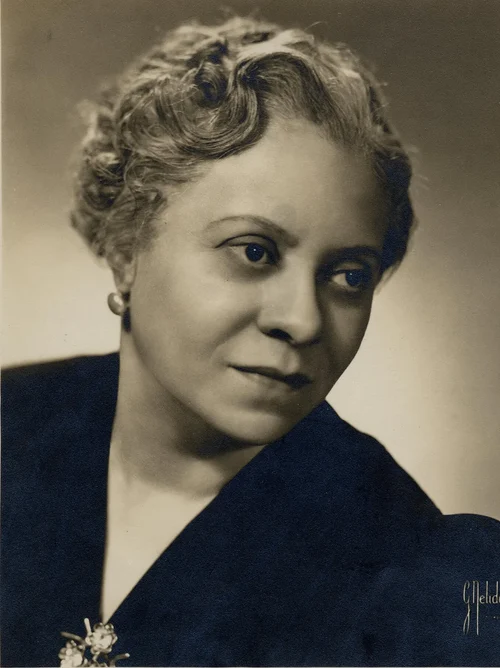
Florence Beatrice Price (1887-1953) portrait
A Historic Achievement in American Music
In 1933, Price became the first African-American woman to have a symphonic work performed by a major American orchestra. Her Symphony No. 1 in E minor was performed by the Chicago Symphony Orchestra under the direction of Frederick Stock during the Chicago World’s Fair.
The performance followed the symphony’s success in the 1932 Wanamaker competition, where it received first prize in the orchestral category. This achievement brought Price national recognition and marked an important moment in American classical music history.
Despite this recognition, Price faced considerable professional obstacles related to both race and gender. Much of her music received limited attention after her death, and renewed interest in her work grew following the discovery of a substantial collection of manuscripts in an abandoned house in the Chicago area in 2009.
Today, her compositions are increasingly performed, recorded, and studied. This renewed attention has helped establish a fuller understanding of her contribution to American music.
3 Sketches for Little Pianists
A Morning Sunbeam belongs to 3 Sketches for Little Pianists, a collection of three elementary piano compositions published in 1937.
The three pieces are:
- Cabin Song
- Bright Eyes
- A Morning Sunbeam
The collection is catalogued under Florence Price’s name by IMSLP, which records 1937 as both the composition year and first publication year. The historical magazine source also identifies A Morning Sunbeam as a contribution to The Etude‘s series of pieces for junior pianists.
These compositions belong to Price’s educational piano repertoire. They demonstrate that music written for young students can still have a distinctive character and offer more than repetitive technical patterns.
One important correction for anyone researching the collection: A Morning Sunbeam is the third sketch, not the opening piece. Its position in the collection should therefore be described accurately when discussing the work.
3. Musical Structure and Theory
The supplied score contains 50 numbered measures in 3/4 time. This means that each measure is organised around three quarter-note beats. The regular three-beat organisation gives the pianist a clear framework for maintaining the pulse, although the different note durations and rests require careful counting.
The tempo marking in the supplied score is quarter note = 69 BPM. The original Etude publication describes the tempo as Andantino and also gives a metronome indication of quarter note = 69. These two markings are consistent: Andantino provides a general character indication, while the metronome marking supplies a more precise reference for the pulse.
The 3/4 Time Signature
In 3/4 time, each measure contains three quarter-note beats. Beginners should learn to feel this organisation rather than simply count individual notes.
A useful first step is to count:
ONE, two, three | ONE, two, three
The first beat provides the main point of reference. The second and third beats complete the measure and lead towards the next downbeat.
For this piece, a steady three-beat pulse is particularly important because the hands do not always play notes at the same time. Some notes are sustained while other musical events take place in the opposite hand. The pianist must therefore maintain an internal sense of the measure even when one hand is temporarily silent.
The Relationship Between Melody and Accompaniment
The score creates interest through the contrast between the two hands.
At the beginning, the right hand plays sustained melodic notes while the left hand introduces a recurring pattern of shorter notes. This creates two different rhythmic roles:
- The right hand provides the melodic line and its longer note values.
- The left hand supplies a more active accompanying pattern.
This relationship requires independence. The right hand must maintain the full duration of its notes without being interrupted by the movement of the left hand.
As the piece progresses, the texture changes. There are passages where one hand rests while the other sustains notes, sections containing shorter and more detached events, and later passages that return to material resembling the opening texture.
The pianist should pay attention to these changes instead of treating the entire piece as one continuous pattern.
Sustained Notes and Musical Continuity
One of the most important features of the score is the use of long notes and ties. These markings indicate that certain notes must continue sounding across their written duration.
A common beginner mistake is to release a note too early because attention shifts towards the other hand. This can interrupt the melodic line and weaken the sense of continuity.
When practising, make sure that each sustained note is held for its full value. The movement of the opposite hand should not cause unnecessary lifting or tension.
Rests Are Part of the Music
The score contains several rests, particularly in the passages where the texture becomes more fragmented.
Rests should be treated as active elements of the rhythm. They are not simply moments when nothing happens. They create space, separate musical gestures, and help define the character of a phrase.
Count through every rest, even when neither hand is playing. This will prevent the tempo from slowing down or becoming irregular.
4. Section-by-Section Analysis
The supplied PDF contains 50 numbered measures. The following guide follows the visible musical layout of that exact score. It uses measure references from the supplied edition rather than introducing unverified bar numbers from another publication.
Measures 1–9: Establishing the Opening Texture
The piece begins with a sustained melodic line in the right hand, accompanied by a recurring broken-note pattern in the left hand.
This opening establishes the main relationship between the hands. The right hand needs to produce a calm, connected melody, while the left hand maintains a regular accompanying movement.
The main challenge is not speed. At the marked tempo, the pianist has time to concentrate on the duration of each note and the balance between the two hands.
What to practise:
- Read the right-hand melody separately.
- Identify the left-hand pattern and practise it evenly.
- Count the three beats of every measure.
- Hold the longer right-hand notes for their full duration.
- Combine both hands slowly without allowing the accompaniment to overpower the melody.
What to listen for: The melody should remain clear and sustained while the left hand provides a consistent foundation.
Measures 10–19: Developing the Musical Conversation
The next section continues the melodic approach while introducing changes in note movement and texture.
The score contains sustained notes, shorter melodic events, and rests. These contrasts require the pianist to remain attentive to the written rhythm. The music should not be played as though every measure has exactly the same shape.
Some passages allow the melody to settle, while others introduce more movement. The student should listen for these changes and avoid making every note equally prominent.
What to practise:
- Identify where the melodic notes are sustained.
- Count the rests accurately.
- Practise short groups of notes separately when necessary.
- Maintain a consistent pulse through changes in texture.
- Avoid shortening tied or sustained notes.
What to listen for: The transitions should feel natural, without sudden interruptions or changes in tempo.
Measures 20–29: A Change in Texture
Around measure 20, the score moves into a noticeably different texture. The right hand contains repeated short gestures and rests, while the left hand plays longer notes and changing accompanying material.
This section is an important coordination exercise. The pianist must resist the temptation to make the hands move together mechanically. Their rhythmic roles are different, and each must be played according to its own notation.
The rests in the right hand are particularly important. Students should count through them rather than anticipate the next note or enter too early.
What to practise:
- Practise the right-hand rhythm independently.
- Count aloud through every rest.
- Hold the left-hand notes for their full written duration.
- Combine the hands slowly.
- Check that the short right-hand gestures are clear and rhythmically accurate.
What to listen for: The contrast between the short right-hand events and the longer notes underneath should remain clear.
Measures 30–39: Reconnecting the Musical Lines
In this section, the score returns to a mixture of sustained notes, shorter melodic gestures, and accompanying patterns.
The pianist should pay attention to how the musical material moves between the hands. Some passages require one hand to remain relatively still while the other becomes more active.
This is a good opportunity to develop independence and controlled note release. The objective is not to make the music sound complicated, but to preserve the balance between the two parts.
What to practise:
- Identify the main melodic notes.
- Practise the accompaniment without unnecessary accents.
- Check the duration of tied notes.
- Work on transitions between contrasting rhythmic patterns.
- Keep the three-beat pulse stable.
What to listen for: The music should sound connected even when the written texture changes.
Measures 40–49: Return of the Opening Material
The later part of the score brings back material resembling the opening. The recurring left-hand pattern and sustained melodic writing help establish a sense of musical return.
This is an important moment for interpretation. The student should recognise the familiar material and play it with the same rhythmic control developed earlier.
Do not assume that a returning passage should automatically be louder or more dramatic. Follow the dynamics and articulation printed in the score.
What to practise:
- Compare the returning material with the opening.
- Maintain the same consistency in the left hand.
- Keep the right-hand melody smooth.
- Pay attention to any changes in the written notes.
- Avoid rushing towards the ending.
What to listen for: The return should feel familiar and coherent, rather than like an unrelated repetition.
Measure 50: The Closing Sonority
The final measure contains sustained notes and brings the composition to a calm conclusion.
Give the final notes their full written duration. Avoid lifting the hands too early or allowing the ending to feel abrupt.
The last moment of a piece is part of its musical expression. A controlled release is just as important as a well-played opening.
What to practise: Hold the final sonority carefully and release it together, maintaining a clear sense of the ending.
5. Technical Challenges
Although A Morning Sunbeam is classified as Grade 1 in its original publication, it still introduces several important technical challenges for beginner pianists. Its difficulty comes less from speed or virtuosity than from rhythmic control, note duration, and coordination.
1. Maintaining a Steady Three-Beat Pulse
The 3/4 time signature requires the pianist to maintain a regular three-beat structure throughout the piece.
Students who are more familiar with 4/4 music may initially find it difficult to feel the measure naturally. Counting aloud can help establish the pulse before attempting to play both hands together.
Practical exercise:
- Count three beats repeatedly without playing.
- Tap the first beat slightly more clearly.
- Continue counting while playing the left hand.
- Add the right hand without changing the pulse.
The aim is to maintain the same underlying beat even when the hands play different rhythms.
2. Holding Notes While the Other Hand Moves
This is one of the most important challenges in the piece.
The right hand often needs to sustain notes while the left hand continues playing. Beginners sometimes release the melody too early because they are concentrating on the movement of the opposite hand.
Practise holding a note while slowly playing the accompanying pattern. Keep the fingers relaxed and avoid pressing unnecessarily hard.
Remember: A sustained note should remain held for its full written value, but it should not require excessive physical tension.
3. Controlling the Left-Hand Accompaniment
The opening left-hand figure uses a recurring pattern of shorter notes. The pianist must play these notes evenly while maintaining a relaxed hand position.
Avoid making the first note of every group excessively loud. The accompaniment should support the melody rather than compete with it.
Practise the pattern slowly and listen for equal timing between its notes.
4. Observing Rests Accurately
Rests become particularly important in the middle sections. Students must understand that silence has a precise duration.
If a rest is shortened, the next note will arrive too early and disturb the rhythmic structure. If it is extended, the musical flow will be interrupted.
Count through rests just as carefully as you count played notes.
5. Balancing the Two Hands
The melody should generally be more prominent than the accompanying material when the notation establishes that relationship.
This does not mean that the left hand should be inaudible. It should remain clear and controlled while allowing the right-hand line to be heard naturally.
Practise each hand separately, then combine them while listening to the balance.
6. Releasing Notes Together
Tied notes and sustained notes require careful attention to their endings. When both hands arrive at a release point, make sure the notes are not cut off at different times unless the notation requires it.
This is particularly important in the final measures, where the closing sonority should sound settled and complete.
6. How to Practise A Morning Sunbeam
A productive practice session should focus on one or two musical objectives rather than simply repeating the entire piece.
Step 1: Study the Score Before Playing
Look at the complete page before beginning.
Identify the 3/4 time signature, the tempo marking, the note values, and the rests. Notice where the texture changes and where familiar material returns.
This first examination helps you understand the piece as a whole rather than treating each measure as an isolated exercise.
Step 2: Establish the Pulse
Set a metronome to quarter note = 69 BPM if you are ready to work at the printed tempo.
If the piece is still unfamiliar, begin more slowly. For example, 50 or 55 BPM can provide a comfortable starting point, provided that you maintain the correct rhythmic relationships.
The slower tempo is a practice choice, not a replacement for the composer’s marking.
Step 3: Learn the Left Hand
Begin with the opening accompaniment.
Play the notes slowly and evenly. Avoid unnecessary tension in the wrist and do not exaggerate the movement of the fingers.
Once the pattern becomes comfortable, practise the later passages where the left hand has longer notes or a different role.
Step 4: Learn the Right-Hand Melody
The right hand should be practised with particular attention to note duration.
Hold the sustained notes correctly and observe the rests. Do not shorten notes simply because the next musical event is approaching.
Try singing the melody while following the notation. This can help develop a clearer sense of phrasing.
Step 5: Combine the Hands
Start with short passages rather than attempting the complete piece immediately.
Combine the hands at a reduced tempo and pay attention to their different rhythmic roles. If coordination becomes unreliable, return to separate practice for the difficult passage.
Increase the tempo gradually as accuracy improves.
Step 6: Work on Musical Balance
Once the notes and rhythm are secure, listen to the relationship between the hands.
The melody should be clear, while the accompaniment remains controlled. Avoid playing every note with the same intensity.
This is where the piece begins to sound musical rather than merely correct.
Step 7: Practise the Complete Piece
Finish each practice session by playing a longer section or the complete piece.
Try to maintain continuity and avoid stopping at every small mistake. Afterwards, identify the passages that still need attention.
A complete performance helps develop confidence and shows whether the individual sections are genuinely connected.
7. Four-Week Practice Method
This four-week plan is a suggested learning framework for A Morning Sunbeam. It is not an official study schedule from Florence Price or the original publisher. Adapt the pace according to your experience and available practice time.
Week 1: Reading and Fingering
Objective: Understand the score and establish secure hand movements.
Practical tasks:
- Identify the 3/4 time signature.
- Set a comfortable practice tempo.
- Read the right-hand melody.
- Practise the opening left-hand pattern.
- Identify sustained notes and rests.
- Establish consistent fingering with the help of a teacher if necessary.
What to listen for: Accurate notes, an even pulse, and full note durations.
Milestone: Play the opening section slowly with each hand separately.
Week 2: Coordination and Structure
Objective: Combine the hands and understand the changes in texture.
Practical tasks:
- Combine the opening passages hands together.
- Practise measures 20–29 separately.
- Count through all rests.
- Work on transitions between different rhythmic patterns.
- Maintain the three-beat pulse.
What to listen for: Stable rhythm and independence between the hands.
Milestone: Play the main sections hands together at a controlled tempo.
Week 3: Technique and Interpretation
Objective: Develop musical balance and more consistent control.
Practical tasks:
- Refine the left-hand accompaniment.
- Hold the right-hand notes for their full duration.
- Listen to the balance between melody and accompaniment.
- Practise the returning material.
- Work on the final sonority.
What to listen for: A clear melody, controlled accompaniment, and natural musical continuity.
Milestone: Play the complete piece with improved accuracy and a consistent musical character.
Week 4: Performance and Refinement
Objective: Consolidate the piece and prepare a complete performance.
Practical tasks:
- Review the most difficult measures.
- Gradually approach the printed tempo of quarter note = 69 BPM.
- Practise starting without hesitation.
- Maintain the pulse through rests.
- Refine the ending.
- Record a complete performance and listen critically.
What to listen for: Rhythmic stability, balanced hands, clear note releases, and a calm overall character.
Milestone: Perform the piece from beginning to end at a comfortable tempo, with a clear understanding of its musical structure.
8. Practice Tips for a More Musical Performance
Technical accuracy is the foundation of a good performance, but the musical character of A Morning Sunbeam deserves equal attention.
Think in Three-Beat Phrases
The 3/4 metre provides a natural framework for shaping the music. Rather than counting every note mechanically, learn to feel how the three beats fit together.
The first beat should provide a stable reference point, while the following beats complete the measure. Avoid exaggerating the first beat unless the score specifically calls for an accent.
Keep the Accompaniment Under Control
The left hand should provide a stable foundation without becoming too prominent.
If the accompaniment sounds louder than the melody, reduce its intensity and listen again. The objective is not to make the left hand disappear, but to create a balanced texture.
Respect the Rests
Do not fill the silences with unnecessary movement or pedal. Let the written rests remain clear.
They are part of the musical rhythm and contribute to the structure of the piece.
Use Pedal Only When Appropriate
The supplied score does not provide a clear pedal instruction. Beginners should therefore focus first on finger legato, note duration, and controlled releases.
Pedal should not be added simply to make the music sound more sustained. Unnecessary pedal can blur the rhythmic clarity and make the different textures harder to distinguish.
Listen to Your Own Performance
Record yourself playing the piece and listen to the result.
Ask yourself:
- Is the three-beat pulse consistent?
- Are the longer notes held for their full duration?
- Are the rests respected?
- Can the melody be heard clearly?
- Does the ending feel complete?
These questions provide a practical way to evaluate progress without relying exclusively on speed.
9. Common Mistakes to Avoid
Releasing Sustained Notes Too Early
This is one of the most common problems in the piece. The right hand may need to hold a note while the left hand continues moving.
Practise these passages slowly and pay attention to the exact duration of each note.
Losing the Three-Beat Pulse
If the pianist concentrates only on the notes being played, the underlying metre can become unstable.
Count through every measure, including those containing rests or long notes.
Making the Accompaniment Too Loud
The left hand should support the melodic line. Playing the accompaniment too heavily can make the music sound unbalanced.
Practise the hands separately and then combine them with a clear sense of hierarchy.
Ignoring the Rests
A rest has a specific rhythmic value. Entering too early or too late changes the structure of the phrase.
Count the silent beats and make sure the next note arrives at the correct moment.
Playing Too Quickly
The printed tempo is a reference, not a reason to rush. Beginners should establish accurate rhythm and coordination before increasing speed.
A slower, controlled performance is more useful than a faster performance filled with interruptions.
Adding Pedal Too Early
Pedal cannot replace good finger control. Learn to sustain notes and release them correctly before experimenting with pedal.
Conclusion
A Morning Sunbeam by Florence B. Price is a short but rewarding elementary piano piece. As the third composition in 3 Sketches for Little Pianists, it belongs to a collection published in 1937 for developing pianists.
The score offers practical opportunities to work on 3/4 time, rhythmic stability, coordination between the hands, sustained notes, rests, and musical balance. Its Grade 1 classification in the original Etude publication confirms its intended elementary level, but the piece still rewards careful practice and attentive listening.
The best way to approach it is to work slowly, understand the different roles of the hands, and pay close attention to note duration. Once the technical elements become secure, the pianist can concentrate on creating a calm, coherent musical interpretation.
For beginners, A Morning Sunbeam is a useful reminder that musical sensitivity does not depend on playing complicated music. Even a short elementary composition can develop important habits that remain valuable throughout a pianist’s musical journey.
Who composed A Morning Sunbeam?
A Morning Sunbeam was composed by Florence B. Price (1887–1953), an American composer, pianist, organist, and music teacher. She is particularly recognised for combining European classical traditions with elements of African-American musical heritage.
Is A Morning Sunbeam the first piece in 3 Sketches for Little Pianists?
No. It is the third piece in the collection. The other two compositions are Cabin Song and Bright Eyes.
When was A Morning Sunbeam published?
The piece was published in October 1937 in The Etude magazine, as part of the series Delightful Pieces for Junior Etude Readers.
What is the tempo of A Morning Sunbeam?
The original publication gives the indication Andantino and a metronome marking of quarter note = 69 BPM. The supplied PDF also displays quarter note = 69.
What is the time signature of A Morning Sunbeam?
The supplied score is written in 3/4 time. Each measure contains three quarter-note beats.
What is the difficulty level of A Morning Sunbeam?
The original 1937 Etude publication classifies the piece as Grade 1. It is intended for elementary pianists, although students may need guidance with coordination, sustained notes, and rhythmic accuracy.
What should beginners focus on when learning this piece?
The main priorities are maintaining a steady three-beat pulse, coordinating the different rhythmic roles of the hands, holding sustained notes for their full duration, and observing rests accurately.
Should I use the sustain pedal?
The supplied score does not show a clear pedal instruction. Beginners should first develop finger control, accurate note duration, and clean releases. Pedal should only be added if a teacher or a reliable edition indicates that it is appropriate.
How long does it take to learn A Morning Sunbeam?
There is no fixed learning time. A student who already reads music and can coordinate both hands may learn it relatively quickly, while a complete beginner may need more time. The important objective is to play accurately and maintain a steady pulse rather than simply finish the piece as quickly as possible.
Sources
The Etude Magazine, October 1937. James Francis Cooke, “Delightful Pieces for Junior Etude Readers: A Morning Sunbeam.” Original publication identifying Florence B. Price, the Grade 1 classification, the Andantino indication, and the metronome marking of quarter note = 69.
https://www.worldradiohistory.com/Archive-All-Music/Etude/Etude-1937-10.pdf
IMSLP, Petrucci Music Library. 3 Sketches for Little Pianists, Florence Price. Catalogue information identifying the three pieces, the 1937 composition and publication year, and the collection’s elementary piano purpose.
https://imslp.org/wiki/3_Sketches_for_Little_Pianists_(Price,_Florence)
National Arts Centre, Canada. Florence B. Price: Biography. Biographical information on Price’s education, career, and musical influences.
https://nac-cna.ca/en/bio/florence-price
Chamber Music Society of Lincoln Center. Florence Price (1887–1953). Biography and historical context concerning Price’s first symphony and its 1933 performance by the Chicago Symphony Orchestra.
https://www.chambermusicsociety.org/about-the-music/composers/florence-price
Atlanta Symphony Orchestra. Florence Price. Biographical information and historical details concerning the 1933 premiere of Symphony No. 1.
https://www.aso.org/composer/detail/florence-price