The “Canon in D Major” by Johann Pachelbel is arguably the most recognizable piece of Baroque music in history. Originally composed around 1680 for three violins and a basso continuo, its transition to the piano has made it a staple for weddings, recitals, and personal study. For many pianists, it represents a bridge from beginner to intermediate playing, requiring a unique blend of rhythmic steadiness and melodic lyricism.
In this comprehensive guide, you will learn the harmonic secrets behind its timeless appeal, the technical challenges of maintaining independent hand movements, and professional strategies to elevate your performance from a simple mechanical exercise to a soulful musical expression.
Technically, Pachelbel’s Canon is a “Canon of Proportion” built upon a “Ground Bass” or “Basso Ostinato.” It follows a strict eight-note harmonic progression in D Major—I-V-vi-iii-IV-I-IV-V—which repeats 28 times, providing the foundation for a series of increasingly complex melodic variations that demonstrate the pinnacle of Baroque polyphony.
Why Learn Canon and Gigue in D Major (Piano Solo Arrangement)?
Canon and Gigue in D Major (Piano Solo Arrangement) by Johann Pachelbel (1653–1706) is one of the essential works in the piano repertoire at the Intermediate level. Composed in the Baroque tradition, this piece in D Major offers pianists a unique combination of technical challenges and musical rewards that make it invaluable for developing both skills and artistry. With a duration of approximately 4–6 minutes, it is substantial enough to serve as a recital centerpiece yet accessible enough for dedicated students to master within a focused practice period.
The Composer: Johann Pachelbel (1653–1706)
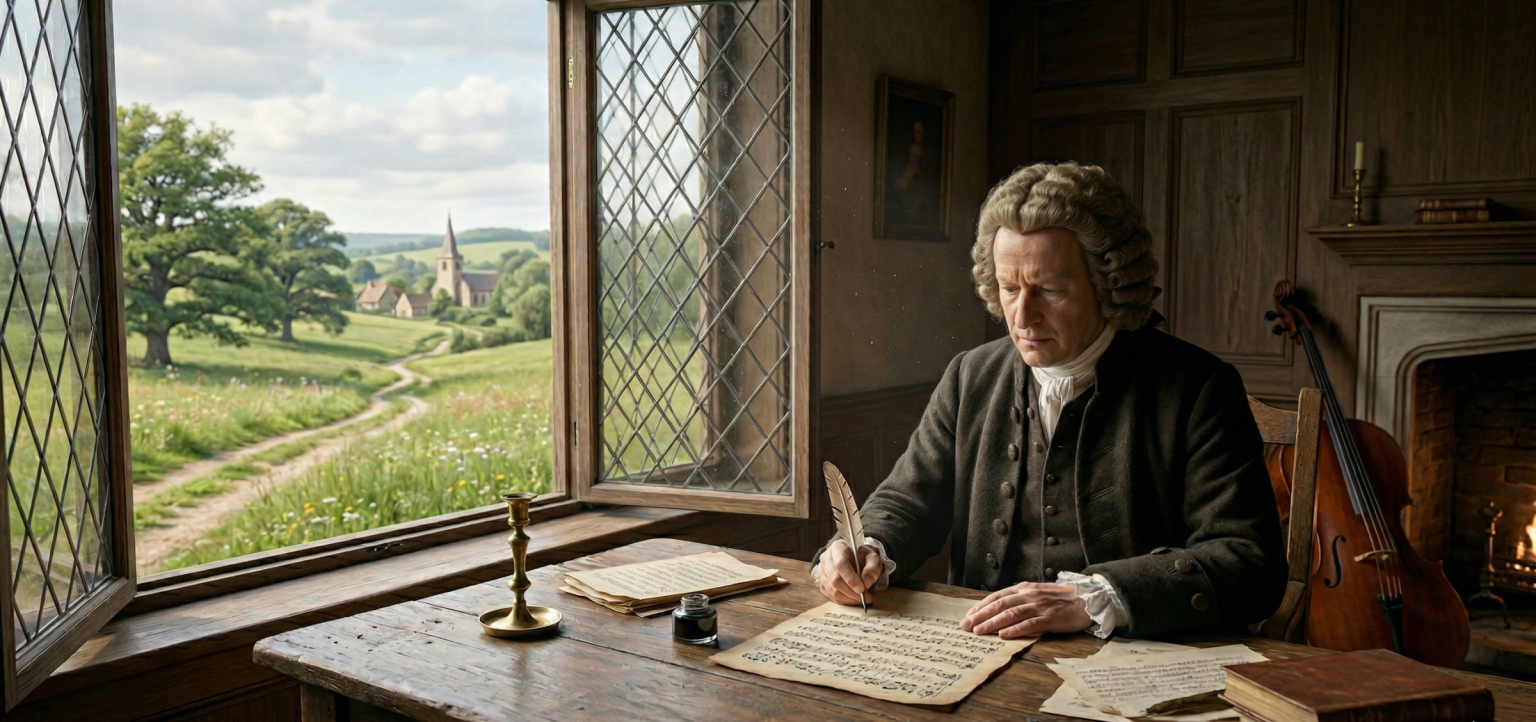
Johann Pachelbel was a German composer, organist, and teacher who bridged the musical worlds of the mid-Baroque and the High Baroque. Born in Nuremberg in 1653, he studied music in Altdorf and Regensburg before serving as organist at several major churches, including the Predigerkirche in Erfurt, where he was a colleague and teacher of Johann Ambrosius Bach — Johann Sebastian Bach’s father. Pachelbel held prestigious positions in Stuttgart and Gotha before returning to his native Nuremberg, where he served as organist at St. Sebald’s Church until his death in 1706.
Pachelbel was a prolific composer whose works include chorales, fugues, magnificats, motets, and chamber music. He was one of the most important figures in the development of keyboard music before Bach. His Canon and Gigue in D Major, composed around 1680–1690 for three violins and basso continuo, was virtually unknown until musicologist Jean-François Paillard recorded it in 1968. That recording sparked a cultural phenomenon: the Canon became one of the most performed and arranged pieces in Western music, used at countless weddings and adapted for every conceivable ensemble, including solo piano.
About Canon and Gigue in D Major (Piano Solo Arrangement)
This work was composed in the key of D Major and falls within the Baroque tradition. At the Intermediate level, it provides significant opportunities for musical growth while remaining technically approachable for pianists who have mastered the fundamentals. The estimated performance duration of 4–6 minutes makes it suitable for both practice sessions and recital programs.
Musical Structure and Analysis
The Canon is built on a repeating bass line (basso ostinato) of eight notes: D–A–B–F♯–G–D–G–A. Above this ground bass, three melodic voices enter one after another, each playing the same theme but offset by two measures. In the original chamber version, this creates an ever-thickening texture. The piano solo arrangement condenses these voices into a single performer’s hands, typically presenting the ground bass in the left hand and combining two or three melodic voices in the right. The piece builds gradually from a bare bass to a full, rich texture before returning to simplicity.
Expert Playing Tips
1. Tone Production
The Baroque style demands a specific approach to tone. For the melodic passages, use arm weight transferred through relaxed fingers to produce a full, singing sound. The accompaniment should be played with a lighter touch, keeping the fingers close to the keys. Avoid any percussive attacks — depress the keys slowly and deliberately for the most beautiful tone.
2. Pedaling
Use syncopated pedaling throughout: depress the sustain pedal a fraction of a second after playing each new harmony, which catches the new sound while releasing the old. In passages requiring special clarity, use half-pedaling (lifting the pedal only partially) to maintain warmth without blurring adjacent harmonies. The una corda (soft) pedal can be used for the most delicate passages to add a veiled, intimate quality.
3. Phrasing and Breathing
Every melody needs to breathe. Identify the natural phrase boundaries and create tiny spaces between phrases, as a singer would take a breath. Within each phrase, shape a dynamic arc: gently crescendo toward the peak note and diminish through the cadence. This rise-and-fall pattern gives the music a sense of natural speech.
4. Balance Between Hands
The most common mistake at the Intermediate level is playing both hands at the same dynamic level. The melody hand should always be slightly louder than the accompaniment hand. Practice the melody alone at forte, then add the accompaniment at piano, until the balance becomes instinctive. Record yourself and listen critically — the imbalance may be more severe than you realize while playing.
5. Rhythmic Precision
Use a metronome during the early stages of learning to establish a solid rhythmic foundation. Once the notes are secure, gradually wean yourself off the metronome and develop a natural sense of rubato (tempo flexibility). The goal is music that sounds free and spontaneous, but is undergirded by a reliable internal pulse.
Stylistic Interpretation: Baroque vs. Modern Piano
Because the piano did not exist in its modern form when Pachelbel lived, we must adapt the original violin textures to the keyboard.
Use of the Sustain Pedal
A common mistake is using too much pedal, which creates a “muddy” sound that obscures the polyphonic layers.
- Direct Rule: Use the pedal only to aid in legato connections that the fingers cannot reach.
- Clear Textures: Change the pedal with every chord change (the eight notes of the bass line) to ensure the harmonies do not bleed into one another.
Phrasing and Articulation
Every variation in the Canon is a new musical “character.”
- Terraced Dynamics: A common Baroque technique where volume levels change in “steps” rather than gradual crescendos. Consider playing one full cycle of the progression piano and the next mezzo-forte to add structural interest.
- The “Singing” Line: Imagine the right hand as three different violins entering one after another. This is the essence of a Canon: a melody that is imitated by other voices at a set interval.
Practice Strategy: A Structured Approach
Phase 1 – Learning (1–2 weeks): Hands separately at half tempo. Focus on correct notes, fingering, and basic dynamics. Memorize the harmonic progression. Identify the most challenging passages and mark them for extra attention.
Phase 2 – Integration (1–2 weeks): Hands together at 60–70% tempo. Prioritize balance between melody and accompaniment. Add basic pedaling. Practice difficult passages in isolation, then in context.
Phase 3 – Interpretation (1–2 weeks): Full tempo with detailed dynamics, phrasing, and pedaling. Shape the overall dramatic arc of the piece. Record yourself and compare with professional recordings (not to imitate, but to identify areas for improvement).
Phase 4 – Performance (ongoing): Daily run-throughs without stopping. Practice performing for others. Work on the opening and closing (audiences remember these most). Develop confidence through repetition and positive performance experiences.
Conclusion
Pachelbel’s Canon in D is more than just a wedding theme; it is a profound exercise in musical architecture. By mastering the steady “Ground Bass” and the shimmering variations that float above it, you develop the fundamental skills required for all great Baroque and Classical repertoire. Whether you are performing for an audience or playing for personal enrichment, approach this piece with patience and a focus on clarity.
Recommendation: To truly capture the Baroque spirit, we recommend practicing with a metronome to avoid the common pitfall of rushing the sixteenth-note variations.
What edition should I use?
For the highest scholarly accuracy, use a Urtext edition (Henle, Bärenreiter, or Wiener Urtext). For a free PDF, download from IMSLP — look for editions published before 1929, which are fully public domain. The Peters, Breitkopf & Härtel, and Schirmer Library editions are all available.
How long will it take to learn?
For a pianist at the appropriate level (Intermediate), expect 4–8 weeks of focused daily practice (30–60 minutes on this piece) to achieve a comfortable performance. The time varies significantly based on prior experience with the Baroque style.
Can I use this piece for exams or competitions?
Yes. Canon and Gigue in D Major (Piano Solo Arrangement) is a recognized standard in the Baroque repertoire and is listed in many examination syllabi. Check your specific exam board’s requirements for acceptable editions and any cuts or repeats they may specify.
What should I listen to for interpretation reference?
Search YouTube and streaming platforms for recordings by major artists. Listen to multiple interpretations to understand the range of possibilities, then develop your own musical voice. Avoid imitating any single performer.