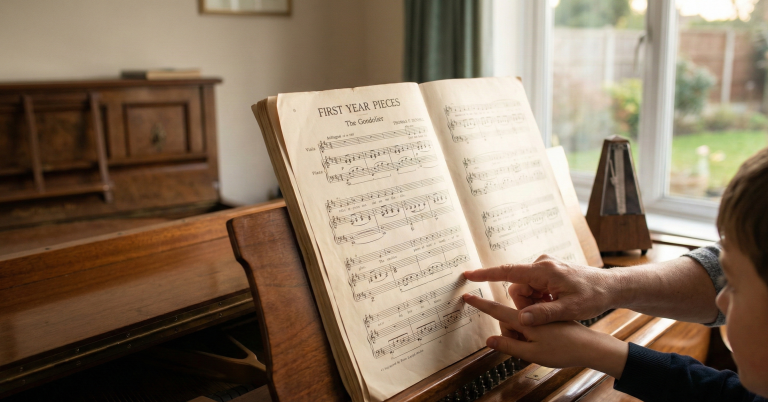
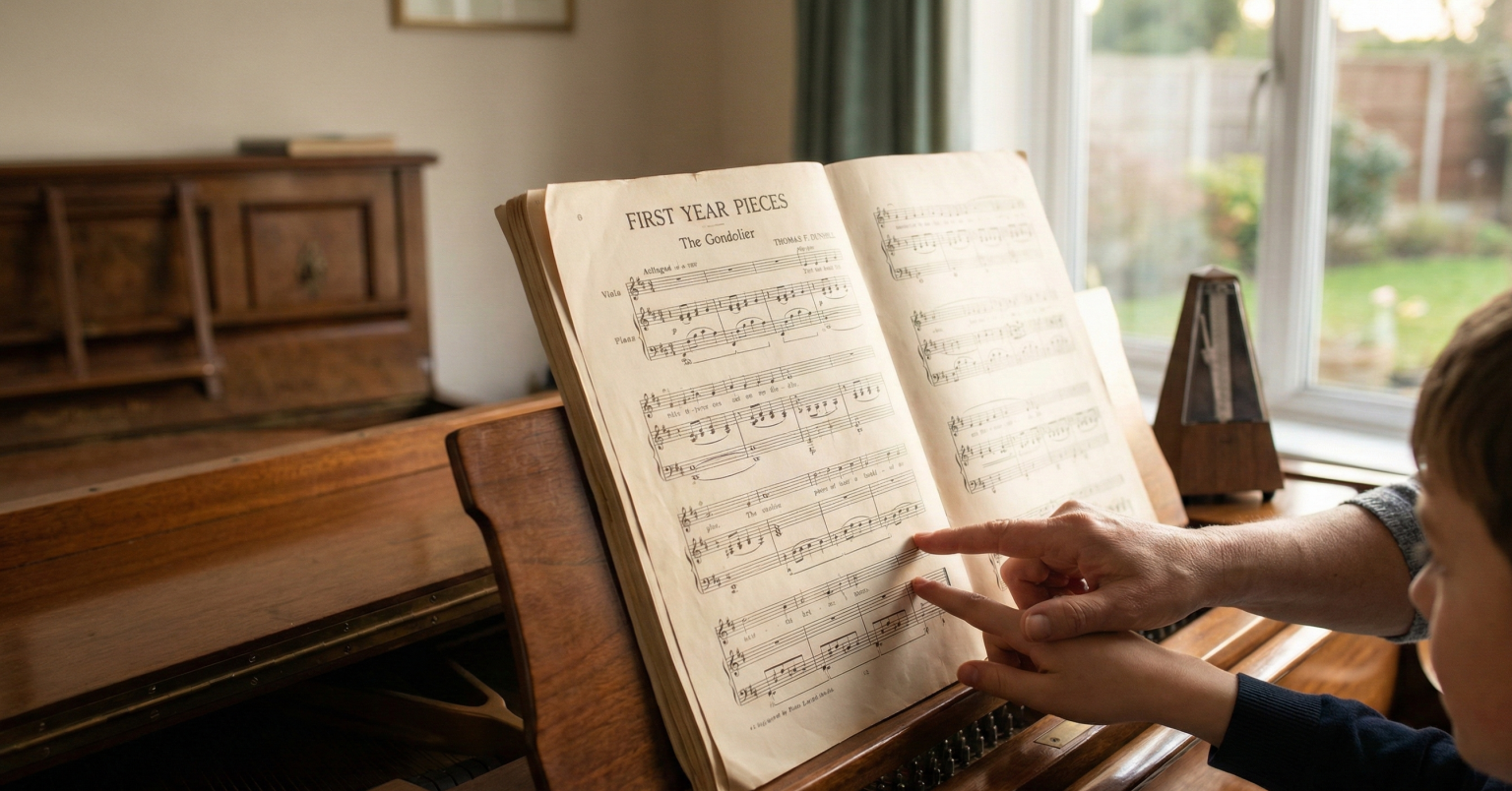
Embarking on the journey of learning piano is never just about hitting the right notes. It’s about discovering a language, a sensibility, a way of breathing through your fingers. And sometimes, in the early stages of this path, you come across a book that does more than teach, it invites. That’s exactly what happened when I first opened the pages of First Year Pieces by Thomas F. Dunhill.
This collection, published under the auspices of the Royal College of Music, offers twelve small yet deeply thoughtful pieces written especially for those in their first year of study. It doesn’t promise fireworks or bravado. It promises clarity, lyricism, and structure. It speaks to the student, but it also speaks for the teacher, like a patient mentor, gently but firmly shaping musical thought.
In this article, I’ll guide you through the heart of this collection. We’ll explore its origin, the man behind the music, the musical fabric of the works themselves, and finally, how best to approach them at the keyboard, especially if you’re still counting finger numbers or learning to trust your left hand.
The history of the collection and the man behind it
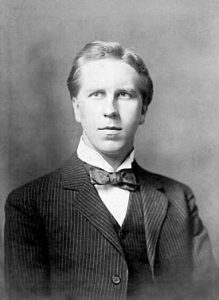
To appreciate First Year Pieces, it’s worth pausing for a moment on the name behind the title: Thomas Frederick Dunhill. Born in 1877, Dunhill was an English composer, teacher and critic who spent much of his life dedicated to nurturing musical education in Britain. He is often remembered for his association with the Royal College of Music and for his commitment to writing music that was both high in artistic integrity and accessible in pedagogical purpose.
At the turn of the 20th century, England was entering a new musical chapter. After years of continental dominance, British composers were eager to establish their own voice. Dunhill stood at the intersection of this renewal, trained in the traditions of the German Romantics but deeply invested in the clarity and balance of English song. He was a contemporary of composers like Vaughan Williams, Holst, and Stanford, but what distinguished Dunhill was his focus on music for students.
He did not see early learning pieces as a ‘lesser’ category. In fact, he believed, rightly, that writing music for beginners was a serious artistic and educational challenge. First Year Pieces was conceived in this spirit: a set of twelve piano miniatures, each no longer than a page or two, meant to be technically approachable yet musically nourishing.
The book was part of a wider pedagogical mission. The Royal College of Music, under whose name this work was published, had a longstanding tradition of excellence. Its publishing arm, especially during the first half of the 20th century, focused on bridging the gap between conservatory-level instruction and private piano lessons in homes across Britain. Dunhill’s contribution was more than just a collection of pretty pieces. It was a compact musical curriculum, one that could accompany a young pianist across the threshold from “beginner” to “musician”.
Musical and technical structure of the twelve pieces
At first glance, First Year Pieces looks humble. Each piece fits on a single page. The dynamics are clear, the rhythms uncluttered, and the key signatures rarely wander far from the familiar. But don’t let this simplicity fool you. Inside these pieces lie the seeds of future growth, careful phrasing, clear harmonic motion, balance between hands, and an introduction to character.
Let’s take a closer look at the technical and musical design of the set.
1. A journey through tonality and mode
Dunhill’s writing is mostly diatonic, favoring C major, G major, F major, and D minor. This choice is intentional. These keys are ideal for beginners, offering comfortable hand positions and avoiding the strain of too many black keys.
That said, within these keys, Dunhill introduces color. For instance, in The Gondolier or Twilight Song, the modal shift between major and minor creates emotional contrast. The student starts to hear the effect of modality and inflection, learning how a single accidental can shift the mood entirely.
2. Phrasing and breath
Many of the pieces follow an ABA or AB structure, with clear four-bar or eight-bar phrases. This mirrors the architecture of classical song and helps the student internalize symmetry, musical breathing, and periodic structure.
Evening Bells, for example, uses a question-and-answer phrase format, where each musical idea seems to ask something, then offer a response. It’s subtle, but powerful for shaping awareness of phrasing.
3. Hands working together — not against
Dunhill makes a point of involving both hands equally. He resists the temptation, common in beginner books, to reduce the left hand to a series of whole-note drones. Instead, he allows it to sing, sometimes in contrary motion, sometimes in imitation, sometimes even in dialogue with the right hand.
In The Village Fair, you’ll find broken chords dancing across both hands, requiring coordination and lightness. Meanwhile, A Quiet Morning asks for overlapping voices and a gentle interplay of timbre, a kind of chamber music for two hands.
4. Rhythmic clarity, never static
While most rhythms stick to quarter notes, half notes, and eighths, Dunhill finds ways to challenge without overwhelming. Syncopations are rare but not absent. More importantly, he plays with dotted rhythms and rests, helping the student become comfortable with silence as part of the musical narrative.
In A Little Waltz, for instance, the rhythm swings naturally, like an invitation to dance, with that soft lilt that defines the genre. It’s a gentle but clear lesson in triple meter.
5. Dynamics and articulation
Dynamics are never random in these pieces. Each one tells a story, and the expressive markings, from piano to forte, from legato to staccato, serve the narrative.
The Hunt, probably the most energetic of the set, alternates playful staccato motifs with urgent crescendos. In contrast, Evening Bells is all about restraint, with legato lines and fading echoes.
Playing tips for beginners and early-intermediate
What makes First Year Pieces so rewarding is also what makes it challenging: its clarity. There’s nowhere to hide. Every note must be shaped. Every phrase must breathe. If you’re learning these pieces — or guiding someone who is — here are some tips I’ve found useful:
1. Start with singing, not playing
Before putting fingers on keys, sing the melody. Even softly. Dunhill wrote singable lines, and hearing the contour will help you internalize phrasing, dynamics, and direction. This is especially helpful in pieces like Twilight Song or A Quiet Morning.
2. Treat the left hand like a voice
Don’t let the left hand become automatic or heavy. In many of these pieces, it’s not just accompaniment — it’s a second voice. Practice hands separately, and when you put them together, listen for balance. Is one dominating too much? Can you hear both clearly?
3. Use dynamics to shape the phrase
Follow the markings, of course, but also experiment with nuance. Where is the phrase heading? Where does it rest? Think like a storyteller. The Gondolier, for example, benefits from a slow swell in the middle, like waves rising and falling.
4. Don’t rush but breathe between phrases
Even if the tempo is slow, many students feel the urge to plow forward. But these pieces live in the spaces between notes. Allow for breath. Lift your hands gently at the ends of phrases. Imagine a dancer finishing a movement before beginning the next.
5. Practice articulation like you practice notes
Staccato, legato, slurs, accents : they matter. Try playing the same piece in exaggerated articulations before refining them. This sharpens your physical control and makes your playing more expressive.
6. Play for someone…or something
Even if it’s just a teddy bear or your phone camera. These pieces benefit from an audience. They were meant to be shared, little stories told in sound. Performing, even informally, can help you connect emotionally with the music and understand its flow.
Your goal with Dunhill’s First Year Pieces
If you are just starting your piano journey, this book is more than a tool. It’s a musical companion, a quiet guide that prepares your fingers, your ears, and your heart for the path ahead.
You won’t find thunderous cadenzas or dizzying scales here. What you’ll find instead are shapes, songs, textures, the beginnings of phrasing, balance, and imagination.
Your goal with First Year Pieces is not to master each piece like a recital showpiece, but to understand what each one is trying to teach you. By the time you reach the twelfth piece, you will have built a musical vocabulary. You’ll have played in major and minor, shaped melodies, balanced voices, understood character. You’ll have played music, not just piano exercises.
So take your time. Return to pieces. Let them change as you change. In this short book, Dunhill has hidden the roots of lifelong musicianship. Plant them carefully, and they will grow.