
St. Louis Blues by W. C. Handy is one of the most recognizable compositions in the history of American blues. Published in 1914, this landmark song helped bring the blues to a much wider audience and demonstrated how African American musical traditions could shape the emerging popular music industry. Its distinctive combination of blues expression, rhythmic energy, and memorable melodic writing has made it an enduring part of American musical heritage.
For pianists, St. Louis Blues offers an opportunity to explore the musical language of early blues through a combination of melody, chordal accompaniment, bass movement, and rhythmic coordination. The piece brings together several elements that are central to blues piano playing, including syncopation, expressive phrasing, chromatic movement, and the contrast between melodic lines and supporting harmonies.
The piano arrangement presented on this page is a solo keyboard version arranged across two staves. It contains 64 numbered measures, a moderate opening tempo, and a repeated closing section with two alternative endings. Its musical texture requires the pianist to coordinate melodic figures, chord voicings, and bass accompaniment while maintaining a consistent rhythmic foundation.
On this page, you can explore the free piano sheet music, discover the history behind Handy’s composition, understand the musical structure of the supplied arrangement, and follow a practical learning method to develop the coordination, rhythmic precision, and expressive control needed to perform it.
1. Overview
St. Louis Blues is a landmark American blues composition written by William Christopher Handy, better known as W. C. Handy. First published in 1914, the song became one of the most influential early blues compositions to reach a broad commercial audience.
The score provided here presents the composition as a piano solo. Unlike the original published song, which was written for voice and piano, this version concentrates the musical material into a keyboard arrangement.
The result is an opportunity to study both the melodic character of Handy’s music and the characteristic accompaniment patterns that help define the blues.
Sheet Music Details
| Feature | Information |
|---|---|
| Title | St. Louis Blues |
| Composer | W. C. Handy |
| Publication | 1914 |
| Original instrumentation | Voice and piano |
| Supplied arrangement | Piano solo |
| Number of measures | 64 |
| Time signature | 2/4 |
| Initial tempo | Moderato, quarter note = 72 |
| Key signature | One sharp |
| Musical style | Early American blues |
| Score format | PDF and MusicXML |
| Difficulty | Intermediate |
The 64 numbered measures include a repeated section near the end of the composition. The first and second endings provide two different ways of completing the passage, so pianists should pay attention to the repeat markings when learning the final section.
What Makes This Piano Arrangement Interesting?
Several musical characteristics make this version particularly useful for studying blues piano.
First, the arrangement combines melodic passages in the right hand with chordal and bass patterns in the left hand. This requires the pianist to maintain two distinct musical functions without allowing either to become mechanically dominant.
Second, the score contains chromatic notes and altered pitches that contribute to the characteristic blues expression. These notes should be approached as expressive elements of the musical language rather than treated as accidental complications.
Finally, the arrangement includes changes in tempo and articulation. The opening is marked Moderato at quarter note = 72, while a later passage introduces a gradual slowing down before the original tempo returns.
These details make the piece an interesting study in both rhythmic consistency and expressive interpretation.
2. History of St. Louis Blues and The Composer Behind It
Who Was W. C. Handy?
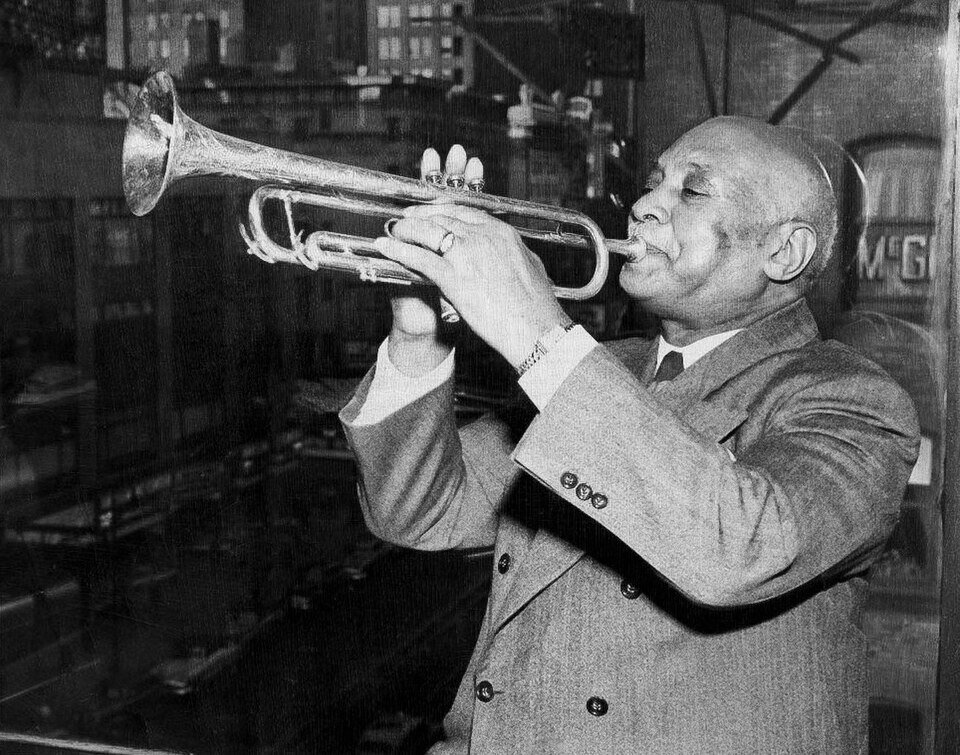
William Christopher Handy was born on November 16, 1873, in Florence, Alabama. He became one of the most influential figures in the early development and popularization of published blues music.
Often described as the Father of the Blues, Handy was a composer, cornet player, bandleader, and music publisher. His importance lies not in having invented the blues, which developed through African American musical traditions long before his commercial success, but in helping document, arrange, publish, and disseminate this music.
Handy’s musical background included exposure to African American spirituals, folk songs, and instrumental traditions. His experiences as a traveling musician and bandleader allowed him to encounter different regional musical styles.
The blues he encountered was not simply a musical genre in the modern commercial sense. It was part of a much broader musical culture, shaped by African American communities in the American South.
The Library of Congress describes how Handy encountered blues music in 1903 and subsequently recognized how widely these musical forms circulated among African Americans. Library of Congress+1
The Publication of Memphis Blues
Before St. Louis Blues, Handy had already achieved recognition with Memphis Blues, published in 1912.
This earlier composition was an important step in bringing blues music into commercially distributed sheet music. It also demonstrated the growing public interest in music associated with the blues tradition.
Handy’s publishing activities helped him establish greater control over the distribution of his compositions. His business activities eventually contributed to the success of his subsequent publications.
The Publication of St. Louis Blues in 1914

Published in 1914 by Handy Brothers Music Co. in New York, St. Louis Blues became one of Handy’s most successful compositions.
Historical copies of the original publication are preserved in American institutional collections. The Smithsonian National Museum of African American History and Culture holds an original 1914 sheet music publication, while Mississippi State University Libraries also preserve several historical editions. Smithsonian Institution+2
The success of the composition helped establish Handy’s reputation beyond the regional musical environment in which he had developed his career.
The song also contributed to the growing commercial visibility of blues music. Its publication demonstrated that this musical language could reach audiences through printed scores and popular performances.
Why St. Louis Blues Became So Important
The significance of St. Louis Blues comes from its contribution to the early commercial history of the blues.
At a time when African American musical traditions were gaining wider recognition through sheet music, recordings, and live performances, Handy’s compositions helped introduce elements of this musical culture to audiences who might otherwise have had little exposure to them.
The song’s popularity also encouraged other composers and publishers to explore blues-influenced material.
Its historical importance should therefore be understood in a broader context: Handy did not create the blues tradition, but he played a major role in bringing selected elements of that tradition into the American popular music industry.
3. Musical Structure and Theory
Understanding the musical language of St. Louis Blues makes the score easier to interpret and more rewarding to perform.
The supplied piano arrangement contains several features associated with early blues playing, including a melodic line supported by chordal accompaniment, bass movement, chromatic inflections, and rhythmic contrasts.
Rather than approaching the piece as a sequence of unrelated notes, pianists should identify the different musical functions within the arrangement.

Understanding the 2/4 Time Signature
The score begins in 2/4 time.
This means that each measure contains two quarter-note beats. The pulse should remain clearly identifiable throughout the piece, even when the melody contains shorter rhythmic values or syncopated figures.
A useful way to approach this meter is to establish two stable beats:
- Beat 1 provides the main rhythmic foundation.
- Beat 2 completes the measure and prepares the next musical gesture.
The challenge is to maintain this underlying pulse while allowing the melodic figures to move freely around it.
The presence of sixteenth notes, eighth notes, dotted values, and ties means that not every note will fall directly on the main beats.
For this reason, counting carefully is particularly important during the initial learning stages.
The Characteristic Blues Sound
Blues music frequently uses melodic inflections that create tension between major and minor tonal colors.
One of the defining features of this language is the use of notes that do not always fit neatly into a conventional major-scale melody.
These altered pitches are often associated with the so-called blue notes. Depending on the musical context, they can create expressive tension, a sense of vocal inflection, or a distinctive blues character.
In the supplied score, chromatic accidentals contribute to this expressive vocabulary.
Pianists should avoid treating these notes as simple passing decorations. Their placement and relationship with the accompanying harmony are essential to the character of the music.
Melody and Accompaniment
The arrangement uses two distinct musical roles.
Right hand: melodic material and chord voicings
The right hand carries much of the melodic activity. It also plays chordal passages that support and reinforce the harmonic structure.
Some passages require the pianist to move between individual notes and compact chord shapes.
The important objective is to preserve the melodic direction while keeping the chordal elements balanced.
Left hand: bass and harmonic support
The left hand provides the underlying harmonic and rhythmic framework.
The score contains low bass notes, followed by movements into higher registers and chordal figures. These patterns help establish the characteristic rhythmic foundation of the piece.
The left hand should sound steady and purposeful without becoming unnecessarily heavy.
Chromatic Notes and Blues Inflection
Chromatic movement is an important part of the expressive character of this arrangement.
A chromatic note is a pitch that differs from the corresponding diatonic note by a semitone.
In blues-influenced music, such notes can create expressive tension and help reproduce the inflections associated with vocal and instrumental blues traditions.
When practicing these passages, pay particular attention to the relationship between the chromatic note and the surrounding chord.
The objective is not simply to play the correct pitch. It is to understand how that pitch contributes to the musical expression.
Tempo and Expressive Flexibility
The score begins with the instruction:
Moderato, quarter note = 72.
This provides a clear initial reference for establishing the pulse. The notation later introduces a ritardando, with progressively slower metronome indications, before returning to the original tempo with the marking a tempo.
This is an important interpretive detail. The tempo change should not be treated as an arbitrary interruption. It creates a moment of expressive relaxation before the musical movement resumes. During practice, first establish a reliable tempo at 72 beats per minute. Only introduce the written slowing down once the surrounding passages are comfortable.
4. Section-by-Section Piano Score Analysis
The following analysis refers specifically to the supplied 64-measure MusicXML score. The measure references are taken from its actual numbering.
Measures 1–4: Establishing the Musical Character
The opening introduces the melodic and harmonic vocabulary of the arrangement.
The right hand begins with repeated melodic notes, followed by chordal material. The left hand initially leaves space before introducing the bass and accompanying figures.
This opening contrast is important. The melody should be clearly articulated without sounding overly mechanical, while the left hand gradually establishes the harmonic foundation.
Practice objectives:
- Learn the opening melodic figure independently.
- Identify the transition from single notes to chords.
- Establish the two-beat pulse.
- Introduce the left-hand accompaniment gradually.
Do not rush the opening. Its rhythmic clarity provides the foundation for everything that follows.
Measures 5–9: Chordal Writing and Expressive Transition
The next passage develops the chordal material. The hands become more involved in supporting the harmonic movement, and the pianist must coordinate sustained chord tones with the moving bass. The score also introduces a ritardando near the end of this passage.
This is an important opportunity to develop expressive control. Rather than slowing down abruptly, allow the tempo to relax progressively while preserving the musical direction.
Practice objectives:
- Coordinate the chord changes between both hands.
- Maintain the duration of tied notes.
- Keep the bass movement controlled.
- Practice the ritardando separately.
The aim is to create a natural transition rather than an exaggerated slowdown.
Measures 10–13: Return to Tempo
The marking a tempo indicates a return to the original tempo. This passage requires the pianist to recover the initial rhythmic stability without losing the expressive character established previously. The right hand resumes melodic movement, while the left hand supports the harmonic progression with fuller chordal figures.
Practice objectives:
- Re-establish the original pulse.
- Avoid rushing immediately after the ritardando.
- Maintain clear articulation.
- Balance melody and accompaniment.
A useful exercise is to practice the final measure of the previous passage together with the first measure of this section.
Measures 14–21: Developing the Melodic Material
This section expands the melodic writing. The right hand contains more active note movement, while the left hand continues to provide harmonic support. The coordination challenge becomes more apparent because the hands do not always move in identical rhythmic patterns. Pianists should pay particular attention to the alignment of melodic notes with the accompanying chords.
Practice objectives:
- Identify the main melodic gestures.
- Practice difficult rhythmic combinations slowly.
- Keep the left-hand accompaniment regular.
- Avoid allowing chordal attacks to interrupt the melodic flow.
It is particularly useful to practice the right hand alone before adding the left hand.
Measures 22–29: Rhythmic Coordination and Chord Changes
The arrangement continues with alternating melodic and chordal gestures. The left hand provides a more active accompaniment, requiring greater consistency in the placement of bass notes and chords. The right hand must maintain a clear melodic direction while negotiating chromatic notes and chord changes.
Practice objectives:
- Practice the bass pattern independently.
- Identify the precise timing of chord attacks.
- Keep the hands rhythmically coordinated.
- Listen for unwanted accents.
This section is a good place to work on rhythmic accuracy rather than speed.
Measures 30–38: Repeated Accompaniment Patterns
The score continues to develop its harmonic and rhythmic material. The pianist should begin recognizing recurring gestures rather than approaching every measure as an entirely new technical problem. Identifying repeated patterns makes the music easier to memorize and improves coordination.
Practice objectives:
- Recognize recurring melodic and accompaniment figures.
- Practice transitions between chord shapes.
- Maintain an even pulse.
- Develop a consistent sound between repeated gestures.
Try to identify which elements of the passage remain similar and which introduce new musical material.
Measures 39–49: Preparation for the Repeated Closing Section
This passage brings together several elements previously encountered in the arrangement. The pianist must coordinate the bass, chordal accompaniment, and melodic writing while maintaining a clear rhythmic foundation. The passage also prepares the transition into the repeated section beginning at measure 50.
Practice objectives:
- Practice the transition into measure 50.
- Review difficult chord changes.
- Maintain rhythmic consistency.
- Listen for continuity between phrases.
The transition should sound natural, not like a change into an unrelated musical section.
Measures 50–60: Repeated Rhythmic Pattern
This section is particularly useful for studying the accompaniment patterns of the arrangement. The notation contains recurring bass and chordal gestures that require consistent timing. Because the material is repeated, it offers an opportunity to develop a more confident and controlled performance.
Practice objectives:
- Learn the repeated pattern in small groups of measures.
- Keep the bass notes even.
- Maintain precise chord attacks.
- Avoid unnecessary changes in tempo.
Repeated patterns should sound consistent without becoming lifeless. The goal is to maintain rhythmic stability while preserving the expressive character of the blues.
Measures 61–64: First and Second Endings
The final section contains a first and second ending. This is a standard musical notation device used to create an alternative conclusion when a passage is repeated. The first ending leads back into the repeated section, while the second ending provides the final resolution.
Pianists should learn the repeat structure before attempting a complete performance.
Practice objectives:
- Identify the repeat beginning at measure 50.
- Learn the first ending at measures 61–62.
- Learn the second ending at measures 63–64.
- Practice the transition into the final ending.
A useful strategy is to practice the repeated section in the order in which it will actually be performed, rather than simply playing measures 50 to 64 consecutively.
5. Technical Challenges
Although the initial tempo is moderate, the arrangement contains several technical challenges that require careful preparation.
Hand Independence
One of the main difficulties is coordinating the different functions of the two hands. The right hand moves between melodic notes and chords, while the left hand combines bass notes with harmonic accompaniment. These roles must remain clearly differentiated.
A useful exercise is to practice each hand separately, then combine them at a reduced tempo. When putting the hands together, focus on the exact moments when the notes and chords must align.
Chord Voicing
The arrangement contains several chordal passages. Playing the correct notes is only the first step. The pianist must also control the balance between the different notes within each chord. A melody embedded in a chord should remain audible, even when several notes are played simultaneously.
Practice each chord slowly and listen to the relative strength of its individual notes. Avoid pressing every note with exactly the same weight when the musical texture requires a particular voice to stand out.
Rhythmic Precision
The 2/4 meter provides a clear framework, but the arrangement includes rhythmic subdivisions that require precision. Sixteenth-note figures, dotted rhythms, and ties can make the music difficult to coordinate. Use a metronome during the early stages of practice.
Begin at a comfortable speed and gradually increase the tempo while maintaining accuracy.
Bass Control
The left hand plays an important role in establishing the character of the piece. Its bass notes and chordal figures should provide a stable foundation for the melody. Avoid playing the bass too loudly. Excessive weight can make the accompaniment sound heavy and obscure the melodic line.
The ideal result is a confident rhythmic foundation that supports the musical expression.
Chromatic Accuracy
Accidentals require particular attention because they can be easy to overlook when reading quickly. Before practicing a difficult passage, identify the altered notes and understand their position within the surrounding musical material. This is especially important when learning passages that combine melodic movement with chord changes.
Articulation and Phrasing
Blues performance depends heavily on articulation. The melody should not sound like a purely mechanical sequence of notes. Pay attention to the distinction between connected melodic gestures, shorter rhythmic figures, and sustained chordal material.
Use the notation as your starting point, then develop a coherent musical interpretation.
6. How to Practice St. Louis Blues
The most effective way to learn this arrangement is to work progressively. Trying to play all 64 measures from beginning to end immediately can make it difficult to identify the source of mistakes.
Instead, divide the score into manageable sections and work on the musical elements independently.
Step 1: Study the Score Before Playing
Begin by looking through the complete score.
Identify:
- The 2/4 time signature.
- The one-sharp key signature.
- The initial tempo of 72 BPM.
- The ritardando and subsequent a tempo marking.
- The repeated section beginning at measure 50.
- The first and second endings.
Understanding these elements before playing will make the learning process more efficient.
Step 2: Practice the Right Hand Alone
Start with the melodic material. Read the notes carefully and pay attention to chromatic accidentals, ties, and rhythmic subdivisions. Do not prioritize speed. The objective is to develop reliable note reading and a clear sense of melodic direction.
Step 3: Practice the Left Hand Alone
The left hand should be studied independently because its role is fundamental to the character of the piece. Practice the bass notes and chordal figures until they feel comfortable. Listen carefully to the timing of each attack and avoid unnecessary tension in the wrist.
Step 4: Combine the Hands Slowly
Once each hand is reasonably secure, begin combining them. Use a metronome if necessary. Start below the written tempo and increase the speed gradually. When a passage becomes unstable, reduce the tempo instead of repeatedly attempting it at full speed.
Step 5: Work on Musical Expression
Once the notes and rhythms are reliable, begin developing the interpretation.
Pay particular attention to the opening, the written ritardando, the return to tempo, and the final repeated section. The goal is to create a performance that sounds musically coherent rather than simply accurate.
7. Four-Week Practice Method
This four-week practice plan provides a structured way to approach the arrangement. The actual time required will depend on your reading ability, previous experience with blues music, and familiarity with chordal accompaniment.
Week 1: Reading and Fingering
Objective: Become familiar with the complete score and establish reliable fingering.
Practical tasks:
- Read through the score without attempting to play it at full speed.
- Practice the right hand independently.
- Practice the left-hand bass and accompaniment patterns.
- Identify difficult chords and chromatic passages.
- Establish comfortable fingering for recurring figures.
What to listen for:
- Accurate pitches.
- Correct rhythmic subdivisions.
- Consistent note duration.
- Comfortable movement between chord shapes.
Milestone: You should be able to play several short sections independently with reasonable accuracy.
Week 2: Coordination and Structure
Objective: Develop hand independence and understand the structure of the arrangement.
Practical tasks:
- Combine both hands at a reduced tempo.
- Practice measures 1–13 in short groups.
- Work on the transitions between melodic and chordal passages.
- Study the recurring patterns in measures 22–38.
- Learn the repeat structure beginning at measure 50.
What to listen for:
- Stable bass movement.
- Accurate chord placement.
- Consistent pulse.
- Balanced interaction between the hands.
Milestone: You should be able to play the main sections with both hands, even if some passages still require slow practice.
Week 3: Technique and Interpretation
Objective: Improve rhythmic precision and begin developing a convincing blues character.
Practical tasks:
- Practice difficult rhythmic combinations with a metronome.
- Refine chord voicing.
- Improve the balance between melody and accompaniment.
- Work on the chromatic notes.
- Practice the written ritardando and return to tempo.
- Develop a consistent interpretation of recurring patterns.
What to listen for:
- Clear melodic direction.
- Controlled articulation.
- Natural rhythmic flow.
- Expressive but measured tempo changes.
Milestone: You should be able to perform most sections with greater continuity and musical confidence.
Week 4: Performance and Refinement
Objective: Bring the entire arrangement together.
Practical tasks:
- Practice complete sections without stopping.
- Review the transitions between measures 39 and 50.
- Refine the repeated section and alternative endings.
- Check the balance between the hands.
- Practice at the written opening tempo where technically comfortable.
- Record a complete performance and listen critically.
What to listen for:
- Rhythmic stability.
- Consistent articulation.
- Appropriate balance between melody and accompaniment.
- Natural phrasing.
- Accurate execution of the repeat structure.
Milestone: Aim to produce a coherent performance of the complete arrangement, with fewer interruptions and greater expressive control.
8. Practice Tips for a Better Blues Interpretation
Learning the notes is only one part of playing blues music convincingly. The musical character of St. Louis Blues depends on the relationship between rhythm, melody, harmony, and expression.
Keep the Pulse Steady
A strong rhythmic foundation is essential. Even when the melody contains syncopated figures, the underlying pulse should remain clear.
Practice with a metronome until the rhythmic structure becomes comfortable.
Avoid Playing Every Note with the Same Weight
A convincing performance requires differences in articulation and emphasis. The melody should remain prominent, while the accompaniment provides support. Listen carefully to how the musical texture changes between single-note passages and fuller chords.
Give Chromatic Notes Their Musical Purpose
Chromatic notes contribute to the blues expression of the composition. Avoid emphasizing them simply because they are unusual. Instead, listen to how they create tension and how that tension relates to the surrounding melodic and harmonic material.
Use the Written Tempo Changes
The ritardando and a tempo markings should be respected. They provide an opportunity to shape the music rather than play it at a completely uniform speed.
Listen to Historical Performances
Listening to different interpretations of St. Louis Blues can help develop a better understanding of the composition’s musical identity. In particular, compare how different performers approach the rhythmic foundation, melodic phrasing, and expressive character. Remember that the historical recordings may use different arrangements and instrumentation from the piano score presented here.
The objective is to understand the musical language, not to reproduce another performance note for note.
9. Common Mistakes to Avoid
Rushing the Rhythmic Figures
Short melodic figures can encourage pianists to accelerate unintentionally. Maintain the underlying pulse and practice difficult subdivisions slowly.
Playing the Left Hand Too Loudly
The accompaniment should support the melody rather than dominate it. Pay attention to the balance between bass notes, chords, and the right-hand melodic line.
Ignoring the Accidentals
Chromatic notes are important to the musical identity of this arrangement. Check every accidental carefully, especially when reading unfamiliar passages.
Treating the Ritardando as an Abrupt Stop
The written slowing down should be gradual. Avoid reducing the tempo too suddenly or losing the continuity of the phrase.
Forgetting the Repeat Structure
The final section contains a repeat and two alternative endings. Learn the navigation through the score before attempting a complete performance.
Focusing Only on Technical Accuracy
A technically correct performance can still sound mechanical. Work on articulation, melodic direction, balance, and expressive phrasing once the notes are secure.
10. The Musical Legacy of St. Louis Blues
The influence of St. Louis Blues extends well beyond its original publication. The composition became part of the broader story of how blues music moved from African American musical communities into the commercial music industry. Its success helped demonstrate the appeal of blues-influenced compositions to a national audience.
The song also became an important part of the repertoire of early jazz musicians and performers. Its musical identity proved flexible enough to accommodate different interpretations and arrangements. This adaptability is one reason why St. Louis Blues has remained relevant across generations.
For pianists today, studying the composition provides more than an opportunity to learn a historically important song. It offers a practical introduction to the rhythmic and expressive characteristics of early American blues.
By studying the arrangement carefully, players can develop skills that are useful in many other styles of piano music, particularly jazz, blues, and early popular music.
Conclusion
W. C. Handy’s St. Louis Blues remains one of the defining compositions in the early history of published blues music.
Its historical importance, distinctive melodic language, and characteristic rhythmic writing make it a valuable piece for pianists interested in exploring the foundations of American blues. The supplied piano arrangement offers a practical way to study these elements through melodic passages, chordal accompaniment, bass movement, chromatic notes, and expressive tempo changes.
Although the initial tempo is moderate, the arrangement requires careful attention to hand coordination, rhythmic precision, and chord balance. The best approach is to learn the score progressively, develop a stable rhythmic foundation, and gradually introduce the expressive elements that give the music its distinctive character.
Whether you are studying early blues for historical interest or developing your piano technique, St. Louis Blues is an excellent opportunity to explore an important part of American musical heritage.
Who composed St. Louis Blues?
St. Louis Blues was composed by William Christopher Handy, commonly known as W. C. Handy. He was an influential American composer, musician, bandleader, and music publisher.
When was St. Louis Blues published?
The composition was first published in 1914 by Handy Brothers Music Co. in New York.
Is St. Louis Blues a blues or jazz composition?
It is fundamentally a blues composition. However, it became an important part of early jazz repertoire and has been interpreted by musicians across several related styles.
What is the time signature of this piano arrangement?
The supplied piano arrangement is written in 2/4 time, with two quarter-note beats per measure.
What is the tempo of St. Louis Blues?
The supplied score begins with a Moderato indication at quarter note = 72. It subsequently includes a written ritardando and a return to the original tempo.
What piano level is required to play St. Louis Blues?
The supplied arrangement is best approached by intermediate pianists. It requires familiarity with chordal playing, rhythmic subdivisions, chromatic notes, and coordination between the hands.
Does this arrangement contain a repeat?
Yes. The supplied score contains a repeat beginning at measure 50, followed by a first ending at measures 61–62 and a second ending at measures 63–64.
Can beginners learn St. Louis Blues?
Beginners can study selected passages, particularly the opening melodic material, but the complete arrangement requires more developed coordination and rhythmic control. Learning it progressively at a reduced tempo can make it more accessible.
Sources
Library of Congress. Blues: Popular Songs of the Day. Historical overview of the development and publication of blues music, including W. C. Handy’s contribution.
https://www.loc.gov/collections/songs-of-america/articles-and-essays/musical-styles/popular-songs-of-the-day/blues/
Library of Congress, National Library Service. Gilbert Busch, Remembering the Father of the Blues, November 16, 2017.
https://blogs.loc.gov/nls-music-notes/2017/11/remembering-the-father-of-the-blues/
Smithsonian National Museum of African American History and Culture. Saint Louis Blues, original 1914 sheet music, collection object 2014.3.22.
https://www.si.edu/object/saint-louis-blues%3Anmaahc_2014.3.22
Mississippi State University Libraries. Saint Louis Blues, Charles H. Templeton Sr. Sheet Music Collection. Historical publication information and digitized sheet music.
https://scholarsjunction.msstate.edu/cht-sheet-music/12925/
IMSLP. St. Louis Blues (Handy, W. C.). Publication history, score catalogue, and copyright information.
https://imslp.org/wiki/St._Louis_Blues_(Handy,_W._C.)
MuseScore. Score Uploading Guidelines. Guidance on score attribution, copyright status, and Creative Commons licensing.
https://musescore.com/score-uploading-guidelines