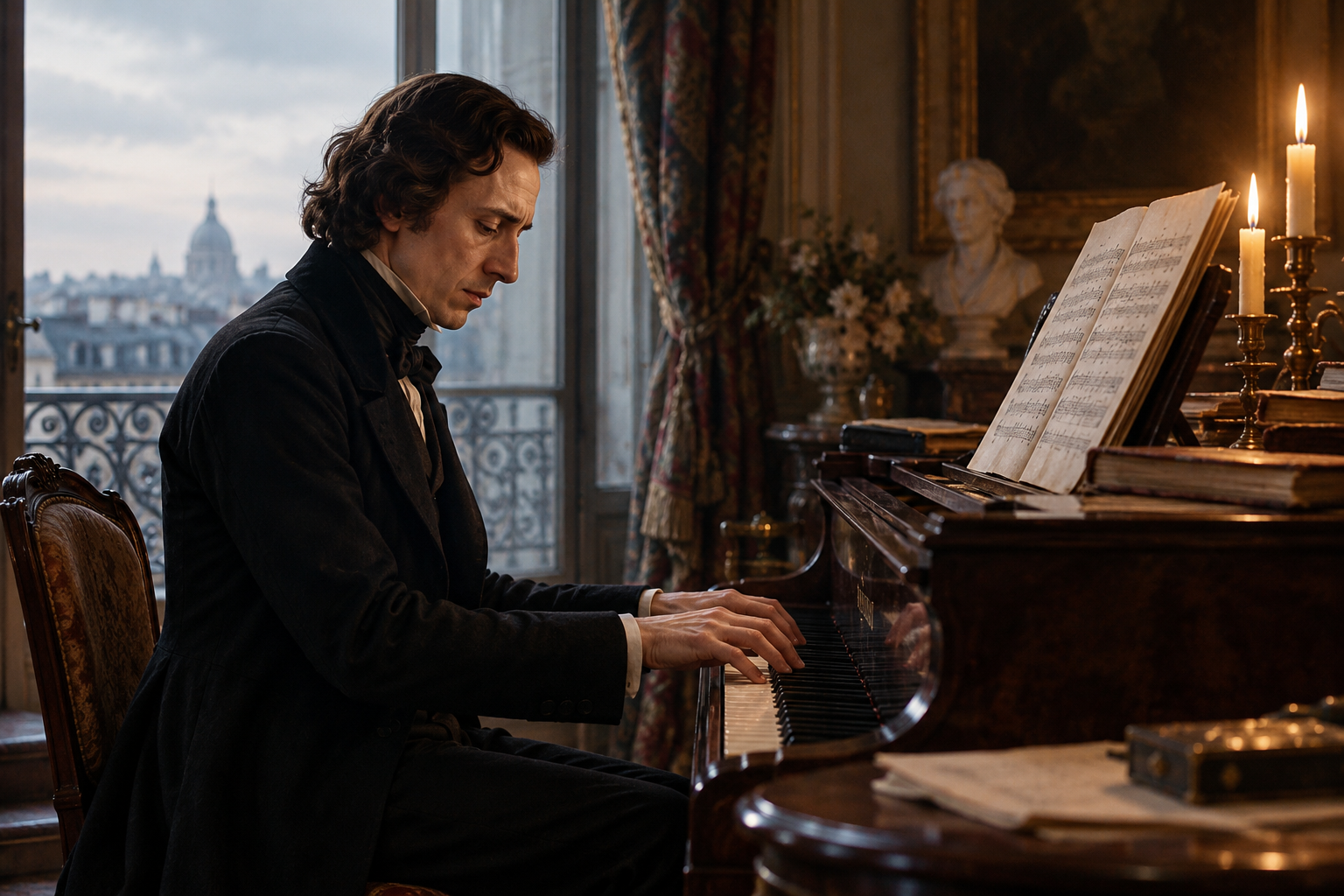
Frédéric Chopin’s Prelude in E Minor, Op. 28 No. 4 is one of the most emotionally expressive miniatures in the Romantic piano repertoire. Despite its brevity, this remarkable composition creates an atmosphere of melancholy and resignation through a restrained melody, slowly changing harmonies, and a persistent sense of downward movement. Marked Largo, it demonstrates how a composer can achieve extraordinary expressive depth without relying on virtuoso passagework or a large musical structure.
Published in 1839 as part of Chopin’s collection of 24 Preludes, Op. 28, the piece contains just 25 measures in the standard score. Its musical language is deceptively simple: the right hand sustains a quiet, hymn-like melodic line, while the left hand supports it with repeated chords whose changing inner voices create a continuous sense of harmonic tension. The resulting sound is intimate and introspective, requiring the pianist to pay close attention to balance, phrasing, and the relationship between individual notes.
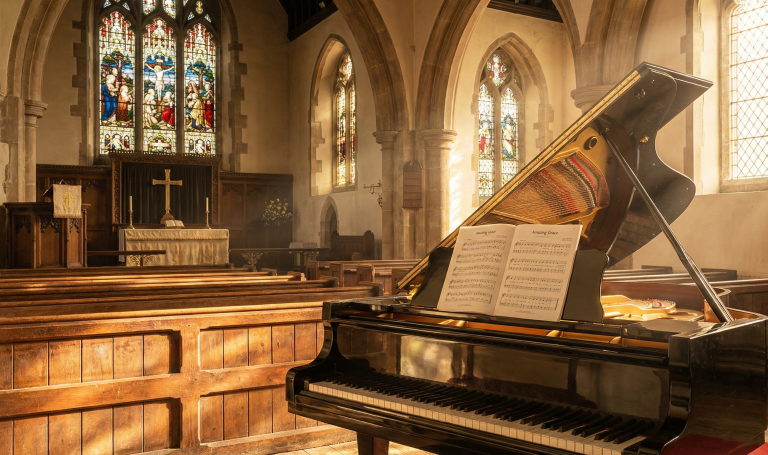
The prelude also occupies a special place in music history. It was performed on the organ during Chopin’s funeral at the Church of the Madeleine in Paris on October 30, 1849, alongside his Prelude in B Minor, Op. 28 No. 6. This association has contributed to its enduring connection with mourning and remembrance, although its musical significance extends far beyond that historical context.
Chopin’s Prelude in E Minor is a short, expressive piano work that rewards careful listening and controlled technique rather than speed. For pianists, the principal challenges are voicing the inner voices of the left-hand chords, maintaining a continuous melodic line, managing subtle dynamic changes, and allowing the final measures to fade naturally into silence.
This guide explores the composition’s history, musical structure, harmonic language, technical challenges, and interpretation. It also provides a practical four-week practice method to help pianists approach the sheet music with greater confidence and musical understanding.
About the Prelude in E Minor, Op. 28 No. 4
Composer: Frédéric Chopin (1810–1849)
Composition: c. 1835–1839, as part of the collection of 24 Preludes
First publication: 1839
Musical period: Romantic
Instrumentation: Solo piano
Key: E minor
Time signature: 2/2
Tempo marking: Largo
Form: A compact, continuous structure with a return of the opening material and a climactic ending
Length: 25 measures in the standard score
Recommended playing level: Intermediate
Henle difficulty rating: 4/9, classified as medium
Approximate performance duration: Around 2 minutes, depending on interpretation
Principal technical challenges: Melodic voicing, left-hand chord balance, chromatic voice leading, legato, expressive timing, pedaling, and dynamic control.
1. The History of the Music and the Man Behind It
Frédéric Chopin and the Romantic Piano
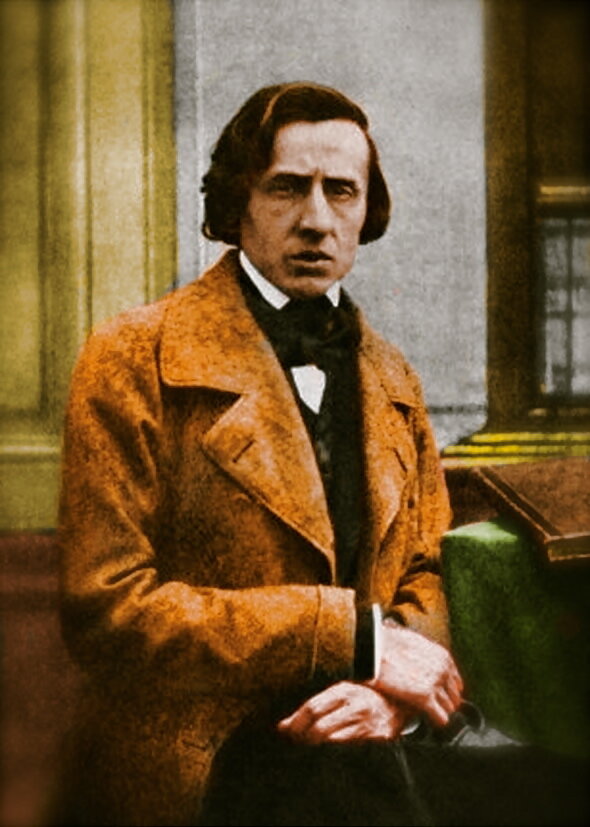
Frédéric Chopin was born on March 1, 1810, in Żelazowa Wola, near Warsaw, Poland. Recognized for his musical abilities during childhood, he studied music in Warsaw under Józef Elsner before leaving Poland in 1830. He subsequently settled in Paris, where he developed a successful career as a composer, pianist, and teacher.
Chopin devoted most of his compositional output to the piano. His works include nocturnes, waltzes, mazurkas, polonaises, études, ballades, scherzos, sonatas, and preludes. Across these genres, he developed a distinctive musical language characterized by expressive melodic writing, chromatic harmony, refined ornamentation, and an exceptional sensitivity to the piano’s tonal possibilities.
His approach to composition helped shape the Romantic piano repertoire. Rather than relying exclusively on large-scale forms or brilliant technical display, Chopin frequently explored the expressive potential of relatively compact musical structures. His works often combine recognizable formal organization with subtle rhythmic flexibility, harmonic complexity, and carefully controlled changes in texture.
The Prelude in E Minor, Op. 28 No. 4, illustrates this approach particularly clearly. Its musical materials are limited, but the interaction between melody and harmony creates a continuous sense of movement. The expressive result depends on the relationship between individual notes, the changing voices within the chords, and the gradual development of tension throughout the piece.
The 24 Preludes, Op. 28
Chopin’s 24 Preludes, Op. 28, were published in 1839. The collection explores all 24 major and minor keys, following a sequence organized around the circle of fifths. Each prelude stands independently, presenting a distinct musical character within a larger, carefully ordered collection.
The set is often compared with Johann Sebastian Bach’s The Well-Tempered Clavier, which also explores all 24 major and minor keys. However, the two collections have different structures. Bach paired each prelude with a fugue, whereas Chopin’s preludes are independent compositions that explore a wide variety of textures, moods, and musical ideas.
Chopin’s collection ranges from energetic and brilliant pieces to quiet, introspective miniatures. Some emphasize technical fluency, while others concentrate on melodic expression, harmonic movement, or a single musical gesture. The Prelude in E Minor belongs to the latter category, deriving much of its effect from sustained melody and slowly changing chords.
Chopin worked on the collection over several years during the 1830s. Its development included the period he spent in Mallorca with the writer George Sand and her children during the winter of 1838 to 1839. The completed collection was published in 1839, with editions appearing in several European markets.
A Prelude Associated with Mourning
Chopin died in Paris on October 17, 1849, at the age of 39. His funeral took place at the Church of the Madeleine on October 30, 1849, and included music by Wolfgang Amadeus Mozart as well as compositions by Chopin himself.
The Prelude in E Minor, Op. 28 No. 4, was performed on the organ during the ceremony, alongside the Prelude in B Minor, Op. 28 No. 6. This documented historical association has contributed to the enduring perception of the E Minor Prelude as a work connected with grief and remembrance.
Its musical character helps explain why the piece has continued to resonate in such contexts. The sustained melody, restrained dynamics, and chromatically changing harmonies create a sense of inward reflection without requiring an elaborate musical narrative.
Nevertheless, the historical association should not be confused with proof that Chopin composed the prelude specifically for a funeral or intended it to represent a particular personal tragedy. Its expressive meaning emerges primarily from the music itself, which allows performers and listeners to experience its emotional character in different ways.
2. Understanding the Musical Structure and Form
A Short Composition with a Continuous Musical Argument
The Prelude in E Minor contains 25 measures in the standard score. Its structure is compact, but the music develops through a carefully controlled sequence of harmonic changes, melodic returns, and dynamic contrasts.
Rather than presenting several sharply differentiated themes, Chopin works with a limited amount of material. The opening establishes the melodic and harmonic language, the middle section develops greater intensity, and the final measures bring the music toward a subdued resolution.
The form is best understood through these changes in musical function rather than through an overly rigid division into conventional sections. The return of the opening material creates a sense of familiarity, while alterations in harmonic movement and intensity give the later passage a different expressive purpose.
For pianists, recognizing this progression makes practice more effective. Instead of treating the 25 measures as a single uninterrupted sequence, divide the piece into manageable phrases and identify how each contributes to the overall direction.
The Opening: Establishing the Mood
The opening measures introduce the central relationship between the sustained right-hand melody and the repeated left-hand chords. The texture is immediately recognizable, and its relative simplicity creates a strong demand for control.
The right hand should establish a clear melodic line without exaggerating its volume. Meanwhile, the left hand provides the harmonic foundation and introduces the subtle movement that prevents the music from becoming static.
The opening should not be interpreted as a series of isolated sad notes. Its character emerges from the connection between the phrases, the changing harmony, and the restraint of the dynamic level.
Practice focus: Learn the right-hand melody separately, then practise the left-hand chords while listening to their changing notes. Combine the hands only when both parts feel secure.
The Middle: Increasing Harmonic and Expressive Tension
As the music progresses, the harmonic movement becomes increasingly important. The left hand continues to articulate changing chords, while the right hand contributes to the development of the melodic line.
The stretto marking in the score indicates an intensification of the musical movement. It contributes to the sense of growing urgency before the climax, but it should not be interpreted as permission to accelerate without control.
This passage benefits from a deliberate dynamic plan. A gradual increase in intensity allows the climax to emerge naturally, preserving the contrast with the restrained opening.
Practice focus: Practise the approach to the climactic passage at a stable tempo. Once the rhythm and chord changes are secure, introduce subtle expressive flexibility while keeping the musical direction clear.
The Ending: Resolution and Silence
The final measures bring the prelude toward a quiet conclusion. The score includes indications for diminishing the volume and allowing the sound to fade, giving the ending an important role in the overall structure.
The final E minor chord should not be treated as an isolated endpoint. Its effect depends on the tension established earlier and the gradual reduction in intensity that precedes it. The silence after the final sound is also part of the performance experience. A convincing interpretation allows the chord to resonate and decay naturally rather than forcing an abrupt release.
Practice focus: Practise the last measures separately. Listen to the relationship between the written dynamics, the pedal, and the natural decay of the piano.
3. Musical Analysis: Melody, Harmony, and Chromatic Voice Leading
The Right-Hand Melody
The right-hand melody is one of the most distinctive features of the prelude. Its restrained movement creates the impression of a vocal line, with sustained notes that seem to unfold over the changing harmony.
This writing requires careful phrasing. The pianist must identify which notes carry the principal melodic weight and how the line moves toward its points of tension and resolution. A useful approach is to sing the melody before playing it. Notice where a singer would sustain a note, release tension, or shape the end of a phrase. These observations can guide the pianist’s use of touch and timing.
The aim is not to imitate a singer mechanically. It is to create a coherent musical line in which the individual notes contribute to a larger phrase.
Chromatic Voice Leading in the Left Hand
The left-hand chords are central to the prelude’s expressive character. Although they may initially appear repetitive, their internal movement creates much of the harmonic tension.
Chromatic voice leading occurs when individual musical lines move by semitones. In this piece, small changes between successive chords produce a gradual transformation of the harmony rather than a sequence of entirely separate harmonic events.
This is one reason the accompaniment requires so much attention. The pianist must allow the changing notes to remain audible while keeping the rest of each chord sufficiently restrained. To practise this, isolate the upper moving voice of the left hand. Play it slowly and listen to the direction of the line. Then add the remaining notes of the chords, preserving the movement without turning every chord into a strong accent.
The technique also develops a broader skill that is useful throughout Romantic piano music: learning to hear a melody within a harmonic texture.
Harmonic Tension and Resolution
The tonal centre of the prelude is E minor, but its expressive effect depends on more than the repeated presence of the tonic chord. The changing relationships between chord tones create tension, temporary stability, and a sense of continued movement. Some harmonies feel unsettled because their notes suggest a continuation rather than a final resolution. The next chord then changes the relationship between those notes, creating a gradual sense of harmonic transformation.
For pianists, understanding these relationships improves both interpretation and technique. When the harmonic direction is clear, it becomes easier to decide which notes should be emphasized, where a phrase should grow, and how the pedal should be used.
An advanced theoretical analysis can provide additional insight, but it is not necessary to label every chord before playing the piece musically. Begin by identifying the notes that change and listening to the tension and release they create.
Why the Chords Should Not Sound Mechanical
Repeated accompaniment patterns can become mechanical when every chord receives the same attack, volume, and duration. In this prelude, that approach obscures the expressive movement of the harmony. Each chord should contribute to the phrase in a specific way. Some changes create a sense of continuation, while others increase tension or support a point of resolution.
Practise the accompaniment with a consistent underlying pulse, but remain attentive to the direction of the changing voices. Musical continuity does not require every chord to sound identical.
The result should be an accompaniment that feels connected and purposeful rather than heavy or repetitive.
4. Section-by-Section Piano Analysis
Measures 1–12: Establishing the Melodic Line
The opening measures introduce the relationship between the right-hand melody and the left-hand chords. The right hand establishes the musical character, while the left hand supplies the harmonic movement that supports the phrase.
The first priority is balance. If the left-hand chords are played too loudly, the melody loses its prominence. If they are played too softly or without attention to their internal movement, the harmonic progression becomes difficult to hear.
Begin by practising the left hand alone. Keep the rhythm even and listen carefully to the notes that change between successive chords. Then practise the right hand separately, shaping the melody as if it were a vocal phrase.
When combining the hands, resist the temptation to focus exclusively on the melody. The expressive effect depends on the interaction between both parts, so the accompanying chords must remain controlled but musically meaningful.
Practice focus: Work in short groups of two or three measures. Listen to the movement of the inner voices and maintain a connected melodic line without forcing the sound.
Measures 13–20: Increasing Expressive Intensity
The second span develops the musical material introduced at the beginning. The melodic character returns, but the expressive pressure increases as the music moves toward its climactic passage.
This section requires careful dynamic planning. Rather than making every successive measure louder, identify the direction of the phrase and the point at which the music reaches its greatest intensity. A controlled crescendo is more effective when it has a clear destination.
The stretto marking in measure 16 deserves particular attention. Practise the surrounding measures at a stable tempo first, then introduce a gradual sense of urgency without sacrificing the clarity of the chord changes.
As the music becomes more intense, it can be tempting to increase the volume of both hands equally. This often makes the texture heavy rather than expressive. Keep listening for the relationship between the melody and the accompaniment, even at the climactic point.
Practice focus: Practise measures 13–20 as a single phrase, then isolate the transition around measure 16. Develop the approach to the climax before deciding how much flexibility of tempo is appropriate.
Measures 21–22: The Climax and Release
The climactic passage marks a significant change in the prelude’s expressive character. The intensity established in the preceding measures reaches its most concentrated point before the music begins to recede.
The dynamic contrast should feel earned. If the opening is already too loud or the middle section is exaggerated, the climax will have less impact. Conversely, an overly restrained climax may make the final release feel structurally insignificant.
Keep the rhythm controlled and the sound focused. The goal is to express the heightened tension of this moment without allowing the hands to become stiff or the chord balance to deteriorate.
Practice focus: Play the approach to the climax several times, concentrating first on rhythm, then chord voicing, and finally the dynamic shape.
Measures 23–25: The Final Dissolution
The closing measures are essential to the composition’s expressive effect. The score includes diminuendo and smorzando indications, guiding the music toward a progressively softer and more subdued ending.
Diminuendo means gradually decreasing the volume. Smorzando suggests that the sound should fade or die away, often with a corresponding sense of relaxation in the musical movement.
The final E minor chord should not sound like a forceful conclusion. Its effect depends on the contrast between the preceding intensity and the quietness of the ending.
Pedaling needs particular attention here. Allow the final harmony to resonate naturally, but do not hold the pedal so long that the acoustic decay becomes uncontrolled. The ideal release depends on the instrument, the room, and the sound produced by the final chord.
Practice focus: Practise the last three measures independently. Experiment with the dynamic release and pedal timing, listening carefully to the natural decay of the piano.
5. Playing Tips: How to Master Chopin’s Prelude in E Minor
1. Balance the Two Hands
The melody should remain clearly audible above the left-hand accompaniment. However, the left hand must not disappear entirely, because the harmonic changes are essential to the piece’s musical character. Practise each hand separately before combining them. When playing hands together, listen for the moving notes within the chords and adjust the balance so that they remain perceptible without competing with the melody.
Avoid relying on a fixed numerical ratio between the hands. The appropriate balance changes with the register, the instrument, and the expressive purpose of each phrase.
2. Develop a Singing Tone
The right-hand melody benefits from a connected, vocal approach. Each note should contribute to the direction of the phrase rather than sounding like an isolated event. Practise the melody without pedal and listen for gaps between notes. Maintain a relaxed hand and avoid excessive finger pressure, especially when sustaining longer notes.
Once the melody is secure, add the accompaniment while preserving the continuity of the line. The goal is a singing sound that remains expressive without becoming heavy.
3. Bring Out the Moving Notes in the Chords
The left-hand accompaniment contains the harmonic movement that distinguishes this prelude. Playing all notes with the same emphasis makes the texture less expressive and can obscure the chromatic progression. Isolate the changing voice and practise it independently. Then add the remaining chord tones at a softer dynamic level.
Repeat the exercise at a comfortable tempo until the moving voice remains audible within the complete texture. This is one of the most valuable technical exercises for the piece.
4. Shape the Crescendo Toward the Climax
The climactic passage needs to emerge from the restrained opening. A gradual increase in intensity creates a stronger structural contrast than an abrupt change in volume. Identify the direction of the phrase and decide where the crescendo should become most noticeable. Practise the passage at a moderate dynamic before gradually expanding the sound.
Keep the hands relaxed and the chord balance controlled. The aim is expressive intensity, not force.
5. Use the Sustain Pedal Carefully
The sustain pedal can connect the sound and enrich the piano’s resonance, but excessive pedaling can obscure the changing harmonies. Practise without pedal first, then introduce it according to the harmonic movement. On many instruments, changing the pedal with the harmony helps preserve clarity, although the precise approach depends on the piano and the room.
Pay particular attention to the final measures. The pedal should support the natural decay of the final chord without creating unnecessary harmonic blur.
6. Introduce Rubato Gradually
Rubato allows subtle flexibility in timing, helping the melody breathe naturally. However, it should not interrupt the underlying continuity of the piece. Begin with a steady pulse. Once the notes, harmony, and dynamic shape are secure, introduce modest flexibility at phrase peaks and points of resolution.
Avoid slowing down at every phrase ending. The most convincing expressive timing arises from the musical structure rather than from a predetermined pattern of accelerations and pauses.
7. Respect the Quiet Dynamics
The prelude’s expressive power depends on restraint. Playing the opening too loudly reduces the contrast available for the climactic passage and makes the ending less effective. Practise at a quiet dynamic while maintaining a clear tone. Soft playing should remain controlled and audible, not weak or uncertain.
The final measures require particular sensitivity. Follow the written dynamic indications and allow the sound to recede naturally.
6. Choosing the Right Tempo for Prelude in E Minor
The opening tempo marking is Largo, indicating a broad, slow movement. Chopin does not provide a single printed metronome number that establishes one universally correct performance speed for the piece.
A suitable tempo allows the melody to remain connected while giving the harmonies enough time to resonate. If the music moves too quickly, the harmonic changes can lose their expressive weight. If it moves excessively slowly, the melodic line may become fragmented and the relationship between the chords may weaken. Begin with a regular pulse and choose a speed at which the left-hand chords remain even and the right-hand melody can be shaped naturally. A metronome is useful during the learning process, particularly when coordinating the hands, but it should not dictate every expressive decision in the final interpretation. The stretto passage requires particular care. Its intensification should be audible, but it should not create an uncontrolled acceleration. The relationship between tempo, dynamics, and harmonic movement is more important than the pursuit of a specific performance duration.
Recordings can help you compare different approaches to timing, but they should be treated as interpretive examples rather than as proof of one definitive tempo. Your own choice should be grounded in the score, the capabilities of your instrument, and the musical direction of the phrase.
7. A Practical Four-Week Practice Method
The following plan provides a structured way to learn the prelude. The time required will vary according to prior experience, reading ability, and the amount of focused practice available. Four weeks is a useful framework, not a guarantee of mastery.
Week 1: Reading and Fingering
Objective: Learn the notes, identify the harmonic changes, and establish comfortable fingering.
Begin by reading the score slowly. Check the key signature, accidentals, rhythm, and chord shapes before attempting to play the entire piece.
Practise the left hand alone, paying particular attention to the voices that change between successive chords. Then learn the right-hand melody separately, identifying the notes that carry the greatest expressive weight.
Choose fingering that allows the hand to remain relaxed and the melodic line to connect naturally. Avoid changing fingering repeatedly without a musical or technical reason.
Practical tasks:
- Learn the right-hand melody in short phrases.
- Practise the left-hand chords without pedal.
- Identify the changing notes within successive harmonies.
- Mark difficult transitions in the score.
What to listen for: Accurate notes, consistent rhythm, and a clear distinction between the moving voices and the sustained notes.
Milestone: Play each hand separately with reliable notes and a clear understanding of the basic musical structure.
Week 2: Coordination and Structure
Objective: Combine the hands and understand how the music progresses toward its climax.
Begin joining the hands in short passages. Work particularly carefully where a new left-hand chord appears beneath a sustained right-hand melody note.
Practise the opening and the later passage separately before connecting them. Pay attention to the transition into the stretto and to the relationship between the climax and the final measures.
Use a metronome when necessary to stabilize the pulse, but avoid increasing the tempo until the coordination feels secure.
Practical tasks:
- Combine the hands in groups of two or three measures.
- Practise transitions independently.
- Maintain a stable pulse while changing chords.
- Repeat difficult passages slowly without unnecessary tension.
What to listen for: A continuous melody, controlled chord changes, and an even underlying pulse.
Milestone: Play the complete prelude slowly without frequent interruptions, maintaining coordination between the hands.
Week 3: Technique and Interpretation
Objective: Refine voicing, dynamics, pedaling, and expressive timing.
Start each session by practising the left-hand chords without pedal. Make sure the changing voices are audible and that the chord attacks remain controlled.
Then work on the right-hand melody, shaping phrases and sustaining the musical line without unnecessary pressure. Combine the hands and introduce pedal according to the harmonic changes.
Develop the dynamic shape of the complete piece. The opening should establish restraint, the middle should build tension, and the ending should release that tension gradually.
Practical tasks:
- Practise the moving voices within the left-hand chords.
- Develop the crescendo toward the climax.
- Introduce pedal changes according to the harmony.
- Experiment with modest rubato after the pulse is secure.
What to listen for: A singing melody, clear harmonic movement, an expressive but controlled climax, and a natural diminuendo at the end.
Milestone: Perform the piece with deliberate phrasing, balanced hands, and a consistent overall musical direction.
Week 4: Performance and Refinement
Objective: Consolidate the interpretation and develop confidence in complete performances.
Begin by reviewing the passages that remain technically unreliable. Practise them in short groups before performing the entire piece. Record a complete performance and listen to it without playing. Notice whether the melody remains audible, whether the harmonic changes are clear, and whether the climax feels proportionate to the rest of the composition.
Compare your interpretation with recordings by established pianists, but avoid copying every timing decision. Recordings can reveal alternative approaches to phrasing, dynamics, and pedaling, while your own interpretation should remain grounded in the score.
Practical tasks:
- Practise the complete piece without stopping.
- Record and evaluate the balance between the hands.
- Refine the final measures and pedal release.
- Focus on continuity rather than correcting every small mistake during a performance.
What to listen for: Structural coherence, controlled dynamics, a natural melodic line, and a convincing final silence.
Milestone: Perform the prelude from beginning to end with reliable notes, balanced voices, and a deliberate expressive plan.
8. Common Mistakes When Learning the Prelude
Playing Every Chord at the Same Volume
Treating the left-hand chords as uniform blocks hides the subtle harmonic movement that gives the piece its character. Practise the changing voices separately and restore the complete chords without losing their melodic direction.
Making the Melody Sound Disconnected
Sustained notes can become isolated events if the pianist does not shape the phrase as a whole. Listen for continuity, maintain a relaxed hand, and avoid unnecessary gaps between connected notes.
Using Too Much Sustain Pedal
Excessive pedal can obscure the chromatic voice leading and make the harmonies sound muddy. Practise without pedal periodically, then add resonance selectively according to the harmony and the instrument.
Rushing Toward the Climax
The stretto marking can tempt pianists to accelerate too abruptly. Build the expressive pressure progressively while keeping the rhythm controlled. The climax should emerge from the music rather than sound like a sudden change of speed.
Beginning Too Loudly
If the opening already contains too much dynamic intensity, the later climax loses some of its significance. Preserve a meaningful contrast between the opening, the more intense central passage, and the final diminuendo.
Ending Too Abruptly
The final measures should not sound like an ordinary cadence followed by an immediate stop. Respect the diminuendo and smorzando indications, and listen carefully to the decay of the final chord.
9. How to Choose the Right Sheet Music Edition
Several editions of Chopin’s 24 Preludes, Op. 28 are available, including historical publications and modern scholarly editions. Although the underlying composition remains recognizable, editions can differ in editorial fingering, notation, articulation, and the treatment of particular readings.
The Henle Urtext Edition
The Henle Urtext edition is a useful option for pianists who want a modern scholarly edition. The publisher’s edition of the complete preludes is edited by Norbert Müllemann, with fingering by Hermann Keller. Henle also provides a detailed critical commentary for readers who want to examine questions concerning the musical text. Henle assigns the Prelude in E Minor, Op. 28 No. 4, a difficulty rating of 4 out of 9, classified as medium. This is a publisher-specific assessment, not an official examination grade.
The edition is particularly useful for pianists who want to compare the written text with editorial commentary and study the relationship between the available sources.
Historical Editions and Free Sheet Music
Historical editions can be useful for comparison, particularly when studying earlier editorial decisions. The International Music Score Library Project, or IMSLP, provides access to historical publications of Chopin’s preludes, along with edition-specific information. For everyday practice, prioritize a readable score with clear accidentals, sufficient spacing, and fingering suggestions where they are useful. More advanced pianists may benefit from comparing different editions when an editorial choice affects their interpretation.
A free download does not automatically grant permission to redistribute the file commercially. Always check the copyright and licensing information associated with the exact edition you intend to use.
Is Chopin’s Prelude in E Minor in the Public Domain?
Chopin died in 1849, so the original composition is in the public domain in jurisdictions where the applicable term of protection has expired. In the European Union, the general rule for musical compositions is protection for the author’s lifetime plus 70 years, subject to applicable legal provisions. However, the public-domain status of the original composition does not automatically settle the rights associated with every modern edition, arrangement, recording, or digital file. A particular publication may contain additional editorial contributions or other protected material.
If you intend to distribute the score commercially through PianoMode, verify the legal status of the exact edition and PDF you use. Do not assume that a score available for free download necessarily permits every form of redistribution.
10. Why Learn Chopin’s Prelude in E Minor?
Chopin’s Prelude in E Minor offers a valuable combination of musical expression and technical development. Its short length makes it possible to study the entire musical structure closely, while its harmonic language provides an introduction to the subtleties of Romantic piano interpretation.
The left-hand chords develop awareness of inner voices and harmonic movement. The right-hand melody encourages a more vocal approach to phrasing, while the dynamic markings teach the importance of restraint, contrast, and gradual release.
The composition also demonstrates how musical complexity can exist beneath a relatively simple surface. A pianist may learn the notes without much difficulty, yet developing an interpretation that communicates the full expressive depth requires careful listening and repeated refinement.
These skills are transferable to many other works in the piano repertoire. Voicing, legato, dynamic control, pedaling, and expressive timing are central to Chopin’s nocturnes and other lyrical compositions, as well as to music by numerous Romantic composers.
Most importantly, the Prelude in E Minor encourages a more thoughtful relationship with the instrument. Instead of measuring progress through speed or volume, the pianist learns to pay attention to the smallest changes in sound and to understand how those changes contribute to the overall musical experience.
Conclusion
Chopin’s Prelude in E Minor, Op. 28 No. 4, demonstrates how a short piano composition can achieve remarkable expressive depth through a small number of musical ideas. Its sustained melody, chromatically changing chords, and gradual movement toward a quiet ending create a distinctive atmosphere that has captivated performers and listeners for generations.
Learning the piece convincingly requires more than accurate notes. The pianist must bring out the inner voices of the left-hand chords, maintain a singing right-hand melody, control the transition toward the climax, and shape the final measures with sensitivity. Each of these elements contributes to the musical structure, and none should be treated as an isolated technical detail.
Approach the score progressively. Begin with accurate reading and comfortable fingering, then develop coordination and harmonic awareness before refining dynamics, pedaling, and expressive timing. Use recordings as a source of comparison, but make your interpretive decisions through careful listening and an understanding of the written music.
The ultimate goal is to make every note feel necessary, every harmonic change audible, and every moment of silence meaningful. When these elements work together, Chopin’s Prelude in E Minor becomes much more than a short study in melancholy. It becomes a lesson in the expressive possibilities of the piano.
Is Chopin’s Prelude in E Minor, Op. 28 No. 4 difficult to play?
The piece is generally suitable for intermediate pianists. Henle rates it 4 out of 9, within its medium category. Its principal challenges are chord voicing, legato, hand coordination, dynamic control, and expressive timing rather than speed or virtuosity.
How many measures does the Prelude in E Minor contain?
The standard score contains 25 measures. Despite its brevity, the composition develops a clear expressive progression through sustained melody, changing harmony, a climactic passage, and a quiet ending.
What is the tempo of Chopin’s Prelude in E Minor?
The score is marked Largo, indicating a broad, slow tempo. Chopin does not provide a single printed metronome number that determines the ideal performance speed. The pianist should choose a tempo that allows the melody to remain connected and the changing harmonies to resonate clearly.
What key is the Prelude in E Minor written in?
The principal key is E minor. The composition uses chromatic movement and changing harmonies to create tension and expressive depth around its tonal centre.
Was the Prelude in E Minor played at Chopin’s funeral?
Yes. The Prelude in E Minor, Op. 28 No. 4, was performed on the organ during Chopin’s funeral at the Church of the Madeleine in Paris on October 30, 1849. His Prelude in B Minor, Op. 28 No. 6, was also performed.
What does the stretto marking mean?
Stretto generally indicates a tightening or intensification of musical movement. In this prelude, it appears in measure 16 and contributes to the growing expressive pressure before the climax. It should not automatically be interpreted as a command for a sudden or uncontrolled acceleration.
How should the final chord be played?
The final E minor chord should be controlled and subdued, following the score’s diminuendo and smorzando indications. Use the sustain pedal to support the resonance where appropriate, and allow the sound to decay naturally rather than ending abruptly.
Is Chopin’s Prelude in E Minor copyright-free?
The original composition is in the public domain in jurisdictions where the applicable copyright term has expired. However, a particular modern edition, arrangement, recording, or PDF may have separate rights. Check the licensing information for the exact material you intend to reproduce or distribute.
Sources
G. Henle Verlag. Preludes, HN 883. Editorial information, difficulty classification, and details of the Urtext edition. Henle Verlag.
The Fryderyk Chopin Institute. Fryderyk Chopin: Preludes. Historical and contextual information about the collection, its composition, and its place in Chopin’s output. Chopin Institute.
The Fryderyk Chopin Institute. Chronicle of Chopin’s Life and Works. Historical chronology covering the Mallorca period and the publication of the preludes. Chopin Institute.
International Music Score Library Project (IMSLP). Preludes, Op. 28, Frédéric Chopin. Historical editions, publication information, and edition-specific copyright notes. IMSLP.
Piano.org. Prelude in E Minor, Op. 28 No. 4. Supplementary reference for the work’s basic score characteristics. Piano.org.