As an Amazon Associate, PianoMode earns from qualifying purchases. Recommendations are made on their merits; the price you pay is the same.
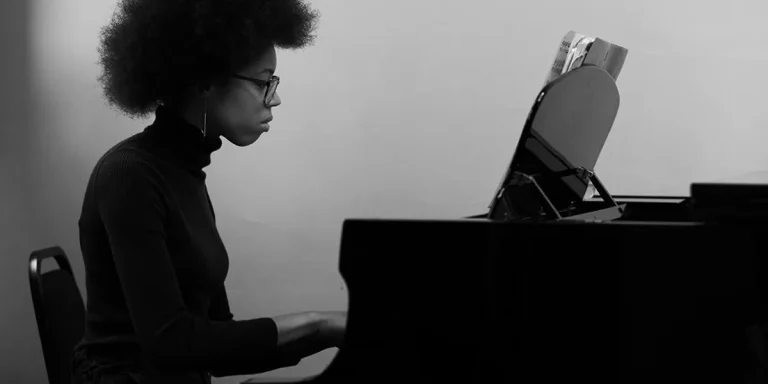
The journey of learning to play the piano is one of the most rewarding intellectual and creative pursuits a person can undertake. In 2026, the barriers to entry have never been lower, yet the sheer volume of available information can make the first step feel overwhelming. Mastering the piano from a standing start requires more than just sitting at a bench; it demands a structured approach that balances physical technique, musical literacy, and the right modern tools. Whether the goal is to play classical masterpieces, modern pop hits, or jazz improvisation, the foundation remains the same: a clear understanding of the instrument’s layout and a commitment to consistent, high-quality practice.
To start learning piano from scratch effectively, a beginner must acquire an 88-key weighted digital piano, learn to identify notes using the repeating patterns of black keys, and establish a 20-minute daily practice routine. Success is built on the simultaneous development of “sight-reading” (reading music) and “muscle memory” (physical finger control).
This guide serves as a definitive resource for the absolute beginner. It bypasses the confusion of conflicting online tutorials to provide a streamlined, pedagogical path toward musical fluency. By focusing on the core pillars of piano education, equipment, theory, and technique, any dedicated student can move from total silence to playing their first complete song within weeks.
What This Guide Covers
This comprehensive analysis is designed to take a learner from “zero” to “functional player” by covering the following essential modules:
- The Hardware Selection: Choosing between acoustic pianos and modern digital alternatives that fit a 2026 lifestyle.
- Keyboard Geography: Decoding the 88 keys and finding “Middle C” without hesitation.
- The Musical Alphabet: Understanding how just seven letters (A-G or LA-SOL in latin notation system) form the basis of every song ever written.
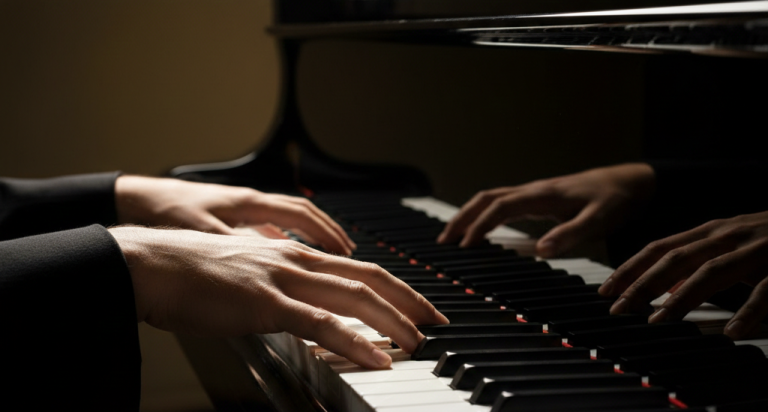
- Physical Biomechanics: Establishing the correct posture and hand “arch” to prevent fatigue and injury.
- Practice Architecture: How to structure a 20-minute session for maximum retention and skill growth.
Weighted Action refers to a keyboard mechanism that uses actual hammers or weights to simulate the resistance of an acoustic piano. This is the single most important feature for a beginner, as it allows for the development of “dynamic control”, the ability to play both softly and loudly.
1. The Instrumentation of the Modern Piano Interface
A. The Acoustic-Digital Dichotomy in the Market
The first critical juncture in the novice pianist’s trajectory is the selection of the instrument. This choice serves as the primary variable limiting or enabling technical development. While the acoustic piano, with its infinite gradation of tone and sympathetic resonance, remains the historical gold standard, the digital piano market has evolved to a point of high-fidelity simulation that offers a pragmatic alternative for the modern learner.
The Mechanics of Weighted Keys
Pedagogical consensus is absolute regarding the necessity of “weighted keys” or “graded hammer action” for any serious study. An acoustic piano operates on a complex leverage system where a key press throws a felt hammer at a string; the resistance felt by the player is the physical mass of this mechanism fighting gravity. To develop finger independence, dynamic control (velocity sensitivity), and neuromuscular endurance, the practice instrument must replicate this resistance.
Unweighted “synth-action” keyboards rely on springs for resistance. This creates a uniform, shallow tension that immediately pushes back against the finger. Practicing on such interfaces fails to develop the intrinsic hand muscles required for piano playing. When a student trained on unweighted keys attempts to play an acoustic instrument, they often experience a phenomenon described as “technical shock,” where the fingers lack the requisite strength to depress the keys evenly or control the hammer velocity. Furthermore, the “escapement”, the tactile notch felt near the bottom of the keystroke on a grand piano, is essential for playing pianissimo passages and rapid repetitions. Digital instruments that lack this haptic feedback sever the connection between physical intent and sonic result.
Pedagogical consensus is absolute: “Weighted keys” or “graded hammer action” are non-negotiable.
- For Children: Developing hand muscles on unweighted keys (spring-action) can lead to collapsing joints and an inability to control dynamics later. The physical resistance is crucial for neuro-motor feedback.
- For Adults: Essential for expressive control and avoiding the “toy” feel that demotivates serious learners.
Comparative Market Analysis: Entry-Level Digital Pianos
For the beginner, the distinction between a “keyboard” and a “digital piano” is a categorical imperative. Keyboards prioritize portability and synthesized variety; digital pianos prioritize the simulation of the acoustic experience.
- Yamaha P-145 (and P-Series): As a successor to the industry-standard P-45, the P-145 utilizes the Graded Hammer Compact (GHC) action. This mechanism addresses the spatial constraints of modern urban living while maintaining the “graded” physics, where bass keys are heavier than treble keys, mimicking the differing hammer sizes of an acoustic instrument. Its sound engine, sampled from the Yamaha CFIIIS concert grand, offers a bright, cutting clarity ideal for classical articulation. Excellent durability for households with children.
As an Amazon Associate I earn from qualifying purchases.
- Roland FP-10: This model is distinguished by the PHA-4 Standard action. Unlike many competitors in the sub-$500 category, the PHA-4 includes escapement simulation and synthetic “ivory feel” key textures, which absorb moisture and provide grip. The sound generation uses Roland’s SuperNATURAL modeling, a synthesis method that calculates resonance behavior rather than merely playing back static samples, offering a more dynamic decay and sympathetic resonance.
As an Amazon Associate I earn from qualifying purchases.
- Kawai ES120: Often cited for its acoustic realism, the Kawai utilizes the Responsive Hammer Compact (RHC) action. Its primary differentiator is the sampling of the Shigeru Kawai EX concert grand, providing a warmer, more mellow timbral character compared to the brightness of the Yamaha. It is particularly noted for a quieter key mechanism, reducing the mechanical “thump” audible in apartment settings and for parents listening to practice sessions.
As an Amazon Associate I earn from qualifying purchases.
Technical Specifications of Market-Leading Entry-Level Digital Pianos (2026)
| Model | Action Architecture | Sound Engine | Polyphony | Connectivity | Primary Advantage |
| Yamaha P-145 | Graded Hammer Compact (GHC) | CFIIIS Sample | 64 notes | USB to Host | Reliability, clear tone |
| Roland FP-10 | PHA-4 Standard (Escapement) | SuperNATURAL Modeling | 96 notes | Bluetooth MIDI | Tactile realism, dynamic range |
| Casio PX-S1100 | Smart Scaled Hammer Action | Multi-dimensional Morphing AiR | 192 notes | Bluetooth Audio/MIDI | Ultra-slim profile, portability |
| Kawai ES120 | Responsive Hammer Compact (RHC) | Shigeru Kawai EX | 192 notes | Bluetooth Audio/MIDI | Acoustic warmth, quiet keybed |
B. Ergonomic Physiology and Posture
The piano is not played by the fingers alone; it is played by the entire skeletal structure, anchored by the bench and activated by the large muscle groups of the back and shoulder.
The Geometry of Seating
The height of the bench dictates the angle of the forearm, which is the primary lever for energy transfer. If the bench is too low, the player must elevate the shoulders to lift the hands onto the keys, introducing chronic tension in the trapezius. If too high, the player loses the natural gravitational advantage of “arm weight.” The optimal ergonomic position places the elbows slightly above the level of the keys, creating a gentle downward slope of the forearm toward the hand.
Distance is measured by the “knuckle test”: with the back straight and arms extended fully forward, the knuckles should graze the fallboard (the vertical panel behind the keys). This ensures that the elbows remain slightly in front of the torso when playing, allowing for free rotation and lateral movement across the register. The feet must remain flat on the floor to stabilize the lower back, acting as a counterbalance to the movements of the upper body.
- The Bench Height: The elbows must be slightly above the level of the keys.
- Children: Most standard benches are too low. Carpet squares, foam pads, or adjustable benches are mandatory. If a child sits too low, they will raise their shoulders to reach the keys, causing tension and “flying elbows.”
- The Foot Stool (Crucial for Kids): Dangling feet cause back strain and instability. A child must have a box, stool, or pedal extender under their feet to provide a center of gravity. They cannot control their arm weight if their core is unstable.
- Distance: The “Knuckle Test” applies to all: with arms extended, knuckles should graze the fallboard.
Recommended Bench:
The Best Adjustable Roland Piano Bench on Amazon !𝄞As an Amazon Associate I earn from qualifying purchases.
2. Biomechanics and Hand Technique
A. The “Claw” vs. The “Natural Curve”
A significant pedagogical debate persists regarding the ideal shape of the hand. Historically, rigid instruction often demanded a “claw” position, imagining the hand holding a ball. Modern analysis suggests this cue can be detrimental if misinterpreted.
- The “Claw” Mechanism: A rigid curl activates the flexor digitorum profundus, the long muscle in the forearm responsible for gripping. While powerful, this muscle binds the fingers together, inhibiting independence and speed. Playing with a fixed claw creates tension that radiates up the arm, leading to fatigue and a harsh, percussive tone.
- The Natural Curve (The Arch): Contemporary technique advocates for the “natural curve”, the shape the hand assumes when the arm hangs loosely at the side. This position relies on the intrinsic muscles of the hand (interossei and lumbricals) for fine motor control, supported by the arm. The arch prevents the finger joints from collapsing (hyperextending) upon impact, ensuring efficient energy transfer from the arm to the key.
The goal is not a static shape but a dynamic stability. The hand must be firm enough to support weight but flexible enough to absorb the shock of the key bottom. The thumb plays on its side tip, acting as a pivot, while the other fingers play on their fleshy pads.
- For Kids: Use imagery. “Make a tunnel for a mouse to crawl under your hand” or “don’t squish the bubble.” This prevents the common issue of collapsing finger joints.
- For Adults: Focus on the “Natural Curve”, the shape the hand assumes when hanging loosely by the side. Avoid the tension of a rigid “claw.”
B. Developing Finger Independence
The untrained hand is neurologically wired for grasping, meaning fingers prefer to move in unison. Piano technique requires the isolation of individual digits.
Key Independence Exercises:
- Static Note Holding: Depressing five keys (C-D-E-F-G or Do, Ré, Mi, Fa, Sol) and repeating one note while holding the others down. This isolates the extensor muscles for each finger.
- The “Slow-Fast” Scale: Practicing scales where one hand plays legato (smooth) and the other staccato (detached). This decouples the articulation signals sent from the brain, forcing independence.
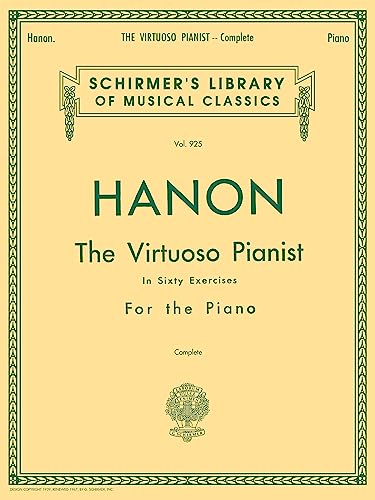
- Hanon and Czerny: While mechanically repetitive, exercises like Hanon’s The Virtuoso Pianist (Nos. 1-20) are effective for building pure endurance, provided they are executed with a supple wrist to avoid tendonitis.
- Children: Struggle with 4th and 5th finger independence. Exercises like “finger pushups” on a table or “dough playing” (playing on play-dough to see individual finger prints) are effective.
- Teens/Adults: Exercises like Hanon (Nos. 1-20) are effective for building endurance, provided the wrist remains supple.
 Kindle editionRead on Kindle ›
As an Amazon Associate I earn from qualifying purchases.
3. The Theoretical Foundation (The “High-Yield” Approach)
To learn piano “from scratch” is to learn a new symbol system. The “High-Yield” music theory philosophy suggests building concepts sequentially, assuming no prior knowledge, to create a robust mental model of music.
A. Rhythm and Meter: The Architecture of Time
Rhythm is the organization of sound duration; meter is the framework that contains it.
Durational Values and Pulse
The “Pulse” (or beat) is the regularly recurring underlying pulsation that compels music forward. The “Tempo” is the rate of this pulse, measured in Beats Per Minute (BPM). Rhythmic values define how long a sound lasts relative to this pulse.
- Whole Note: The longest standard value, typically lasting four beats.
- Half Note: Half the duration of a whole note (two beats).
- Quarter Note: One quarter of a whole note (one beat).
- Eighth and Sixteenth Notes: Subdivisions of the beat.
- Dotted Notes: A dot adds half the value of the note to itself (e.g., a dotted half note = 2 + 1 = 3 beats).
Time Signatures and Meter
“Meter” organizes pulses into recurring patterns of strong and weak beats. This is notated by the Time Signature.
- Simple Meter: The beat is divisible by two. Common examples are 4/4 (Common Time), 2/4, and 3/4. The top number indicates beats per measure; the bottom number indicates the note value receiving the beat.
- Compound Meter: The beat is divisible by three. The most common is 6/8, where there are two main beats, each divided into triplets.
- Asymmetrical Meter: Meters with irregular pulse groupings, such as 5/8 (3+2 or 2+3) or 7/8. These are common in 20th-century and contemporary repertoire.
B. Pitch Notation and the Staff
The musical staff acts as a Cartesian grid for pitch (vertical axis) and time (horizontal axis).
- The Grand Staff: Piano music utilizes the Grand Staff, joining the Treble Clef (G-clef or Sol-clef) and Bass Clef (F-clef or Fa-clef) with a brace. Middle C (C4 or Do4 latin) serves as the anchor point between the two staves.
- Clefs:
- Treble Clef: Spiral centers on the G line. Notes: Lines E-G-B-D-F (Mi, Sol, Si, Ré, Fa) ; Spaces F-A-C-E (Fa, La, Do, Mi).
- Bass Clef: Dots surround the F line. Notes: Lines G-B-D-F-A (Sol-Si-Ré-Fa-La); Spaces A-C-E-G (La-Do-Mi-Sol).
- C-Clefs: Though less common for piano, understanding movable C-clefs (Alto/Tenor) aids in advanced score reading.
C. Scales, Keys, and the Circle of Fifths
Scales are the source code of tonal music. A (La) “Scale” is a sequential ordering of pitch classes spanning an octave.
The Major Scale
The Major Scale is constructed on a specific interval pattern of Whole Steps (W) and Half Steps (H): W-W-H-W-W-W-H.
- Half Step (Semitone): The distance to the immediate adjacent key (e.g., E to F – Mi to Fa, or C to C# – Do to Do#).
- Whole Step (Tone): Two half steps (e.g., C to D – Do to Ré).
The Minor Scale
The Minor Scale is a complex entity with three distinct forms used in Common Practice music:
- Natural Minor (Aeolian): Uses the key signature of its relative major without alteration (W-H-W-W-H-W-W).
- Harmonic Minor: Raises the 7th degree to create a “leading tone” that pulls strongly to the tonic. This creates an “augmented second” interval between the 6th and 7th degrees.
- Melodic Minor: Raises both the 6th and 7th degrees when ascending to smooth out the melodic line, but reverts to the natural minor form when descending.
The Circle of Fifths
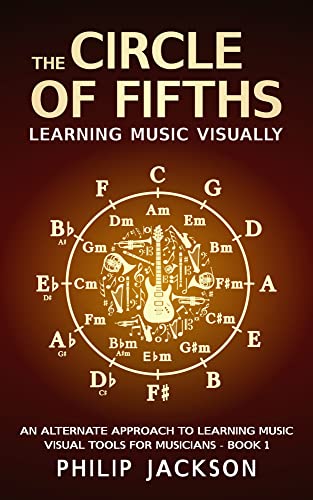
The Circle of Fifths is the mnemonic engine of Western music. It organizes keys by the number of sharps or flats they contain. Moving clockwise (up a perfect fifth) adds one sharp; moving counter-clockwise (down a perfect fifth) adds one flat. This tool allows the pianist to predict the “black keys” required for any piece.
 Kindle editionRead on Kindle ›
As an Amazon Associate I earn from qualifying purchases.
Modes
Beyond Major and Minor, “Modes” are heptatonic scales derived from the major scale but starting on different degrees. Understanding modes (Ionian, Dorian, Phrygian, Lydian, Mixolydian, Aeolian, Locrian) is essential for modern jazz and pop improvisation.
D. Harmony and Analysis
Harmony is the vertical stacking of notes. The fundamental unit is the Triad.
Triad Construction
- Major Triad: Root + Major 3rd + Perfect 5th.
- Minor Triad: Root + Minor 3rd + Perfect 5th.
- Diminished Triad: Root + Minor 3rd + Diminished 5th.
- Augmented Triad: Root + Major 3rd + Augmented 5th.
Inversions
Chords are not always played with the root at the bottom.
- Root Position: Root in bass.
- First Inversion: Third in bass.
- Second Inversion: Fifth in bass. Understanding inversions allows the pianist to move smoothly between chords (voice leading) without jumping the hand across the keyboard.
Functional Harmony and Cadences
Chords function within a key hierarchy. Roman numerals denote these functions (e.g., V for Dominant, I for Tonic).
- Authentic Cadence (V-I): The strongest resolution, signaling the end of a phrase.
- Plagal Cadence (IV-I): The “Amen” cadence.
- Deceptive Cadence (V-vi): A surprise resolution to a minor chord instead of the tonic.
4. Curriculum and Repertoire Progression
A. Method Books: The Structured Path
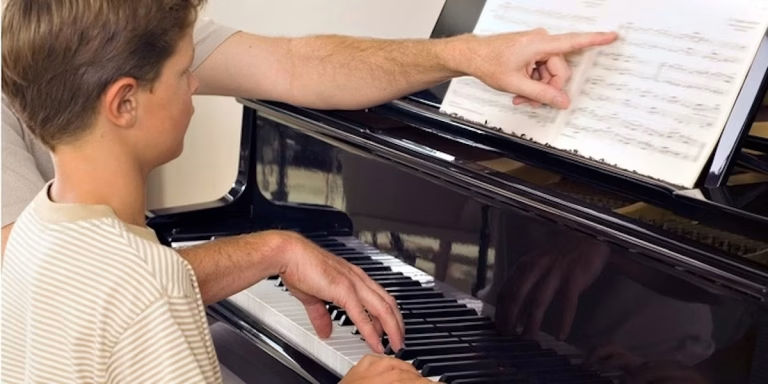
Method books provide the necessary scaffolding for the autodidact.
- Faber Adult Piano Adventures: This method is highly regarded for its integrated approach. It introduces reading via intervals (recognizing the distance between notes) rather than just note names, fostering better sight-reading skills. It also emphasizes the “natural curve” hand shape and relaxation early on.
 Kindle editionRead on Kindle ›
As an Amazon Associate I earn from qualifying purchases.
- Alfred’s Basic Adult All-in-One: A chord-centric method. It teaches students to play full-sounding arrangements quickly by using primary chords in the left hand. While satisfying, it can sometimes lead to a dependency on hand positions.
As an Amazon Associate I earn from qualifying purchases.
- John Thompson’s Easiest Piano Course & Modern Course: A rigorous, faster-paced method suited for those with some musical background. It emphasizes classical repertoire and technique but can be steep for absolute beginners.
 Kindle editionRead on Kindle ›
As an Amazon Associate I earn from qualifying purchases.
For the Child Beginner (Ages 5–9)
Kindle editionRead on Kindle ›As an Amazon Associate I earn from qualifying purchases.
B. Repertoire Milestones
Moving from methods to literature requires careful selection.
- Petzold’s Minuet in G (formerly attr. Bach): An essential study in independence, requiring the hands to play two distinct melodic lines (polyphony).
- Clementi Sonatinas (Op. 36): These works introduce the “Sonata Form” (Exposition, Development, Recapitulation) and technical scales in a musical context.
- Lead Sheets: For non-classical study, learning to read lead sheets (melody + chord symbols) enables the performance of thousands of songs using the theory of triads and inversions discussed in Part III.
C. Digital Learning Platforms
- Piano Marvel: Focuses on academic rigor and sight-reading assessment (SASR). It uses MIDI connectivity to score accuracy and timing strictly.
- Flowkey: Utilizes “wait mode,” pausing the music until the correct note is played. Excellent for visual learners but requires discipline to avoid reliance on the video rather than the score.
- Simply Piano: Highly gamified and accessible, though its horizontal scrolling notation differs from standard sheet music, potentially creating friction when transitioning to real scores later.
Digital Learning Platform Comparison
| Platform | Primary Focus | Feedback Mechanism | Notation Style | Best For |
| Piano Marvel | Sight-Reading & Technique | MIDI/SASR Scoring | Standard Sheet Music | Serious/Academic Study |
| Flowkey | Repertoire & Songs | Note Recognition (Wait Mode) | Split Screen (Video/Sheet) | Visual Learners |
| Simply Piano | Gamification & Basics | Acoustic/MIDI Recognition | Scrolling Horizontal | Casual Learners/Kids |
| Skoove | Improvisation & Listening | AI Listening | Standard/Scrolling | Creative Approach |
5. The Practice Regimen
A. The 30-Minute Beginner Routine
Consistency is superior to intensity. A daily 30-minute routine yields better neuroplasticity results than infrequent long sessions.
- Warm-up (5 mins): Physical stretches. Five-finger scales focusing on the “natural curve” and relaxed weight transfer.
- Technique (5 mins): Hanon exercises (No. 1-5) or major scales, focusing on the “thumb-under” maneuver.
- Sight-Reading (5 mins): Playing a new, simple piece without stopping. This trains the brain to process symbols in real-time.
- Repertoire (15 mins): Deep work on a current piece. Practice in small “chunks” (2-4 measures). Hands separate first, then combined. Slow practice is non-negotiable; speed is a byproduct of accuracy.
B. Hand Independence
To overcome the brain’s tendency to synchronize the hands, specific exercises are required.
- Rhythm Tapping: Tap the left-hand rhythm on the left knee and the right-hand rhythm on the right knee. This isolates rhythmic coordination from pitch generation.
- Articulation Split: Practice a C Major scale with the left hand playing staccato (detached) and the right hand playing legato (connected). This forces the brain to send conflicting articulation signals to the limbs.
Recommended Tools & Ressources
- Invest in Quality: Purchase a Roland FP-30X, or a Yamaha P-145 or a similar weighted digital piano.
- Follow a Method: Use Alfred’s Basic Adult All-in-One Course for a proven curriculum.
- Stay Consistent: Practice for 20 minutes a day rather than 2 hours once a week.
Roland FP 30x Digital Piano
Roland’s PHA-4 Standard keybed is excellent, with a slightly different feel than Yamaha’s. Some teachers and students prefer it. The FP-10 also features Roland’s SuperNATURAL Piano sound engine, which models the behavior of a real piano, including string resonance and damper effects.
As an Amazon Associate I earn from qualifying purchases.
Yamaha P-145 Digital Piano
This is the entry point for serious piano study. It features Yamaha’s GHC (Graded Hammer Compact) action, which replicates the heavier touch of lower piano keys and the lighter touch of upper keys, just like an acoustic piano. Its sound engine samples the Yamaha CFX concert grand. At its price point, it is the most capable instrument available for a beginning student.
As an Amazon Associate I earn from qualifying purchases.
Alfred’s Basic Adult All-in-One Course: Structured curriculum with clear milestones for self-assessment
As an Amazon Associate I earn from qualifying purchases.
Conclusion
The path to piano mastery is constructed on a foundation of theoretical literacy and biomechanical efficiency. For the child, it builds neural pathways and discipline; for the teen, it offers identity and emotional outlet; for the adult, it provides cognitive maintenance and artistic fulfillment. By selecting a weighted digital instrument (like the Roland FP-10, FP30X or Yamaha P-145), adopting the “natural curve” hand posture to avoid injury, and rigorously applying the grammar of music theory (scales, intervals, harmony), the beginner transforms from a button-pusher into a musician. The journey is non-linear, but with a structured curriculum, whether through method books or adaptive apps, and a commitment to daily, deliberate practice, the complex language of the piano becomes accessible, logical, and ultimately, expressive.
How long does it take to learn the piano?
While “mastery” is a lifelong pursuit, an absolute beginner can typically play a simple, two-handed song (like Hallelujah or a basic Minuet) within 3 to 6 months of consistent daily practice.
Can I learn on a 61-key keyboard?
It is possible to learn the very basics on 61 keys, but you will quickly run out of space. For a serious start, an 88-key instrument is strongly recommended to avoid having to buy a second instrument within the first year.
Is it too late to start as an adult?
No. Research in neuroplasticity shows that adults are highly capable of learning new motor skills. Adults often progress through the “theory” and “logic” of music faster than children, even if their fingers take slightly longer to become flexible.