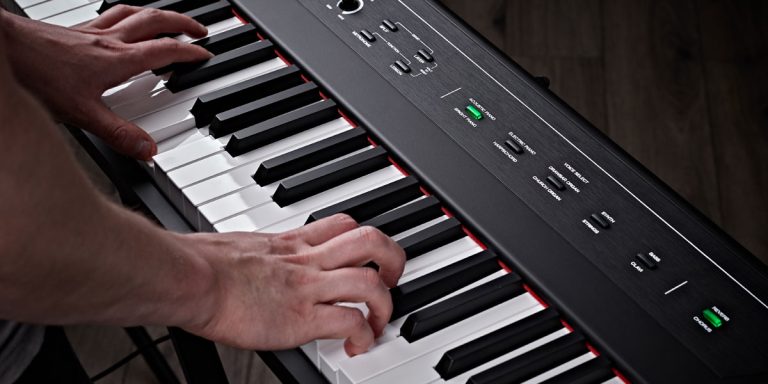
The journey of a thousand melodies begins with a single key press, but for many aspiring musicians, the first hurdle is not a difficult concerto, it is the choice of the instrument itself. Imagine a beginner standing in a modern music electronics store, surrounded by a dizzying array of options ranging from pocket-sized synthesizers to grand digital consoles. The question inevitably arises: “Is this small keyboard enough to learn real piano?”
The allure of compact keyboards is undeniable. They offer affordability, portability, and a low barrier to entry for those living in small apartments or traveling frequently. However, the piano is a physical and acoustic marvel that traditionally requires 88 keys to express the full breadth of human emotion. This guide explores the feasibility of learning piano fundamentals on 22, 40, and 61-key instruments. By diving into the mechanics of octaves, the requirements of beginner repertoire, and the physiological development of the hand, this article provides a definitive answer for every type of learner.
What you will learn in this guide:
- The technical definitions and octave ranges of various keyboard sizes.
- Which specific piano skills, like note reading and hand independence, transfer across all sizes.
- The critical limitations of “toy” ranges (22 and 40 keys) compared to student-grade instruments (61 keys).
- Why touch sensitivity and weighted action are often more important than the number of keys.
- Expert recommendations for choosing an instrument based on age, goals, and budget.
Learning piano on a smaller keyboard is entirely possible for mastering foundational skills such as note identification, basic music theory, and simple melodies, particularly on a 61-key instrument which covers five full octaves. While 22-key and 40-key models are primarily restricted to introductory play or basic theory visualization for children, a 61-key keyboard is widely considered the minimum viable size for a student to begin a formal method book. However, serious technical development, dynamic control, and classical repertoire eventually necessitate an upgrade to an 88-key instrument with weighted, touch-sensitive keys to avoid technical “walls” and bad habits.
1. Understanding the Geometry of the Keyboard: Octaves and Layout
Before assessing the pedagogical value of a keyboard, one must understand its physical layout. The modern piano is a repeating pattern of twelve notes: seven white keys and five black keys. This pattern is known as an octave, the distance from one note (such as C) to the next note of the same name.
The Math of Octaves and Keys
A standard acoustic piano possesses 88 keys, spanning roughly 7¼ octaves. In the world of Scientific Pitch Notation, these are numbered to help musicians identify exactly where a note sits in the pitch spectrum.
- Middle C (C4): The central anchor of the piano, vibrating at approximately 261.6 Hz.
- Octave Designations: Every C starts a new octave number (e.g., C1, C2, C3).
- 22 Keys: Spans approximately 1.8 octaves.
- 40 Keys: Spans approximately 3.3 octaves.
- 61 Keys: Spans exactly 5 octaves (from C2 to C7 on many models).
Frequency and Physics
The concept of the keyboard is rooted in sound wave physics. Each key represents a specific frequency; for instance, the A above middle C is universally tuned to 440 Hz. The difference between any two adjacent keys (white or black) is a “half step” or “semitone”. This universal layout means that the relationship between notes remains identical regardless of whether the keyboard has 22 or 88 keys.
2. Full-Size (88-Key) Pianos and Digital Pianos
For comparison, a standard 88-key piano (acoustic or digital) offers the full range and feel of the piano world. Digital pianos in particular aim to replicate an acoustic piano closely. According to one music services guide, “digital pianos are instruments whose main purpose is to feel and sound like a genuine acoustic piano”. They typically have all 88 keys, velocity-sensitive (touch-sensitive) weighted actions, graded hammer mechanisms, and built-in sustain pedals. In practice, this means you can play the exact same pieces and exercises as on a real piano, with real dynamic control and pedals. Music & Arts, a major music school chain, notes that for most piano learning, “the skills they’ll need to develop are rooted in the acoustic piano.”.
In contrast, they explain, a generic “keyboard” instrument (synth or arranger style) often has fewer than 88 keys and non-piano action: “these instruments frequently have smaller-range keyboards (fewer than 88 keys)… often [with] ‘unweighted’ or ‘synth action,’ meaning they don’t feel like a real piano”. For serious piano study, this is important: an acoustic-style piano develops different finger strength and technique than a synth-keyboard.
That said, digital pianos have trade-offs: they are bulky and usually more expensive than basic keyboards. But they also include features like headphone outputs, built-in metronomes, and learning apps. One guide highlights that digital pianos are easy to maintain (no tuning needed), portable (lighter than an acoustic), have adjustable volume, and often bonus sounds and MIDI connectivity. In short, for long-term growth a digital piano (ideally 88 keys with hammer action) is the safest choice.
Indeed, many experts advise: “Always go for 88 keys” if you plan to stick with piano for the long haul. A comprehensive piano review site warns that a 61-key instrument will let you “hit a wall fast,” whereas 88 full-size keys “help you build real technique”. In our discussion on choosing instruments (below), we’ll detail who really needs 88 keys versus who can start on less.
3. The 61-Key Experience: The Gold Standard for Beginners
For most hobbyists and adult beginners, the 61-key keyboard is the most common entry point. It represents a balance between professional capability and home convenience.
Evidence from method books supports this. Many beginner courses (for example, Alfred’s Beginner and Adult Piano courses) are written with 61-key keyboards in mind for the first levels. One student on an adult course forum noted that “All Alfred’s adult piano course is for 61 keys up to level 3” – meaning beginners can cover quite a bit of material on 5 octaves. Likewise, standard warm-up drills like Hanon or Bartók’s Mikrokosmos typically stay within five octaves for the first volumes, so they fit on a 61-key range. In practical terms, a 61-key learner can practice major and minor scales, triads and seventh chords in most keys, read beginner notation, and develop basic finger dexterity.
Pros of 61 keys include portability, space savings, and cost. One reviewer notes that 61-key models are often “compact and space savers,” able to fit under a bed or easily be transported in a car. Many 61-key keyboards run on batteries or USB power as well, so they can be used in classrooms, on stage, or on trips. They often include fun learning features (built-in songs, LED lights, drum beats) that engage beginners. In short, a good 61-key keyboard can serve as a complete beginner piano. As one reviewer puts it: “61 key pianos are great for beginners; you can learn a ton with fewer keys”.
As an Amazon Associate I earn from qualifying purchases.
What Can Be Learned on 61 Keys?
A 5-octave range is surprisingly versatile. Most beginner method books, such as Alfred’s Basic Adult Piano Course, are designed with the 61-key range in mind for the first several levels.
- Note Reading & The Grand Staff: A 61-key keyboard comfortably accommodates the “Grand Staff,” which consists of a treble clef and a bass clef connected by a brace.
- Scales and Chords: Students can practice major and minor scales in almost every key, as most technical exercises stay within a two-octave range.
- Hand Independence: Because 61 keys allow for plenty of space between the left and right hands, students can begin the difficult work of playing different rhythms and melodies simultaneously.
Repertoire and Limitations
A 61-key keyboard is sufficient to learn piano fundamentals for many beginners. While it’s sufficient for pop, jazz, and early intermediate pieces, a “wall” is often hit when moving into the Romantic or Classical eras. Compositions by Liszt, Chopin, or late Beethoven frequently utilize the extreme ends of the 88-key range. On a 61-key board, these notes simply do not exist, forcing the player to transpose sections or omit notes, which compromises the integrity of the piece.
4. The 40-Key Keyboard: Niche Tool or Transition?
The 40-key size (spanning roughly 3.3 octaves) is a “middle ground” instrument. It is often found in high-end musical toys or ultra-portable MIDI controllers used by producers.
You can learn some fundamentals: the notes and keys in that range, basic finger patterns, simple melodies and rhythms. You could practice reading notes in treble or bass clef that fit entirely within those 3 octaves. Early chord patterns in C and G major (which mostly occupy mid-range notes) would fit too. However, many common pieces and exercises will extend beyond 3 octaves. For example, even simple pieces like Bach’s Minuet in G or beginner arrangements often span about 4 octaves. Hanon’s first exercises (spanning an octave plus a step) could be done, but higher-level Hanon drills might not fit at all.
There is little published advice on 40-key use, since most beginner keyboards jump from 44/49 keys up to 61. A 40-key instrument is effectively halfway between a toy and a real keyboard. We can surmise that 40 keys might be acceptable for the most basic learning (in note-reading, theory and very elementary melodies) – especially for small hands – but will be frustratingly limiting after a very short time. As one expert pointed out about 61 keys, if you need extra keys later, you’ll quickly hit a wall; this is even more true for 40 keys.
The Theory Laboratory
Despite its limited range, a 40-key keyboard can serve as an excellent “theory lab.” It is ample for visualizing intervals, triads, and seventh chords.
- Interval Mastery: Students can learn to identify the distance between notes, such as a “Perfect 5th” (7 half steps) or a “Major 3rd” (4 half steps), which is fundamental to understanding harmony.
- Chord Progressions: Common sequences like the I-IV-V progression (e.g., C Major, F Major, G Major) fit easily within three octaves.
The Pedagogical Gap
For a student following a standard curriculum, 40 keys will feel restrictive within weeks. Most beginner pieces require a range of at least four octaves to allow the left hand to play bass notes while the right hand plays the melody. Therefore, while useful for specific tasks like ear training or transcribing melodies, 40 keys are not recommended for those wishing to “learn to play piano” in a traditional sense.
5. 22 Keys: Musical Toy or Training Tool?
A 22-key keyboard (less than 2 octaves) is almost exclusively the domain of early childhood education. At this size, the instrument is a tool for discovery rather than technique.
On a 2-octave keyboard, you can make basic melodies and explore pitches, but you can’t even play a full major scale two-octave above middle C (which requires 15 notes). There’s simply no room for two-handed playing beyond maybe very simple two-note harmony. Music theory and sight-reading principles could technically be introduced (you can point to do-re-mi positions on the 2-octave keyboard), but you would be learning on a vastly different layout than a real piano (since you’d never experience more than those two octaves).
Sensory and Ear Training
For a toddler, 22 keys are plenty to explore the “highness” and “lowness” of pitch.
- Solfège Introduction: The basic “Do-Re-Mi” scale (Solfège) only requires eight notes. A 22-key keyboard allows a child to learn these syllables and their corresponding physical positions.
- Rhythmic Foundation: Before learning keys, a child must learn the beat. Smaller keyboards often come with built-in drum rhythms that help students “Meet the Beat,” a series of repeating, consistent pulsations of time.
Why It Isn’t “Piano”
The primary issue with 22-key models is the lack of a “Grand Staff” context. Piano music is inherently polyphonic (multiple voices), and with only two octaves, there is no room for the hands to operate independently without colliding.
6. Fundamental Skills You CAN Learn on Small Keyboards
While the range may be limited, the logic of music remains constant. A small keyboard can be a powerful supplemental tool for mastering the “High-Yield” fundamentals of music theory.
Music Theory & Solfège
Regardless of keyboard size, the pattern of whole steps and half steps remains the same.
Any keyboard with a standard layout (even mini-keys) can be used to learn note names, intervals, scales, and chords. For example, one orchestra teacher praises having keyboards in the classroom: “When teaching the circle of 5th or chord theory, I always have my students grab the portable keyboards. It helps them visualize the distance between notes and how their music is arranged in space.”. In other words, a keyboard makes theory concrete. You can practice major and minor scales in every key (within range), learn key signatures by physically playing them, and sing solfège syllables (“do, re, mi…”) while hitting notes. A small keyboard still has the exact layout of an octave, so solfège training (e.g. moveable do exercises) works just the same. Kids’ keyboards often include simple songs and ear-training games for this reason.
A 61-key or even a 40-key keyboard can be used to master:
- Major Scale Construction: The universal pattern of W-W-H-W-W-W-H (Whole, Whole, Half, etc.).
- The Circle of Fifths: Visualizing how keys relate to one another as they add sharps or flats.
- Solfège Syllables: Using “Moveable Do” to train the ear to recognize intervals.
Sight-Reading Basics
Learning to read the staff does not require 88 keys immediately. Learning to read notation doesn’t require a full keyboard. Early sight-reading exercises (small note ranges) fit on any sized keyboard. On a 61-key keyboard, you can cover treble and bass clef well enough to match beginning method books. Even on a 44-key mini (like the Casio SA-76), students can practice reading right-hand (treble clef) melodies and simple left-hand harmonies within that range. The limited range actually forces beginners to master reading in the middle octaves before tackling high/low extremes. Over time, you simply learn to transpose up or down when a score goes outside your keyboard’s reach.
A beginner can master:
- Treble and Bass Clefs: Understanding that the second line of the treble clef is G, and the fourth line of the bass clef is F.
- Ledger Lines: Learning to read notes that occur just above or below the standard five-line staff.
- Rhythmic Notation: Counting whole notes, half notes, and quarter notes is a skill that translates to any instrument, regardless of its pitch range.
Finger Dexterity (Hanon and Czerny)
Strictly speaking, developing piano finger technique requires weighted, touch-sensitive keys (more on that below). However, even a lighter-key 61-key keyboard can help establish basic finger patterns and hand coordination. Many famous technical exercises, like the first volume of Hanon’s “The Virtuoso Pianist,” stay within a very narrow range, often just five notes or one octave. A student on a 61-key keyboard can develop significant finger strength and independence by running these drills in various keys.
As an Amazon Associate I earn from qualifying purchases.
As an Amazon Associate I earn from qualifying purchases.
7. The Critical Missing Links: Why 88 Keys Eventually Matter
As a student progresses, the “keyboard” and the “piano” begin to diverge. There are three technical features that smaller keyboards often lack, which are essential for true piano mastery.
Weighted Action and Touch Sensitivity
Most small keyboards do not have a weighted, hammer-action keybed. Instead, they use synth or organ-style keys which press easily and all sound at one volume (or only respond minimally to velocity). This means no true dynamic control: you can’t make real crescendos by pressing harder, as on a real piano. From the start, learners on unweighted keys miss developing the nuanced touch that piano technique requires. As one guide bluntly states: “weighted keys are non-negotiable” for proper finger training. Another notes that touch-sensitivity is fundamental: “for any beginner learning to play piano, it is vital to have a digital piano with touch sensitivity. It provides the feel of touch and learning to express the music by pressing keys harder or lighter. This is fundamental to developing piano techniques.”
- The Problem with Synth Action: Most 61-key and smaller keyboards use “synth action” or “unweighted” keys. These keys offer no resistance and often sound at the same volume regardless of how they are pressed.
- The Pedagogical Danger: Learning on unweighted keys can lead to “lazy” fingers. When a student eventually sits at a real piano, they may find they lack the strength to produce a clear tone or the control to play expressively.
The Sustain (Damper) Pedal
The sustain pedal, the right-most pedal on a piano, lifts the dampers off the strings, allowing notes to ring out even after the key is released. Many small keyboards either lack a sustain (damper) pedal input or only include a non-traditional “soft” pedal. The sustain pedal is crucial in almost all piano music, allowing notes to ring and fingers to shift position. Without it, even a simple two-chord arpeggio loses its depth. One music school guide explicitly warns beginners to get a pedal: “a sustain pedal will make your setup way more comfortable and realistic”. In fact, Ztunes Music (a piano school) lists having a sustain pedal socket as a top requirement for a keyboard: “The keyboard must have a socket for a sustain (damper) pedal… [which] will become crucial eventually.”. Without a pedal, learners cannot practice legato phrasing properly. Even if a keyboard physically fits 61 or 76 keys, lacking a pedal input means missing out on this expressive tool.
- Legato Phrasing: Without a sustain pedal, many pieces will sound “choppy” and disconnected.
- Pedal Dynamics: Advanced students learn to “half-pedal” to create shimmering textures, a skill impossible on keyboards without a pedal input.
Repertoire and Range
The most glaring limitation is that many piano pieces simply cannot be played on a keyboard that lacks the necessary notes. For instance, Chopin’s Waltzes, Beethoven Sonatas, or even many intermediate etudes often extend beyond five octaves. Joshua Ross warns that on a 61-key keyboard (5 octaves), “there are limitations on what music you can play. A 61-key piano only has 5 octaves which are not always enough”. Similarly, one comment notes that on a 61-key, “forget Beethoven, forget Liszt, forget Chopin”, as their works require the piano’s extremes. If your goal is to play advanced classical repertoire someday, a small keyboard will force frequent transposition (re-writing the music in a different key) or omitting octave-spanning passages.
8. Comparative Table: Keyboard Size vs. Musical Capability
| Feature | 22 Keys | 40 Keys | 61 Keys | 88 Keys |
| Octave Range | ~1.8 | ~3.3 | 5 | 7¼ |
| Method Books | No | Partially | Yes (Early Levels) | Yes (All Levels) |
| Scales & Chords | 1-Octave only | 2-Octaves | All Keys | All Keys |
| Hand Independence | No | Limited | Yes | Yes |
| Weighted Keys | Rarely | Rarely | Sometimes | Standard |
| Classical Pieces | None | Very Early Only | Early-Intermediate | All Repertoire |
9. Recommendations: Matching Your Instrument to Your Goals
Choosing the right size is a matter of aligning the instrument with the student’s trajectory.
For the Young Child (Ages 3-6)
At this age, a 44-key mini keyboard (like the Casio SA series) is often the best choice. It features smaller keys for “mini hands” and focuses on making music fun through built-in sounds and rhythms. It serves as a low-cost experiment to see if the child has a genuine interest.
For the Adult Hobbyist
Adults learning piano as a hobby have varied needs. If space or budget is limited, a 61-key keyboard with at least semi-weighted keys can work. It will let you play popular songs, learn reading, and develop coordination. However, if you have room and budget, an 88-key digital piano (with weighted keys and pedal) is recommended, since it trains your hands for “real piano” and avoids bad habits. In many forums, adult learners report that they quickly outgrow cheap 61-key keyboards and switch to full-size within a year or two. In general, if you expect to continue long-term (or play classical pieces), start with 88 keys or at least 76 keys. If you just want to “mess around” and learn simple tunes or theory, 61 keys can be a fun stepping stone.
For the Serious Classical Student
Students aiming for serious piano study or college auditions should definitely be using an 88-key fully-weighted piano. Conservatories and music schools expect competency on the full range and all techniques of the instrument. A teacher’s anecdote emphasizes this: as a piano teacher, one finds that “students quickly grow out of smaller, non-weighted [keyboards] which sound awful as well.” Likewise, the Ztunes music academy’s requirements state clearly that at home practice instruments should have at least 61 full sized keys (88 strongly preferred). In practice, an 88-key digital piano or an acoustic piano (if available) is the proper tool for advancing through intermediate and advanced repertoire.
For the Traveling Musician or Producer
For those focusing on electronic music, synthesizers, or “arranging,” a 49-key or 61-key MIDI controller is standard. In these genres, the goal is often note entry and melody creation rather than “concert piano” performance.
For example, Joshua Ross highlights that 61-key portable keyboards often come with “built-in chord buttons and drum pads” and are “perfect for gigs and touring”. These attributes make them ideal for players who move around a lot or who want a keyboard for composing and practice while traveling. Just remember: if you’re playing serious classical repertoire, you’ll eventually need the full range. But for pop/jazz gigs and composing, 61 keys can suffice.
Recommended Piano & Gear
To help you get started, we have curated a selection of highly-rated instruments and accessories available on Amazon that align with the goals discussed in this article.
Best 61-Key Starter Keyboards
Yamaha PSR-E373: A gold standard for beginners, featuring touch-sensitive keys and a massive library of high-quality sounds.
As an Amazon Associate I earn from qualifying purchases.
Casio CT-S300: Ultra-portable, battery-powered, and includes a built-in carry handle—perfect for the traveler or student on the move.
As an Amazon Associate I earn from qualifying purchases.
Best 88-Key Digital Pianos (Weighted Action)
Yamaha P-45 / P-71: The most recommended entry-level 88-key piano, featuring “Graded Hammer Standard” action that feels remarkably like an acoustic piano.
As an Amazon Associate I earn from qualifying purchases.
Yamaha P-225: The ultimate space-saving 88-key powerhouse, utilizing the new “Graded Hammer Compact” (GHC) action and the elite CFX Concert Grand voice to deliver professional-grade performance in a slim, modern chassis.
As an Amazon Associate I earn from qualifying purchases.
Roland FP-10: Known for having one of the best key actions in its price range, providing a very authentic feel for serious students.
As an Amazon Associate I earn from qualifying purchases.
Essential Accessories
M-Audio SP-2 Universal Sustain Pedal: A heavy-duty, piano-style pedal that works with almost any keyboard.
As an Amazon Associate I earn from qualifying purchases.
Roland RPB-500BK Adjustable Bench: The gold standard for ergonomic stability, featuring a solid-wood construction and a high-density cushioned seat. Its precision hydraulic-style adjustment mechanism allows you to dial in the exact height required for perfect forearm-to-key alignment, while the discreet under-seat storage provides a sleek solution for your essential sheet music.
As an Amazon Associate I earn from qualifying purchases.
Sennheiser HD 490 PRO: Designed for the most demanding studio environments, these open-back reference headphones are perfect for digital piano practice. The open-frame architecture eliminates the “boxy” internal resonance of closed-back models, creating a natural, three-dimensional soundstage that mimics the experience of playing an acoustic grand in a room. Its lightweight design and “comfort zone” for glasses make it the ideal companion for 4+ hour practice sessions without ear fatigue.*
As an Amazon Associate I earn from qualifying purchases.
Foundational Books
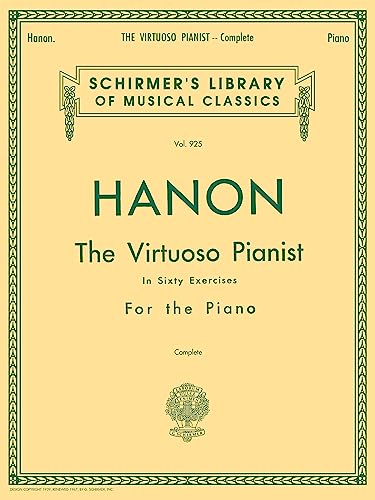
Hanon: The Virtuoso Pianist in 60 Exercises: The essential book for building finger strength and dexterity.
 Kindle editionRead on Kindle ›
As an Amazon Associate I earn from qualifying purchases.
Alfred’s Basic Adult All-in-One Piano Course (Book 1): The most popular curriculum for adult beginners, designed to work perfectly with 61-key or 88-key instruments.
As an Amazon Associate I earn from qualifying purchases.
Conclusion: The Path Forward
The question of whether one can learn piano on 22, 40, or 61 keys is not a simple “yes” or “no.” It is a question of “how far.” A small keyboard is a gateway, a way to demystify music theory, build rhythmic confidence, and learn the geography of the staff. For many, a 61-key instrument is the spark that ignites a lifelong passion for music.
However, the piano is an instrument of nuance and power. To truly master its language, one eventually needs the full 88-key landscape and the physical feedback of weighted keys. If you are a beginner, do not let the lack of a grand piano stop you. Start on what you can afford, master the fundamentals, and let the music tell its own story as you grow into a larger instrument.
Ready to start your journey?
Is 61 keys enough for the first year of lessons?
Yes, for most beginner method books, 61 keys are sufficient to cover the first year of material. You will be able to play most melodies, learn all your major scales, and play basic chord accompaniments.
Can I learn “weighted key” technique on a non-weighted keyboard?
No. While you can learn the notes and the rhythms, you cannot develop the muscle memory and finger strength required for weighted keys on a synth-action keyboard. It is similar to practicing a sport with a ball that weighs differently than the one used in the game.
What is the most important feature to look for in a 61-key keyboard?
Touch sensitivity (or velocity sensitivity). This ensures that the keyboard responds to how hard you hit the keys, which is the first step in learning “dynamics”—the art of playing loud and soft.