As an Amazon Associate, PianoMode earns from qualifying purchases. Recommendations are made on their merits; the price you pay is the same.
The transition from a casual interest in music to a disciplined piano practice requires more than just a keyboard. It demands a curated ecosystem designed to support ergonomic health, auditory precision, and cognitive development. For the beginner, the sheer volume of available equipment can be overwhelming. However, understanding the synergy between the instrument and its supplementary tools is the key to long-term success.
The following comprehensive guide analyzes the indispensable accessories that transform a standard piano setup into a professional-grade workstation. By integrating technical expertise with pedagogical insights, this resource serves as the definitive roadmap for students all over the world.
Essential piano accessories are tools and hardware designed to improve a player’s posture, musical expression, and technical proficiency. These include ergonomic seating (benches), stability hardware (stands), temporal guides (metronomes), expressive interfaces (sustain pedals), and educational resources (theory and method books).
1. Ergonomics and Foundation: The Bedrock of Technique
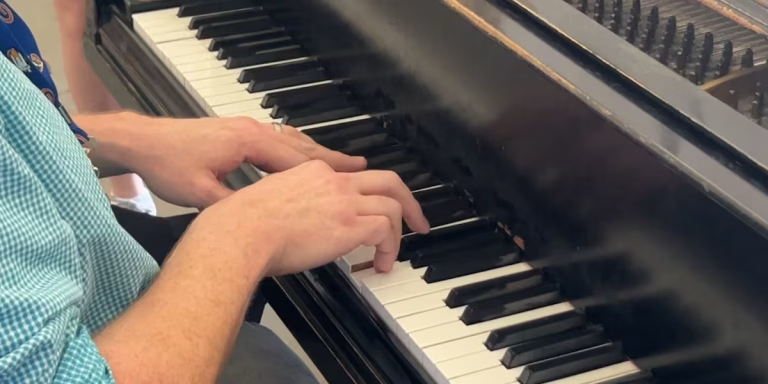
Effective piano playing begins with the body’s relationship to the instrument. Without proper alignment, a student risks developing repetitive strain injuries (RSI) and poor technical habits that can take years to unlearn.
Professional Piano Benches
A piano bench is a specialized, backless seat engineered to facilitate the “active sitting” posture required for fluid movement across the 88 keys. Unlike standard chairs, a professional bench allows for height micro-adjustments, ensuring the player’s forearms are parallel to the floor.
Defining Ergonomic Bench Height
Ergonomic seating in piano performance refers to a stable, level surface that allows the performer to sit on the front third of the seat (the “sit bones” or ischial tuberosities), ensuring that the weight of the torso is supported by the legs and the core. This position facilitates a 90-degree angle at the elbows, with forearms positioned parallel to the floor or sloping slightly downward toward the keys.
| Bench Category | Typical Height Adjustment | Structural Material | Recommended User |
| Fixed-Height Traditional | 18″ – 19″ (None) | Solid Wood | Adults of average height on acoustic pianos |
| Hydraulic Professional | 17″ – 24″ (Lever) | Steel/Iron | Multi-student studios and performance halls |
| X-Style Portable | 18″ – 21″ (Bolt-lock) | Tubular Steel | Traveling musicians and small digital setups |
| Artist Bench (Tufted) | 18″ – 22″ (Knob) | Solid Hardwood | Serious home students requiring storage and comfort |
| Duet Bench | 18″ – 23″ (Dual knobs) | Heavy-duty Wood | Teacher-student pairs or collaborative performers |
Postural Dynamics and Injury Prevention
Correct bench height is the first defense against common musculoskeletal issues such as tendinitis and carpal tunnel syndrome. When the bench is too low, the pianist is forced to “hike” their shoulders toward their ears to reach the keyboard, creating excessive tension in the trapezius and levator scapulae muscles. Conversely, if the bench is too high, the wrists often drop below the level of the keys, leading to restricted finger mobility and tension in the forearm extensors.
Modern pedagogical trends emphasize the “arm weight” technique, wherein the power to depress the keys comes from the weight of the arm dropped via gravity, rather than isolated finger strikes. A stable bench is the fulcrum for this weight transfer. Any instability or wobbling in the bench causes the body to instinctively “brace” itself, locking the wrists and elbows and preventing the fluid, resonant tone required for advanced playing.
Specialized Posture Training Tools
In the contemporary market, electronic and physical posture correctors have emerged as vital aids for self-taught students. Devices such as the Upright Go 2 provide haptic feedback (gentle vibrations) when the student slants or hunches, training the core muscles to maintain an upright, lengthened spine. Additionally, mechanical aids like the Piano Hand Posture Corrector or Anti-Folding Wrist Brace help beginners who struggle with “collapsing” joints, ensuring the fingers remain curved in the “holding an egg” or “chick” position.
- Luxury Recommendation: The Roland RPB-500 Luxury Piano Bench features a heavy-duty hydraulic or adjustment mechanism and premium cushioning, essential for long practice sessions.
As an Amazon Associate I earn from qualifying purchases.
- Alternative: The Roland Piano Bench (standard adjustable) provides the necessary stability to prevent swaying during fortissimo passages.
As an Amazon Associate I earn from qualifying purchases.
High-Stability Keyboard Stands
For digital piano users, the stand is the backbone of the setup. A wobbling keyboard disrupts the tactile feedback necessary for developing “muscle memory.”
- Home Studio: The Roland F107 or Donner DDP-100 often come with integrated wooden stands that offer maximum rigidity.
As an Amazon Associate I earn from qualifying purchases.
As an Amazon Associate I earn from qualifying purchases.
- Portable Solutions: If using a slab-style digital piano like the Yamaha P-145 or Roland FP-30X, a heavy-duty Z-style or platform stand is recommended over basic X-stands to ensure zero lateral movement.
As an Amazon Associate I earn from qualifying purchases.
As an Amazon Associate I earn from qualifying purchases.
2. Expressive and Temporal Tools: Mastering Time and Resonance
Music is a discipline of time and tone. To master these, a beginner must utilize tools that provide objective feedback and expanded mechanical control.
The Metronome: Internalizing the Pulse
A metronome is a device that produces a steady, audible beat, measured in Beats Per Minute (BPM), to help musicians maintain a consistent tempo. It is the most critical tool for developing rhythmic integrity.
The formalization of musical tempo began in the 17th century when French philosopher Marin Mersenne proposed using the mammalian heartbeat as a universal reference for the “minim” or pulse. However, early attempts at mechanical timekeeping, such as Étienne Loulié’s 1696 pendulum, were impractical due to the requirement for a six-foot-tall structure to achieve slow tempos.
The breakthrough occurred in the early 19th century when Dietrich Nikolaus Winkel invented the double-pendulum mechanism, which was subsequently patented and popularized by Johann Nepomuk Maelzel. The “M.M.” marking frequently seen on historical scores, such as those by Beethoven, one of the first major composers to embrace the device, stands for “Maelzel’s Metronome”.
- Digital Precision: The Digital Metronome Korg MA-2 Pocket is a compact, highly accurate tool with various beat patterns and a headphone jack for silent rhythmic practice.
As an Amazon Associate I earn from qualifying purchases.
- Traditional Aesthetics: The Classic Wittner Taktell Metronome or the Mechanical Metronome M2 provides a visual pendulum swing, which helps students anticipate the beat visually, a key pedagogical advantage.
As an Amazon Associate I earn from qualifying purchases.
- Modern Innovation: The Vibrating Metronome Watch is an excellent choice for players who prefer a haptic pulse over an audible click.
As an Amazon Associate I earn from qualifying purchases.
Sustain Pedals: The Soul of the Piano
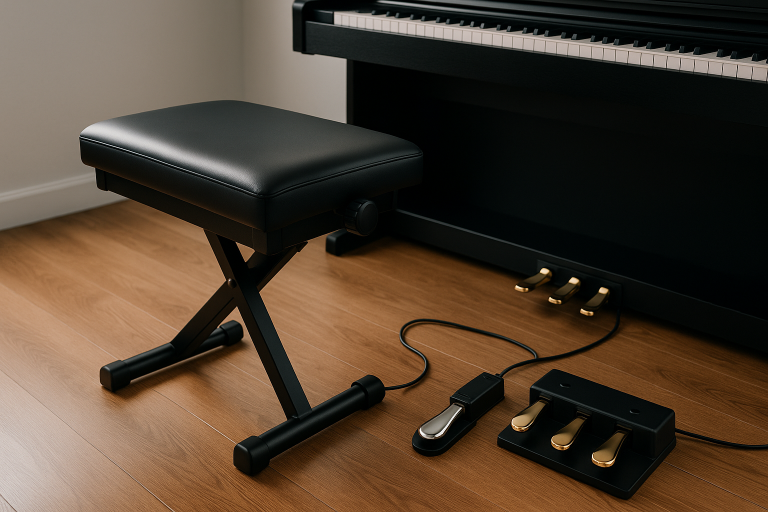
A sustain pedal (or damper pedal) allows the piano’s strings (or digital samples) to vibrate freely after the key is released, creating a “legato” or connected sound.
- Universal Choice: The Piano Pedal M-Audio SP-2 is highly regarded for its “real-feel” resistance and polarity switch, making it compatible with almost any keyboard brand.
As an Amazon Associate I earn from qualifying purchases.
- Brand Specific: The Yamaha Piano Foot Pedal P-Series and the Roland RPU-3 Piano Pedals (a triple-pedal unit) offer the most authentic acoustic-mimicry for their respective brands.
As an Amazon Associate I earn from qualifying purchases.
3. Auditory Refinement: High-Fidelity Headphones for Digital Pianos
As the market for digital pianos continues to expand globally across North America, Europe, and Asia, the requirement for high-quality auditory accessories has become paramount. Standard consumer earbuds are insufficient for piano study because they often emphasize low frequencies (bass) to the detriment of the mid-range clarity required to hear the complex harmonics of a sampled concert grand piano.
Technical Parameters: Impedance and Frequency Response
When selecting headphones for a digital piano, the student must consider Impedance, measured in Ohms (Ω). For direct connection to most entry-level and mid-range digital pianos (e.g., Yamaha P-Series, Roland FP-Series), an impedance range of 32 to 80 Ohms is optimal. High-impedance “Audiophile” headphones (e.g., 250 Ohms) will sound quiet and thin unless paired with an external headphone amplifier or a dedicated audio interface like the Focusrite Scarlett 2i2.
As an Amazon Associate I earn from qualifying purchases.
Headphone Design Comparison
| Design | Acoustic Characteristics | Pros | Cons |
| Open-Back | Perforated ear cups; allows air and sound passage | Natural soundstage, prevents ear fatigue | Significant sound leakage; no isolation |
| Closed-Back | Solid outer shell; traps air and sound | Excellent noise isolation; punchy bass | Can feel “claustrophobic” over time |
| Semi-Open | Hybrid venting system | Balanced soundstage; some awareness | Moderate sound leakage |
The “Piano-Like” Auditory Experience
Pedagogical experts often recommend professional-grade monitoring headphones to judge dynamics (loud and soft) and the resonance of the virtual dampers. For students in shared living spaces, a common reality in urban space, the following industry standards are recommended:
- Professional Reference: The Beyerdynamic DT 770 Pro (80 Ohm) is a world-class closed-back option that offers a vast soundstage and superior comfort for long sessions.
As an Amazon Associate I earn from qualifying purchases.
- High-Value Monitoring: The Sennheiser HD 280 Pro provides exceptional passive noise isolation, making it ideal for concentrating in noisy environments.
As an Amazon Associate I earn from qualifying purchases.
4. Educational Resources: Methodologies and Theory
A structured curriculum is the difference between aimless playing and measurable progress. A piano is a “silent machine” without a structured path to mastery. For beginners, particularly those without the immediate guidance of a weekly teacher, the selection of a “Method Book” is the most influential pedagogical accessory.
Core Method Books
- For Adults: Alfred’s Basic Adult All-in-One Course and Faber Piano Adventures: Adult Piano Adventures are the premier choices. They integrate lesson, theory, and technique into a single volume.
As an Amazon Associate I earn from qualifying purchases.
- For Children: Faber Piano Adventures – Primer Level and John Thompson’s Easiest Piano Course 1 remain the global benchmarks for young beginners.
 Kindle editionRead on Kindle ›
As an Amazon Associate I earn from qualifying purchases.
Technical and Theoretical Mastery
To build finger independence and speed (dexterity), certain “Bibles” of piano technique are required:
- Technique: Hanon: The Virtuoso Pianist 60 exercises and The School of Velocity are essential for building the physical strength required for advanced repertoire.
 Kindle editionRead on Kindle ›
As an Amazon Associate I earn from qualifying purchases.
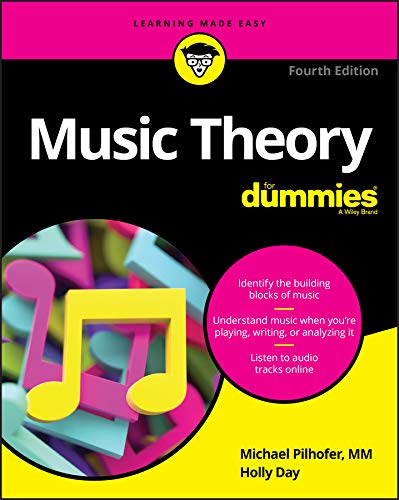
- Theory: Music Theory for Dummies and Music Theory: From Beginner to Expert provide the “why” behind the “what,” allowing students to understand harmonic structures.
 Kindle editionRead on Kindle ›
As an Amazon Associate I earn from qualifying purchases.
- Specialized Insight: The Jazz Piano Book by Mark Levine is the definitive text for moving beyond classical notation into improvisation and jazz harmony.
As an Amazon Associate I earn from qualifying purchases.
Sight Reading and Ear Training
Sight-reading requires the brain to process two separate clefs (Treble and Bass) simultaneously while maintaining awareness of key signatures and dynamic markings.
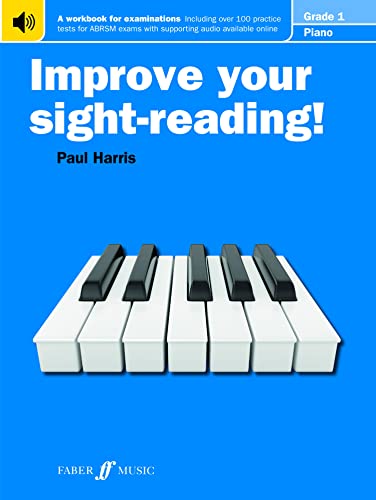
- Sight Reading: Improve your sight-reading! Piano Bible and Essential Music Theory Insights for Sight Reading focus on the cognitive process of decoding notation quickly.
 Kindle editionRead on Kindle ›
As an Amazon Associate I earn from qualifying purchases.
- Ear Training: The Real Easy Ear Training Book helps bridge the gap between hearing a melody and reproducing it on the keys.
As an Amazon Associate I earn from qualifying purchases.
Physical Maintenance
Keep the keys responsive and the finish pristine using high-quality materials.
- Exerciser: Use specialized tool like the VariGrip Hand Exerciser to keep your physical “instrument”- your hands – in peak condition.
As an Amazon Associate I earn from qualifying purchases.
5. The Digital Frontier: Audio, Technology, and Lighting
Modern piano education often incorporates digital tools to record progress or access sheet music via tablets.
Audio Interfaces and Monitoring
Recording your own playing is an essential pedagogical tool for self-criticism.
- Interfaces: The Focusrite Scarlett Solo 4th Gen and Focusrite Scarlett 2i2 allow you to connect your digital piano directly to a computer with pristine audio quality.
As an Amazon Associate I earn from qualifying purchases.
As an Amazon Associate I earn from qualifying purchases.
- Headphones: To hear the nuances of your tone without disturbing others, the Beyerdynamic DT 770 Pro (80 Ohm) and Sennheiser HD 280 Pro offer a “flat” frequency response, ensuring you hear an accurate representation of the instrument.
As an Amazon Associate I earn from qualifying purchases.
As an Amazon Associate I earn from qualifying purchases.
Tablets and Page Turners
- The transition to digital sheet music is streamlined with high-resolution tablets like the iPad Air 13-inch and the Apple Pencil Pro for marking up scores.
As an Amazon Associate I earn from qualifying purchases.
As an Amazon Associate I earn from qualifying purchases.
- Hands-Free Control: To turn pages without taking your hands off the keys, the Donner Bluetooth Page Turner Pedal or the AirTurn Duo 500 are indispensable for performance and practice.
As an Amazon Associate I earn from qualifying purchases.
As an Amazon Associate I earn from qualifying purchases.
Innovative Training Gadgets
- ROLI Airwave: A revolutionary accessory that uses computer vision (3D sensors) to track hand and finger positions above the keys, providing visual coaching on hand shape and technical efficiency.
Optimized Lighting
Piano lighting is specialized illumination designed to provide a wide, flicker-free beam across both the sheet music and the 88-key keyboard. Inadequate lighting creates “visual noise,” leading the student to hunch forward, a postural mistake that causes chronic back pain and limits the range of motion in the arms.
- Premium Option: The BenQ Piano LED Lamp is specifically engineered with an asymmetrical optical design to prevent glare on the screen/paper while illuminating the entire keyboard.
As an Amazon Associate I earn from qualifying purchases.
- Compact Option: The Novolido Piano Lamp offers adjustable color temperatures to reduce eye fatigue during late-night sessions.
As an Amazon Associate I earn from qualifying purchases.
6. Maintenance and Environmental Control
For both acoustic and digital pianos, the environment is a silent factor in the instrument’s longevity and performance. Whether an instrument is a $50,000 grand piano or a $500 digital slab, environmental factors such as humidity, dust, and UV exposure can degrade its performance over time.
Humidity and Temperature Management
A hygrometer is a specialized meteorological instrument used to measure the moisture content (relative humidity) in the atmosphere. In the context of piano maintenance, maintaining a stable environment is critical because wood, the primary material in high-end piano actions and cabinets, is hygroscopic. It naturally absorbs and releases moisture, leading to the swelling and shrinking of internal components.
In diverse climates, from the humid coastal regions of the United States and India to the dry, cold interiors of Canada and Northern Europe, fluctuations in humidity are the leading cause of tuning instability and structural damage. For digital pianos, excessive humidity can lead to the oxidation of electronic contact points, while extreme dryness can cause wooden chassis elements to crack or warp.
- Optimal Humidity Range: Professionals recommend maintaining a constant relative humidity (RH) between 45% and 50%.
- Thermal Stability: Instruments should be kept away from direct heat sources (radiators, vents) and out of direct sunlight to prevent UV damage to the finish and internal sensors.
Precise Monitoring Solutions
The first step in environmental protection is data collection. Modern digital tools allow students to monitor their practice space with laboratory-level precision.
- Recommended Monitoring: Use the Govee Bluetooth Hygrometer to track environmental data. This device sends real-time alerts to a smartphone, allowing the user to react before the instrument is compromised by a sudden drop or spike in humidity.
As an Amazon Associate I earn from qualifying purchases.
Correction and Dehumidification
In regions where seasonal humidity exceeds 60%, active dehumidification is mandatory to prevent “sluggish” key actions and mold growth within the cabinet.
Room-Scale Solution: For dedicated studios, the Pro Breeze Large Dehumidifier is essential for maintaining a stable 45-50% humidity level across the entire room, ensuring that both the player and the instrument remain in an optimal environment.
As an Amazon Associate I earn from qualifying purchases.
Localized Solution: The Eva-Dry Mini Dehumidifier is a renewable, cordless accessory perfect for placing inside an upright piano cabinet or near a digital workstation to manage micro-climates.
As an Amazon Associate I earn from qualifying purchases.
Product Comparison Table
| Category | Premium Choice | Budget-Friendly / Essential |
| Digital Piano | Roland FP-30X | Yamaha P-145 |
| Piano Bench | Roland RPB-500 | Roland Adjustable Bench |
| Metronome | Wittner Taktell (Mechanical) | Korg MA-2 (Digital) |
| Sustain Pedal | Roland RPU-3 | M-Audio SP-2 |
| Headphones | Beyerdynamic DT 770 Pro | Sennheiser HD 280 Pro |
| Lighting | BenQ Piano LED Lamp | Novolido Piano Lamp |
| Sheet Music | iPad Air 13″ + AirTurn Duo | Cahaya Music Stand + Physical Books |
Conclusion
The evolution of a beginner pianist is facilitated by a delicate balance of physical discipline and sensory feedback. An investment in high-quality accessories is not a luxury; it is a commitment to the longevity of the student’s health and the instrument’s performance. By prioritizing ergonomics through adjustable seating, precision through digital metronomy, and expressive control through pedal technology, the student creates a professional framework for growth. As the barrier between physical and digital instruction continues to blur through the integration of MIDI and haptic wearables, the “Essential Accessory” list will remain the bedrock of pedagogical excellence, ensuring that every hour of practice is a meaningful step toward musical fluency.
Equipping a piano studio is an investment in your musical identity. By selecting high-quality tools, from the Focusrite Scarlett interface for recording to the Hanon exercises for technique, you remove the friction from the learning process. The goal is to create an environment where the only challenge is the music itself, not the equipment.
For beginners, we recommend starting with a solid foundation: a Roland FP series keyboard, a M-Audio SP-2 pedal, and the Alfred’s Adult All-in-One method. As you progress, integrate technology like the iPad Air and AirTurn to transition into the modern digital repertoire.
Do I really need a sustain pedal as a total beginner?
Yes. While the first few weeks focus on finger placement, the sustain pedal is introduced very early in most method books (like Alfred’s or Faber). It is vital for learning how to manage “overtones” and legato phrasing.
Why choose the Beyerdynamic DT 770 Pro over standard consumer headphones?
Consumer headphones often “boost” bass or treble, which masks technical errors. The DT 770 Pro provides a professional monitoring environment where every missed note or uneven dynamic is clearly audible.
Is it better to learn from a book or an app?
A: Books like Faber Piano Adventures or Bastien’s Music Theory provide a tactile, structured path that is less distracting than digital apps. However, using a tablet with a Donner Page Turner provides a modern, efficient middle ground.
How often should I use a metronome?
A: A metronome should be used in at least 50% of your practice time. It is especially important when first learning a piece to ensure the “rhythmic skeleton” is correct before adding emotional expression.
Why is a dedicated piano bench better than a standard office chair?
Office chairs often include casters (wheels) and swivels, which create instability and prevent the student from “grounding” themselves during performance. Furthermore, the armrests of standard chairs interfere with the pianist’s elbow movement, leading to restricted technique and bad posture habits.
Is a mechanical metronome more accurate than a digital one?
Strictly speaking, digital metronomes are more accurate because they use quartz oscillators. However, mechanical metronomes provide a “visual cue” (the swinging pendulum) that helps beginners anticipate the beat, which can be more intuitive for young children.
What are the best headphones for someone practicing in a noisy apartment?
Closed-back headphones like the Audio-Technica ATH-M50x or Sony MDR-7506 are optimal. They utilize a solid outer shell that blocks ambient noise from the room and prevents your music from leaking out to neighbors.
Do children really need pedal extenders?
Yes. If a child cannot reach the floor or the pedals, they often slide forward to the edge of the bench, which collapses their posture. An extender provides a stable platform for their feet and allows them to learn expressive dynamics, such as the “damper” technique, early in their development.