Florence Price’s 1938 solo piano concert arrangement of “Nobody Knows the Trouble I’ve Seen” stands as a monumental work in the intermediate piano repertoire. Blending the deep emotional resonance of the African American spiritual tradition with sophisticated post-Romantic European harmony, this piece transcends simple hymn accompaniment. To perform this work with stylistic integrity, a pianist must master contrapuntal voicing, syncopated pedaling, and fluid rhythmic subdivision. On the surface, the score appears deceptively approachable: a single sharp in the key signature, standard quadruple time, and an opening melodic line familiar to ears around the world. But the moment your fingers depresses the keys, that visual simplicity dissolve. What looks like a brief spiritual arrangement unfolds into a dense, multi-layered acoustic landscape where the right hand has to sing like a concert soloist while the inner voices murmur in rich, post-Romantic harmony. It become immediately obvious that mastering this work was not an exercise in basic note-reading, but a masterclass in arm-weight distribution, contrapuntal voicing, and classical control.
In this comprehensive guide, you will examine the historical and cultural origins of Florence Price’s landmark 1938 setting, analyze its full architectural structure measure by measure, explore the precise mechanics of cantabile tone projection and syncopated pedaling, and apply a disciplined four-week practice blueprint designed to bring this American concert masterpiece to life under your fingers.
Published in 1938, Florence Price’s arrangement of “Nobody Knows the Trouble I’ve Seen” is a self-sufficient, intermediate-level solo piano work. Set in the key of G major in 4/4 common time, the piece spans approximately three minutes and challenges the performer to balance a pentatonic vocal melody against chromatic, layered, post-Romantic chord structures. It is widely graded at ABRSM Grade 4 to 5 or RCM Level 5. Combining traditional African American pentatonic spiritual melodies with late-Romantic European harmonic vocabulary, the piece requires cantabile melodic projection, multi-voiced hand balancing within the same hand, clean syncopated pedaling, and rhythmic independence. It serves as a foundational pedagogical work for intermediate pianists seeking to develop expressive tone production and contrapuntal control.
Score at a Glance
| Attribute | Specification |
|---|---|
| Traditional melody | African American spiritual |
| Piano arrangement | Florence Beatrice Price |
| Original publication | 1938 |
| Original publisher | Theodore Presser Company |
| Score used in this guide | Owain Evans edition |
| Key | F major |
| Key signature | One flat, B flat |
| Time signature | 4/4 |
| Opening tempo | Andante moderato, quarter note = 84 |
| Approximate duration | About 3 minutes |
| PianoMode level | Intermediate, 3/5 |
| Main technical skills | Voicing, balance, pedaling, cantabile playing, tempo control |
1. Who Was Florence Beatrice Price? (1887-1953)
Florence Beatrice Smith Price was born in Little Rock, Arkansas, on April 9, 1887. Her mother was a musician and teacher, and Price received musical instruction from an early age. She eventually entered the New England Conservatory of Music in Boston in 1903, where she studied composition and counterpoint with George Whitefield Chadwick and Frederick Converse. She graduated in 1906 with an artist diploma in organ and a teaching certificate.
Her early professional career combined teaching, performing and composition. She taught at institutions in Arkansas and later headed the music department at Clark University in Atlanta before returning to Little Rock.
In 1927, Price moved with her family to Chicago. This placed her within one of the most important centers of African American artistic life in the United States. Chicago provided contact with musicians, writers and cultural organizations at a time when Black artists were building new institutions and creating distinctive forms of American art.
Price’s musical language developed from several traditions simultaneously. She was thoroughly trained in European classical composition, but she also drew on African American musical practices, including spirituals, hymn traditions and dances such as the Juba. These materials were not simply added as decorative references. They became structural parts of her musical language.
That synthesis is essential for understanding Nobody Knows the Trouble I’ve Seen. Price was not merely placing chords underneath a folk melody. She was bringing a traditional spiritual into the concert piano repertoire while retaining its vocal identity.
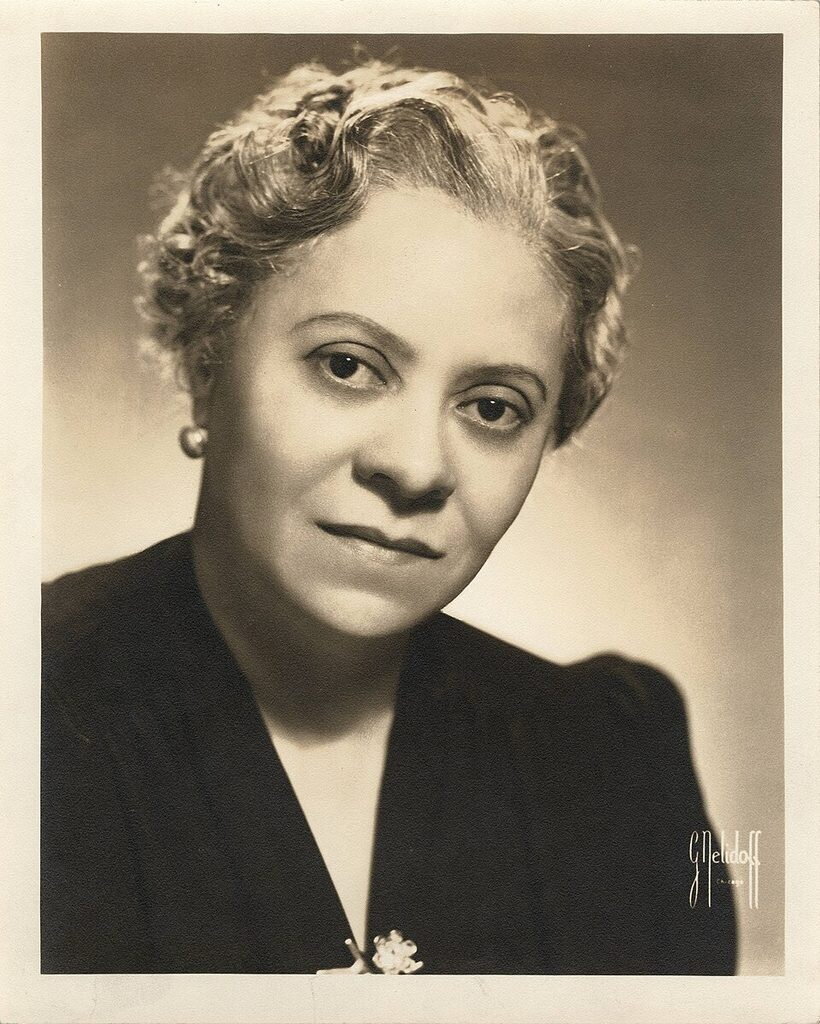
The Great Migration and the Chicago Black Renaissance
Following graduation, Price taught collegiate music in Arkansas and Georgia, eventually chairing the music department at Clark University in Atlanta. She married attorney Thomas J. Price in 1912 and returned to Little Rock to establish a private piano studio.
During the late 1920s, Jim Crow violence escalated dramatically throughout the American South. Following a horrific, racially motivated lynching in Little Rock in 1927, Price joined the Great Migration, moving her family north to Chicago. It was in Chicago that Price flourished as an artist, becoming a central figure in the Chicago Black Renaissance alongside exceptional cultural leaders:
- Marian Anderson: The legendary contralto whose international recital tours regularly featured Price’s concert spirituals and art songs.
- Margaret Bonds: Price’s brilliant student, lifelong confidante, and fellow composer-pianist who collaborated directly with Langston Hughes.
- Will Marion Cook: The innovative composer and violinist who championed the incorporation of Black folk idioms into Western concert forms.
Historic Triumph with the Chicago Symphony Orchestra
In 1932, Price submitted several orchestral and chamber manuscripts to the Rodman Wanamaker Foundation Competition. Her Symphony No. 1 in E Minor claimed First Prize, while her monumental Piano Sonata in E Minor earned secondary honors.
On June 15, 1933, Frederick Stock raised his baton to conduct the Chicago Symphony Orchestra in the world premiere of Price’s Symphony No. 1 in E Minor at the Century of Progress Exposition (Chicago World’s Fair). This performance marked the first time in history that a major American orchestra performed a symphonic composition written by an African American woman.
Despite this triumph, institutional bias continuously restricted her professional commissions. In an articulate, unflinching 1943 letter to Serge Koussevitzky, music director of the Boston Symphony Orchestra, Price addressed her professional reality:
“To begin with, I have two handicaps – those of sex and race. I am a woman; and I have some Negro blood in my veins. I know that I have a certain amount of talent, but this does not prevent my music from being judged with preconceived bias.”
Price produced more than 300 works before her death on June 3, 1953, in Chicago, including four symphonies, two violin concertos, a piano concerto, choral works, art songs, chamber pieces, and extensive solo piano and organ literature. In 2009, an enormous collection of her unpublished manuscripts and personal papers was discovered in an abandoned summer home in St. Anne, Illinois, sparking an international renaissance of her music in concert halls and university curricula worldwide.
2. Origins and Significance of “Nobody Knows the Trouble I’ve Seen”
The melody of Nobody Knows the Trouble I’ve Seen originates within the oral tradition of African American spirituals created by enslaved people across the American South. Known historically as “sorrow songs,” these melodies functioned as vital expressions of theological faith, emotional perseverance, and community survival, while frequently communicating double-coded directives regarding physical flight along the Underground Railroad.
The sacred text juxtaposes deep earthly despair (“Nobody knows the trouble I’ve seen / Nobody knows but Jesus”) with triumphant spiritual deliverance (“Glory, Hallelujah!”). Beneath this overt sacred message, enslaved people used the song to articulate the systemic brutality of enslavement and to signal secret gatherings and escape networks.
Spirituals functioned as communal folk expressions serving dual purposes:
- Sacred Catharsis: Expressing deep earthly grief paired with an unshakable theological faith in heavenly deliverance.
- Coded Communication: Conveying secret signals regarding the Underground Railroad, escape plans, and community resilience.
The spiritual entered the written concert repertoire during the American Civil War and Reconstruction era:
- 1867 Publication: It was first preserved in print in Slave Songs of the United States, edited by William Francis Allen, Charles Pickard Ware, and Lucy McKim Garrison, the first anthology dedicated to African American folk music.
- The Fisk Jubilee Singers: Throughout the 1870s, this pioneering vocal ensemble introduced choral arrangements of the spiritual to international concert halls across the United States and Europe, establishing the sorrow song as an enduring pillar of global vocal music.
Refusing to treat Black folk melodies as mere exotic decorations, Price viewed the spiritual as foundational source material for high concert art. Her 1938 solo piano setting transforms the traditional vocal line into an instrumental tone poem, surrounding the melody with chromatic passing tones, secondary dominants, and rich keyboard voicing.
Florence Price’s 1938 Solo Piano Setting
Throughout her creative career, Price refused to treat Black folk melodies as nostalgic decorations. Continuing the compositional path established in the late nineteenth and early twentieth centuries by Antonín Dvořák and Harry T. Burleigh, Price recognized the spiritual as fertile thematic raw material for high concert art.
Published in 1938 by the Theodore Presser Company, Price’s solo piano concert transcription of Nobody Knows the Trouble I’ve Seen is an independent, self-contained keyboard tone poem rather than an accompanimental sketch. The work preserves the expressive vocal inflection of the spiritual while clothing the lines in rich, post-Romantic polyphony, chromatic counter-melodies, and sophisticated keyboard voicing.
3. How to Read the Opening of the Score
The score begins in F major with the indication Andante moderato, quarter note = 84. That tempo is important. The piece should move. Andante suggests a walking quality, while moderato prevents the music from becoming excessively slow or sentimental.
The opening also establishes the central interpretive problem almost immediately. The pianist has to distinguish melody from harmony even when both are played within the same hand or within closely spaced textures. Do not think of the opening as a collection of vertical chords.
Think horizontally.
The melody must travel from note to note as though it were being sung, while the supporting notes create harmonic color underneath it. A good test is to play only the melodic notes first. If the phrase does not sound natural without the accompaniment, adding the other voices will not improve it.
Once that melodic contour is clear, add the remaining notes at a lower dynamic level.
Measures 1 to 10: Establishing the Vocal Character
The first part of the score introduces the main expressive language of the arrangement.
Price asks for a moderate tempo, then immediately uses a ritardando followed by an a tempo. A cantabile marking appears as the phrase continues. The performer therefore encounters tempo flexibility before the piece has even had time to settle into a mechanical pattern. This tells us something important about the style.
The notation establishes a pulse, but the phrase should not sound metronomic. Price wants the pianist to shape the line as a singer might shape a sentence.
The left hand largely provides harmonic grounding while the melodic material remains prominent above it. The pedal indications help connect the sonority, but the pedal must never replace finger legato or careful listening.
The dynamic level begins around mezzo forte and grows. That increase should not be achieved by simply pressing every note harder. Instead, allow the melodic line to broaden while keeping supporting chord tones controlled.
Measures 11 to 20: Expansion, Contrast and Register
Around measure 11, the music reaches a stronger dynamic point. The texture grows more assertive before retreating again through mezzo piano and piano.
This section is an excellent place to practise dynamic hierarchy. A written forte does not mean that every note should have identical volume. Forte describes the overall musical intensity. The melody should still project above the accompanying voices. As the section continues, Price changes register and texture. Some gestures become more independent and pianistic, preparing the ear for the contrasting middle part that follows.
This is also where careless pedaling begins to cause problems. Chromatic notes and moving lines create more opportunities for unwanted resonance. The performer should listen to each harmonic change rather than automatically holding the pedal for an entire measure.
A clean release followed by a quick renewal of the pedal will usually produce a better result than continuous full pedal.
Measures 21 to 29: The More Animated Middle Section
At measure 21 the score introduces poco più mosso, meaning a little more movement. The character changes immediately.
Repeated chordal figures create greater rhythmic energy, and the piano momentarily sounds less like a transcription of a solo singer and more like an independent keyboard instrument. Cooper describes this portion of Price’s design as a pianistic interlude in D minor. The contrast with the surrounding F major material gives the work a darker central color without breaking its overall continuity.
The challenge here is not raw speed. It is maintaining rhythmic precision while continuing to shape the phrase. Practise these measures first without rubato. Keep the repeated figures even and make sure that the bass movement remains clear. Once the coordination is secure, reintroduce the written poco rit., a tempo and later rit. indications.
The score eventually reaches a clear Tempo I, returning to the original tempo. That return should be audible to the listener. Do not let the central section and the reprise blur into one continuous tempo.
Measures 30 to the End: Returning the Melody in a New Perspective
When Tempo I appears, the musical material returns in a changed textural environment. This is one of the most interesting aspects of Price’s arrangement.
The melody is no longer experienced simply as a high soprano line above accompaniment. The musical argument moves through lower voices and overlapping registers, giving the pianist several simultaneous layers to control. The score also becomes quieter. Mezzo piano gives way to softer dynamics, including pianissimo and piano. These passages require more control than they might appear to on the page.
Playing softly does not mean playing weakly.
The keys still need to be depressed with sufficient control for the sound to speak clearly. The difference lies in the speed and weight of the attack, not in withdrawing physical support from the hand. As the music approaches the end, Price introduces further chromatic color, dynamic shaping and tempo flexibility. The final systems contain another poco rit. followed by a tempo, before the music comes to rest in a broad final sonority. The second page of the supplied score clearly shows these successive tempo modifications and the increasingly spacious final texture.
The ending should feel resolved without becoming heavy. Allow the resonance of the piano to contribute to the final atmosphere.
Understanding the Harmonic Language
The home key is F major, clearly indicated by the single B flat in the key signature. But Price does not remain within uncomplicated diatonic harmony.
Chromatic accidentals appear throughout the score. They create local tension, connect voices smoothly and enrich the color of the traditional melody. The central D minor region is especially important because D minor is the relative minor of F major. Price can therefore move into a darker harmonic environment without making the music sound disconnected from its opening world.
For an intermediate pianist, it is useful to study these harmonic changes before trying to memorise every individual note.
Look for:
- Repeated chord shapes
- Bass notes that define changes of harmony
- Chromatic notes that lead by half step into another voice
- Places where the same melody appears above a different harmony
- Cadential points where the tension relaxes
This kind of analysis reduces the apparent complexity of the score. Instead of remembering fifty unrelated notes, you begin remembering harmonic shapes and voice leading.
4. Advanced Piano Technique: Overcoming the Challenges
Intermediate pianists generally encounter physical and technical hurdles when preparing this score.
The Main Technical Challenge: Piano Voicing
Voicing is the ability to give different notes within the same texture different levels of prominence. In this arrangement, the melodic line frequently has to sound above supporting notes played by the same hand. That is why simply pressing all the notes of a chord with equal force produces an unsatisfactory result.
Practise the melodic voice alone first.
Then play the complete chord while intentionally keeping the inner notes softer. A useful method is to play the melody at mezzo forte while making the inner notes almost pianissimo. The contrast may initially feel exaggerated. That is useful during practice because it teaches the hand and ear to separate the layers.
When you return to normal playing, reduce the contrast slightly while preserving the hierarchy.
Another useful exercise is to play a chord very slowly and listen to the precise instant at which each hammer sounds. Your goal is not necessarily to arpeggiate the chord. The purpose is to become aware that fingers within one hand can contribute different amounts of sound. The outer melodic finger should never feel rigid. Excessive tension in the fifth finger or wrist will make the tone harsh rather than singing.
Support the hand with the forearm, keep the wrist mobile and allow the melody to receive slightly more arm weight than the surrounding notes.
Left Hand Technique
The left hand earns a 3/5 difficulty rating because it changes function throughout the piece.
At first it provides sustained harmonic support. Later it participates more actively in the texture, with moving bass lines, chordal patterns and material that interacts with the middle register. The biggest mistake is to make the bass consistently too loud. Bass notes on a piano naturally carry significant acoustic weight. When combined with the sustain pedal, a heavy left hand can cover the melody even when the right hand is technically louder.
Practise the left hand alone at piano or mezzo piano. Listen for the harmonic direction rather than trying to produce a large sound. When the hands are combined, ask yourself a simple question: if you closed your eyes, could you follow the melody from beginning to end without losing it inside the accompaniment?
If the answer is no, reduce the left hand before increasing the right.
Pedaling: Follow the Harmony, Not Just the Printed Marks
The supplied score contains frequent pedal indications. Pedaling is therefore part of the sound of the arrangement, but it still requires interpretation.
Different acoustic pianos have different levels of resonance. A digital piano behaves differently again. The amount of pedal that works in a dry practice room may create excessive blur in a resonant recital hall.nUse the written pedal markings as the starting point, then listen.
A practical approach is delayed pedaling:
- Play the new harmony.
- Release the pedal as the new notes sound.
- Depress the pedal again immediately after the old resonance has cleared.
This allows the fingers to establish the new harmony before the pedal sustains it.
In passages containing chromatic movement, you may need shallower or more frequent pedal changes. Half pedaling can also be useful, particularly on an acoustic instrument with strong resonance. Partial release allows some resonance to remain while reducing accumulated blur.
The goal is not maximum sustain. The goal is continuity without loss of harmonic definition.
Rhythm and Tempo Control
The written rhythms are not extremely complex, which is why the Rhythm rating remains 3/5 rather than 4 or 5. The difficulty comes from maintaining a pulse while respecting expressive flexibility.
Throughout the score you encounter:
- Andante moderato
- Ritardando
- A tempo
- Poco più mosso
- Tempo I
- Poco ritardando
These markings must relate to one another. An a tempo should sound like a return to an established pulse, not the invention of a new one.
Likewise, poco più mosso means slightly more movement. It does not mean suddenly rushing. During early practice, temporarily ignore most rubato and learn the basic rhythmic framework with a metronome.
Once the rhythm is stable, remove the metronome and restore the written flexibility. The metronome is a training tool here, not the final interpretation.
Dynamics: Why This Deserves a 4/5 Rating
Dynamics are arguably the most demanding aspect of this score. The piece contains forte, mezzo forte, mezzo piano, piano and pianissimo, together with crescendos, diminuendos and accents. More importantly, the written dynamic does not describe every voice equally.
A passage marked piano can still contain a melody that must project above an accompaniment. A forte passage can contain inner notes that remain subordinate. This is why the performer must think in several dynamic layers.
Imagine three possible levels:
- Foreground: the principal melody.
- Middle ground: countermelodies or important inner motion.
- Background: harmonic support.
Not every measure contains all three, but thinking in these terms makes the texture easier to control.
Record yourself from several feet away from the piano. A melodic line that seems obvious from the bench may disappear from the listener’s position.The recording is often more revealing than playing louder.
How to Create a True Cantabile Sound
Cantabile means in a singing manner.
A piano cannot literally sustain a note after the hammer has struck the string in the same way a singer can sustain a vowel. The illusion of singing therefore depends on connection, balance and timing.
To improve cantabile playing:
- Listen to where each melodic note is going.
- Avoid accents on notes merely because they are played by the thumb.
- Connect the physical motion of one note into the next.
- Allow longer notes to retain musical direction.
- Shape several notes toward a phrase peak rather than treating each note individually.
- Let the accompaniment remain underneath the melodic line.
It can also help to sing the melody away from the piano. You do not need a trained voice. The purpose is to discover where you naturally breathe and which notes feel like arrival points.
Then reproduce those phrase shapes at the keyboard.
5. A Four Week Practice Plan
This schedule is not a promise that every pianist will master the piece in four weeks. Progress depends on reading ability, previous repertoire and daily practice time. Instead, use the four stages as a structured sequence.
Week 1: Learn the Score and Establish the Pulse
Begin without trying to sound expressive.
Your priorities are notes, fingering and rhythm.
Work in small groups of measures rather than repeatedly starting at measure 1.
Practise each hand separately where necessary, especially when the texture changes function.
Identify every tempo marking before playing through the complete score.
Use the printed fingerings as a starting point. The Evans edition contains extensive fingering suggestions, but a fingering that is physically uncomfortable for your hand may need adjustment.
Keep any changes consistent.
By the end of the first stage, you should be able to play the whole piece slowly without major rhythmic interruptions.
Week 2: Build Balance and Pedal Control
Now begin shaping the sound.
Take the principal melody alone and play it as naturally as possible.
Then add the accompaniment at a deliberately softer dynamic.
Work on the pedal without trying to play at performance tempo. Listen for the exact moment a harmony becomes muddy.
Practise the central poco più mosso section separately because its repeated chordal writing has a different physical character from the opening.
At this stage, do not worry if the music still sounds slightly cautious.
Clarity comes before freedom.
Week 3: Develop Dynamics and Character
Begin moving toward the printed tempo of quarter note = 84.
Practise the transitions into rit., a tempo, poco più mosso and Tempo I.
The tempo changes should sound intentional rather than accidental.
Study the dynamic progression across larger sections. Avoid creating a separate crescendo and diminuendo in every measure. Some phrases should belong to a longer musical arc.
Pay particular attention to the softer return later in the piece.
Pianissimo playing should retain melodic definition.
Week 4: Performance Practice
Begin complete performances without stopping.
If you make a wrong note, continue.
A convincing performance is not one in which nothing unexpected happens. It is one in which the musical line survives small imperfections.
Record complete performances and evaluate four things separately:
- Can you always hear the melody?
- Does the pedal ever obscure a harmony?
- Do the tempo changes sound deliberate?
- Does the final section become genuinely quieter and more reflective without losing tone?
Do not correct everything simultaneously.
Choose the most obvious problem, improve it and record again.
6. Common Mistakes to Avoid
Playing the accompaniment at the same volume as the melody
This destroys the vocal character of the arrangement.
The listener should not need to search for the tune.
Using too much sustain pedal
The music benefits from resonance, but chromatic notes quickly accumulate if the pedal is not refreshed.
More pedal does not automatically produce more expression.
Turning every ritardando into a dramatic slowdown
Price uses several tempo modifications.
If each one becomes extreme, the piece loses continuity.
Keep poco in mind. It means a little.
Rushing the central section
The poco più mosso marking increases movement, but the repeated patterns still need rhythmic stability.
Practise them at a moderate tempo before increasing speed.
Treating piano and pianissimo as weak sound
Soft playing still requires support and clarity.
The melody must continue speaking even at the lowest dynamic levels.
Ignoring the lower melodic voices
Later in the arrangement, the musical focus is no longer confined to the uppermost register.
Listen actively for the voice carrying the phrase.
7. How Should Nobody Knows the Trouble I’ve Seen Feel?
Historical understanding should inform the interpretation, but it should not encourage theatrical exaggeration. This spiritual belongs to a tradition shaped by suffering, faith and communal memory. Price’s arrangement respects that gravity without turning the melody into constant dramatic display.
A successful interpretation can therefore remain restrained. Allow intensity to develop through harmony, voicing and dynamic expansion rather than through excessive rubato. The quiet passages are just as important as the louder ones. The central animated section provides contrast, but the work ultimately depends on the return of the melodic voice and the sense of reflection created near the close.
One of the most effective interpretive decisions a pianist can make is simply to trust the melody.
It does not need decoration. It needs space, balance and a clear sense of direction.
8. Why This Piece Is So Useful for Intermediate Pianists
Many intermediate pieces develop one obvious technical skill. One may focus on arpeggios, another on repeated chords and another on rapid scales. Nobody Knows the Trouble I’ve Seen teaches something subtler.
It teaches the pianist to listen inside a texture.
You learn that playing the correct notes is only the beginning. You must decide which voice matters, how loudly each layer should sound, when the pedal should change, how much tempo flexibility a phrase can tolerate and how to create a singing line on an instrument whose sounds begin to decay as soon as they are produced. Those are not isolated skills.
The same principles appear throughout Romantic piano music, twentieth century repertoire, accompaniment, chamber music and even popular arrangements. For that reason, the piece can serve as an effective bridge between elementary note based playing and more mature interpretive work.
Recommended Gear
A responsive weighted keyboard makes a real difference when working on Florence Price’s music. The following digital pianos provide the touch control, dynamic range and pedal support needed to practise cantabile playing, voicing and expressive balance.
- Roland F107 Digital Piano: A strong choice for home practice, with an 88 key weighted action and a furniture style design that suits pianists looking for a permanent instrument for classical repertoire.
As an Amazon Associate I earn from qualifying purchases.
- Kawai ES120 Digital Piano: Particularly well suited to expressive practice thanks to its responsive weighted keyboard, making it easier to work on the subtle dynamic control and melodic voicing required in Nobody Knows the Trouble I’ve Seen.
As an Amazon Associate I earn from qualifying purchases.
- Roland FP 30X Digital Piano: A versatile option for intermediate pianists who want a convincing weighted action in a more portable format, with enough dynamic control for detailed work on balance, phrasing and softer playing.
As an Amazon Associate I earn from qualifying purchases.
- Yamaha P 225 Digital Piano: A compact 88 key instrument that works well for pianists who need a smaller setup without giving up the weighted keyboard response needed for classical technique and expressive practice.
As an Amazon Associate I earn from qualifying purchases.
- Casio PX 870 Privia Digital Piano: A more substantial home piano option for players who want an integrated stand, pedal unit and speaker system, making it particularly suitable for regular classical practice and repertoire development.
As an Amazon Associate I earn from qualifying purchases.
Conclusion
Performing Florence Price’s 1938 concert arrangement of Nobody Knows the Trouble I’ve Seen connects you directly with a vital current of American musical history. The work transforms an oral sorrow song into an idiomatic keyboard masterpiece that demands touch, tonal balance, and emotional maturity.
The score asks the pianist to listen. The melody must remain alive inside changing textures. The left hand must support without dominating. The pedal must create resonance without obscuring chromatic detail. Tempo changes must feel like natural breaths rather than interruptions, and the wide dynamic range must be organized around the direction of each phrase.
Its historical background makes that musical discipline even more meaningful. Price brought an African American spiritual rooted in an oral tradition into the concert piano repertoire without stripping away its vocal identity. The result is a short work in which musical restraint can carry considerable expressive weight.
Learn the notes carefully, but do not stop there. Practise the melody alone. Listen to the bass. Reduce the inner voices. Experiment with the pedal. Record yourself from across the room. Above all, allow the musical line to speak naturally. That is where this arrangement becomes more than an intermediate piano piece. It becomes an exercise in the central skill that every developing pianist eventually has to learn: turning notation into a living musical voice.
What key is Florence Price’s Nobody Knows the Trouble I’ve Seen in?
The edition used in this guide is in F major, with one flat, B flat, in the key signature. IMSLP also catalogues Price’s 1938 piano arrangement in F major.
What is the tempo?
The score begins Andante moderato, quarter note = 84. It later includes several tempo changes, including rit., a tempo, poco più mosso and Tempo I.
What level is the piece?
PianoMode rates the work Intermediate, 3/5 overall. Reading, left hand technique and rhythm are each approximately 3/5, while dynamic and expressive control deserve a 4/5 rating.
This is a PianoMode pedagogical assessment, not an official ABRSM, RCM or Henle grade.
How long is the piece?
G. Schirmer and Wise Music Classical give an approximate duration of three minutes. Actual performance time will vary slightly depending on the pianist’s treatment of the written tempo changes.
What is the most difficult part of the arrangement?
For most intermediate pianists, the greatest challenge is voicing rather than speed. The performer must keep the spiritual melody audible while supporting it with softer chordal and contrapuntal material.
Pedal clarity and dynamic control are closely related challenges.
How long does it take for an intermediate pianist to master this work?
Most intermediate pianists practicing 30 to 45 minutes daily can learn the notes, rhythms, and basic pedaling in 4 to 6 weeks. Refining subtle voicing, dynamic balance, and expressive rubato to a performance standard generally takes 8 weeks.
How does this solo piano arrangement differ from Price’s chamber settings?
Price arranged Nobody Knows the Trouble I’ve Seen for several instrumentations:
- Solo Piano (1938): A self-contained transcription where the piano voices the lyrical melody, counterpoints, and choral harmonies simultaneously.
- Chamber Settings (e.g., Violin and Piano / String Quartet): The solo violin or strings carry the primary melodic voice, while the piano provides harmonic accompaniment.
Pianists looking for a standalone solo recital work should ensure they are using the 1938 solo piano score.
Sources
- John Michael Cooper, G. Schirmer / Wise Music Classical, “Nobody Knows the Trouble I’ve Seen”, programme note and work information. Particularly useful for the 1938 publication, early history of the spiritual, Price’s revisions and the actual formal outline of the piano arrangement. G. Schirmer and Wise Music Classical source
- University of Arkansas Libraries, Florence Price Collection, catalog record for Nobody Knows the Trouble I’ve Seen, Theodore Presser Company, Philadelphia, 1938. University of Arkansas source
- Library of Congress, Florence B. Price Music Manuscripts, biographical chronology covering her education, career and musical training. Library of Congress Florence Price collection
- Chicago Symphony Orchestra, Florence Price and Symphony No. 1, historical account of the June 15, 1933 premiere and Price’s relationship with the orchestra. Chicago Symphony Orchestra source
- Library of Congress, “Spirituals,” Songs of America, historical overview of African American spirituals, sorrow songs and the limitations of claims concerning coded Underground Railroad messages. Library of Congress Spirituals source
- Encyclopedia of Arkansas, “Florence Beatrice Price”, biographical reference including the 2009 discovery of manuscripts at her former Illinois summer home.