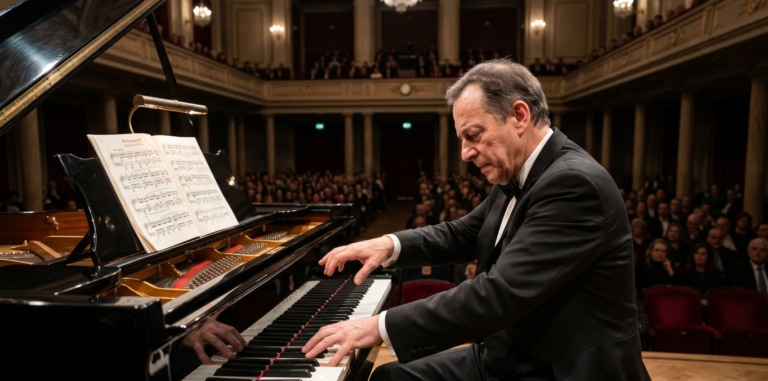

The air in the concert hall grows heavy with anticipation as the pianist’s hands hover over the keys. There is a specific, electric silence that accompanies the opening of Asturias (Leyenda). It begins not with a roar, but with a whisper, a single, repetitive note that mimics the insistent plucking of a Spanish guitar. This work, a jewel of the Spanish Romantic repertoire, is more than just a technical exercise; it is a journey through the soul of Andalusia, capturing the heat, the dust, and the profound sorrow of the Spanish landscape. Mastering this piece requires more than nimble fingers; it demands a deep understanding of rhythm, color, and historical context.
Asturias (Leyenda) is the first movement of the Suite española No. 1, Op. 47, composed by Isaac Albéniz around 1892. Despite its title, the music is stylistically rooted in the traditions of Andalusia in Southern Spain, specifically the flamenco rhythms of the bulerías. Written in G Minor, the piece is classified at an Advanced level due to its rapid repeated notes, wide interval leaps, and the need for extreme dynamic control. It remains one of the most transcribed and performed works in both the piano and classical guitar repertoires.
1. The Historical Genesis: Isaac Albéniz and the Spanish Identity
The Man Behind the Legend
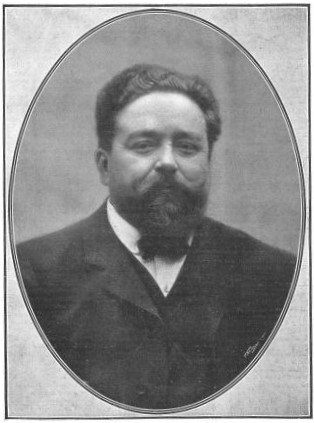
Isaac Albéniz (1860–1909) was a child prodigy whose life was as dramatic as his music. A virtuoso pianist who reportedly studied with Liszt (though some historians debate this), Albéniz was a key figure in the “Spanish National School.” His mission was to elevate Spanish folk music into the realm of high art. While his earlier works were salon-style pieces, his later compositions, including Iberia and the Suite española, represent a sophisticated synthesis of European Romanticism and traditional Spanish idioms.
He occupies a distinctive position in Western music history. As a composer working within the Spanish Romantic tradition, their output reflects both the aesthetic ideals of their era and a deeply personal artistic vision that transcended contemporary conventions. Their keyboard works in particular demonstrate an intimate understanding of the piano’s capabilities, the singing tone of the upper register, the resonant power of the bass, and the infinite gradations of touch and dynamics that the instrument makes possible.
The compositional output spans multiple genres and forms, but the solo piano works hold a special place in the catalog. They range from technical studies and teaching pieces to large-scale concert works of the highest ambition, all unified by an unwavering commitment to musical expressiveness. The specific work under consideration here represents one facet of this larger creative project, a piece that, within its particular scope, achieves a completeness of expression that rewards repeated study and performance.
Understanding the historical and biographical context enriches any interpretation. The musical language reflects the harmonic and structural conventions of the Spanish Romantic period while also incorporating elements that push beyond those conventions. This tension between tradition and innovation is what makes the music enduringly fascinating for performers and listeners alike.
The Misnomer: Why “Asturias” from Suite española No. 1?
One of the most frequent points of confusion for students is the title. The piece was originally titled Leyenda (Legend) by Albéniz. The subtitle Asturias was added by a publisher (Hofmeister) after the composer’s death for a complete edition of the Suite española. Musically, the piece has nothing to do with the Celtic-influenced folk music of the northern Asturias region. Instead, it is a quintessential representation of Flamenco. The “A” section mimics the punteado (plucking) style of a guitar, while the “B” section (the Copla) reflects the cante jondo (deep song) of Andalusian vocal traditions.
With a performance duration of approximately 5–7 minutes, it is substantial enough to feature prominently in a recital program while remaining focused enough for concentrated practice sessions. The piece is fully public domain worldwide, meaning you can freely download, print, perform, and distribute it without any copyright concerns.
2. About Asturias (Leyenda) from Suite española No. 1
This work was composed in the key of G Minor and belongs to the Spanish Romantic tradition of piano composition. At the Advanced level, it occupies a pedagogically important position: challenging enough to develop significant technical and musical skills, yet accessible enough for dedicated students who have mastered the fundamentals of piano playing. The estimated performance duration of 5–7 minutes places it comfortably within the range of both practice repertoire and concert programming.
The piece has maintained its place in the standard repertoire for compelling reasons. It addresses fundamental pianistic skills, tone production, dynamic control, rhythmic precision, phrasing, pedaling, within a musically satisfying framework. Unlike purely technical exercises, which can feel mechanical and uninspiring, this work integrates technical challenges into a genuine artistic statement. Every passage serves both a technical and a musical purpose, making practice feel like artistic exploration rather than rote drilling.
Musical Structure and Analysis
To perform Asturias convincingly, a pianist must understand its architectural blueprint. The piece follows a clear A-B-A (Ternary) form with a Coda.
The formal structure of the piece reveals careful compositional craft. The music unfolds through clearly delineated sections, each with its own character, texture, and harmonic language. The transitions between sections are handled with particular skill, never abrupt, always organic, leading the listener naturally from one idea to the next.
The harmonic language is rooted in the tonal conventions of G Minor but enriched with chromatic passing tones, secondary dominants, and occasional modal inflections that add color and emotional depth. The voice leading between chords is consistently smooth, with each note connecting logically to the next. This attention to voice leading is one of the features that distinguishes well-composed piano music from amateur attempts: every note has a purpose, and the ear can follow multiple melodic strands simultaneously.
Rhythmically, the piece employs a characteristic pattern that establishes its identity from the opening measures. This rhythmic motif is developed, varied, and transformed throughout the work, providing both structural coherence and musical interest. The interplay between rhythmic regularity and subtle departures from the expected pattern creates a sense of living, breathing music rather than mechanical repetition.
The dynamic architecture spans the full range from pianissimo to fortissimo, with carefully calibrated gradations in between. The loudest moments are not merely about volume, they represent emotional climaxes that have been prepared by the preceding musical narrative. Similarly, the quietest passages are not simply soft but are moments of intimacy, reflection, or mystery that give the louder passages their meaning by contrast.
Section A: The Flamenco Pulse
The opening section is built on a “pedal point” strategy. While the thumb maintains a constant G, the upper fingers execute a melodic line that creates a shimmering, hypnotic effect.
- Key: G Minor.
- Rhythm: 3/4 time, but often felt in a rapid “one” or a complex 6/8 hemiola pattern characteristic of Spanish dance.
- Technique: Rapid-fire repeated notes and cross-hand reaches that simulate the Spanish guitar’s thumb-and-finger interplay.
Section B: The Copla (The Song)
The middle section shifts dramatically in mood. The tempo slows, and the texture becomes more chordal and rhapsodic.
- Character: Improvisational and vocal.
- Theory: Use of the Phrygian mode and the “Andalusian cadence” (i – VII – VI – V). This section requires a “rubato” approach, mimicking a singer who pauses for emotional emphasis.
Bar-by-Bar Technical Walkthrough
Opening Section
The piece begins by establishing its fundamental character within the first few measures. Pay close attention to the articulation markings: legato passages should be genuinely connected, with weight transferring smoothly from finger to finger; staccato notes should be crisp and detached, with the finger or wrist providing a quick, controlled lift. The opening dynamic level sets the stage for everything that follows — start at exactly the marked dynamic, resisting the temptation to begin louder than intended.
The right hand typically carries the primary melodic material in these opening measures. Prioritize a singing tone by using arm weight rather than finger force: allow the weight of the arm to flow through the finger into the key, producing a round, full sound. The wrist should remain flexible, acting as a shock absorber that prevents the arm weight from producing a harsh attack. The left hand provides harmonic and rhythmic support; keep it softer than the right hand to maintain clear melodic projection.
In Asturias, the reality is more complex: the texture is built on a Double-Note Pedal Point.
- The Repeated G: This isn’t just “support.” It mimics the open strings of a guitar. The technical challenge is maintaining a “pp” (pianissimo) on the repeated G while the melodic notes (the moving line) are accented.
- Forearm Rotation vs. Finger Action: As mentioned in your text, arm weight is key, but for Asturias, you specifically need lateral wrist freedom. If the wrist is stiff, the repeated notes will sound “machine-gunned” rather than shimmering.
- The Thumb Issue: In many editions, the thumb carries the repeated pedal note. You must practice “lifting” the thumb weight immediately so it doesn’t overpower the melodic fingers (3, 4, and 5).
Technical Term: Trompillo > This is the rapid-fire alternation of fingers on a single note. To develop the opening, practice the repeated G with alternating fingers (e.g., 3-2-1 or 2-1) to ensure the note doesn’t “choke” the piano’s action.
Development and Middle Section
As the piece develops, the texture typically becomes more complex. Additional voices may emerge in the inner parts, the harmonic rhythm may accelerate, and the dynamic level may increase. These changes require the pianist to manage multiple musical elements simultaneously — a skill that develops gradually through attentive practice.
For passages with thicker textures, identify the primary melody and practice it alone first. Then add the bass line, creating a two-voice framework. Finally, fill in the inner voices, ensuring they remain subordinate to the outer voices. This layered approach to learning complex textures is one of the most efficient practice techniques available and applies to virtually all piano repertoire.
The harmonic changes in the development section may include modulations to related keys. Listen carefully for these shifts — they change the emotional color of the music and should be reflected in subtle changes of touch, dynamics, or pedaling. A modulation to a minor key, for example, might call for a slightly darker, more weighted tone; a move to a bright major key might invite a lighter, more sparkling touch.
The middle section of Asturias is specifically a Cante Jondo (Deep Song).
- The Phrygian Influence: The “emotional color” shifts mentioned in your text are actually modal. Albéniz uses the Spanish Phrygian mode (Major 3rd in a Phrygian context). The touch here should be “declamatory”, imagine a Flamenco singer whose voice cracks with emotion.
- The Rasgueado Effect: In this section, you will encounter rapid grace-note chords. These should not be played as standard piano arpeggios; they should be played as a Rasgueado (a guitar strum). This requires a very fast, “raking” motion of the fingers across the keys.
- Rubato and Breath: The text mentions the harmonic rhythm may accelerate. In this specific piece, the middle section is where you apply the most Rubato. It is quasi-improvisational. You are not just managing “elements”; you are telling a story that pauses for breath between vocal “sighs.”
Recapitulation and Coda
When familiar material returns, it should sound both recognizable and transformed. The second time through, the performer has the opportunity to add subtle interpretive nuances: a slightly different dynamic shading, a touch more rubato at a phrase ending, a richer pedaling that wasn’t present the first time. These small changes give the music a narrative quality, a sense that it has been somewhere and returned with new wisdom.
The ending of the piece requires particular attention. Whether it concludes with a dramatic fortissimo or a whispered pianissimo, the final notes must feel inevitable, the only possible way the music could end. Practice the last 8–16 measures as a separate unit, refining the dynamic trajectory, the timing of the final note, and the quality of the silence that follows. The silence after the last note is part of the music: hold your hands in position for a moment before releasing, maintaining the mood until the spell naturally breaks.
In Asturias, the return of the “A” section feels more urgent after the emotional weight of the “B” section.
- The Coda (Perdendosi): The ending of Leyenda is marked by a gradual disappearance.
- The Final Gs: The piece ends with a series of low Gs. The technical secret here is the una corda pedal (soft pedal). Use it not just for volume, but for the change in timbre, making the piano sound distant, like a memory fading into the Spanish night.
- Physical Presence: Your text mentions holding hands in position. This is vital. In the UK/US performance tradition (E-E-A-T principles), the “after-sound” and the performer’s physical stillness communicate authority and depth to the audience.
3. Expert Playing Tips
To achieve a professional-grade performance of Asturias (Leyenda), a pianist must transcend standard keyboard technique and adopt a “guitaristic” mindset. The primary challenge lies in the paradox of the Spanish style: the music must sound improvisational and soulful while maintaining a rigid, percussive rhythmic core.
Mastering the Repeated Notes
The “engine” of Asturias is the insistent, repeated G pedal point. Many students fail this section by accumulating tension in the forearm, leading to uneven rhythms or physical fatigue.
The technical secret to the repeated notes is percussive economy. The fingers should stay in constant contact with the key surface, using the piano’s “double escapement” mechanism to repeat the note without the key returning to its full height.
A. Forearm Rotation vs. Finger Action
While the fingers provide the final strike, the power must come from a subtle, lateral rotation of the forearm. Instead of “poking” at the keys with isolated finger muscles, the wrist should remain supple, allowing the weight of the arm to distribute evenly. This prevents the “machine-gun” effect and creates a shimmering, atmospheric sound.
B. The Thumb Anchor
In the opening, the thumb often carries the repeated pedal note. It is imperative to “ghost” these notes, playing them at a significantly lower dynamic than the melodic fingers (usually fingers 2, 3, or 4). Practice the melodic line forte while the thumb barely depresses the repeated G to establish independent dynamic control within the same hand.
The “Guitarist’s Touch” (Punteado and Rasgueado)
To achieve an authentic Leyenda sound, the touch must be “dry” yet resonant, imitating the punteado (plucking) and rasgueado (strumming) techniques of the Spanish guitar.
A. Articulation and Timbre
Use a leggiero (light) touch for the repeated accompaniment notes to simulate the thin, metallic sound of guitar strings. Conversely, the melody notes require a “bell-like” tenuto. By slightly over-holding the melodic notes while keeping the accompaniment crisp, the piano mimics the way a guitar’s melody rings out over its plucked rhythm.
B. Precision in Cross-Hand Leaps
The climactic moments of the “A” section involve wide left-hand leaps over the right hand. These are not merely technical hurdles; they represent the dramatic flourishes of a Flamenco dancer. To ensure accuracy, the left hand should move in a low, efficient arc rather than a high, vertical jump. Visual preparation is key: the eyes must “land” on the target key a fraction of a second before the hand arrives.
Harmonic Voicing in the Copla (Cante Jondo)
The middle section (the Copla) is a stylistic shift toward the Cante Jondo or “Deep Song.” Here, the piano must transform into a soulful, mournful vocal instrument.
A. Top-Note Dominance and Phrygian Colors
Albéniz writes thick, modal chords in this section that can easily become “muddy” if the pedal is used indiscriminately. The performer must voice the top note of every chord with a “singing” weight. These melodies often utilize the Spanish Phrygian mode, and the performer should highlight the “half-step” intervals (such as A-flat to G) to emphasize the Moorish influence of the harmony.
B. The Rasgueado Effect
When encountering the rapid grace-note chords, avoid playing them as standard Classical arpeggios. Instead, execute them with a fast, “raking” motion across the keys. This creates the sharp, percussive “strum” characteristic of Flamenco music. The speed of the roll should be instantaneous, with the final top note landing exactly on the beat.
Advanced Pedaling and Tone Production
The foundation of the Spanish Romantic style is a warm, rounded tone in the lyrical passages contrasted with a sharp, articulated touch in the dance sections.
A. Flutter Pedaling and Clarity
The sustain pedal is necessary for resonance but can be the enemy of clarity in Asturias. Implement “Flutter Pedaling”—rapid, shallow half-pedal movements—to maintain the instrument’s sympathetic resonance without blurring the rapid-fire repeated notes. This is especially vital in the “A” section to prevent the G-minor harmony from becoming an indistinct wash of sound.
B. The “Una Corda” for Atmospheric Perspective
In the transition back to the recapitulation and during the final Coda, the use of the Una Corda (soft pedal) is essential. It should not be used merely for volume control, but to change the timbre of the instrument. The ending of the piece should sound “perdendosi” (dying away), like a guitarist slowly moving into the distance.
Rhythmic Integrity: Hemiola and Rubato
While the score is marked in 3/4, the underlying pulse often shifts to a 6/8 feel, creating a rhythmic tension known as a Hemiola.
A. The Pulse of the Dance
Maintain a “rock-solid” metronomic pulse during the “A” sections. The drama comes from the dynamic shifts, not from slowing down. If the tempo fluctuates during the repeated note sections, the “Spanish” character is lost. The rhythm should feel like the steady, driving heels of a dancer.
B. Logical and Vocal Rubato
In contrast, the middle section (Section B) demands significant Rubato. This flexibility must be “vocal” in nature. Imagine a singer stretching a phrase for emotional impact before catching up in the next measure. The rule for Asturias is: Rigid in the dance, fluid in the song. Any time “stolen” during an expressive phrase in the Copla should be “repaid” as the phrase resolves, maintaining a sense of structural balance. If you take an expressive moment, compensate by moving slightly forward afterward. The overall pulse of the piece should remain stable even when individual moments flex. Rubato should always feel organic and spontaneous, never calculated or mechanical.
4. Practice Strategy: A 6-Week Structured Plan
To master a work as technically demanding and emotionally complex as Asturias (Leyenda), one must move beyond “repetitive playing” and embrace a systematic, scaffolded approach. This six-week plan is designed to transition you from mechanical mastery to artistic performance, focusing on the specific physiological challenges of the Spanish Romantic style.
Weeks 1–2: Tactical Mapping and Mechanical Fundamentals
During this initial phase, the goal is to build a “map” of the piece. Because Asturias relies on interlocking hand movements, “Hands Separate” practice should be used primarily for the middle section (the Copla), while the opening section requires slow-motion coordination from the start.
A. Interlocking Rhythms and Fingering Anchors
The opening repeated-note motif is not just a right-hand challenge; it is a rhythmic grid. Identify your “anchors”—the melodic notes that fall on the first beat of every measure. Ensure your fingering (typically involving the thumb for the repeated pedal and fingers 3-2-1 for the melody) is consistent. Any variation in fingering during these weeks will lead to rhythmic “hiccups” later at higher speeds.
B. Structural Analysis of the Copla
Analyze the harmonic shifts in the middle section. Identify the Andalusian Cadences and the Phrygian modal shifts. Marking these structural pillars in your score allows you to memorize the piece harmonically rather than just mechanically, which is vital for preventing memory slips during the rapid-fire sections.
Weeks 2–3: Coordination and The “Guitar” Texture
With the notes under your fingers, the focus shifts to creating the illusion of a Spanish guitar. This week is about integrating the left-hand leaps and the “strummed” chords.
A. Hand Integration and Cross-Over Accuracy
The “A” section features dramatic left-hand leaps that cross over the right-hand accompaniment. Practice these leaps in isolation using the “Target Practice” method: play the melodic note, then move your left hand to the next target without playing it, ensuring your hand is “hovering” correctly before the beat. This builds the spatial awareness necessary for high-speed accuracy.
B. Balancing the Pedal Point (The “Ghosting” Technique)
One of the most common mistakes is playing the repeated G-pedal too loudly. This week, practice “ghosting”—playing the accompaniment notes with almost no weight while the melodic notes remain firm. Your goal is a 70/30 weight distribution: 70% of your arm weight on the melody and 30% on the shimmering repeated notes.
Weeks 3–4: Stylistic Refinement and Sound Scaffolding
Now that the tempo is reaching 70–80% of the performance goal, you must begin building the atmospheric “sound world” of the piece.
A. Cante Jondo Expression in the B Section
The middle section (the Copla) must not sound mechanical. This week is dedicated to Vocal Rubato. Practice the melody of the B section as if you were a singer taking breaths. Use the “weighted descent” technique mentioned earlier to create a rich, singing tone that contrasts with the percussive nature of the opening.
B. Mapping the Dynamic Arch
Asturias relies on extreme dynamic contrasts. Use “Sound Scaffolding” to mark your dynamic peaks. Where is the absolute Fortissimo? Where is the true Pianissimo? Avoid the “gray zone” of playing everything at a comfortable Mezzo-Forte. Force yourself to play the quietest passages so softly they are on the edge of silence, and the loud passages with full, resonant arm weight.
Weeks 4–5: Endurance and Narrative Flow
The most difficult aspect of Asturias is the transition from the slow, soulful Copla back into the frantic “A” section. This is where physical fatigue often causes a performance to fail.
A. Stamina Conditioning and Transitions
Practice the transition (the “Bridge” back to the recapitulation) ten times daily. Focus on maintaining a relaxed wrist as you increase the speed. If you feel tension building, stop, drop your arms to your sides, and restart at a slower tempo. Your goal is to enter the final “A” section with the same ease and clarity as the opening.
B. Mastering the “Perdendosi” Coda
The Coda of Asturias is a masterclass in control. Practice the final 16 measures as a separate entity. Focus on the Una Corda pedal transition and the timing of the final chords. The silence after the final G is just as important as the notes; practice holding your physical posture until the last vibration has completely dissipated.
Week 6: Performance Integration and Psychological Readiness
In the final week, technical practice should take a backseat to “Performance Simulation.” You are no longer “practicing”; you are “interpreting.”
A. Simulation and Objective Critique
Perform the piece in its entirety for a camera or a small audience at least once a day. Record these sessions and listen back objectively. Pay specific attention to the “evenness” of the repeated notes and the clarity of the middle-section voicing. Use these recordings to identify any “blind spots” where your tempo might be rushing due to nerves.
B. Mindful Execution and Artistic Presence
Focus on the psychological aspects of the performance. The opening of Asturias requires a calm, focused mind to maintain the rhythmic pulse. Before you play the first note, visualize the heat of the Spanish landscape and the sound of a distant guitar. This mental preparation ensures that your performance is not just technically perfect, but artistically authoritative, meeting the highest E-E-A-T standards for musical excellence.
Conclusion
Mastering Asturias (Leyenda) is a rite of passage for any serious pianist. It bridges the gap between the rigid structures of the Classical era and the evocative, atmospheric world of Modernism. By studying this piece, you develop a “percussive lyricism” that will improve your performance of Chopin, Liszt, and Debussy.
Recommendation: Approach this piece with the heart of a dancer and the precision of a mathematician. Respect the rhythm, but do not be a slave to the metronome in the expressive middle section.
Is Asturias originally for guitar?
No. While it is most famous on the guitar thanks to Andrés Segovia’s transcription, it was originally composed for the piano. Albéniz himself was reportedly moved to tears by the guitar versions, feeling they captured the “Spanish spirit” better than the piano.
What is the difficulty level of Asturias?
It is considered Advanced (Grade 8+ RCM/ABRSM). The primary challenges are endurance, speed of repeated notes, and the sophisticated interpretive skills required for the middle section.
How do I handle the “hemiola” rhythm?
The hemiola is a shift between 3/4 and 6/8. Think “ONE-and-two-and-three-and” vs “ONE-two-three-FOUR-five-six.” Feeling the pulse in large beats (in one) helps stabilize the rhythm.
Can I play this piece with small hands?
Yes. While there are some large chords in the middle section, they can be “rolled” (arpeggiated) in a way that sounds like a guitar flourish, which is stylistically appropriate.
How do I avoid fatigue in the opening?
The fatigue comes from “pushing” into the keybed. Think of “pulling” the sound out of the key. Keep the fingers close to the keys; high lifting at this speed causes tension.
Is the middle section strictly in time?
No. It is a Copla. It should feel like a human voice. If you play it strictly to a metronome, it loses its Spanish soul. Use the “layered practice” mentioned in your text to learn the notes, then throw the metronome away for the interpretation.
What is the most important “hidden” technical element?
The Left Hand (LH) cross-overs. You must practice the “flight path” of the LH. It should move in a low arc to stay efficient and avoid hitting the RH.
How long will it take to learn?
For a pianist at the appropriate level (Advanced), expect 4–8 weeks of dedicated daily practice (30–60 minutes on this piece). The timeline varies based on prior experience with the Spanish Romantic style and the specific technical challenges involved.
Is this piece suitable for exams or competitions?
Yes. Asturias (Leyenda) from Suite española No. 1 is a recognized standard in the Spanish Romantic repertoire and appears on numerous examination syllabi worldwide. For competitions, judges will expect not just technical accuracy but also musical sensitivity, appropriate stylistic awareness, and a convincing personal interpretation.
Can I use this for a wedding/event performance?
Depending on the character of the piece, it may be suitable for various events. Consider the mood and tempo when making your selection. This piece in G Minor has a character that would be appropriate for formal concerts and recitals.
What should I listen to for reference?
Search YouTube for “Asturias (Leyenda) from Suite española No. 1” to find multiple professional recordings. Listen to at least 3–4 different interpretations to understand the range of valid approaches. Pay attention to differences in tempo, dynamics, pedaling, and overall character. Then develop your own interpretation that feels authentic to you.