As an Amazon Associate, PianoMode earns from qualifying purchases. Recommendations are made on their merits; the price you pay is the same.
I have browsed endless piano listings, compared brands, researched sound quality, and tested key responsiveness. But what I didn’t realize back then was that the seat I sat on and the pedals beneath my feet would have just as much of an impact on my playing experience as the piano itself. It wasn’t until much later that I understood how crucial it is to learn how to choose the right piano bench and pedals.
It might seem like a minor detail when you’re just getting started, but trust me, having the proper bench and pedals can transform your technique, posture, and even your enjoyment while practicing. Over time, I discovered the hard way what happens when you use equipment that doesn’t suit your body or your musical goals. What I want to do here is share everything I’ve learned so far, in hopes that it saves someone else the same struggle.
Every pianist knows that technique and practice time are crucial – but did you know that even your seat and pedals can make or break your progress? The best piano bench and pedal setup doesn’t just feel nice; it affects your posture, comfort, and ability to express the music. In my experience teaching and playing, I’ve seen students breeze through difficult passages once they settled into the right seat height and foot position. A good bench supports a straight, relaxed back and lets your arms and legs move freely. Meanwhile, the right sustain pedal or three-pedal unit gives you the nuanced control that turns a good performance into a great one. This guide will help you understand why these choices matter and how to pick the setup that fits you, whether you’re a beginner, a gigging musician, or buying for a student.
1. Why Bench & Pedal Setup Matters
A piano bench might seem like just a piece of furniture, but it’s actually a key part of your playing “toolkit.” According to bench experts, a well-designed bench “promotes proper posture and ergonomics” and keeps your back, shoulders, and arms free from strain. In practice, this means you can sit with a straight spine and relaxed limbs rather than slouching or reaching awkwardly for the keyboard. The Yamaha piano guide similarly warns that your elbows should be level with the keyboard, and that “the bench must face the piano squarely”. When bench height and distance are correct, your wrists, forearms, and elbows form natural angles (often about 90° at the elbow), giving you more power and agility at the keys.
Comfort isn’t just a matter of luxury, it directly influences learning and expression. When you feel comfortable, you can practice longer without fatigue, focus on phrasing, and avoid injury. Pedals play a similar role: they expand your expressive range. As B&H Photo’s keyboard guide puts it, pedals are “invaluable accessories” that let notes “continue to sound even after the player releases the keys, adding depth and richness”. A good sustain pedal or soft pedal helps you shape the music, from legato lines to dynamic swells. In short, a supportive bench and responsive pedals let you concentrate on the music instead of your discomfort or technical limitations. That’s why choosing the right bench and pedals is an investment in your playing – they are part of your piano posture accessories that ensure your body works with the music, not against it.
2. Bench Height, Posture, and Foot Placement
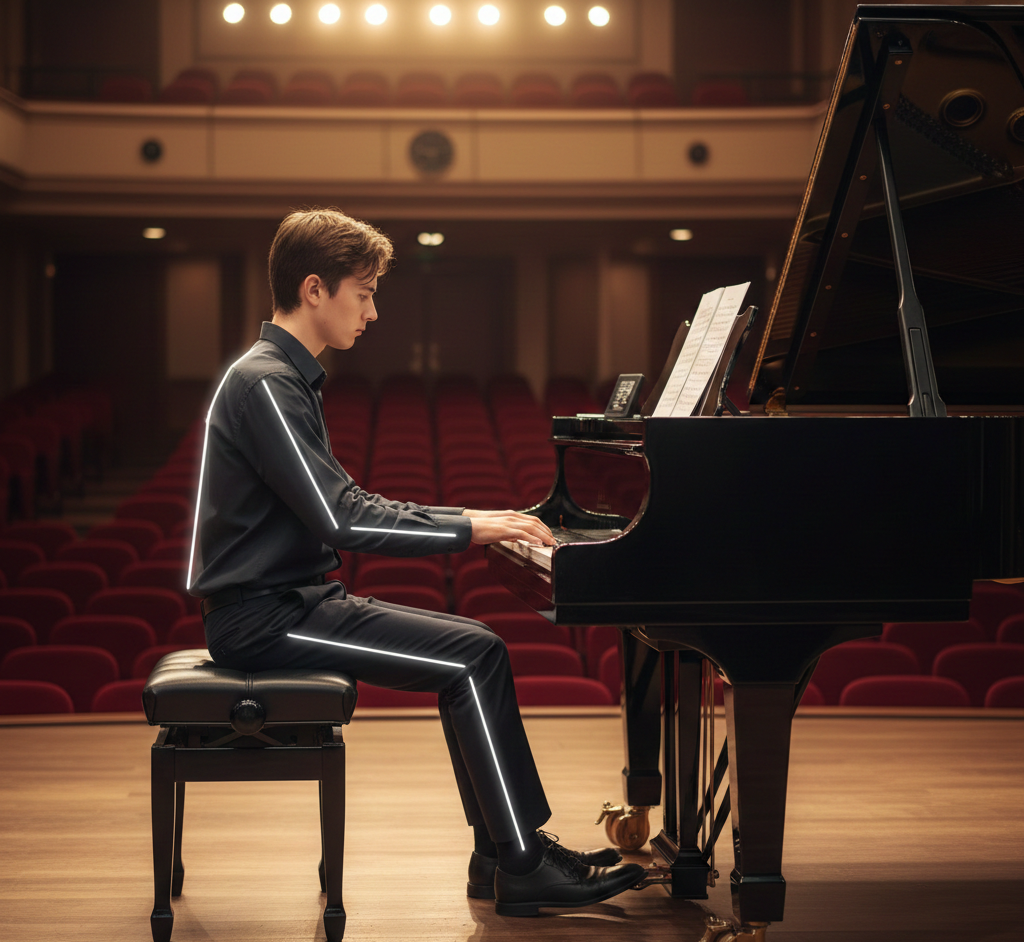
Getting the bench height right is one of the simplest changes with the biggest impact. The basic rule of thumb: sit so your forearms are nearly parallel to the floor and your elbows at or slightly above the keys. If you’re too low, you strain your wrists; too high, and you lose finger control. In practice, adjust the bench until your elbows are about at keyboard height when your fingers rest on the keys. A common guideline is that your arms form roughly a right angle at the elbows. This lets your back stay straight and your shoulders relaxed. Yamaha’s posture guide agrees: your bench should be set so “your elbows are almost level with the keyboard”.
Once height is set, sit toward the front half of the bench. Your buttocks should bear most of your weight, not the thighs, to keep your back upright and allow slight freedom of movement. Keep your feet flat on the floor (heels down, toes relaxed) with your knees slightly below the bench, forming a gentle angle. If your feet don’t touch the floor comfortably, especially for young children, use a footstool. As one music school guide notes, “Ideally, the seat should allow your feet to rest flat on the floor. If that isn’t possible, use a footstool”. This solid footing is important not only for stability but also to use pedals correctly.
A stable bench is crucial. You don’t want the seat wobbling as you play or inadvertently shifting your height. Make sure any adjustable knobs or levers are tightened evenly so the bench doesn’t tilt. When seated properly, with your feet grounded and back straight, you’ll automatically improve your technique. In fact, one source summed it up: “A proper seated position is essential to playing the piano comfortably and preventing any back pain from arising.”(We all know back pain can quickly derail practice time.)
To summarize good posture:
- Bench Height: Adjust so elbows are at key level.
- Seat Position: Sit near the front edge of the bench.
- Spine: Keep back straight and shoulders relaxed.
- Feet: Flat on the floor or on a footstool, knees slightly lower than hips.
- Legs: Thighs roughly parallel to the floor, giving space for the pedals.
Following these guidelines helps your body absorb the music gracefully. When you’re aligned properly, your arms and fingers can work with full strength and flexibility, making even technical passages feel easier. Plus, maintaining this posture over time trains your body for the piano, which prevents injuries and builds muscle memory for healthy technique.
3. Types of Piano Benches
Not all benches are created equal. The market offers a variety of designs, each with its own advantages and drawbacks. Below is an overview of common bench types and when to choose them:
- Fixed-Height Benches: These benches have a set height and usually a hinged seat. They’re often constructed from solid wood. Fixed benches are sturdy and often come with a storage compartment under the seat, handy for keeping sheet music or metronomes. The main downsides are that they’re not adjustable and can be less versatile: if multiple people of different heights use the piano, one height may not suit all. However, for a dedicated home piano or studio bench where one person dominates, a fixed bench can be a cost-effective, durable choice. Many fixed benches have traditional aesthetics that fit acoustic pianos nicely.
As an Amazon Associate I earn from qualifying purchases.
- Adjustable Benches (Mechanical): These benches use threaded knobs or levers on each side to raise or lower the seat. The upside is obvious: tailor your seating height to the player. This is crucial for studios or households with both kids and adults, or pianists who perform different styles. Adjustable benches ensure “each pianist can create a personalized and comfortable playing environment”. They also adapt as you (or your student) grows – no need to replace the bench after a growth spurt. The Benchworld guide notes that adjustable benches offer an “ergonomic edge” by letting you find that perfect height, reducing strain during long sessions. The trade-off is that they’re usually pricier than fixed benches and may have more moving parts that could wear over decades. For most learners and teachers, however, the flexibility is worth it.
As an Amazon Associate I earn from qualifying purchases.
- Pneumatic/Hydraulic Benches: These are a special sub-type of adjustable bench that use gas or fluid mechanisms (similar to an office chair) to change height easily – often via a lever you push with your hand or knee. They allow “seamless height adjustments” without unscrewing knobs, which many professionals appreciate. The mechanism also tends to lift higher than traditional adjustments, accommodating taller players or grand pianos requiring a higher bench. Pneumatic benches often look quite sleek and may use gas lifts inside the wooden frame. Downsides: they can be much more expensive, and some people worry about long-term reliability (though many years’ use doesn’t seem to break them if built well). If you perform on different instruments or sit on plush stage risers, a hydraulic bench lets you dial in the height in a moment.
- Duet (Double) Benches: These extra-wide benches seat two people side-by-side. Duet benches are invaluable for collaborative playing – for example, a piano teacher sitting with a student, or two performers in a four-hand piece. They often come in both fixed and adjustable forms. A duet bench must be stable (no rocking!), and the seat is obviously wider or longer. If you regularly play duets or simply want a bench that can fit your family pet during practice (cats love piano benches!), a duet bench is a great tool. On the other hand, they can be bulky in a small room and usually have one control for both players – meaning it must suit two heights at once. For that reason, some duet benches have a split seat or dual adjustments, but these are rarer and pricier.
- Folding/Portable Benches: X-style folding benches are typically lightweight with an X-shaped metal frame. They’re very popular for keyboards and on-the-go musicians. The biggest benefit is portability and storage: they fold flat, making them ideal for practice spaces with limited room or for gigging musicians who travel. The On-Stage KT7800+ (shown below) is a prime example of this type. It has a sturdy welded frame that supports up to 360 lbs and a thickly padded seat. Users praise its portability and comfort for a folding bench. The compromise is that folding benches can feel slightly less solid or stable than a heavy wooden bench. They often have a thinner seat (though many newer models use over 2 inches of foam) and may not have storage. Also, setting the exact height may be limited to a few preset positions rather than infinite adjustment. Still, for digital piano setups and travelers, the convenience is hard to beat.
On-Stage KT7800+ (portable, X-style bench) – This example of a folding keyboard bench combines portability with a thick cushion. It’s adjustable to several preset heights and sturdy enough for stage use.
As an Amazon Associate I earn from qualifying purchases.
- Keyboard Stools: A side note: some players ask if they can use a regular stool or chair. A simple armless stool can sometimes serve in a pinch, but it often lacks the ergonomics of a bench (such as adjustability or a stable base). Chairs with backs are generally discouraged because they force you to lean, harming posture. If you must use a stool (e.g. for an organ bench offstage), choose a stable, height-appropriate one and ensure your posture is as close to the above guidelines as possible.
To recap, when choosing bench type, consider:
- Adjustability needs: Will multiple people use it? Children growing? If yes, adjustable or hydraulic is wise.
- Portability: Musicians who gig or have small spaces may prefer a foldable bench.
- Stability & Weight: For intense playing, a solid fixed or premium bench might feel sturdier under fast movement.
- Extra features: Some benches add storage or even a flip-top for hidden compartments, which can be very handy for sheet music.
In general, adjustable or hydraulic benches are favored for long-term use and serious students, while a simple fixed bench can suffice for a stationary practice setup if it’s well-cushioned.
As an Amazon Associate I earn from qualifying purchases.
4. Cushion, Upholstery, and Durability
Just as important as the bench frame is what you sit on. Benches typically have an upholstered cushion or padded seat, and the materials here affect comfort, durability, and even aesthetics.
Cushion thickness: Aim for at least an inch of padding; thicker cushions (1.5″ or more) will feel more comfortable during multi-hour sessions. For example, the Gator Traditional bench (a budget model) comes with about 1.5″ of padded vinyl, which one reviewer said is “comfortable for hours.” The On-Stage folding bench has a 2.5″ foam pad, making it unusually thick for a portable model. In general, a firmer high-density foam is good for support, whereas softer, lower-density foam may compress too much and become uncomfortable over time.
Upholstery material: Here are common materials and their trade-offs:
- Vinyl (Faux Leather): Very common on digital piano benches and budget models. It’s durable, wipe-clean, and resistant to wear. However, vinyl can get sticky in hot or humid conditions (your legs might stick after an hour) and isn’t as luxurious-feeling as real leather. If the bench is black or in direct sunlight, vinyl can also get hot. Many foldable and X-benches use vinyl.
- Genuine Leather: Found on high-end benches (like the Roland RPB-500). Leather is breathable, long-lasting, and develops a nice patina. It stays cooler than vinyl and looks premium. The Roland RPB-500 was praised for its “high-grade leather seat” with thick padding. The downside is cost (leather benches are significantly more expensive) and the need for care (leather can scratch or stain if not maintained).
- Cloth/Fabric: Less common, but some benches use a velvet or other cloth surface. Cloth stays cool and can be soft, but it can wear out faster, absorb spills, and doesn’t wipe clean easily.
- Velvet or Suede: Found on some classical or antique-style benches. Very soft and attractive, but like cloth, it can wear or stain and often comes at a premium price.
As an Amazon Associate I earn from qualifying purchases.
Most modern benches (especially those meant for stage or heavy use) choose vinyl as a durable middle ground. If you sweat easily, consider a fabric or real leather seat, as vinyl can get slippery. Also, check if the cushion is tufted or stitched: tufting can prevent foam from shifting inside, adding to longevity.
Seat Size and Shape: Make sure the seat width and depth fit your body size comfortably. Standard benches are around 45-50 cm wide, which fits most adults. Duet benches are obviously wider. Very narrow stools (such as some portable keyboard chairs) can cause hip strain. Padded arm rests or contoured shapes are not typical for piano benches, since you need to move your arms freely, a flat, rectangular top is the norm.
Durability and Build: Besides the cushion, the bench’s construction affects its lifespan. Solid wood frames (often birch or walnut) will outlast pressed wood or particle board. Inspect the bench legs and joints: wobble or squeak is a sign of weak construction. Metal frames (like X-benches) can be tough, but check for solid welds and rust resistance.
An excellent example: Roland’s premium RPB-500 bench uses solid wood with a polished finish, a “velvet-lined storage” compartment, and top-tier materials. It’s meant to last a lifetime. On the other end, a budget bench like the Gator Traditional still held up to 350 lbs and “robust styling”. Whatever price point you choose, look for at least a couple of years warranty or good user reviews on durability.
5. Pedals Explained: Single, Double, and Triple Units
Pedals are the secret sauce of piano expression. On an acoustic piano, you normally have three pedals (soft, sostenuto, sustain) from left to right. Many digital keyboards start with just a single sustain pedal (mimicking the rightmost pedal) and then offer optional extra pedals or units. Let’s unpack the choices:
- Single Sustain Pedal (Damper Pedal): This is the most essential pedal. It lifts the dampers off the strings (in an acoustic piano) or sends a sustain signal (in a digital piano), allowing notes to ring. Even for beginners, a sustain pedal is a must-have accessory. There are two basic forms: a sustain footswitch (a small box you press like a lever) and a sustain pedal (the larger, piano-style pedal). The footswitch (square/box type) is ultra portable and cheap – good for very tight spaces or casual play. However, it doesn’t feel like a real piano pedal. I usually recommend a proper piano-style sustain pedal (like the Yamaha FC4A or M-Audio SP-2) because it gives you the familiar pressure and travel of a real damper pedal. B&H notes that sustain pedals are “the most essential” for keyboards, as they add depth to your playing. When buying a sustain pedal, make sure it has a polarity switch. This toggle (or sometimes labeled as “+/-” or DIP switch) ensures it works correctly with any keyboard. The catch: some keyboards are wired so that the pedal is “normally off” and closes to sustain (Yamaha style), while others do the opposite (Roland style). If you plug in a pedal without a polarity switch, you might find notes sustain when the pedal is not pressed – confusing, right? As B&H warns, the wrong polarity “can lead to issues, notes may sustain when released or stop when pressed”. A good workaround is to buy a universal pedal like the M-Audio SP-2 or Yamaha FC4A, both of which have a polarity switch on the bottom. These pedals are typically unbranded (or generic) and cost under $30, but they work reliably across Yamaha, Casio, Korg, Roland, and more.
- Half-Damper (Continuous) Sustain Pedal: Some advanced keyboards and stage pianos support half-pedaling. This means that the pedal input is treated as a continuous sensor, so you can lift the pedal partway for subtle sustain effects – very useful in classical music (think Debussy or Chopin). To use this, you need a half-damper capable pedal and a piano that recognizes it. Not all boards have this feature. For Yamaha and Roland digital pianos that do, you can buy their specific half-pedals: for example, Roland’s DP-10 or Yamaha’s FC3A support half-damper operation (Roland’s is half-damper, Yamaha’s has the heavy feel of a grand piano). B&H lists some half-damper dedicated pedals like the Korg DS-1H (Korg only) and Roland DP-10. These pedals plug into the sustain jack (usually a stereo ¼″ jack) and send variable resistance to the piano. If you’re a jazz or classical player who uses delicate pedaling, a half-damper pedal is worth considering, but be sure your instrument actually reads it.
- Triple-Pedal Units (Three-Pedal System): For the fully authentic experience, some digital pianos offer (or accessory makers sell) a three-pedal unit that mimics an acoustic piano’s setup – soft (una corda), sostenuto, and sustain. For example, Yamaha’s FC35, Roland RPU-3, Casio’s SP-34, and Korg’s PU-2 are all three-pedal attachments. These pedal units usually sit on the floor and connect to the piano, often via a dedicated connector or a cable. They allow you to sit at the same ergonomic height you have for playing but reach all three pedals as on a grand. This is ideal for advanced players or students transitioning to concert grand technique. The soft pedal (left) typically shifts the action or lowers volume electronically; the sustain (right) and sostenuto (middle) function as expected. The B&H guide points out that three-pedal setups “replicate the pedal setup found on a traditional acoustic grand”, including half-damper capability. However, not every keyboard supports a triple unit: make sure your model lists one as compatible. Stand-alone universal triple pedal units also exist (like the DAOK or generic ones), but again check that your piano can use all three inputs. On the bright side, many players start with just one pedal and add more pedals later; it’s a modular journey.
- Other Pedals: Some keyboards have or accept an expression pedal (like a volume/control pedal) and a sostenuto pedal (rarely on its own), but those are more for synthesists. If your focus is on piano playing, the sustain (and optional soft/sostenuto via a triple unit) cover most bases.
As an Amazon Associate I earn from qualifying purchases.
Compatibility Notes:
- Polarity: As mentioned, always ensure the sustain pedal’s polarity matches the keyboard. Most branded pedals (Yamaha, Roland, Casio) have a fixed polarity (Yamaha and Casio are usually one way, Roland the opposite). If you buy a pedal and it works “backwards,” just flip the switch if available.
- Jack Type: Sustain pedals use a standard ¼″ mono or stereo plug. Half-damper pedals use a stereo plug (even if your keyboard only has one input, the second contact carries the half-damper signal).
- Brand Pedals: You’ll see brand-specific pedals marketed (Yamaha FC4A/FC3A, Roland DP-10, Korg DS-1H, etc.). These usually ensure perfect compatibility with that brand’s instruments. But remember the portable, universal pedals (e.g. M-Audio SP-2) can work on any keyboard because of the polarity switch. B&H specifically recommends the Yamaha FC4A (full-size) and Auray/Casio pedals with polarity switches as safe universal picks.
As an Amazon Associate I earn from qualifying purchases.
To summarize pedal options:
- Beginners: Start with a single universal sustain pedal with polarity switch (e.g. M-Audio SP-2). It’s affordable and works on any keyboard.
- Intermediate/Advanced: If your instrument supports it, consider a half-damper pedal for nuanced control (Roland DP-10 or Yamaha’s FC3A), and eventually a triple-pedal unit for full piano experience.
- Stage/Gigging: You might use a portable footswitch for simplicity, but at the studio/home, a proper piano-style pedal (with heavy base) is more stable underfoot.
As an Amazon Associate I earn from qualifying purchases.
6. Bench and Pedal Recommendations
Choosing the right bench or pedal often depends on who you are and how you play. Here are some scenario-based recommendations to guide your decision:
- For Beginners (Kids or New Adult Learners): Comfort and correct posture are top priorities. An adjustable bench is ideal, since the height might need tweaking as skills improve or the student grows. A bench that’s too tall or too short will undermine technique. For example, the Yamaha PKBB1 (an affordable X-style bench) is often cited as a reliable entry option. It folds for storage and has plush padding. A teacher friend I know swears by using a footstool as well if the student is very small, ensuring their feet don’t dangle (proper support is crucial for young learners).
On the pedal side, a simple universal sustain pedal works great. The M-Audio SP-2 or Yamaha FC4A (polarity switch included) cost under $30 and will work on any keyboard. If you have a budget digital piano like a Casio or Yamaha, sticking to the brand’s own pedal (Casio SP-3, Yamaha FC4A) guarantees compatibility. For a beginner, a triple-pedal unit isn’t necessary, but if the keyboard came with one (some Casio digital pianos bundle the SP-34 triple pedals), by all means use it. - For Advanced or Classical Students: These players might require the full range of pedals. If the instrument is an acoustic piano, you already have all three. For a digital piano, I would recommend investing in a dedicated three-pedal unit (if you have space). For example, Yamaha’s FC35 or Casio’s SP-34 mimic grand piano pedals and include soft/half-sustain functions. The Roland RPU-3 is also excellent (and doubles as a stand). These allow for nuanced techniques like sostenuto and subtle half-pedaling. Also, a high-quality bench matters: a wooden bench with a real leather seat (if possible) can be worth it. Roland RPB-500 is an example of a luxury bench – it has thick leather padding and a continuous 10″ height range, plus hidden storage for music. It’s on the expensive side, but it’s built for serious players. If that’s out of reach, even a basic adjustable bench with good cushion (like the Korg PC-300 or Casio CB-7 mentioned by experts) will support longer practice sessions without discomfort.
- For Gigging Musicians/Performers: Portability and quick setup are key. Here’s where a foldable bench like the On-Stage KT7800+ shines. It’s lightweight, yet On-Stage (makers of keyboard gear) built it strong enough for stage use. According to reviews, this bench has much thicker padding than typical road benches, and it locks securely at several heights. I’ve personally used it on gigs – it’s easy to throw in the car and adjust at the venue. For pedals, many gig keyboardists use a rugged sustain pedal like the Mission EP-1 or a heavy-duty M-Audio SP-2 (these won’t slide around). If the show requires organ-style drawbars, consider a compact sustain footswitch (if space is tight), but usually a standard pedal is fine on stage. Remember to bring a pedal mat if the venue floor is slippery – a simple rubber pedal mat can keep your pedal from sliding on a wooden or tiled floor.
- For Studio/At-Home Practice: Focus on comfort for long hours. A plush cushioned bench is nice (you might even consider adding a separate bench cushion for extra softness or to correct a minor height issue). If space allows, a bench with storage (like the Roland RPB-500 or flip-top On-Stage KB8902B) is handy for stashing scores. On pedals, accuracy matters more than portability. A high-quality pedal with smooth action and no clicking is ideal. Yamaha’s FC4A or Roland DP-10 (if you have a Roland) will give a solid, piano-like feel. Don’t overlook pedal maintenance: occasionally dust the pedal mechanism and check the cable if it’s wired.
- For Teachers and Shared Studios: Adjustable benches are almost mandatory – you have kids of various sizes and maybe even adult students. I recommend benches with a wide height range or quick adjustments. Hydraulic benches are great here because you can change heights easily between students. Also consider having a variety of footrests (small boxes or stools) for younger kids. For pedals, you might keep one spare universal pedal on hand, since students forget or lose them often. Having both a footswitch and a proper pedal can accommodate beginners transitioning from a practice pad to a real piano sound.
- For Digital Piano vs Acoustic: While the posture principles are the same, note a few differences. Digital setups often sit at slightly different heights (some keyboard stands position the keyboard higher). You might find you need a lower bench setting or even use the keyboard’s bench (if it came with one). Also, digital pianos usually come with built-in pedals (single or triple). Test those first: some digital grands have a built-in three-pedal unit that you can adjust under the cabinet. If your digital instrument has an included pedal that feels flimsy, you can replace it with an external model via the pedal jack. For an acoustic piano, of course, any pedal is already built-in, so focus only on bench. In the case of combo pianos or home keyboards on a stand, use a bench (not a flat desk bench) to allow proper leg and arm position.
No matter the scenario, always check compatibility before buying: if you have, say, a Yamaha Clavinova, the FC3A pedal (half-damper) or FC4A pedal will definitely work. A Casio Privia might require Casio’s own SP-3 or SP-20 if you need heavy-duty use. Generic pedals like Korg DS-1H only work on Korg pianos, whereas universal ones (with polarity switch) will suit anything.
Accessories to Enhance Your Setup
Beyond the bench and pedals themselves, there are a few accessories that can improve comfort and protect your gear:
- Pedal Mat/Sticky Pad: If your sustain pedal tends to creep away on the floor during use, try an anti-slip mat or tape under it. A simple rubber mat under the pedals can keep them from sliding, and can also dampen mechanical noise if your pedals are noisy. Some makers even sell small sticky pads for the pedal base.
- Footrest for Children: As mentioned, kids benefit from footrests. Many adjustable wooden footstools exist (the StrongTek and Baby Grand footrests are popular) that elevate little feet so their posture is correct. Even a sturdy cardboard or folded cushion can work short-term, but a real footstool is safer.
- Extra Bench Cushion: If your bench seat is too hard, you can buy an aftermarket cushion pad. Some companies (like ZIPCushions) make custom-fit cushions that wrap around existing bench tops with velcro. These can add memory foam comfort or simply fresh upholstery cover.
- Organizational Add-ons: Bench pockets or hangers can hold a metronome or sheet music. Under-bench book racks or side shelves (often found on church organ benches) keep music within reach. These are mostly for fixed benches.
- Chair Gliders/Caster Cups: If your piano bench has legs on a hard floor, use felt gliders to protect the floor. And under the piano itself, cup the wheels to prevent moving (especially on carpet).
In short, think of your bench and pedals as a “piano posture station.” Little add-ons like a rubber mat, a supportive cushion, or a footrest can make sitting and using the pedals even more comfortable and injury-free.
Summary & Top Picks
Selecting the right piano bench and pedal setup is about matching your body and playing style to the gear. A bench that’s the right height and firmness will make long practice sessions sustainable, while quality pedals unleash musical expression.
To recap our top recommendations:
- Benches:
- Portable/Practice: On-Stage KT7800+ (folding X-bench, extra padding). Yamaha PKBB1 (simple, affordable X-style).
- Premium: Roland RPB-500 (solid wood, leather cushion, storage). Korg PC-300 or Casio CB-7 for a stylish, well-built bench.
- Budget: Gator Traditional (sturdy wood, vinyl 1.5″ cushion). On-Stage KB8902B Flip-Top (basic wood bench with storage, inexpensive).
- Duet: Any extra-wide adjustable bench, or a bench with proven stability (brands like Galaxy or Livingstone make duet versions).
- Pedals:
- Basic sustain pedal: M-Audio SP-2 or Yamaha FC4A (both have polarity switches and feel like a real piano pedal).
- Half-damper: Roland DP-10 (if you have a Roland) or any pedal labeled “half-damper compatible,” plus ensure your piano supports half-pedaling.
- Triple unit: Yamaha FC35 (for Yamaha pianos), Roland RPU-3, Casio SP-34, Korg PU-2 – these attach to the piano stand or furniture for a full 3-pedal experience.
- Accessories: Footswitch (for limited space), a pedal with a heavy base (for slip resistance), and a pedal mat underfoot.
In each case, look up the product reviews on Amazon or Sweetwater before buying, and verify it meets the needed specifications (height range, weight capacity, brand compatibility). For example, the Sweetwater review of the Yamaha PKBB1 touts it as “plush, ultra-thick” and stable. Similarly, B&H’s articles and user reviews can help you choose a pedal.
As an Amazon Associate I earn from qualifying purchases.
Final Tips:
- Always test the bench and pedals (if possible) with your instrument before committing. Ergonomics is personal – what’s comfortable for one pianist may not suit another.
- Don’t ignore simple posture checks. Even the “best” bench won’t help if you slouch.
- Remember that a $20 pedal can actually be quite decent; you don’t always need the top-of-line brand pedal unless you’re playing in concert settings. The same goes for benches: a well-chosen $100 bench can outperform an $800 one if it fits you properly.
Choosing the right bench and pedals is an investment in your comfort and development. With the best piano bench and pedal setup, you’ll feel more connected to your instrument, allow your technique to flourish, and let your musical ideas shine through with ease. Don’t underestimate these accessories : get them right, and your hands (and feet) will thank you as your playing reaches its full potential.
How do I determine the correct height for my piano bench?
To achieve the ideal ergonomic position, adjust your bench so that your forearms are nearly parallel to the floor and your elbows are level with or slightly above the keyboard. When your fingers rest on the keys, your arms should form approximately a 90-degree angle. This alignment prevents wrist strain, reduces shoulder tension, and ensures you have maximum leverage and finger control during technical passages.
Why is a polarity switch essential when buying a sustain pedal?
A polarity switch is a critical feature that ensures compatibility across different digital piano brands. Different manufacturers, such as Yamaha and Roland, use opposite electrical polarities for their “sustain” signal. Without a polarity switch, your pedal may work “backwards”, sustaining notes when your foot is off the pedal and cutting them off when pressed. A universal pedal with a polarity switch allows you to toggle the signal to match your specific instrument’s requirements.
What is “half-damper” operation and do I need it?
Half-damper (or continuous) pedaling is a feature found in advanced sustain pedals that allows for nuanced control over the resonance. Unlike a standard “on/off” switch, a half-damper pedal detects how far down the pedal is pressed, mimicking the way physical dampers interact with strings on an acoustic grand. This is essential for intermediate and advanced classical repertoire (such as works by Chopin or Debussy) where subtle “half-pedal” shifts are required for artistic expression.
Is a pneumatic piano bench better than a mechanical adjustable bench?
The choice depends on your environment and budget. Mechanical adjustable benches use threaded knobs to raise or lower the seat manually, offering stability and a traditional look. Pneumatic (or hydraulic) benches use a gas-lift mechanism, similar to high-end office chairs, to provide instant, effortless height adjustments via a lever. Pneumatic benches are often preferred in professional studios or teaching environments where multiple players of different heights use the same instrument throughout the day.
Can I use a standard chair or stool instead of a dedicated piano bench?
Using a standard chair is generally discouraged because chairs often lack the necessary height and stability required for proper piano posture. Most household chairs feature backs that encourage slouching or seats that are too low, forcing the pianist to “reach up” to the keys, which leads to chronic wrist and back pain. A dedicated piano bench provides a wide, flat, and stable surface that supports your weight on the front half of the seat, facilitating the necessary freedom of movement for your arms and torso.