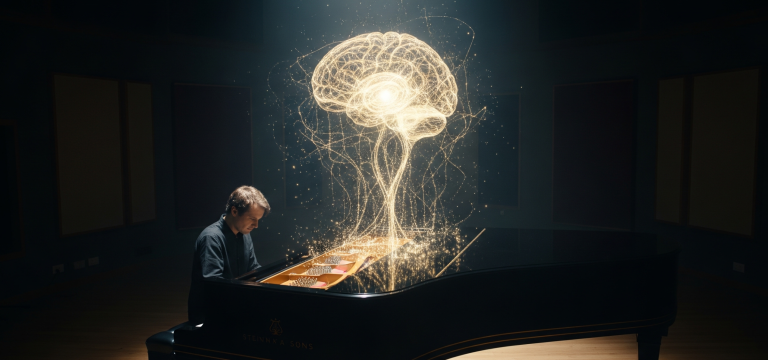
There exists a profound threshold in every pianist’s journey, a moment where the instrument ceases to be a machine for reproducing the works of others and becomes a mirror for the soul. For many, the piano begins as a disciplined pursuit of sight reading, technical drills, and the rigid memorization of classical repertoire. However, the true power of the instrument lies in its capacity to serve as a creative outlet. When we move beyond the ink on the page, the piano transforms into a boundless canvas for imagination, a vehicle for emotional catharsis, and a storyteller that speaks a language transcending words.
Embracing the piano as a creative outlet is not a privilege reserved for the virtuoso; it is a fundamental shift in perspective available to every student. Whether you are navigating your first harmonic intervals or mastering complex polyphony, the ability to tell your own story through sound is what defines true artistry.
In this guide, we will explore the evolution of the piano from a technical tool to a creative sanctuary. We will delve into the mechanics of improvisation, the psychology of musical storytelling, and the technical frameworks, such as modal theory and harmonic progressions, that empower you to find your unique musical voice.
Using the piano as a creative outlet refers to the intentional practice of using the instrument for self-expression, improvisation, and original composition. Unlike performance-based playing, which focuses on the accurate replication of a score, creative playing prioritizes the pianist’s internal emotional state and imaginative narratives, utilizing the piano’s full dynamic range and polyphonic capabilities to communicate personal stories.
1. The Harmonic Foundation of Emotional Narratives
To tell a story, one must master the vocabulary of sound. In music, this vocabulary is built upon harmony. Understanding the relationship between notes (intervals) and how they combine (chords) allows the pianist to set the “climate” of their musical story.
From Technique to Artistry: The Great Shift
In the early stages of piano pedagogy, the focus is almost exclusively on fundamentals. Students spend years mastering the “correct” way to play: perfecting hand positioning, developing finger independence, and learning to read music at sight with high accuracy. This phase is essential, it builds the “musical vocabulary” necessary for communication. However, a common pitfall occurs when the student becomes a prisoner of the score.
The shift toward creativity happens when you realize that the piano is not just an instrument to be “conquered,” but a channel. I remember the transition vividly: sitting at the piano without a book for the first time. The silence was intimidating. Without the guidance of a composer like Bach or Chopin, the 88 keys felt like a vast, empty wilderness.
This “speaking in a new language” feels awkward at first because we are conditioned to fear the “wrong note.” In a creative context, however, there are no wrong notes, only dissonances seeking resolution. By shifting the focus from “perfection” to “expression,” the pianist unlocks a new level of intimacy with the instrument.
The Science of Intervals and Human Emotion
Intervals are the primary colors of the musical palette. Each interval carries a specific psychological weight based on its frequency ratio and its placement within a tonal center. To use the piano as a creative outlet, you must understand the emotional “temperature” of these building blocks.
A. Consonant Intervals: Stability and Peace
Consonant intervals, such as the Perfect 5th (7 half steps) or the Major 3rd (4 half steps), provide a sense of resolution and rest. The Perfect 5th is often perceived as hollow, strong, and ancient, making it ideal for establishing a sense of foundation or “home.” The Major 3rd is the hallmark of joy and clarity.
B. Dissonant Intervals: Conflict and Tension
Dissonance is the engine of storytelling. The Minor 2nd (1 half step) creates immediate anxiety or a sense of “creeping” danger, while the Tritone (6 half steps) offers extreme instability. In a narrative, these intervals represent the obstacles or the “villains” of the story.
C. The Nuance of the Thirds
The distinction between the Major 3rd and the Minor 3rd (3 half steps) is the most fundamental tool for emotional direction. The Minor 3rd introduces introspection, melancholy, and depth, allowing the pianist to move from a “public” joy to a “private” reflection.
Comparative Interval Chart for Creative Mapping
| Interval Name | Half Steps | Harmonic Quality | Narrative Association |
| Minor 2nd | 1 | Dissonant | Tension, Conflict, Fear |
| Major 2nd | 2 | Mildly Dissonant | Movement, Progress |
| Minor 3rd | 3 | Consonant | Sadness, Introspection |
| Major 3rd | 4 | Consonant | Joy, Brightness, Triumph |
| Perfect 4th | 5 | Consonant | Stability, Openness |
| Tritone | 6 | Highly Dissonant | Mystery, Unrest, Danger |
| Perfect 5th | 7 | Consonant | Strength, Purity, Origin |
Triadic Structures as Story Chapters
Chords are the “chapters” of your musical story. By stacking intervals, we create complex emotional environments.
A. The Major Triad (M3 + m3)
Built with a Major 3rd followed by a Minor 3rd, this triad represents daylight. It is the sound of resolution and external success. In a creative session, the Major triad serves as the baseline of “normalcy.”
B. The Minor Triad (m3 + M3)
By lowering the middle note (the third) by a half step, the environment shifts to shadow. The Minor triad is essential for expressing grief, mystery, or the quietude of night.
C. Augmented and Diminished Textures
Augmented triads (M3 + M3) create a sense of suspension and “floating,” often used in dream sequences. Diminished triads (m3 + m3) convey a sense of claustrophobia and urgent need for resolution, perfect for a story’s climax.
The Pulse of the Narrative: Rhythm and Tempo
If harmony is the color of the story, rhythm is its heartbeat. A discernible rhythm provides the order that allows a listener to connect with the music.
A. Tempo as Mood Setting
The tempo, or speed of the beat, sets the basic atmosphere of a piece. Italian terms provide a spectrum for this expression:
- Grave / Largo: Very slow and solemn; ideal for mourning or deep reflection.
- Adagio: Slow and stately; conveys grace and poise.
- Andante: A “walking” pace; represents progress, journeying, or steady thought.
- Allegro: Brisk and lively; conveys excitement, joy, or urban energy.
- Presto / Prestissimo: Very fast; suggests chaos, manic happiness, or virtuosic flair.
B. Dynamics: The Musical Punctuation
Dynamics (the relative loudness or softness) are the markings that tell the performer how to “speak” the musical sentence. A whisper (ppp) can represent a secret, while a cry (fff) can represent an unstoppable emotional force. Changes in dynamics, such as a crescendo (gradually getting louder), build narrative tension toward a climax.
2. Advanced Technical Frameworks for Innovation
Once the basic vocabulary is established, the creative pianist must learn to organize these sounds into larger structures. This is where music theory transitions from a set of rules into a roadmap for freedom.
Modal Storytelling: Beyond Major and Minor
The Western tonal system is often limited to the Major (Ionian) and Natural Minor (Aeolian) scales. However, the seven “Church Modes” offer a much wider spectrum of creative possibilities. Each mode is a specific arrangement of whole and half steps that dictates a unique emotional “flavor.”
A. The Lydian Mode: Celestial Wonder
The Lydian mode is a Major scale with a raised 4th degree. This single alteration creates a sound that is ethereal, bright, and slightly magical. It is the primary tool for film scores meant to evoke wonder or the supernatural.
B. The Dorian Mode: Soulful Resilience
Dorian is a Minor scale with a raised 6th degree. This “brightened” minor scale sounds sophisticated, soulful, and “cool.” It avoids the heavy tragedy of the natural minor, suggesting instead a sense of movement through sorrow.
C. The Phrygian Mode: Dark Antiquity
With its lowered 2nd degree, the Phrygian mode sounds ancient, dark, and intense. It is frequently used to evoke desert landscapes or deep, primal conflicts.
The Mechanics of Polyphonic Depth
The piano’s greatest strength is its ability to handle polyphony—multiple independent voices. To use the piano as a creative outlet, one must move beyond “melody plus accompaniment” and toward “dialogue.”
A. Counterpoint as Character Interaction
In a story, different characters interact. In music, this is achieved through counterpoint. The left hand might represent a steady, grounded character (the bass line), while the right hand represents a flighty, erratic character (the melody). Their interaction, how they clash and resolve, is the essence of the narrative.
B. Voice Leading and Transformation
Creative playing involves “transforming” one idea into another. Using smooth voice leading (moving each note of a chord by the smallest possible interval to the next chord) ensures that the story feels continuous rather than fragmented.
C. The Sustaining Pedal as Atmosphere
The sustain pedal (the “soul” of the piano) is not just for blurring notes. It is a tool for creating “acoustic space.” A storyteller uses the pedal to create a “wash” of sound, representing memories or fog, or releases it for “dry” articulation, representing clarity and the present moment.
3. The Psychology and Physiology of the Creative Outlet
The piano is not just an artistic medium; it is a neurological sanctuary. The act of creative playing engages the brain in a way that mere reproduction cannot, providing significant mental health and cognitive benefits.
The Neurobiology of Improvisation
When a pianist improvises, the brain enters a “flow state.” Research shows that during improvisation, the Dorsolateral Prefrontal Cortex (the “inner critic”) deactivates, while the Medial Prefrontal Cortex (associated with self-expression) becomes highly active.
A. Stress Reduction and Cortisol Regulation
Engaging with the piano as a creative outlet has been shown to lower cortisol levels. The tactile feedback of the keys combined with the emotional release of sound provides a physical bypass for stress that words often cannot reach.
B. Cognitive Synthesis
The polyphonic nature of the piano requires the brain to synchronize the left and right hemispheres. This “cross-talk” enhances neuroplasticity, improving problem-solving skills and emotional regulation in daily life.
C. Self-Actualization through Sound
Creating an original piece of music, however simple, provides a sense of agency. For the student or the professional, this act of creation reinforces their identity as an individual with a unique voice, combating feelings of invisibility or stagnation.
Overcoming the Barrier of Vulnerability
The greatest obstacle to the creative outlet is the fear of “playing a wrong note.” To find freedom, the pianist must redefine the concept of error.
A. The Concept of Intentional Dissonance
In a creative context, a “wrong” note is simply a note that hasn’t been resolved yet. By leaning into the dissonance and finding a way to lead it back to a consonant center, the pianist learns resilience.
B. The Listener’s Projection
Music is subjective. A melody that the pianist considers “sad” might be heard by a listener as “hopeful.” Understanding this allows the pianist to release the burden of “correct” expression and focus instead on “honest” expression.
C. The Daily Ritual of Exploration
Creativity is a muscle. Establishing a “No-Rules” session—ten minutes every day where the pianist is forbidden from looking at sheet music—is essential for maintaining a functional creative outlet.
4. Practical Methodology: From Doodle to Composition
How does one actually start telling a story? The transition from “messing around” to a structured creative output requires a methodical approach to development.
The Toolkit for Spontaneous Creation
Improvisation is the “sketching” phase of musical storytelling. To do it effectively, you need a starting point.
A. The “Black Key” Gateway
The pentatonic scale (the black keys) is a safe haven for beginners. Because there are no half steps between the keys (it is an “anhemitonic” scale), it is impossible to play a harsh dissonance. This allows the pianist to focus entirely on rhythm and dynamics.
B. Visual Mapping Techniques
Before playing, imagine a specific scene: a rainy window, a bustling city street, or a quiet forest. Assign musical elements to these visuals. Rain might be high-register staccato notes; a city might be syncopated bass lines.
C. The Harmonic “Loop”
Choose a simple chord progression (e.g., I – vi – IV – V). Repeat this loop and allow the right hand to explore different melodic fragments. This provides a “safety net” that prevents the music from feeling aimless.
Refining the Narrative Structure
A story needs a beginning, a middle, and an end. In music, this is represented by “form.”
A. Motifs as Characters
A motif is a short musical idea (3-5 notes). To tell a story, introduce a motif (the character), change its key (the character moves to a new environment), and finally bring it back to the original key (the character returns home, changed).
B. The Power of Contrast
A story with only one emotion is boring. Creative pianists use “contrast” to keep the listener engaged. If the first section is loud and rhythmic (Section A), the second should be soft and flowing (Section B).
C. Capturing and Archiving
The “fleeting” nature of improvisation is its beauty, but also its weakness. Using a phone or a Digital Audio Workstation (DAW) to record sessions allows the pianist to identify “golden moments” that can be polished into full compositions later.
Expressing Emotion Through Sound
The piano is a uniquely polyphonic instrument, meaning it can play multiple independent lines of melody and harmony simultaneously. This allows for a level of emotional complexity that few other instruments can match.
A. The Role of Dynamics and Articulation
When using the piano as a creative outlet, your touch is your most important tool.
- Pianissimo (pp): Can represent a whisper, a secret, or a distant memory.
- Fortissimo (ff): Can represent a cry of pain, a burst of joy, or an unstoppable force.
- Legato: Creates a sense of flow and connection.
- Staccato: Adds playfulness, agitation, or rhythmic precision.
B. The Power of Dissonance and Resolution
Emotional storytelling on the piano often follows the “Tension and Release” model. By intentionally introducing “harsh” sounds (dissonance) and then guiding them back to “pleasant” sounds (resolution), you mirror the human experience of struggle and peace. This is the essence of tonal storytelling.
Building Your Daily Creative Ritual
Creativity is a muscle that requires consistent training. To maintain the piano as a functional creative outlet, consider these daily habits:
- The 10-Minute “No-Rules” Session: Begin every practice session with 10 minutes of free improvisation. Do not judge the sounds you make; simply explore.
- Genre-Bending: Take a simple melody (like “Twinkle Twinkle Little Star”) and try to play it in three different styles: Blues, Classical, and Minimalist.
- Mood Journaling: Sit down at the piano and try to “play” exactly how your day felt. If it was stressful, use dissonant clusters. If it was productive, use clear, driving rhythms.
- The “Black Key” Exercise: Limit yourself to only the pentatonic black keys. It is impossible to play a “wrong” note here, which helps lower the psychological barrier to improvisation.
Recommended Gear & Products:
Sustain Pedal: M-Audio SP-2. A high-quality universal pedal to help master the legato and “cinematic” textures of storytelling.
As an Amazon Associate I earn from qualifying purchases.
Digital Piano: Yamaha P-225 or Roland FP-30X. Essential for beginners and intermediates seeking weighted keys that mirror an acoustic feel for better expressive control.
As an Amazon Associate I earn from qualifying purchases.
As an Amazon Associate I earn from qualifying purchases.
Studio Headphones: Sennheiser HD 490 PRO. Perfect for private creative sessions where you need to hear the subtle timbre and dynamic shifts in your playing.
As an Amazon Associate I earn from qualifying purchases.
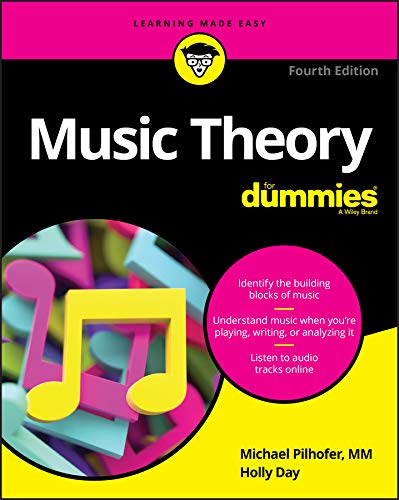
Theory Books: Music Theory For Dummies by Michael Pilhofer. An excellent comprehensive guide for those wanting to dive deeper into the “why” behind the music.
 Kindle editionRead on Kindle ›
As an Amazon Associate I earn from qualifying purchases.
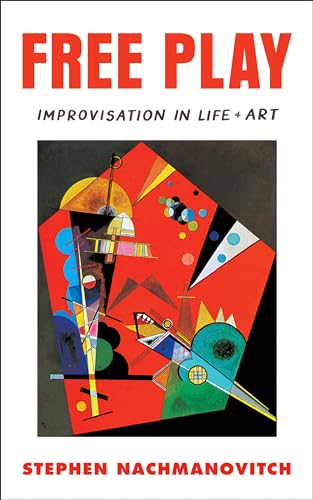
Free Play – Improvisation in Life – Art by Stephen Nachmanovitch is the absolute “bible” for musical creativity. It explores the psychological barriers to improvisation.
 Kindle editionRead on Kindle ›
As an Amazon Associate I earn from qualifying purchases.
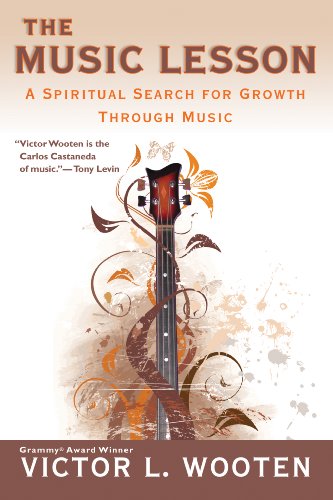
The Music Lesson by Victor Wooten is a narrative-driven book about the spiritual and emotional side of music.
 Kindle editionRead on Kindle ›
As an Amazon Associate I earn from qualifying purchases.
Conclusion
The journey to using the piano as a creative outlet is not about reaching a destination of “perfection.” It is about the continuous process of self-discovery. By mastering the harmonic vocabulary, embracing the psychological benefits of flow, and applying structured methodologies to your improvisation, you transform the piano into a true extension of your being.
As you sit at the keys today, remember that the most important note is the one that expresses your current truth. The piano is ready to listen. It is time for you to speak.
How much music theory do I need to know to be creative?
While you can be creative with zero theory, knowing the “rules” of harmony and scales gives you a shortcut to the sounds you want to hear. Think of theory as a map; you can explore without it, but you’ll find your destination much faster if you have one.
Is the piano better for creativity than a guitar or violin?
The piano is uniquely suited for a creative outlet because of its “orchestral” nature. You can play the bass, the harmony, and the melody at the same time, giving you total control over the entire musical environment.
I feel like I’m just playing the same things over and over. How do I break out?
Introduce a “limitation.” Try to play a story using only three notes, or only in a specific mode like Phrygian. Constraints are often the greatest fuel for innovation.
Does creative playing replace technical practice?
No. Technical practice (scales, arpeggios, Hanon) builds the “muscles” and “technique” that allow your hands to keep up with your imagination. They are two sides of the same coin.
Can beginners use the piano as a creative outlet?
Absolutely. You do not need years of training to improvise. Even playing two notes back and forth and exploring the difference in their volume (dynamics) is a creative act. Creativity should be integrated into piano study from day one.
How do I start improvising if I only know how to read music?
Start small. Take a piece you already know and change the ending. Or, keep the left-hand chords the same but try to invent a new melody in the right hand. This is the bridge between sight reading and improvisation.
Do I need to learn music theory to be creative?
While you can be creative by ear, music theory acts as a roadmap. It helps you understand why certain sounds evoke certain emotions, allowing you to recreate those moods intentionally rather than by accident.
What is the best way to record my original piano music?
For beginners, a simple smartphone recording is enough to capture ideas. For those looking to produce higher-quality tracks, using a MIDI-equipped piano connected to a computer allows you to edit and arrange your compositions professionally.
What is the difference between a major and a minor scale?
A major scale follows the pattern W-W-h-W-W-W-h, creating a bright sound. A natural minor scale (Aeolian) follows W-h-W-W-h-W-W, which is perceived as more somber.
Sources & References
Feezell, Mark. High-Yield Music Theory, Vol. 1: Music Theory Fundamentals. LearnMusicTheory.net, 2011.
Martin, Lawrence. Basic Music Theory for Adult Beginner-Level Piano Players. Lakeside Press, 2019-2023.
Pilhofer, Michael, and Holly Day. Music Theory For Dummies. Wiley Publishing, Inc., 2007.
Cook, Mark Andrew. Music Theory v. 1.0. Lardbucket.org, 2012.
National Endowment for the Arts. The Cognitive Benefits of Music Education and Practice.
Levine, Mark. The Jazz Piano Book. Sher Music Co. 1989