As an Amazon Associate, PianoMode earns from qualifying purchases. Recommendations are made on their merits; the price you pay is the same.
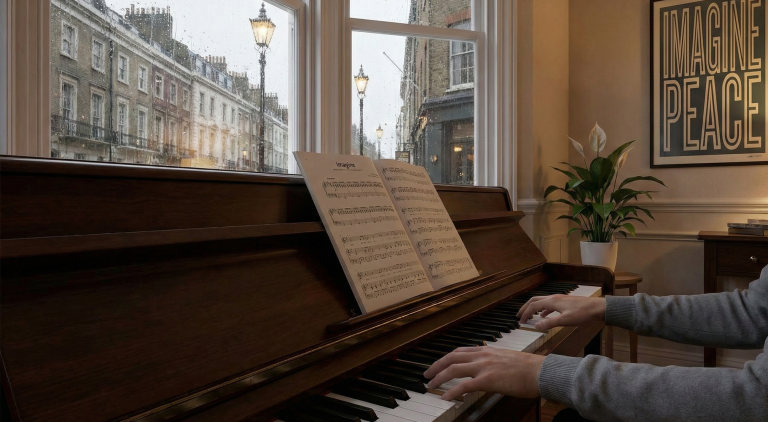
The journey of a thousand melodies often begins with a single, familiar chord. Imagine sitting at a polished grand piano, the light catching the gold accents of the instrument, as the opening notes of a world-famous ballad resonate through the room. For many aspiring pianists, the transition from scales and exercises to actual music happens through the lens of contemporary pop. Taylor Swift’s discography, characterized by its narrative depth and melodic accessibility, serves as one of the most effective gateways for adult beginners and students alike to master the fundamentals of the instrument while playing music they actually love.
The following analysis demonstrates that the simplicity of these arrangements is their greatest pedagogical strength. By focusing on a select group of tracks, students can master essential techniques, such as the I-V-VI-IV chord progression, steady quarter-note pulse, and stepwise melodic motion, without becoming overwhelmed by technical hurdles. This exploration will provide a comprehensive roadmap for the beginner’s journey, integrating historical context, the physics of piano sound, and detailed hardware recommendations to ensure an optimized learning environment.
The easiest Taylor Swift songs for beginner piano players include “Lover,” “All Too Well,” and “Cardigan,” characterized by their reliance on the “Singer/Songwriter” four-chord schema (I, V, VI, IV) and predictable stepwise melodic contours that minimize hand position shifts. These songs facilitate the rapid development of left-hand chordal stability and right-hand melodic fluency, making them ideal for those transitioning from basic five-finger patterns to full-song performance.
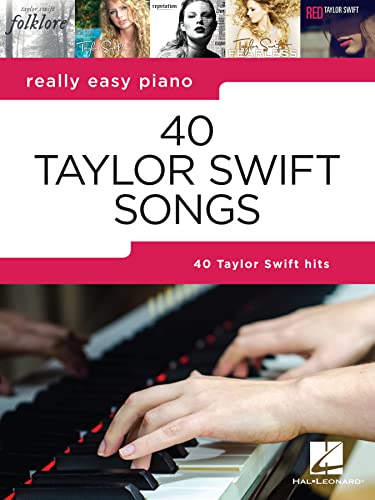 Kindle editionRead on Kindle ›
As an Amazon Associate I earn from qualifying purchases.
To understand why certain songs are “easier” than others, one must first master the fundamental mechanics of the instrument and the symbols used to represent sound in time. Music is defined in its broadest sense as “organized sound,” a definition that holds true regardless of era or style. For the pianist, the keyboard is a visual graph of pitch and frequency.
The Core Intervals: Half Steps and Whole Steps
A half step is the distance between any two adjacent keys on a piano keyboard, including both white and black keys. It is the most useful aspect of basic music theory for adult beginners, serving as the “building block” for scales, chords, and keys. A whole step consists of exactly two half steps, or the distance between two keys when one key is skipped.
From an acoustical perspective, these steps are rooted in the physics of sound wave frequencies. Notes that are a half step apart have approximately half the frequency span, measured in hertz (Hz), compared to notes a whole step apart. For example, the whole step from C to D features a difference of 42.1 Hz, whereas the half step from E to F is a mere 19.6 Hz. This physical reality dictates how our ears perceive tension and resolution.
| Step Type | Piano Geography | Frequency Relationship | C Major Example |
| Half Step | Directly adjacent keys | Small frequency span (~19-20Hz) | E to F |
| Whole Step | One key skipped | Larger frequency span (~40-42Hz) | C to D |
| Diatonic Half Step | Two white keys adjacent | Naturally occurring in major scales | B to C |
Notation and the Grand Staff
The transcription of music onto a five-lined staff allows for the communication of ideas across generations. Each clef acts as a graph of pitches: the treble clef (G-clef) handles higher-pitched notes played with the right hand, while the bass clef (F-clef) contains lower-pitched notes for the left hand. The “Grand Staff” connects these two via ledger lines, with “Middle C” serving as the literal and figurative center of the keyboard landscape.
Pedagogically, mastering sight-reading (lecture à vue) involves recognizing patterns rather than individual letters. Experienced pianists read chord patterns the way readers view words rather than individual letters. Identifying that a chord occupies three successive spaces in the bass clef instantly signals a triad, such as C Major (C-E-G), without requiring the student to identify each note individually.
Rhythmic Organization: Pulse and Meter
Rhythm is the backbone of all music; without it, music would be an unbroken, waiversome note. The pulse, or beat, is the regularly recurring underlying pulsation that compels kinesthetic reactions like foot-tapping or dancing. Tempo refers to the rate at which this pulse flows, often measured in Beats Per Minute (BPM).
In the context of Taylor Swift’s easiest repertoire, students primarily encounter “Simple Meter,” where each beat is divided into two equal parts. The time signature indicates how many beats are in a measure and which note value gets the beat.
| Time Signature | Common Name | Feel | Application in Swift’s Music |
| 4/4 | Common Time | Strong-weak-Medium-weak | “All Too Well,” “You Belong With Me” |
| 3/4 | Waltz Time | Strong-weak-weak | “Lover,” “Crazier” |
| 6/8 | Compound Duple | Two strong pulses divided into 3 | “How Did It End?” |
Harmonic Foundations: The Architecture of Pop
The effectiveness of Swift’s music as a teaching tool stems from its use of diatonic harmony, chords that are naturally derived from the notes of a major or minor scale.
The 4-Chord Formula (I-V-vi-IV)
The “Singer/Songwriter” schema, often moving from I to V to vi to IV, is a hallmark of Western popular music. This progression is mathematically and psychologically satisfying because it mirrors a narrative journey :
- I (Tonic): The home base, representing stability and arrival.
- V (Dominant): The peak of tension, making the ear crave resolution.
- vi (Submediant): The relative minor, adding emotional depth and a “bittersweet” introspective quality.
- IV (Subdominant): A warm, preparatory chord that resolves comfortably back to the home base.
In the key of C Major, these chords are C, G, Am, and F. Mastering these four chords allows a student to play a vast majority of the Swift catalog, including “All Too Well,” “Champagne Problems,” and “Clean”.
Chord Voicing and Inversions
Chord voicing refers to how the individual notes of a triad are distributed across the keyboard and between the two hands. Every three-note chord can be played in three ways:
- Root Position: The note naming the chord is at the bottom (e.g., C-E-G).
- 1st Inversion: The third is at the bottom (e.g., E-G-C).
- 2nd Inversion: The fifth is at the bottom (e.g., G-C-E).
Inversions are pedagogically critical because they minimize hand movement, enabling faster and smoother transitions. For example, moving from a C Major chord (C-E-G) to an A Minor chord (A-C-E) is much simpler if the A Minor is played in its first inversion (C-E-A), requiring the movement of only one finger.
Top 10 Easiest Taylor Swift Songs
1. “Lover” (The Waltz Entry)
Key: G Major
Time Signature: 6/8
Core Chords: G, D, C, Em
“Lover” is an exceptional teaching tool for compound meter. Unlike the standard 4/4 time signature found in most pop, “Lover” uses a 6/8 “swaying” feel.
- Pedagogical Benefit: It teaches triple meter and how to sustain notes using the damper pedal to create a “dreamy” atmosphere.
- The Left Hand: Can stick to simple “root notes” or “open fifths” on the first beat of every measure.
- The Right Hand: The melody is narrow in range, meaning the hand doesn’t need to jump across the keyboard.
- Chords: The entire song relies on a loop of G, D, and C Major. The bridge adds a slight variation with Em and F, introducing the student to basic relative minor transitions.
- Pedaling: The song provides an ideal environment to practice “legato pedaling.” The student must learn to sustain the sound to blur the transition between chords, creating a lush, romantic atmosphere.
- Inversions: The intro features a “walk-down” in the bass (G to D/F# to Em), teaching the student how to play slash chords where the left hand plays a specific bass note while the right hand maintains the triad.
2. “All Too Well” (The Mastery of Repetition)
Key: C Major
Core Chords: C, G, Am, F
Often cited as her magnum opus, “All Too Well” is surprisingly simple from a technical standpoint. The song is a “loop,” meaning the chord progression rarely changes between the verse, chorus, and bridge.
- Structure: This is the perfect song for practicing dynamics. Because the chords repeat, the pianist must use volume (crescendo and decrescendo) to tell the story.
- Technique: Beginners can practice “block chords” in the left hand while the right hand plays the melody.
- Repetition as Mastery: Because the chord progression never changes, the student can focus entirely on “expressive touch” and storytelling.
- The ADSR Envelope: Students learn to manipulate the “attack” (how hard the key is struck) and “release” (how the note ends) to prevent the song from sounding monotonous over ten minutes.
- Endurance: Playing a single piece for ten minutes builds physical stamina in the forearms and wrists, essential for advancing to intermediate literature.
3. “Cardigan” (Minimalist Melancholy)
Key: C Major
Core Chords: Am, F, G, C
From the folklore era, “Cardigan” offers a lesson in intervals. The opening piano riff uses a simple “down-up” motion that is very ergonomic for the human hand.
- No Sharps or Flats: Being in C Major (or A Minor), the pianist stays almost entirely on the white keys.
- Texture: This song introduces the concept of arpeggios, breaking a chord into individual notes, which creates a more sophisticated sound without adding technical difficulty.
- Key Signature: Often played in Eb Major or C Minor, this song introduces the student to the “black keys” (flats). This is a vital step in moving beyond the “all-white-key” safety of C Major.
- Timbre and Color: The song’s production focuses on “spectral evolution”, the way the tone quality changes over time. Students practice a “soft touch” to emulate the track’s intimate, rainy-day feel.
- Oda and Tag Sections: The song features a distinct “coda” or tail section, teaching the student about formal song structures beyond simple verse-chorus.
4. “Love Story” (Understanding Modulations)
Key: D Major (shifts to E Major)
Core Chords: D, A, Bm, G
“Love Story” is a classic for learning key signatures. D Major has two sharps (F# and C#).
- The Key Change: The end of the song features a “truck driver’s gear shift” modulation. This is a brilliant way for a student to learn how a song’s “energy” changes when every note is moved up a whole step.
- Technical Focus: The song begins in D Major but leaps a whole step (two semitones) into E Major for the final chorus.
- Pedagogy: Students learn how the same physical chord progression (I-V-vi-IV) can be transposed to a higher key to build emotional energy and “resolution”.
- Intervals: The jump in the vocal melody, specifically the “Ro-me-o” hook, is a perfect example of a Perfect 4th interval.
5. “Back to December” (The Power Ballad)
Key: D Major
Core Chords: D, Bm, G, A
This song is ideal for practicing the sustained pedal. The piano-driven arrangement requires a “legato” (smooth) touch.
- Chord Inversions: To keep the hand from jumping around, a beginner can learn “inversions”, playing the same notes of a chord but in a different order (e.g., instead of D-F#-A, playing F#-A-D).
- Broken Chord Technique: Instead of striking G-B-D at once, the student plays G, then B, then D in sequence. This develops finger independence and coordination.
- Leading Tones: In the key of D Major, the use of C# as a “leading tone” in the melody teaches the student about harmonic resolution, the way certain notes “want” to move to the tonic.
- Phrasing: The long, breathy lines of the chorus encourage the student to think of the piano as a “singing” instrument, using slurs and phrase markings to connect notes.
6. “You Belong With Me” (Rhythmic Drive)
Key: F# Major (Simplified to G Major for beginners)
Core Chords: G, D, Am, C
While the original is guitar-heavy, the piano transcription is very percussive.
- Staccato Practice: This song is great for practicing short, detached notes in the right hand to mimic the upbeat energy of the original track.
- Rhythmic Stability: The song demands a steady 4/4 driving pulse. Beginners practice maintaining this “beat” without rushing, which is common in upbeat tracks.
- Melodic Steps and Skips: The vocal melody is primarily stepwise but includes small “skips” (intervals of a third), helping students move beyond simple five-finger positions.
- Dynamic Range: Moving from a “mezzo-piano” (medium soft) verse to a “forte” (loud) chorus teaches the student how to vary finger pressure to express emotion.
7. “Wildest Dreams” (Atmospheric Pedaling)
Key: Ab Major (Can be transposed to G Major)
Core Chords: G, Em, C, D (Transposed)
This song teaches soundscapes. The piano isn’t just playing notes; it’s creating a “vibe.”
- The “Heartbeat” Rhythm: The left hand often plays a steady pulse, which is excellent for developing an internal metronome.
- Technical Focus: The song relies heavily on the sustain pedal to “blur” the harmonies, particularly in the bridge where the Ab-Eb-Bbm-Db progression creates a wash of sound.
- Rhythmic Stability: Learners must maintain a steady, slow 4/4 tempo (approx. 70 BPM) while coordinating sustained root notes in the left hand with block chords in the right.
- Voicing: It introduces the concept of “open position” voicing, where chord notes are spread across the keyboard to create a larger, more “orchestral” sound.
8. “Clean” (The Electronic-to-Acoustic Shift)
Key: E Major
Core Chords: E, A, B, C#m
From the 1989 album, “Clean” was originally composed on a MBIRA (thumb piano). On the piano, this translates to repetitive, high-register patterns.
- Hand Independence: The patterns are so repetitive that they allow the player to focus on making the left hand and right hand work independently.
- Technical Focus: Arpeggiated textures. In acoustic versions, the steady electronic pulse is replaced by broken chords.
- Key Signature: Often played in E Major (four sharps), it provides a gentle introduction to the black keys without the complexity of more distant keys.
- Texture: It focuses on “spectral evolution,” or how the timbre of a note changes based on the attack and decay of the strike.
9. “Champagne Problems” (The 4-Chord Masterclass)
Key: C Major
Core Chords: C, G, Am, F
Similar to “All Too Well,” this song is a structural loop. However, the tempo is slightly faster, making it a great “step-up” challenge for a beginner looking to increase their Words Per Minute (WPM) in musical terms.
- Technical Focus: Coordination and offbeat rhythms. The key to the “Swiftian” sound here is the left-hand thumb repeating notes on each beat while the right-hand chords are played on the offbeats.
- Dynamics: The song requires a very soft “mezzo-piano” touch to match its melancholic tone.
- Pedagogy: The outro features a descending scale that mirrors traditional finger exercises, making it a functional bridge between technical drills and artistic performance.
10. “Enchanted” (Arpeggio Excellence)
Key: Ab Major (Simplified to G Major)
Core Chords: G, Bm, C, G
The “Enchanted” chorus is legendary. For a pianist, it provides a workout for the pinky finger and thumb, as the melody spans a slightly wider range than her other hits.
- Stepwise Motion: The chorus melody moves almost entirely in steps (adjacent notes), making it highly “singable” and easy to play without looking at one’s hands.
- Tension and Release: The song builds dramatic tension in the bridge before resolving to a powerful chorus, a perfect exercise for practicing “crescendo” (gradually getting louder) and “decrescendo” (gradually getting softer).
Technical Tips for Mastering Pop Piano
To move beyond simply “hitting keys” to actually “playing music,” students should adopt the following professional practice habits:
- Hands Separate Practice: Master the left-hand chord loop until it becomes automatic. Only then should the right-hand melody be introduced. This prevents cognitive overload and hand confusion.
- Slow-Motion Training: Professional results come from practicing at 25% of the target tempo. Rushing through a song leads to “muddled” pedaling and rhythmic instability.
- The ADSR Envelope Awareness: Students should focus on the “Attack, Decay, Sustain, and Release” of each note. For Swift’s ballads, a soft “attack” with long “sustain” is required.
- Pattern Recognition: Instead of reading note-by-note, students should learn to recognize the visual “shape” of a triad on the staff. Triads in root position always appear as three notes stacked neatly on successive lines or successive spaces.
Master the “Shell” Chord
Instead of playing full four-note chords in the left hand, which can sound “muddy” on a piano, play just the Root and the Fifth. This provides a solid harmonic foundation without cluttering the sound.
The Power of Inversions
As explained in Alfred’s Basic Adult All-In-One Piano Course, moving your hand as little as possible is the key to speed. If you are playing a C Major chord (C-E-G) and need to move to F Major (F-A-C), don’t jump your whole hand. Just move the E and G up to F and A. This is called a smooth voice leading.
As an Amazon Associate I earn from qualifying purchases.
Use Lead Sheets
Don’t feel restricted to traditional sheet music. Learn to read Lead Sheets, which only provide the melody line and the chord symbols (C, G, Am, etc.). This allows the pianist to improvise their own accompaniment, which is much closer to how Taylor Swift herself approaches the instrument.
Kindle editionRead on Kindle ›As an Amazon Associate I earn from qualifying purchases.
Recommended Gear for the Aspiring Pianist
To achieve that “Premium Gold & Black” aesthetic and high-quality sound, the right equipment is essential. Here are the top recommendations for beginners:
- Digital Piano: Yamaha P-145 or Roland FP-10 Why: Both offer weighted keys, which are non-negotiable for learning proper finger strength. The sleek black finish fits the modern aesthetic perfectly.
As an Amazon Associate I earn from qualifying purchases.
As an Amazon Associate I earn from qualifying purchases.
- Sustain Pedal: M-Audio SP-2 Why: A high-quality chrome pedal with a heavy-duty rubber bottom. Essential for the “legato” sound required for ballads like “Back to December.”
As an Amazon Associate I earn from qualifying purchases.
- Headphones: Beyerdynamic DT 770 Pro Why: For “silent practice,” these offer a cinematic soundstage that makes a digital piano sound like a concert grand.
As an Amazon Associate I earn from qualifying purchases.
As an Amazon Associate I earn from qualifying purchases.
- Piano Bench: Roland Adjustable Bench Why: Posture is the foundation of technique. An adjustable bench ensures the pianist’s elbows are at the correct height relative to the keys.
As an Amazon Associate I earn from qualifying purchases.
Conclusion: Finding Your Musical Voice
Learning the easiest Taylor Swift songs on piano is not merely about playing pop hits; it is about building a bridge between technical proficiency and emotional expression. Her music reminds us that complexity is not a prerequisite for beauty. By mastering a few diatonic chords and a steady rhythm, any beginner can transform a silent room into a venue of storytelling.
For continued growth, prioritize pattern-based reading and dynamic expression. Do not merely “hit the notes”, focus on the storytelling, the weight of your touch, and the timing of your pedal. The path forward is simple: choose one song, master the left-hand root notes, and slowly integrate the melody. As the hands begin to move in unison, the instrument ceases to be a machine of wood and wire and becomes an extension of the soul.
Do I need to know how to read music to play Taylor Swift?
While reading music is helpful, many beginners start with chord charts or synthesia tutorials. However, learning basic notation will allow you to play more complex arrangements in the long run.
What is the hardest part of playing her songs?
The hardest part is often the hand independence, playing a steady rhythm in the left hand while the right hand plays the syncopated vocal melody.
Can I play these songs on a keyboard with 61 keys?
Yes. Most of Taylor Swift’s “easy” songs stay within a 4-octave range, meaning they fit perfectly on a standard 61-key keyboard, though an 88-key weighted piano is recommended for the best experience.
Which song should I start with today?
Start with “Lover.” Its slow tempo and repetitive chords make it the most forgiving song for someone who has just opened their piano lid for the first time.
What is a “slash chord” like D/F#?
A slash chord tells you to play a specific note in the bass. D/F# means play a D Major chord in your right hand, but use an F# as the lowest note in your left hand. This creates a smoother, more professional “walk-down” sound.
How can I learn to play and sing Taylor Swift at the same time?
Simplify the arrangement. Ignore the complex rhythmic patterns and simply “hold” the chords (block chords) while you sing. Once the chord transitions are comfortable, you can add arpeggios or syncopated rhythms.