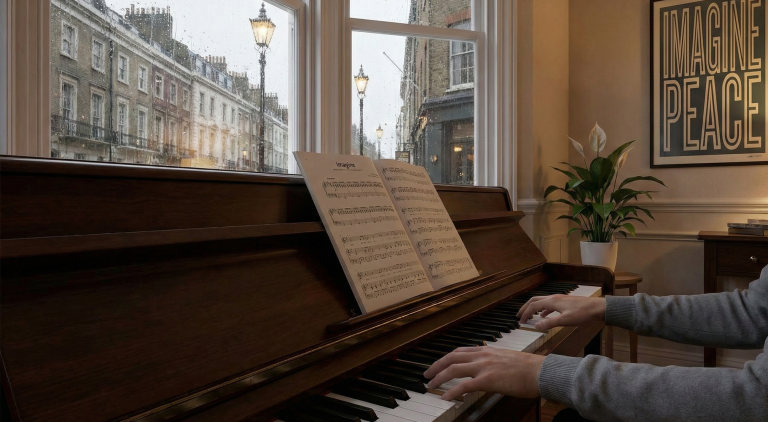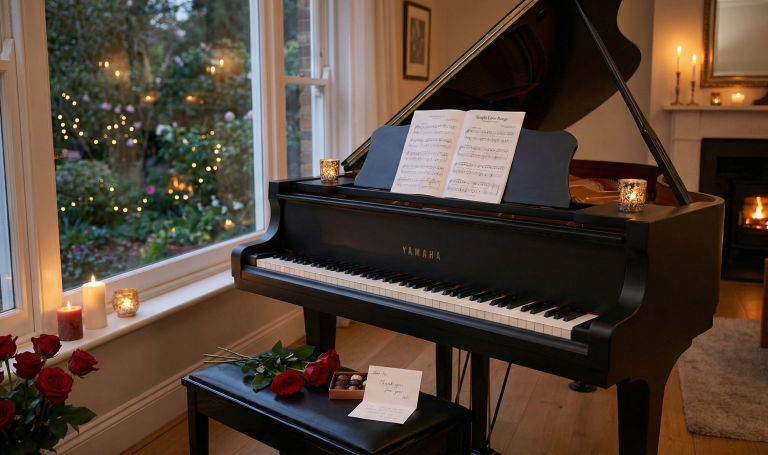
The holiday season often presents a unique challenge for musicians: the desire to perform festive repertoire coupled with a significant lack of preparation time. For beginner and intermediate pianists, identifying Christmas songs you can learn in one day is essential for participating in the musical traditions of the season without the stress of multi-week practice schedules. Mastery in a single day is not only possible but highly effective when selecting pieces characterized by structural simplicity and familiar melodic contours.
In this comprehensive guide, pianists will discover a curated list of accessible holiday classics, the theoretical reasons behind their ease of learning, and high-level practice strategies to accelerate the memorization process.
Learning Christmas songs requires a strategic convergence of simplified notation, fixed hand positions, specifically the C-major or G-major pentascales, and the utilization of the I-IV-V chord progression. By prioritizing carols with high internal repetition such as “Jingle Bells” and “Joy to the World,” and employing a hands-separate practice routine that concludes with a sleep-enhanced memory consolidation phase, a beginner can successfully perform recognizable arrangements for an audience within a single day of focused study.
Key Characteristics of Accessible Holiday Repertoire:
- Diatonic Melodies: Most easy Christmas songs stay within a single major scale, minimizing the need for complex accidentals.
- Homophonic Texture: A clear melody in the right hand supported by block chords or simple intervals in the left hand.
- Predictable Phrasing: Phrases are often four bars long, making them easy to segment and memorize.
- Limited Hand Movement: Songs that stay within a “five-finger pattern” or require minimal shifting across the keyboard.
1. Jingle Bells: The Foundation of Festive Rhythm
Jingle Bells is perhaps the most iconic example of a Christmas song that can be mastered in hours. Written by James Lord Pierpont in 1857 as “The One Horse Open Sleigh,” it was originally a drinking song for Thanksgiving sleigh races. In 1965, astronauts Tom Stafford and Wally Schirra played it on a smuggled harmonica and bells in space, making it the first song broadcast from the cosmos.
Technical Breakdown
The verse and chorus of “Jingle Bells” primarily utilize the Major Scale (often taught in C Major or G Major for beginners). The chorus, specifically, is famous for its “stagnant” melody, repeating the 3rd scale degree multiple times. This repetition reduces the cognitive load on the pianist, allowing focus to shift toward rhythmic precision.
Melodic Analysis: The chorus consists of notes primarily within a five-finger span (C-D-E-F-G). The repetition of “E-E-E” (the third finger) for the phrase “Jingle bells” provides an immediate success point for the learner.
Rhythmic Detail: Set in 4/4 time, it utilizes quarter and eighth notes. The “hey!” in the middle of the chorus acts as a rhythmic rest, allowing the brain a micro-break to prepare for the next phrase.
Practice Strategy
- Isolate the Chorus: Focus on the “Jingle bells, jingle bells” section first. In C Major, this is simply the note ‘E’ played repeatedly.
- Harmonic Support: Utilize the Primary Triads (I, IV, and V). In the key of C, these are C Major, F Major, and G Major.
- Rhythmic Vitality: Maintain a steady “common time” (4/4) pulse to ensure the “sleigh-ride” feel is captured.
2. Silent Night: Mastering Expressive Phrasing
For those seeking a more contemplative atmosphere, Silent Night is the quintessential choice. Its 3/4 time signature (triple meter) provides a gentle, swaying motion that is technically undemanding but musically rich. Composed in 1818 in Oberndorf, Austria. Due to a broken organ at St. Nicholas Church, Franz Gruber composed the melody for guitar accompaniment, which explains the arpeggiated, flowing nature of the piano arrangements.
The Role of the Left Hand
In “Silent Night,” the left hand often performs Arpeggiated Accompaniment. Instead of playing a block chord, the pianist plays the notes of the triad one by one (e.g., C – G – E). This creates a “harp-like” effect that enhances the song’s serenity.
As a 3/4 time lullaby, “Silent Night” focuses on “legato” touch and dynamic control rather than velocity.
- Technical Challenge: The melody requires a “finger stretch” near the end (often reaching for a high A or Bb depending on the key).
- Pedagogical Tip: Use the damper pedal. Depress the pedal on count 1 of each measure and lift/re-press on the next count 1 to “clean” the sound. This masks small gaps in finger legato.
Harmonic Analysis
The song follows a very traditional harmonic path, leaning heavily on the Tonic (I) and Dominant (V7) chords. Because the tempo is slow (Adagio or Lento), the pianist has ample time to anticipate chord changes and prepare the hand shape for the next measure.
3. Joy to the World: A Study in Scale Degrees
Joy to the World is a unique pedagogical tool because the opening melody is essentially a descending Major Scale. If a student can play a C Major scale downward from the top C to the bottom C, they have already learned the first two measures of this anthem.
Why It’s Learnable in a Day
Conceptually, this is the easiest carol for anyone who has practiced a C-Major scale.
- The “Backward Scale” Hack: The entire opening line is a descending C-Major scale (C-B-A-G-F-E-D-C). The student doesn’t need to “learn” the melody if they know the scale.
- Hand Independence: The left hand often plays a “pedal point” (holding a single low C) while the right hand descends, making it an excellent introduction to playing with both hands simultaneously.
- Stepwise Motion: Unlike songs with large melodic leaps, this piece moves primarily by “steps” (seconds).
- Dotted Rhythms: While it introduces dotted quarter notes, the familiarity of the tune allows the pianist to use “aural learning” to correct rhythmic nuances quickly.
- Grandioso Style: The piece sounds impressive and full even with simple octave doublings or basic triads, providing a high “reward-to-effort” ratio.
4. We Wish You a Merry Christmas: The Triple Meter Staple
This song is essential for any holiday gathering. Its structure is repetitive, with the “We wish you a merry Christmas” phrase appearing three times before moving to the “Good tidings we bring” section.
Structural Efficiency
The Verse-Chorus structure is very clear here. Once the main hook is learned, the performer has mastered 60% of the piece. The bridge (“Now bring us some figgy pudding”) introduces a slight harmonic shift but typically remains within the closely related keys, maintaining the song’s accessibility.
This carol is excellent for practicing rapid chord changes and ternary (3/4) time.
- Melodic Pattern: The melody utilizes “sequences”, the same melodic shape repeated starting on different notes (F-F-G-F-E-D, then G-G-A-G-F-E).
- Pedagogical Value: It introduces “accidentals” and “relative minor” shifts (moving from F Major to D Minor), which are standard in intermediate piano literature.
5. O Christmas Tree (O Tannenbaum)
Derived from a traditional German folk song, O Christmas Tree uses a melody that is both lyrical and repetitive. It is an excellent piece for practicing Interval Recognition, specifically fourths and fifths, which characterize the “O Tannenbaum” leap.
Chordal Implementation
For a one-day mastery, use “Shell Chords” in the left hand—playing only the root and the fifth. This provides a full sound without the complexity of full triads, allowing the right-hand melody to sing clearly.
6. Frosty the Snowman
Written in 1950 to capitalize on the “Rudolph” craze, “Frosty” never mentions Christmas in its original lyrics, yet it has become a seasonal staple. “Frosty” utilizes the “TIM-KI” rhythm, a dotted eighth note followed by a sixteenth note.
- Technical Breakdown: This rhythm creates a “swing” feel. The first note is held for 75% of the beat, and the second for only 25%.
- Harmony: Simple versions often use a “diminished” chord (F# dim) to transition between the IV and I chords, a classic 1950s pop technique.
7. Rudolph the Red-Nosed Reindeer
“Rudolph” introduces the learner to syncopation, the rhythmic practice of emphasizing the “and” between beats.
The song was a massive commercial success for Gene Autry in 1949, selling 2 million copies in its first year. It remains a hallmark of “juvenile” novelty Christmas music.
- Technical Breakdown: The phrase “Rudolph the red-nosed reindeer” follows a 1-& 2-& 3 4 rhythm. Beginners should use three distinct hand positions: F position, E position, and G position.
Accelerated Learning Techniques & Tips
To learn these songs in 24 hours, one must move beyond traditional “note-by-note” reading and adopt an architectural approach to the score.
The Power of Chunking and Interleaving
“Chunking” involves isolating the smallest difficult unit of a song, often just two notes or one measure, and repeating it until it is involuntary.
- The Rule of Seven: A passage is only “learned” when it can be played correctly seven times in a row without an error.
- Interleaving: Rather than practicing “Jingle Bells” for three hours, the learner should alternate 20 minutes of “Jingle Bells” with 5 minutes of scale work or a second song. This prevent “semantic satiation” and keeps the brain engaged in active problem-solving.
Chord Reduction
Look at the lead sheet or grand staff and identify the underlying chords. Instead of reading every individual note in the left hand, simply write the chord symbol (C, G7, F) above the measure. Playing these as block chords first helps internalize the harmonic structure.
Sight-Reading via Interval
Rather than naming every note (C, D, E), look at the distance between them. Is the next note a step up? A leap of a third? This “intervallic reading” is significantly faster for short-term memorization.
Hands-Separate Stabilization
Spend the first 20 minutes of your practice session strictly on the right hand until it can be played with “muscle memory.” Then, spend 10 minutes on the left-hand transitions. Combining them becomes a matter of synchronization rather than discovery.
- Melody First: The right hand must be automated. If the learner has to think about the next note in the melody, they are not ready to add the left hand.
- Harmonic Foundation: The left hand should practice the “jumps” between chords (e.g., C to G) until the hand can find the position without looking.
- The “Slow-Motion” Technique: When combining hands, the tempo should be reduced to 10-20% of the target speed. This allows the neural pathways to form without the interference of “error-reinforcement”.
Advanced Technical Nuances for Beginners
Once the basic notes and rhythms are secured, adding “expressive” elements—known in theory as articulations and dynamics, transforms a clinical performance into a musical one.
Articulations: Staccato vs. Legato
- Legato (Slur): Indicated by a curved line over notes, meaning they should be played smoothly and connected. This is essential for the “Holy Infant” section of “Silent Night”.
- Staccato: Indicated by a dot above or below the note head, meaning the note is played short and detached. This adds the necessary “bounce” to the chorus of “Jingle Bells”.
Dynamics: The Architecture of Volume
Dynamics define the emotional arc of a carol.
- Piano (p) and Forte (f): “Silent Night” should generally be played piano (softly), while “Joy to the World” demands forte (loudly).
- Crescendo and Diminuendo: Gradual increases or decreases in volume can be used to simulate the sound of “bells” approaching or fading away.
Recommended Gear
To enhance the learning experience and the eventual performance, specific tools and accessories can provide a more professional environment.
Songbooks
- The Giant Book of Christmas songs: A massive collection of accessible arrangements that ensures you always have a wide variety of festive tunes at your fingertips.
As an Amazon Associate I earn from qualifying purchases.
Essential Pianos & Keyboards
- Digital Piano Yamaha P-145: A reliable and compact digital piano that offers the weighted key feel necessary for developing proper technique while learning festive classics.
As an Amazon Associate I earn from qualifying purchases.
- Roland FP-30X: This high-quality digital keyboard provides superior sound engine technology, making your holiday performances sound professional and rich.
As an Amazon Associate I earn from qualifying purchases.
Methods & Theory for Fast Learning
- Alfred’s Basic Adult All-in-One Course: This comprehensive method is perfect for adults who want to understand the theory behind holiday songs while learning to play them.
As an Amazon Associate I earn from qualifying purchases.
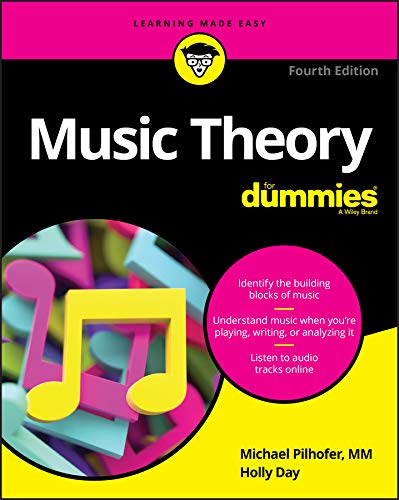
- Music Theory for Dummies: A highly pedagogical resource that breaks down complex musical concepts into simple, actionable insights for the modern pianist.
 Kindle editionRead on Kindle ›
As an Amazon Associate I earn from qualifying purchases.
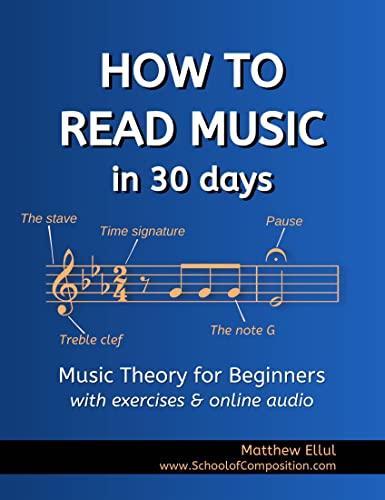
- How to Read Music in 30 Days: If you want to accelerate your ability to learn songs in a single day, this guide will drastically improve your sight-reading speed.
 Kindle editionRead on Kindle ›
As an Amazon Associate I earn from qualifying purchases.
Accessories & Performance Tools
- Donner Bluetooth Page Turner Pedal: Transition through your digital sheet music hands-free, allowing you to focus entirely on your two-handed performance.
As an Amazon Associate I earn from qualifying purchases.
- Piano Pedal M-Audio SP-2: A high-quality universal sustain pedal that is vital for creating the ethereal, ringing tones required for “Silent Night.”
As an Amazon Associate I earn from qualifying purchases.
- Digital Metronome Korg MA-2 Pocket: Keep your “Jingle Bells” tempo perfectly steady with this portable and highly accurate digital timing tool.
As an Amazon Associate I earn from qualifying purchases.
Pro Tip: If you are practicing on a digital keyboard, use the “Strings” or “Ethereal Pad” layer on top of the piano sound for songs like “Silent Night” to add a professional, cinematic layer to your playing.
Conclusion: Bringing the Magic to Life
Learning Christmas songs on the piano does not require months of rigorous study. By selecting pieces like Jingle Bells, Silent Night, and Joy to the World, and utilizing strategies such as chord reduction and intervallic reading, any pianist can prepare a festive setlist in a single day.
The goal of holiday music is not technical perfection but the transmission of joy and tradition. Whether you are playing for a large gathering or a quiet evening by the fireplace, these songs provide the perfect bridge between musical skill and seasonal spirit. We recommend starting with the most familiar melody to build confidence, then expanding your “one-day repertoire” as your sight-reading speed improves.
Ready to start? Pick one song from the list above, print the lead sheet, and commit to 30 minutes of focused “hands-separate” practice. You’ll be surprised at how much holiday cheer you can produce by sunset.
Can a total beginner learn a Christmas song in one day?
Yes. Total beginners should focus on “Pre-Staff” notation or “Letter-Note” versions of Jingle Bells. By focusing on the right hand and using a single-note bass line, a recognizable version of the song can be performed within 30 to 60 minutes.
Which Christmas song is the absolute easiest to play?
Jingle Bells is widely considered the easiest due to its repetitive nature and the fact that the melody primarily stays within a five-finger position, requiring no hand extensions or shifts.
Do I need to know how to read music to learn these songs quickly?
While reading music is beneficial, many pianists use “Synthesia” style videos or “Chord Charts” (Lead Sheets) to learn holiday music quickly. For a one-day turnaround, Lead Sheets are often more efficient than full standard notation.
Can I learn these songs on a 61-key keyboard or do I need 88 keys?
While carols like “Jingle Bells” fit on a 61-key keyboard, 88 keys are standard for piano. More importantly, ensure the keys are “weighted.” Non-weighted keys do not allow you to develop the finger strength needed for expressive playing (dynamics).
I keep making mistakes in the middle of the song. Should I keep playing to the end?
No. This is a common beginner error. If you play through a mistake, you are practicing the mistake. Stop immediately, isolate the two notes where the error occurred, and “chunk” them until they are perfect.
What is the fastest way to memorize the notes of a new carol?
Visualize the keyboard in your mind away from the piano. If you can “see” your fingers playing the sequence of white and black keys, your brain has internalized the pattern.
Why is “Jingle Bells” considered the easiest?
It utilizes a “pentascale,” meaning your hand never has to shift positions. Each finger stays on one key for the entire chorus, allowing you to focus entirely on rhythm.
Should I use the pedal for all Christmas songs?
Use the pedal for slow, lyrical carols like “Silent Night.” For upbeat, bouncy songs like “Jingle Bells,” the pedal often makes the sound “muddy.” Keep it “dry” (no pedal) for faster tempos.