As an Amazon Associate, PianoMode earns from qualifying purchases. Recommendations are made on their merits; the price you pay is the same.
To learn “Bohemian Rhapsody” piano breakdown is to immerse oneself in a musical masterpiece that seamlessly blends classical structures with the theatricality of 1970s rock. Written by Freddie Mercury for Queen’s 1975 album A Night at the Opera, this composition remains a cornerstone of piano-driven rock. It demands not only technical proficiency but also a deep understanding of emotional dynamics and structural transitions.
This guide serves as a comprehensive pedagogical resource for pianists looking to master this iconic piece.
The journey through this composition is essentially a narrative experience. It begins with an a cappella overture that establishes the tonal center of B-flat major before transitioning into a reflective piano ballad. From there, the music moves into a theatrical operatic section that utilizes tritone modulations and rapid key changes to heighten dramatic tension. The hard rock segment follows, introducing aggressive syncopation and bass octaves, before the piece resolves into a quiet, emotive coda. Understanding the architectural foundations of these shifts allows the pianist to move beyond rote memorization and toward a nuanced interpretation that captures the emotional weight of Mercury’s “mock opera”.
A piano breakdown is a methodical analysis of a musical composition where the piece is divided into its constituent parts, harmony, melody, rhythm, and structure, to facilitate deeper understanding and easier learning. In the context of “Bohemian Rhapsody,” a breakdown is essential because the song functions more like a multi-movement suite than a standard pop song.
 Kindle editionRead on Kindle ›
As an Amazon Associate I earn from qualifying purchases.
1. Foundational Music Theory for the Bohemian Rhapsody Suite
The complexity of Mercury’s arrangement necessitates a robust understanding of music theory, particularly the relationship between pitch, rhythm, and structural form. Before approaching the keyboard, it is essential to define the core elements that constitute the Western musical tradition, as these rules are both honored and transgressed throughout the song.
Music Notation and the Piano Keyboard
Music theory is the systematic study of the organizational characteristics of music, examining how sound is perceived aurally and symbolized visually. The piano serves as the universal tool for this study because its keyboard layout provides a direct visual representation of the chromatic scale, a series of thirteen keys including eight white keys and five black keys that repeat in octaves across the instrument.
The distance between any two adjacent keys on the piano is a half step (or semitone), while a distance spanning two half steps is a whole step. These intervals are rooted in physics; for example, the A note above middle C vibrates at 440 Hz, while middle C itself (C4) vibrates at 261.6 Hz. Understanding these distances is critical for the “easy come, easy go” motif in “Bohemian Rhapsody,” which relies on chromatic neighbor tones, notes that move by a half step to create a sense of harmonic restlessness.
| Interval Type | Piano Navigation | Example in “Bohemian Rhapsody” |
| Diatonic Half Step | E to F or B to C | Movement in vocal harmonies |
| Chromatic Half Step | White key to adjacent black key | B to Bb in the “easy come” motif |
| Whole Step | Two half steps (e.g., C to D) | Standard scalar movement in the ballad |
| Tritone | Six half steps (The “Devil’s Interval”) | The modulation from Eb major to A major |
Durational Values and Rhythmic Precision
Rhythm is the most basic component of music, established by patterns of regular or irregular pulses in time. In “Bohemian Rhapsody,” the performer must toggle between the reflective, rubato feel of the ballad and the rigid, metronomic drive of the operatic and rock sections. Durational values represent the length of these pulses through symbols:
- The Whole Note: Held for four beats in common (4/4) time.
- The Half Note: Held for two beats.
- The Quarter Note: The standard pulse, typically equaling one beat.
- The Eighth and Sixteenth Notes: Faster subdivisions required for the rapid-fire “Galileos” of the operatic section.
A critical rhythmic device used in the suite is syncopation, the act of placing stress on the weak beats or between the beats to create a sense of forward momentum. Furthermore, the rock section introduces a “3-over-4” polyrhythm, where the left hand plays a four-pulse in 12/8 time while the right hand handles a three-pulse melody. Mastering these layers requires the student to move beyond simple time signatures and into the realm of compound and asymmetrical meter.
2. Sectional Analysis: The Ballad (B-flat Major)
The ballad section forms the emotional core of the piece, beginning with the iconic piano motif that supports the confession “Mama, just killed a man”. Historically, Mercury never considered himself a virtuoso pianist, yet his compositions demonstrate a profound grasp of voice leading and melodic development.
Establishing the Tonal Center
The ballad is set in the key of B-flat major, indicated by the two flats (B-flat and E-flat) in the key signature. The use of B-flat major provides a warm, natural foundation for the narrative voice. Pedagogically, the student should begin by mastering the B-flat major scale to internalize the default flat positions.
Finger Positioning for B-flat Major Scale:
- Right Hand: 2 (Bb) – 1 (C) – 2 (D) – 3 (Eb) – 1 (F) – 2 (G) – 3 (A) – 4 (Bb).
- Left Hand: 3 (Bb) – 2 (C) – 1 (D) – 4 (Eb) – 3 (F) – 2 (G) – 1 (A) – 2 (Bb).
The section transitions between B-flat major and its relative minor, G minor. Relative keys are those that share the same key signature; G minor is the relative minor of B-flat major because it also contains two flats. This relationship allows the music to shift seamlessly from the stability of the major key to the melancholic tension of the minor key during the verse.
Harmonic Progression and Chromaticism
Mercury employs a circular fifths sequence in the introduction, descending through root G(m7) – C7 – F7 – Bb before settling into the “reality” keys of Eb and Bb. As the ballad progresses to the line “easy come, easy go,” the harmony utilizes chromatic movement (B–Bb–A–Bb) to mirror the lyrical themes of instability.
In the chorus (“Mama, ooo”), the song modulates to E-flat major. This shift represents an emotional peak, utilizing a classic ii–V–I progression (Fm7 – Bb7 – Eb) accompanied by passing diminished chords that add harmonic depth. Passing tones and neighbor tones are used extensively here, following the aesthetic of an 18th-century opera.
| Chord Progression Segment | Chords Involved | Function |
| Verse Entry | Bb to Gm | Narrative stability |
| “Sympathy” | Cm – Cm7 – F7 | Leading to modulation |
| “Mama, Oooo” | Eb – Bb/D – Cm | Emotional swell in Eb Major |
| “Nothing matters” | Abm to Eb | Borrowed IV chord for dark poignancy |
3. The Operatic Interlude: Dramatic Tension and Modulation
The operatic section is perhaps the most daring transition in pop music history, often described as a “mock opera” or a parody of classical aria movements. It moves with startling unpredictability through multiple keys and styles, demanding a high level of technical agility from the pianist.
Tritone Modulations and Key Shifts
As the guitar solo fades, the piano enters abruptly in A major. This leap from the previous key of E-flat major to A major is a tritone modulation, an interval that spans six semitones and was historically labeled “the devil in music” due to its inherent dissonance and tension. The juxtaposition of E-flat major (dark warmth) and A major (bright coldness) creates a theatrical canvas for the ensuing drama.
The opera section is predominantly in 4/4 time, but contains brief shifts to 2/4 meter (at bar 66) to accommodate the phrasing of the lyrics. The tempo increases sharply to 144 BPM, though the transition is smooth because the underlying beat remains constant.
Technical Execution: Hand Crossovers and Staccato Chords
The operatic segment begins with two bars of staccato chords in A major. The most famous piano motif in this section is the “Galileo” sequence, which requires the cross-hand technique. In this movement, the right hand maintains the accompaniment in the middle register while the left hand crosses over to play high G and F octaves.
Pedagogical Tips for the Crossover:
- Quick Execution: The crossover should be executed as quickly as possible to get the hands in position without disturbing the accompaniment.
- Wrist Movement: The performer should use the wrist to “hit” the octave rather than attempting a large, stiff vertical jump.
- Preparation: The left hand should be prepared over the G octave while the right hand is still playing its chords.
The section also features antiphonal singing (call and response) between Mercury’s solo voice and multi-tracked harmonies. The piano must mirror this energy through staccato precision and dynamic control, moving from soft, inquisitive phrases to bombastic, accented chords during the “Thunderbolt and lightning” passage.
4. The Hard Rock Section: Polyrhythmic Drive
Just as the operatic tension reaches its climax, the song explodes into a hard rock section driven by a simple but powerful progression in E-flat major. For the pianist, this section is a test of rhythmic endurance and hand independence.
Decoding the 3-over-4 Polyrhythm
The core of the rock riff is a “3-over-4” polyrhythm set in 12/8 time. In 12/8 time, each measure contains twelve eighth-note pulses, which can be grouped into four beats of three pulses each.
- The Left-Hand “Four” Pulse: The left hand plays powerful bass octaves on the four dotted quarter notes that represent the primary beats of the bar.
- The Right-Hand “Three” Pulse: The right hand plays quarter notes that generate a three-pulse feel against the left hand’s groove.
Mastering this requires the student to tap the rhythms away from the piano first. One should tap the steady four-pulse with the left hand and the syncopated three-pulse with the right to establish the “beat groove” before attempting to play the melody in octaves on the keyboard.
Mercury’s “Drummer” Technique
Brian May described Freddie Mercury’s piano style as uniquely percussive—playing “like a drummer”. Mercury often played with drooping wrists, a technically “incorrect” posture that nonetheless allowed him to “hammer” the keys with extraordinary power. This percussive approach is essential for the rock section, where the piano must provide a rhythmic foundation that rivals the impact of a full drum kit and electric guitar.
5. How to Practice the Breakdown
The transition from a beginner to an intermediate pianist involves moving beyond note-reading to pattern recognition. “Bohemian Rhapsody” should be approached as a long-term goal rather than a piece to be “brute forced”.
Step 1: Foundational Skill Development
Before tackling the suite, the student should complete a curriculum book like Bastien or Faber to understand treble and bass clef synchronization. One must be familiar with major and minor scales and arpeggios, broken chords where the notes are played in sequence rather than simultaneously.
Step 2: Sectional Practice
The piece must be broken into manageable chunks. One should master the Intro and Ballad (0:00–2:37) first, focusing on legato touch and sparing use of the pedal to maintain clarity. Once the ballad feels fluid, the student can move to the Opera Section (2:37–4:07), simplifying the complex vocal harmonies into two-hand arrangements.
Step 3: Slow Tempo and Metronome Integration
Tempting as it is to play at full speed, slow practice makes perfect. The student should practice each hand separately, particularly for the rock section’s polyrhythms, before combining them at half-tempo. Using a metronome helps the internal clock register the differences between the 72 BPM ballad and the 144 BPM opera.
Step 4: Vocalizing and Phrasing
As Mercury was primarily a vocalist, singing the lyrics while playing the piano part helps internalize his phrasing. Phrasing is the expression given to a set of notes, much like the intonation used in speech. By vocalizing, the performer learns where to apply rubato—the slight stretching of tempo for emotional effect.
6. Production Insights: Recording the Masterpiece
The recording of “Bohemian Rhapsody” was an arduous, three-week process involving five different studios and nearly 200 tracks for overdubs. The production utilized analog 24-track tape, requiring the band to “bounce” tracks across eight generations, a process that involved cutting and splicing tape manually.
The C. Bechstein Concert Grand
The piano heard on the original recording is a C. Bechstein concert grand, allegedly the same instrument Paul McCartney used for the Beatles’ “Hey Jude” and Rick Wakeman used for David Bowie’s Hunky Dory. The Bechstein sound is distinguished by a warm middle section and a “bell-like” treble with a shorter sustain than other makes like Steinway or Yamaha. This shorter sustain contributed to the clarity of the staccato chords in the opera section and the sharp attack of the rock segment.
Stereo Separation and Dynamics
The final mix of the song features a massive dynamic range of 16.2 LU, allowing the rock part to feel “explosive” compared to the quiet ballad.
- Vocal Panning: Mercury’s vocals are double-tracked and panned slightly left and right, creating an immersive sense of space.
- Piano Miking: The piano was miked with two Neumann U67s to capture its full resonance.
- Phasing Effect: Mercury’s vocal overdubs were so precise that they often created a natural phasing effect, a testament to his exacting standards in the studio.
Recommended Gear
To achieve the best results while learning a complex piece like “Bohemian Rhapsody,” having the right tools is essential. Below are top-rated products to support your practice.
The Piano Sheet:
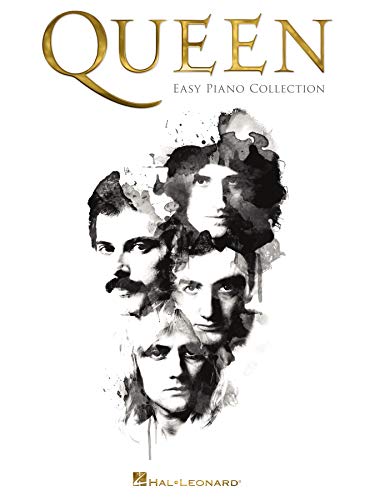
Kindle editionRead on Kindle ›As an Amazon Associate I earn from qualifying purchases.
1. High-Quality Digital Pianos
- Yamaha P-225: A gold standard for intermediate players. It features weighted keys that mimic the feel of Freddie Mercury’s Bechstein grand.
As an Amazon Associate I earn from qualifying purchases.
- Roland FP-30X: Known for its superior “SuperNATURAL” sound engine, perfect for capturing the rich dynamics of the ballad section.
As an Amazon Associate I earn from qualifying purchases.
- For students on a budget, the Casio Privia PX-S1100 offers a slim design and responsive action that is ideal for beginner-to-intermediate practice.
As an Amazon Associate I earn from qualifying purchases.
2. Essential Piano Accessories
- M-Audio SP-2 Universal Sustain Pedal: A heavy-duty pedal that provides the realistic feel of an acoustic piano, crucial for the “legato” sections of the intro.
As an Amazon Associate I earn from qualifying purchases.
- Rolland Adjustable Piano Bench: Comfort is vital for long practice sessions. This bench ensures proper posture to avoid wrist strain during the rock segment.
As an Amazon Associate I earn from qualifying purchases.
Conclusion and Final Recommendations
To learn “Bohemian Rhapsody” – piano breakdown is to undertake a journey through the very best of 20th-century songwriting. This piece challenges the pianist to be a storyteller, a technician, and a performer all at once. By respecting the structure, the gentle ballad, the chaotic opera, and the soaring rock, the pianist honors Freddie Mercury’s vision.
The key to success lies in patience and compartmentalization. Do not view the song as a monolithic six-minute challenge. Instead, view it as five small pieces that eventually fit together like a puzzle. As technical proficiency grows, focus on the “Character” of each section. The piano should sound different in the opera than it does in the ballad.
For those ready to begin, start by mastering the B-flat major scale and the basic triads of the ballad. The mountain may be high, but the view from the top is unparalleled in the world of rock piano.
How long does it take to learn “Bohemian Rhapsody” on piano?
For an intermediate player, it typically takes 4 to 8 weeks of consistent practice to play the piece from start to finish. Mastering the nuances and the operatic section may take longer.
Is “Bohemian Rhapsody” suitable for beginners?
The full version is quite challenging (Level 6-7). However, beginners can learn simplified “Easy Piano” arrangements that focus on the Ballad section and the main melody lines.
What is the most difficult technical hurdle in the song?
For most intermediate students, the Operatic Interlude presents the greatest challenge due to the high-speed staccato chords and the left-hand crossover required for the “Galileo” motif. Additionally, coordinating the 12/8 polyrhythm in the rock section is a significant hurdle for those not used to independent hand rhythms.
Which key is the song in?
The song primarily resides in B-flat major during the ballad and moves into E-flat major for the chorus and rock sections. However, it modulates through several other keys, including A major and F major, during its six-minute runtime.
Do I need a full 88-key piano to play this?
While most of the song fits within a smaller range, a full 88-key piano is recommended to capture the deep bass octaves in the rock section and the high-register tinkling in the intro.