I cannot tell you how many times I have heard, and frankly, how many times I still hear today, the claim that it is “too late” to pick up a musical instrument. Every time I encounter this sentiment, I tell myself the same thing: it isn’t a matter of age; it is simply a matter of time. I have even looked at other instruments and asked myself: if I had to start from absolute zero today on an instrument where the process to master even a single piece is so long and grueling… would I really want to do it? Honestly, no. I would stick to the piano. I understand that hesitation and the weight of the journey ahead. But here is the reality: when you have the willpower, you take the action, and when you take the action, you get the result. Willpower directs everything, and time isn’t something you “find”, it is something you take. Because even if we learn more slowly than a child, the fact remains: we are still learning.
Here, you will learn why your adult brain is actually a powerhouse for musical logic, how to structure your practice to see results in weeks, and which instruments will best support your journey.
It is never too late to learn the piano as an adult ! While children possess high synaptic plasticity, adults excel in “functional plasticity,” allowing them to master complex motor skills through deliberate practice and logical reasoning. Scientific studies show that musical training in adulthood improves cognitive health and memory. With internal motivation and the right resources, adults can often progress through music theory and foundational pieces faster than younger students.
1. The Science of the Adult Musical Brain: Neuroplasticity and Beyond
One of the primary reasons adults hesitate is the fear of “calcified” brains. We’ve all heard that children are “sponges.” While it is true that children have a higher density of synapses, the adult brain possesses something equally powerful: Functional Plasticity.
Neuroplasticity Doesn’t Have an Expiration Date
Research in neuroscience has shown that engaging in music leads to “cortical remapping.” When you learn to coordinate your left hand (bass clef) and right hand (treble clef), your brain strengthens the corpus callosum, the bridge between the two hemispheres. For an adult, this doesn’t just help with piano; it improves cognitive flexibility and memory across all areas of life.
The Power of “Deliberate Practice”
As an adult, you understand the concept of a goal. A child might spend 30 minutes “noodling” on the keys because their mom told them to. An adult, however, uses deliberate practice. You can identify a specific problem, such as a difficult interval or a rhythmic displacement, and apply systematic solutions. This efficiency often allows adults to cover in six months what a child might take two years to grasp.
Abstract Logic and Theory
According to the principles found in High-Yield Music Theory by Mark Feezell, music is a language of patterns. Adults are naturally better at recognizing these patterns. Understanding the “Circle of Fifths” or the construction of a Major Seventh chord is an exercise in logic that adults can master through intellectual study, whereas children often have to learn these concepts through rote repetition.
| Feature | Child Learner | Adult Learner |
| Brain Plasticity | High (Synaptic pruning) | Moderate (Functional remapping) |
| Motivation | Often External (Parents) | Internal (Personal Passion) |
| Conceptual Grasp | Slow / Intuitive | Fast / Logical |
| Physical Dexterity | Natural / Flexible | Requires Targeted Stretching |
| Practice Efficiency | Low | High (Deliberate Practice) |
The pedagogical methods designed for children, which often rely on rote memorization and external reinforcement, are frequently ineffective for adult learners. The science of adult education, known as andragogy, emphasizes the role of life experience, self-direction, and the need for immediate relevance.
Self-Directed Learning and Intrinsic Motivation
Adults come to the piano with a mature hierarchy of needs, often seeking self-actualization rather than mere skill acquisition. They are typically independent and desire to be empowered in their learning journey. Unlike children, who may be nagged to practice by parents, adults are driven by intrinsic motivation, a personal “why” that anchors them during the inevitable frustrations of the learning process. This internal drive allows for more concentrated, efficient practice sessions. Experts suggest that 15 to 30 minutes of focused, goal-oriented practice is significantly more beneficial for adults than longer, unfocused sessions.
The mind-hand Gap and Perfectionism
One of the primary struggles for the adult beginner is the disparity between their analytical understanding and their physical execution. Adults often absorb musical concepts—such as the logic of the circle of fifths or the structure of a major triad, much faster than their hands can physically master the complex motor tasks. This can lead to impatience and perfectionism, where mistakes are viewed as examples of failure rather than necessary steps in the learning process.
The pedagogical challenge for the adult student is to “learn to think like an athlete,” allowing the muscles in the hands the time they need to master these tasks. Furthermore, adults must consciously resist the urge to self-criticize, adopting the more accepting mindset of a child to foster a safe environment for discovery.
Historical Evolution of the Keyboard Interface
To understand the piano’s role in the adult learning landscape, one must consider its historical development. The piano was not a static invention but the culmination of centuries of technological and artistic refinement.
From Clavichord to Pianoforte
Before the invention of the piano by Bartolomeo Cristofori in 1709, composers were largely confined to the harpsichord and the clavichord. These instruments followed a stringed-instrument design but utilized internal plucking mechanisms rather than direct manual contact with the strings. A fundamental limitation of these predecessors was their inability to produce a wide range of dynamics; the volume remained largely the same regardless of how hard or soft the keys were pressed.
Cristofori’s breakthrough was the hammer-and-lever mechanism, which allowed the player to strike the strings with varying force. This led to the instrument’s original name: the gravicembalo col pian e forte, meaning “harpsichord with soft and loud”. This dynamic flexibility made the piano an essential tool for the Baroque and Classical periods, as it allowed for a level of expressive nuance that had previously been impossible.
The Centrality of the Piano in Theory
The piano keyboard is the universal tool of choice for composing and understanding music theory because its visual layout provides a no-nonsense, straight-line representation of pitch. The ascending and descending notes are laid out in a logical sequence that matches the pitch notations used in Western sheet music. Furthermore, the piano allows for the simultaneous execution of multiple notes, making it an ideal interface for studying harmonic intervals and polyphony, the layering of different melodic and rhythmic activities within a single composition.
Foundational Music Theory for the Adult Mind
Adults often excel at music theory because of their ability to process abstract mathematical patterns. Understanding the “grammar” of music provides the adult learner with a roadmap that facilitates both sight-reading and improvisation.
 Kindle editionRead on Kindle ›
As an Amazon Associate I earn from qualifying purchases.
 Kindle editionRead on Kindle ›
As an Amazon Associate I earn from qualifying purchases.
The Grand Staff and Pitch Nomenclature
The fundamental elements of music include pitch (the highness or lowness of sound), duration (the length of notes), timbre (the quality of sound), and dynamics (volume). These are notated on a system of five parallel lines called a staff.
For the piano, we use the Grand Staff, which connects a Treble Clef (for higher pitches) and a Bass Clef (for lower pitches) with a brace.
- Treble Clef: Also known as the G-clef, it circles the second line from the bottom, designating it as G4. The lines represent E, G, B, D, and F, while the spaces represent F, A, C, and E.
- Bass Clef: Also known as the F-clef, the two dots surround the fourth line from the bottom, designating it as F3. The lines represent G, B, D, F, and A, while the spaces represent A, C, E, and G.
- Middle C: This pitch acts as the “anchor” of the Grand Staff, sitting on a ledger line directly between the two staves.
The Chromatic Scale and Half-Step Physics
The piano follows a repeating pattern of white and black keys. A half step is the distance from one key to the next closest key, whether white or black. A whole step consists of two half steps.
The concept of half and whole steps is rooted in sound wave physics, as demonstrated by the frequency differences between notes:
| Interval | Starting Note | Frequency (Hz) | Ending Note | Frequency (Hz) | Hz Difference |
| Half Step | E4 | 329.6 | F4 | 349.2 | 19.6 |
| Whole Step | C4 | 261.6 | D4 | 293.7 | 32.1 |
| Whole Step | E4 | 329.6 | F#4 | 370.0 | 40.4 |
Adult students find that counting half steps is the most efficient method for defining scales, chords, and intervals.
Heptatonic Scales: Major and Minor
Western music is primarily built on heptatonic scales, which contain seven notes within an octave.
- The Major Scale: Follows the pattern W-W-h-W-W-W-h (Whole, Whole, Half, Whole, Whole, Whole, Half). This arrangement creates the bright, resolved sound common in much of the Western repertoire.
- The Minor Scale: While minor is a single tonal entity, it is typically taught in three forms to address harmonic and melodic needs :
- Natural Minor: The pure diatonic form, following the pattern W-h-W-W-h-W-W.
- Harmonic Minor: Sharps the 7th degree to create a “leading tone”—a note a half step below the octave that demands resolution back to the tonic.
- Melodic Minor: Raises both the 6th and 7th degrees when ascending to smooth over the “melodic flaw” of the augmented second found in the harmonic minor.
Harmonic Content: Intervals and Chords
A hallmark of advanced adult playing is the ability to interpret harmonic intervals—the distance between two notes played together—and chords, which consist of three or more notes.
Interval Qualities
Every interval has a number (based on alphabetical distance) and a qualifier (based on the number of half steps). The qualifiers include Perfect, Major, Minor, Augmented, and Diminished.
- Harmonic Intervals: Notes stacked vertically, played simultaneously.
- Melodic Intervals: Notes written in sequence, played one after another.
The tritone, an interval of six half steps (e.g., F to B in the key of C), is considered highly dissonant and was once historically referred to as the “devil in music”. Modern composers use the tritone to create harmonic tension that seeks resolution into a major or minor chord.
Triads and Seventh Chords
Chords are constructed by stacking thirds on top of a root note. The most basic chord is the triad, consisting of the root, the third, and the fifth scale degrees.
- Major Triad: Root + 4 half steps + 3 half steps (Pattern 4-3).
- Minor Triad: Root + 3 half steps + 4 half steps (Pattern 3-4).
- Diminished Triad: Root + 3 half steps + 3 half steps (Pattern 3-3).
By adding a fourth note, the seventh degree, we create a seventh chord. The dominant seventh chord is the most pervasive in popular and classical music, as it creates a powerful urge to return to the tonic chord.
Chord Inversions and Voicing
For the adult learner, mastering chord inversions is essential for efficient fingering and professional sound. Inversion involves moving the bottom note of a chord to the top.
- Root Position: The note naming the chord is at the bottom.
- First Inversion: The “third” of the triad is at the bottom.
- Second Inversion: The “fifth” of the triad is at the bottom.
Experienced pianists read these chord patterns as “words” or “groups” rather than individual notes, a skill known as pattern recognition.
Rhythmic Sophistication and Meter
Rhythm is the pattern of regular or irregular pulses that gives music its order. It is the most primary musical stimulus.
Time Signatures
A time signature indicates how many beats are in a measure and which note value receives one beat.
- Simple Meter: Each beat divides into two equal parts (e.g., 4/4 common time or 3/4 waltz time).
- Compound Meter: Each beat divides into three equal parts (e.g., 6/8, 9/8, 12/8). In these meters, the top number is always a multiple of three, and the beat unit is a dotted note.
- Asymmetric Meter: Also called “odd meters,” these combine simple and compound beats within a measure (e.g., 5/8 or 7/8). These rhythms are hallmark characteristics of 20th and 21st-century music.
Syncopation
Syncopation is a rhythmic device where stress is placed on an “off-beat” or an unexpected pulse. This creates a sense of propulsion and is essential for mastering genres such as jazz and rock.
2. Advantages of Starting Piano Later in Life
If you are starting today, you aren’t “behind.” You are starting with a toolkit that no 7-year-old possesses.
Superior Emotional Intelligence
Music is more than hitting the right notes at the right time. It is about phrasing and expression. As an adult, you have a reservoir of life experience, joy, grief, longing, and triumph. When you play a piece in a minor key, you aren’t just playing “sad sounds”; you are communicating a lifetime of emotion. This depth of “musicality” is something that many child prodigies struggle to emulate until they reach maturity.
Financial and Resource Autonomy
You have the power to choose your own path. You can invest in a high-quality instrument, subscribe to the best digital learning platforms like Piano Marvel, or hire a specialized teacher who understands adult pedagogy. You are the CEO of your own musical journey.
The “Third Space” Benefit
For most adults, the piano becomes a “Third Space”, a sanctuary away from the stresses of work and home. The focus required for piano playing acts as a form of “active meditation.” It is one of the few activities that requires 100% of your mental bandwidth, effectively silencing the “noise” of daily life.
3. Technical Foundations: The Adult Roadmap to Success
To succeed, you need a structured approach. Based on the Basic Music Theory for Adult Beginners syllabus, here is how you should structure your first 90 days.
Phase 1: The Topography of the Keys
Don’t just jump into songs. Understand the layout.
- Half Steps and Whole Steps: This is the DNA of Western music. As highlighted by Lawrence Martin, recognizing the distance between keys is the key to understanding scales and chords.
- The Chromatic Scale: Understanding that there are only 12 notes allows you to demystify the entire keyboard.
Phase 2: Rhythmic Literacy
Most beginners struggle not with the notes, but with the timing.
- Use Rhythmic Counting Syllables (1-and-2-and).
- Master simple meters (4/4, 3/4) before moving to compound meters (6/8).
- Pro Tip: Always practice with a metronome. It is the “truth-teller” of music.
Phase 3: Chordal Theory and Polyphony
Adults thrive on harmony. Instead of learning “Mary Had a Little Lamb,” start with Lead Sheets.
- Learn your Primary Triads (I, IV, V).
- Understand how to play a melody in the right hand while the left hand provides a stable harmonic “carpet” using chords.
- This allows you to play popular songs much faster than the traditional “classical-only” route.
The journey of an adult piano beginner is as much a psychological challenge as it is a musical one. Addressing specific internal barriers is crucial for long-term retention.
Embracing Mistakes and “Deliberate Stumbling”
Psychologists maintain that allowing music into one’s life without fear of judgment has a lasting positive effect on self-esteem. Adults often struggle with the “perfectionism trap,” where a single wrong note is perceived as a failure. To overcome this, students should practice in “very, very small sections,” overlapping them to ensure smooth transitions. Practicing slowly enough that the brain remains “faster than the hands” ensures that errors are minimized and technical precision is built incrementally.
S.M.A.R.T Goals for the Mature Student
The application of S.M.A.R.T goals provides the adult learner with a measurable framework for progress :
- Specific: “I want to play the first movement of Clementi’s Sonatina in C Major.”
- Measurable: “I will play this movement at 80 BPM without errors.”
- Achievable: Selecting repertoire that is challenging but not overwhelming.
- Relevant: Choosing music that the student personally finds resonant.
- Time-bound: Setting a target date for performance, even if only for oneself or a close circle of friends.
Ergonomics and Longevity
Physical challenges such as arthritis or back issues must be acknowledged. Professional guidance on ergonomically correct han
4. Overcoming the “Adult Roadblocks”
“My hands are too stiff.”
Physical flexibility can be improved. Focus on “Five-Finger Patterns” and gentle stretching exercises. Avoid “squeezing” the keys; use the weight of your arm to produce sound rather than just finger strength.
“I don’t have time.”
Consistency beats intensity every time. 15 minutes of focused practice every day is vastly superior to a 2-hour “marathon” once a week. Schedule your piano time like a gym appointment.
“I can’t read music.”
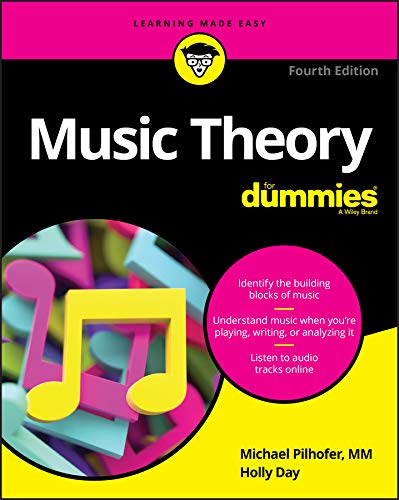
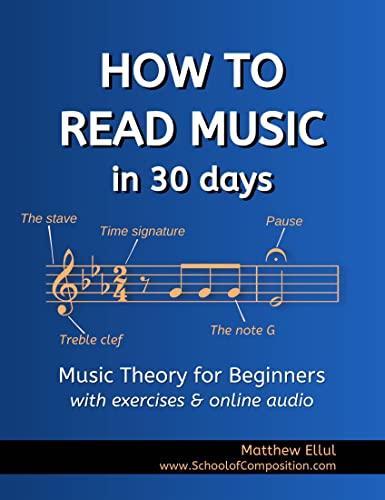
Reading music is simply a code. Start with the “Landmark System” (Middle C, Treble G, Bass F). Tools like Musical Theory For Dummies break this down into digestible steps that bypass the confusion of traditional methods.
Recommended Equipment: Choosing Your First Piano
You cannot learn to play on a toy. To develop the necessary “tactile memory” and finger strength, your instrument must meet certain criteria. Here are our top recommendations for adult beginners:
1. The Best Entry-Level Digital: Roland FP-30X
The Roland FP-30X is the gold standard for beginners. It features “PHA-4 Standard Keyboard” action, which feels remarkably like a real acoustic piano. The keys are weighted, meaning they have the resistance necessary to build finger muscles.
Why for adults? It has Bluetooth connectivity to use with learning apps and a sleek, minimalist design that fits into a modern home.
As an Amazon Associate I earn from qualifying purchases.
2. The Best Space-Saving Value: Yamaha P-145
The Yamaha P-145 is the successor to the world-renowned P-45, specifically redesigned for modern, compact living. It features the newly developed GHC (Graded Hammer Compact) keyboard action. This technology allows the piano to be significantly slimmer and more portable while maintaining the “weighted” feel that is essential for building finger strength and proper technique. It utilizes the Yamaha CFIIIS concert grand engine to deliver a bright, resonant, and high-quality sound.
Why for adults? For many adult beginners, finding a dedicated “music room” is impossible. The P-145 is the ultimate space-saver; it can be easily stored or moved, making it easier to “take the time” for your 15-minute practice sessions anywhere in your home. It provides the essential physical feedback of a real piano without the bulk or a massive financial commitment, ensuring you have no excuses to delay your progress.
As an Amazon Associate I earn from qualifying purchases.
3. The Professional Choice: Yamaha P-525 B Stage Piano
The Yamaha P-525 is the flagship of the P-series, designed for those who demand the feel of an acoustic grand in a versatile, portable frame.
- The GrandTouch-S™ Experience: This is the most critical feature for an adult. With 88 weighted wooden keys, the P-525 replicates the physical resistance and “escapement” of a real grand piano. This builds the necessary finger strength and dexterity that adult beginners often lack.
- World-Class Sound Engines: It features the legendary Yamaha CFX and the Bösendorfer Imperial. Thanks to Binaural Sampling, the sound is optimized for headphones, creating a 3D spatial experience that makes late-night practice feel like you are sitting in a concert hall.
Why for the Adult Learner? The P-525 removes the “digital barrier.” Because it sounds and feels like a $50,000 grand piano, you will find yourself practicing longer simply because the tactile experience is so rewarding.
As an Amazon Associate I earn from qualifying purchases.
4. The Classic Home Choice: Yamaha ARIUS YDP-145
The Yamaha ARIUS YDP-145 is a classic and elegant digital piano specifically designed for beginners and hobby players who want a traditional look and feel without the massive investment of a high-end console.
- Authentic Acoustic Touch: It features the GHS (Graded Hammer Standard) keyboard. This means the keys in the lower register have a heavier feel while the higher keys are lighter, exactly like an acoustic piano. This is vital for developing the correct “muscle memory.”
- The CFX Concert Grand Voice: Despite its accessible price point, the YDP-145 is loaded with the sound of Yamaha’s flagship CFX concert grand, delivering sparkling highs and a powerful resonant bass.
- VRM Lite (Virtual Resonance Modeling): This technical feature simulates the complex sympathetic vibrations created when the strings of an acoustic piano interact. It adds a layer of realism that makes your playing sound “alive.”
- Elegant Cabinet Design: The black, classic finish and integrated sliding key cover make this a beautiful addition to any room. It is designed to look like a piece of furniture, serving as a permanent invitation to sit down and play.
Why for the Adult Learner? The ARIUS YDP-145 is the perfect “anchor” for your practice. Its elegant design reminds you that music is a permanent part of your lifestyle. It is simple to use, requires no maintenance, and works perfectly with the Smart Pianist App to help you learn your first songs quickly.
As an Amazon Associate I earn from qualifying purchases.
Some Recommended Theory
As an Amazon Associate I earn from qualifying purchases.
Kindle editionRead on Kindle ›As an Amazon Associate I earn from qualifying purchases.
 Kindle editionRead on Kindle ›
As an Amazon Associate I earn from qualifying purchases.
Kindle editionRead on Kindle ›As an Amazon Associate I earn from qualifying purchases.
The Role of AI and Learning Apps
Artificial Intelligence has transformed the landscape of independent piano study, offering real-time feedback that was once only possible through a private tutor.
- Flowkey: Uses a “Wait Mode” that listens to the student and pauses the sheet music until the correct key is pressed. It is ideal for visual learners who want to master specific songs quickly.
- Skoove: Provides a more structured, lesson-based approach, combining music theory with technical exercises.
- MuseFlow: A 2025 innovation that uses AI-driven personalization to dynamically adjust the difficulty of lessons based on the student’s progress.
- Artie (by ArtMaster): An advanced AI tutor that analyzes not just the correctness of notes, but the nuances of timing, rhythm, and weak key strikes.
Conclusion: The Best Time to Start is Today
The fear that it is “too late” is simply your brain’s way of protecting you from the vulnerability of being a beginner. But there is a unique magic in being a “beginner” as an adult. It keeps you humble, it keeps your mind sharp, and it opens a door to a form of communication that words cannot touch.
You aren’t trying to win a competition; you are trying to enrich your life. Whether you want to play jazz in a dimly lit room, lead a holiday sing-along, or simply master a Bach Prelude for your own satisfaction, the path is open to you.
Your Action Plan:
- Get the Gear: Invest in a weighted 88-key digital piano (like the Roland FP-30X or the amazon Yamaha ARIUS 145).
- Pick a Method: Choose an adult-specific book or app.
- Commit to 15: Practice for 15 minutes today. Not tomorrow. Today.
The music is already inside you. It’s time to let it out.
How long does it take to play a basic song?
With daily 20-minute practice sessions, most adults can play a simple, recognizable, two-handed arrangement of a popular or folk song within 4 to 6 weeks.
Do I need a teacher, or can I teach myself?
While YouTube and apps are excellent supplements, having a teacher (even remotely) for the first 3 to 6 months is highly recommended. A teacher’s primary role is to prevent “bad habits”—like collapsed wrists or poor posture—that can lead to inefficiency or even injury (like tendonitis) down the road.
Should I learn Classical or Jazz/Pop?
Learn what you love. The “best” style is the one that keeps you returning to the bench. If you love Pop, start with chord charts and lead sheets. If you love Classical, follow a graded traditional syllabus.
Is it harder for adults to learn to read music?
Not necessarily. Adults often find the logic of sheet music easier to understand intellectually than children do. It is essentially a Cartesian graph of pitch (vertical axis) versus time (horizontal axis).
Is the YDP-145 good for learning “from zero”?
Absolutely. The YDP-145 is arguably the most popular choice for adult hobbyists. It provides the essential “weighted” feel required to learn correctly, ensuring that if you ever sit at an acoustic piano, your hands will already know what to do.