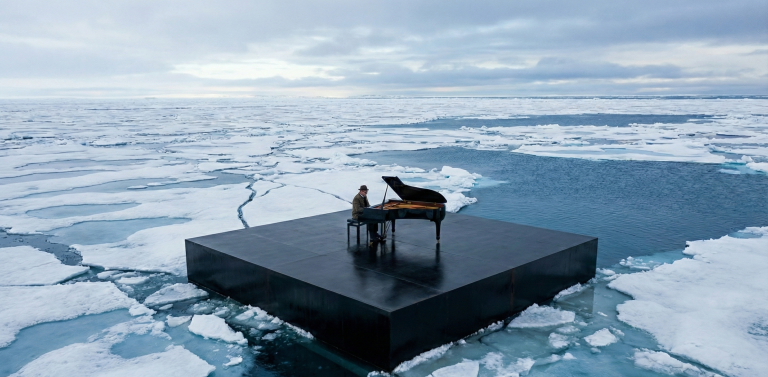
Imagine a cold winter night in 1830s Paris. The air in the aristocratic salons of the Place Vendôme is thick with the scent of expensive perfume and the soft murmur of the social elite. Suddenly, a silence falls as a frail man with sharp features and a quiet intensity sits at the Pleyel piano. As his fingers touch the keys, the instrument stops being a machine of hammers and strings; it begins to sing. This was the world of Frédéric Chopin, a man who didn’t just play the piano, he transformed it into the ultimate vessel for human emotion, bridging the gap between Polish nationalism and Parisian sophistication.
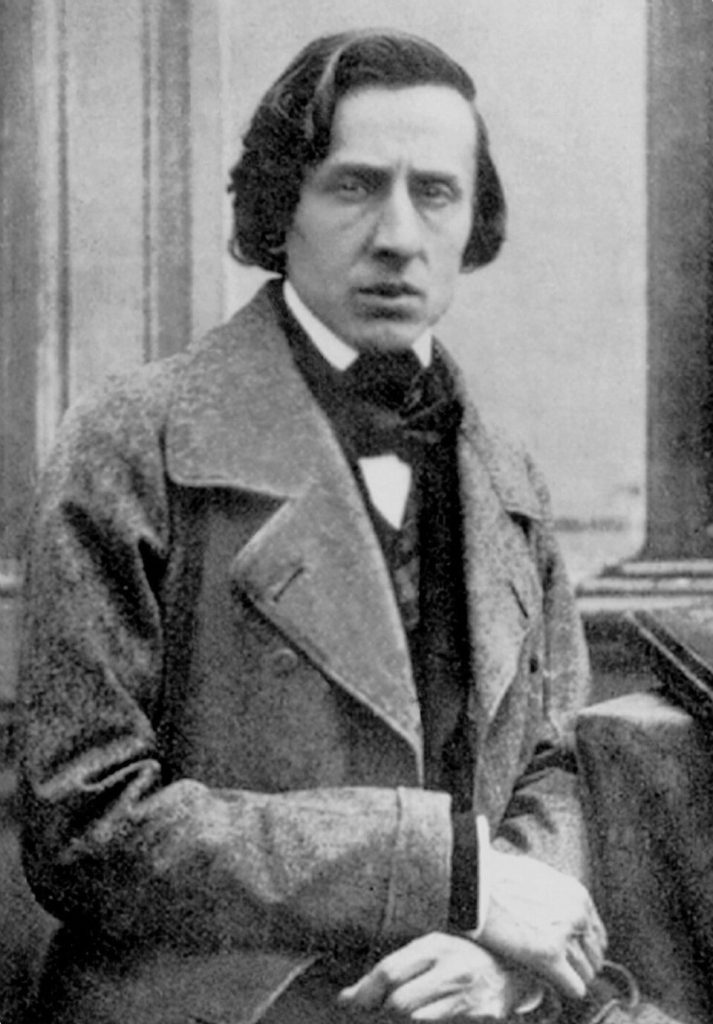
Frédéric Chopin (1810–1849) was a Polish-born composer and virtuoso pianist of the Romantic era, widely regarded as the “Poet of the Piano.” He is unique among great composers for writing almost exclusively for the solo piano. His music is characterized by its profound lyricism, innovative harmonic structures, and the pioneering use of “rubato.” Chopin’s work successfully blended the folk traditions of his native Poland (Mazurkas and Polonaises) with the refined elegance of the French salon, creating a body of work that remains the cornerstone of the classical piano repertoire.
1. The Polish Prodigy: Early Life and Education in Warsaw
Frédéric Chopin (Fryderyk Franciszek Chopin in Polish) was born on March 1, 1810 in Żelazowa Wola, a village near Warsaw. His father Nicolas had come from France to teach French in Warsaw, and his mother Justyna Krzyżanowska was a Polish pianist and teacher.
Chopin showed extraordinary talent in early childhood: by age six he was reproducing melodies he had heard and inventing his own tunes. At seven he composed a Polonaise in G minor that was later published. He gave his first public piano performance at eight (at a charity concert) and by eleven he played before the visiting Tsar Alexander I of Russia.
In Warsaw’s cultured salons Chopin was recognized as a prodigy. His early pieces, polonaises, mazurkas, variations and small rondos, were already taking shape with a Romantic polish and hints of Polish folk rhythms (as was common for Polish composers of the time).
The Rise of a “Second Mozart”
By the age of six, Chopin was already a local sensation. Unlike many virtuosos who were forced into practice, Chopin’s talent was organic. He began composing polonaises and performing in the salons of the Polish aristocracy before he was ten.
In 1823, when Chopin was only 13, he began studying composition with Józef Elsner at the Warsaw Conservatory. By 1826 he entered the Main School of Music under Elsner, who soon praised him as a “musical genius”. Elsner gave him a solid grounding in harmony and form, but otherwise allowed Chopin’s natural creativity free rein. Even as a student, Chopin absorbed the Classical tradition (Bach, Mozart, Beethoven) and also collected melodies from rural Poland, which later gave his music a distinct national color. By his late teens Chopin was composing larger works. He remained in Warsaw until age 20, working in traditional concert forms like variations, fantasies and concertos, but always including Polish dances such as mazurkas and polonaises in his output.
- 1817: Published his first Polonaise in G Minor.
- 1818: Performed his first public concerto at age eight.
- The Warsaw Conservatory: Under the guidance of Józef Elsner, Chopin studied the rigors of counterpoint and harmony. Elsner, recognizing Chopin’s singular gift, notably wrote in a report: “Musical genius.”
While his education was grounded in the Classical traditions of Bach and Mozart, Chopin spent his summers in the Polish countryside. Here, he absorbed the syncopated rhythms and “blue notes” of the Mazur, Kujawiak, and Oberek. This synthesis of academic rigor and folk authenticity would define his musical identity forever.
2. The Great Migration: From Warsaw to the Heart of Paris
In 1829–30, Chopin made his first concert tours abroad. In December 1829 he performed in Vienna to great acclaim, and it was there that he wrote his first piano concertos (F minor and E minor) and a set of Études (Op.10) to show off his brilliant piano technique. He returned to Warsaw to premiere new works in early 1830. But Europe was on the brink of upheaval.
By the time Chopin left Poland in late 1830, the November Uprising against Russian rule had just begun. He decided not to return, instead moving on to Vienna and finally settling in Paris in late 1831. Thus began a lifetime of voluntary exile: he would never live permanently in Poland again.
Settling in Paris (1831)
Paris in the 1830s was the heart of the Romantic era, and Chopin soon became part of its musical circles. He found fellow Polish émigrés like Franz Liszt and Polish intellectuals around him. By 1832 he gave a debut in Paris, but learned that his delicate playing belonged in intimate salons, not large concert halls. Teaching piano became his main profession: he charged well for lessons to the aristocracy, famously earning a living at the piano without constant touring. A major patron was the Rothschild family, whose support allowed him financial independence. Freed from the rigors of concertizing, Chopin devoted himself to composing for piano. He effectively invented or perfected many solo piano genres. His oeuvre would include roughly two dozen ballades (he is credited with creating the piano ballade as a form) and dozens of mazurkas, waltzes, nocturnes, polonaises, scherzos, préludes, impromptus and études. He continued to write in cycles: for example, the 1835–39 Preludes (Op.28) is a landmark set of 24 brief pieces, and he completed two late Piano Sonatas (op.35 and op.58). In all these works, Chopin gave an unprecedented lyricism to the piano, treating it almost like a singing instrument.
Chopin’s personal life during these Paris years was eventful. In 1836–37 he became secretly engaged to the 17-year-old Maria Wodzińska, a Polish pupil and amateur painter. The relationship ended suddenly in spring 1837, which left Chopin deeply heartbroken. He channeled his grief into music: notably, the famous “Funeral March” (second movement of his B‑flat minor Piano Sonata, Op.35) dates from this period. Chopin was always physically fragile, prone to respiratory illness (eventually he would suffer 13 years from tuberculosis). After the Wodzińska episode he took a restorative trip to Switzerland and Italy late in 1837.
3. The Architecture of Sound: Revolutionary Musical Forms
Chopin’s greatest contribution to music was his ability to elevate “small” forms into epic masterpieces. He moved away from the rigid structures of the Classical sonata and instead focused on genres that allowed for more fluid, emotional expression.
The Ballades and Scherzos
Chopin is credited with inventing the Piano Ballade—a large-scale work that tells a wordless story. Influenced by Polish literary legends like Adam Mickiewicz, his four ballades are masterpieces of structural tension and dramatic release. Similarly, he took the Scherzo (traditionally a “joke” movement in a symphony) and turned it into a standalone, dark, and brooding genre.
The Nocturnes: Night Music for the Soul
Inspired by the Irish composer John Field, Chopin perfected the Nocturne. These pieces are the pinnacle of Bel Canto (beautiful singing) style on the piano. They feature a flowing, arpeggiated left hand and a highly decorated, singing melody in the right hand.
The Études: Teaching Art through Technique
Before Chopin, “études” (studies) were dry exercises meant to build finger strength. Chopin’s Op. 10 and Op. 25 changed history. While each étude focuses on a specific technical challenge, such as thirds, sixths, or rapid arpeggios, they are also profound musical statements. They are standard repertoire for every serious concert pianist today.
4. The George Sand Years: Love, Illness, and Mallorca
In 1836, Chopin met the subversive French novelist Aurore Dupin, known by her pseudonym George Sand. Their nine-year relationship was one of the most famous and tumultuous in the Romantic era.
The Fateful Winter in Mallorca (1838–1839)
Seeking a cure for Chopin’s worsening tuberculosis, the couple traveled to Valldemossa, Mallorca. The trip was a disaster. The weather was damp, the locals were hostile, and Chopin’s health plummeted. However, amidst the gloom of an abandoned monastery, Chopin composed some of his most haunting works, including the 24 Preludes, Op. 28.
- The “Raindrop” Prelude: Legend says the repeated A-flat in the 15th prelude mimics the sound of rain dripping from the monastery roof, though Chopin famously detested such literal interpretations of his music.
The Nohant Summers
Free from Parisian distractions, he composed some of his finest works surrounded by Sand’s children, occasional guests like the painter Delacroix and singer Viardot, and the peace of the countryside. As one biographer notes, these years “opened up a space… within which some of the most exceptional piano music of the European tradition could come to fruition”. Examples of works from this period include the four Ballades (Op.23, 38, 47, 52), the Fantaisie in F‑minor (1841), the Barcarolle (1845–46), the Polonaise-Fantaisie (1846), and the two late piano sonatas (one containing the famous Funeral March). He also continued writing mazurkas and nocturnes with rich harmonic color. Notably, Chopin’s harmonic vocabulary grew adventurous at Nohant while never sacrificing beauty.
By the mid-1840s, however, tensions arose. Family strife in Sand’s household (especially her daughter’s marriage troubles) made Chopin moody and irritable. In 1847 Chopin and Sand broke up, ending a nine-year partnership. In early 1848 the wave of revolutions in Europe again stirred Chopin’s patriotic feelings. That spring he left Paris to visit Britain, where he gave a series of benefit concerts in London and Scotland for Polish refugees. Though his playing was warmly received, the exhausting travel took a toll on his fragile body and curtailed his composing. He returned to Paris in the fall of 1848, and never fully regained his health.
5. Masterclass: Technical Pillars of Chopin’s Style
For the student or enthusiast, understanding how to play Chopin is as important as knowing his life. His technique was not about strength, but about fluidity and ease.
The Concept of Rubato
Chopin’s most misunderstood technique is Tempo Rubato (stolen time). He described it as a tree: the trunk (the left-hand rhythm) stays straight and steady, while the leaves (the right-hand melody) sway and move with the wind.
- Key Tip: Never distort the pulse. The “stolen” time must always be “paid back” by the end of the phrase.
Fingering Innovations
Chopin broke the rules of Classical piano. He was one of the first to:
- Pass the thumb under the fifth finger.
- Slide the same finger from a black key to a white key to maintain a perfect legato.
- Use the “natural” position of the hand (starting on E, F#, G#, A#, B) as the basis for his teaching, rather than the C-major scale.
Harmonic Boldness
Chopin’s use of Chromaticism and Enharmonic modulations (treating a G# as an Ab to move to a distant key) paved the way for late-Romantic composers like Wagner and the Impressionism of Debussy. He often used “dissonance” not as a mistake, but as a color to heighten the emotional tension.
6. The Final Act: London, Paris, and the Heart in Warsaw
By 1848, Chopin was a dying man. Exhausted by the breakup with Sand and the revolution in Paris, he accepted an invitation to tour Britain. Though he performed for Queen Victoria, the London fog and grueling schedule destroyed his remaining strength.
Chopin spent the winter of 1849 in declining strength. On October 17, 1849 he died in Paris at age 39. His death certificate listed tuberculosis as the cause (the disease had plagued him for many years). He was a famous composer by then, so his passing was mourned across Europe. Chopin was buried in Paris’s Père-Lachaise Cemetery; in accordance with his wishes his heart was removed and preserved in Poland, finally interred in Warsaw’s Church of the Holy Cross.
The Heart of Poland
In a final act of devotion to his homeland, Chopin requested that his heart be removed and returned to Warsaw. Today, it is interred in a pillar of the Holy Cross Church in Warsaw, while his body rests in the Père Lachaise Cemetery in Paris.
Legacy and Cultural Impact
Chopin’s death at 39 only enhanced his myth as the archetypal Romantic composer – brooding, passionate and prematurely gone. His works became staples of concert repertoire worldwide. He has been cited as a national hero in Poland: the Polish government eventually founded the Fryderyk Chopin Institute and sponsors a major international Chopin Piano Competition in Warsaw, held every five years. Chopin’s music has also had broad influence: late 19th-century Russian composers like Tchaikovsky and Rachmaninoff admired his mazurkas and waltzes as models for building a national Russian style. In France, composers such as Fauré, Debussy and Ravel acknowledged Chopin’s imprint on their own piano writing. In the 20th century Chopin attained an almost cult status outside Europe: for example, in East Asia (Japan, China and Korea) he is idolized as a symbol of artistic refinement, and the piano has often been regarded as a path to modernity in those cultures.
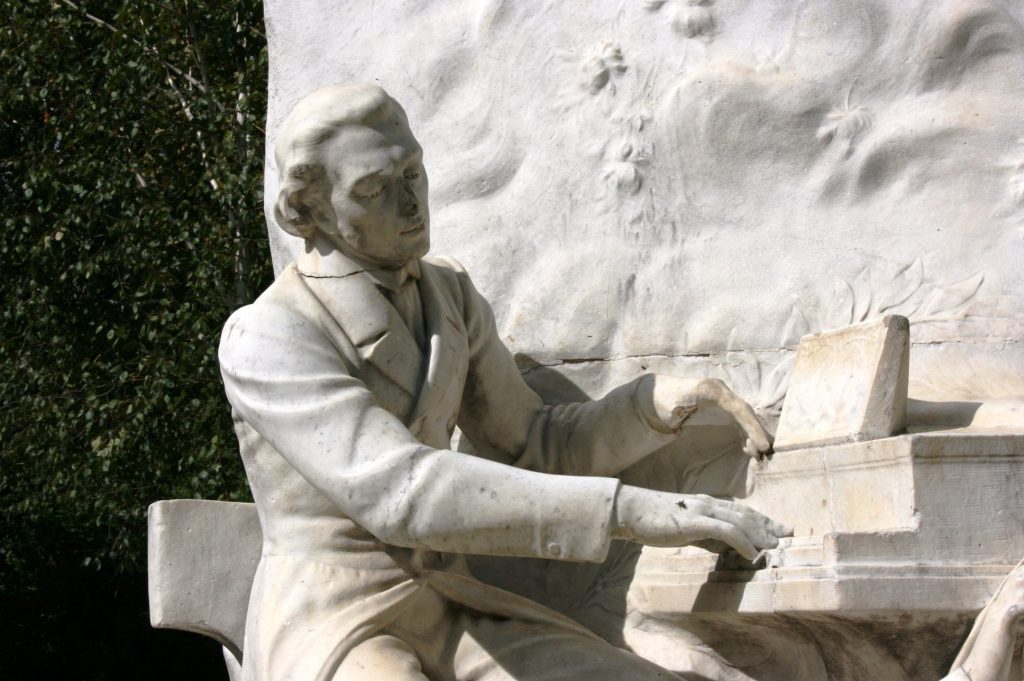
His life and personality, the frail genius from Poland – have inspired many biographies and films. Among the famous memorials to him is his heart, enshrined in the Church of the Holy Cross in Warsaw, and the numerous statues and concert halls bearing his name in both Poland and France. Today Chopin’s music remains immensely popular, a mainstay of pianists from amateur to virtuoso levels, and his legacy continues to grow with each new generation of listeners.
7. Playing Chopin: Technique, Interpretation, and Challenges
Understanding how to play Chopin effectively is a journey that demands sensitivity, technical finesse, and intellectual insight. His music is filled with expressive nuance, dynamic contrast, and poetic freedom. Pianists often find Chopin both seductive and challenging: seductive because of the innate beauty and lyricism of his works, and challenging because that beauty is hard to realize without precise control.
Tone Production and Touch
Chopin placed extraordinary importance on the quality of sound. Unlike many of his contemporaries, he disliked harshness or force in piano playing. He taught his students to “caress” the keyboard, favoring a velvety legato and round tone. He advised pressing the key with the pad of the finger, avoiding excessive finger height. The aim was not to attack the piano but to produce a seamless, singing line. This makes his music ideal for developing a refined touch.
Playing Chopin well often starts with cultivating a sensitive tone. In pieces like the Nocturnes or Preludes, each note matters. A heavy or detached touch can ruin the effect. Pianists must learn to play with deep, relaxed finger technique and to control dynamics minutely, shaping each phrase like a singer would. Exercises in tone control, such as voicing a melody within a chord or achieving evenness in pianissimo, are vital in Chopin’s music.
Use of Rubato
Rubato is perhaps the most characteristic feature of Chopin’s playing style and also the hardest to teach. As described earlier, Chopin employed a subtle form of rhythmic flexibility where the left hand keeps a steady beat and the right hand floats freely above it. It’s important not to confuse this with random speeding up and slowing down.
To play rubato authentically in Chopin’s style, a pianist must understand the music’s shape and direction. Rubato should never disrupt the overall pulse or draw attention to itself. It should enhance the phrase, making the melody more expressive. This demands not only a technical skill but also a deep emotional connection to the music.
Many teachers recommend singing the phrase aloud to determine where the natural push and pull of rubato belongs. The best rubato is almost imperceptible—it is felt more than heard. Great Chopin interpreters like Dinu Lipatti or Maria João Pires exemplify this kind of controlled elasticity.
Voicing and Inner Lines
Another hallmark of Chopin’s piano writing is the use of complex textures with multiple voices. In works like the Ballades or Scherzos, the pianist often must project a singing melody while also shaping inner voices and bass lines. Mastery of voicing is critical.
This means being able to make one or two notes in a chord sing out while keeping others in the background. This requires a deep control of weight and independence in the fingers. A common challenge in Chopin is maintaining a soft accompaniment in the left hand while making the right-hand melody bloom above it.
Exercises that isolate the melody or break apart the hands can help develop this skill. Recording oneself is also valuable, as the ear can better judge the balance after the fact.
Pedaling
Chopin’s use of the sustain pedal was subtle and refined. He disliked blurring harmonies and often expected the pedal to follow the harmony closely. Legato pedaling, where the foot lifts and depresses the pedal at the moment of a chord change, is essential.
In fast or chromatic passages, half-pedaling or flutter pedaling may be required. Over-pedaling is a common error in Chopin: it muddies textures and robs the music of its transparency. Pianists must develop an ear for clarity and resonance, using the pedal to enhance, not to cover mistakes.
Ornamentation and Articulation
Chopin frequently used ornamentation, trills, mordents, grace notes, both as expressive devices and structural elements. These must be executed with precision and style. In his own performances, Chopin varied ornaments subtly, never playing them the same way twice.
Modern performers often consult early editions or manuscripts to understand how ornaments were intended. Playing ornaments smoothly and expressively requires finger dexterity and a refined sense of timing. They must flow from the melodic line, never interrupting it.
Phrasing and Breathing
Playing Chopin well involves thinking vocally. He often advised his students to emulate the human voice and to breathe with the music. This means shaping each phrase with natural rise and fall, with slight pauses or dynamic nuances at the end of a musical sentence.
Chopin’s music is not about strict tempo and metronomic precision. Rather, it’s about motion and gesture. Pianists should pay attention to cadence points, melodic climaxes, and harmonic shifts, adjusting their expression accordingly.
Emotional Intelligence and Restraint
Chopin’s music is intensely emotional, but it is also refined. He disliked showiness for its own sake and warned against playing with excessive speed or volume. Pianists must bring out the poetry in his works, not just the passion.
In performances, emotional maturity is key. Overly sentimental playing can make his music sound saccharine, while cold technical display can leave it empty. The best interpretations combine passion with elegance.
To reach this level, performers often return to the same pieces over many years, discovering new meanings and deepening their interpretations. Chopin’s works, particularly the Mazurkas, Ballades, and Nocturnes, reward lifelong study.
Technical Preparation
Technically, Chopin demands agility, flexibility, and control. His Études, especially, train the pianist in specific challenges: thirds, sixths, chromatic runs, rapid octaves, and arpeggios. The Études Op.10 and Op.25 are not just exercises but concert pieces that test a pianist’s endurance, velocity, and musicality.
Pianists studying Chopin should also work on hand flexibility and wrist mobility, especially for his wide-spanning chords and passages that require lateral motion across the keyboard. Exercises that strengthen finger independence, such as Hanon or Dohnányi, can be used in moderation but should be complemented with real Chopin excerpts to apply the techniques musically.
Interpretation Across Pieces
Each genre in Chopin’s output has its own interpretive demands. The Waltzes require elegance and rhythmic bounce, often with light pedaling and dance-like precision. The Polonaises call for nobility and grandeur. The Mazurkas require knowledge of Polish folk rhythms and subtle accents. The Nocturnes demand lyrical phrasing and textural balance. The Ballades ask for narrative pacing and structural command.
Mastering Chopin means learning how to listen deeply, to shape lines expressively, to balance technical control with poetic intuition, and above all to allow the music to breathe and sing.
In conclusion, playing Chopin is not about flashy brilliance or mechanical accuracy. It is about creating beauty with restraint, telling a story with clarity, and expressing emotion with sincerity. His music asks the pianist to be both a poet and a craftsman—someone capable of nuance, grace, and profound feeling. And for those willing to engage deeply, Chopin offers a lifetime of insight and artistic fulfillment.
Recommended Recordings and Editions
For listeners seeking definitive performances, many legendary recordings of Chopin are celebrated. For example, Arthur Rubinstein’s 1930s recordings of the Mazurkas are still admired. Martha Argerich’s complete recording of the Chopin sonatas (Deutsche Grammophon) and Garrick Ohlsson’s complete Waltzes are often recommended. Likewise, Maurizio Pollini’s album of Polonaises, Emanuel Ax’s concerts (played on a period Érard piano), Maria João Pires’s Nocturnes, Vladimir Ashkenazy’s complete Études (Decca), and Yundi’s Preludes (DG) are highly regarded. These recordings showcase Chopin’s range from delicate intimacy to heroic grandeur.
Scholars and performers also rely on authoritative editions of Chopin’s music. The Polish National (Chopin) Edition, begun by Jan Ekier, is considered the definitive critical edition. Ekier started this project in 1959 because he believed earlier editions (like that of Paderewski) contained many errors and editorial changes inconsistent with Chopin’s intentions. (For example, Ekier wrote that the prevailing Paderewski edition gave a “false image of Chopin’s music in many aspects”.) The National Edition was completed in 2010 and is now the reference for modern performers and scholars. Other editions (by Henle, Wiener Urtext, etc.) are also popular and often include thorough performance commentaries. In any case, using a reliable urtext is advised, since Chopin was known to revise his scores and to use expressive markings (like rubato) that later editors sometimes misunderstood.
Throughout two centuries, Chopin’s music has remained evergreen. His blend of Polish character, Romantic poetry and pianistic brilliance ensures that each new listener can find something profoundly moving in his art.
Recommended Gear for Aspiring Pianists and Chopin Lovers
To truly appreciate and master Chopin’s work, one must use the right tools. Here are the professional recommendations for scores, recordings, and accessories.
The “Urtext” Scores (The Gold Standard)
- The Polish National Edition (Jan Ekier): This is the most authoritative edition available. Based on Chopin’s original manuscripts, it corrects centuries of editorial errors.
As an Amazon Associate I earn from qualifying purchases.
As an Amazon Associate I earn from qualifying purchases.
As an Amazon Associate I earn from qualifying purchases.
- Henle Urtext Editions: Excellent for durability and clarity. These are the blue-covered books you see on every professional’s piano.
As an Amazon Associate I earn from qualifying purchases.
As an Amazon Associate I earn from qualifying purchases.
As an Amazon Associate I earn from qualifying purchases.
Essential Recordings
- Arthur Rubinstein: The legendary interpreter of Chopin’s Mazurkas and Nocturnes. His playing captures the “aristocratic” elegance of the music.
- Martha Argerich: For the high-voltage energy of the Preludes and Sonatas.
- Maria João Pires: Noted for her breathtaking sensitivity in the Nocturnes.
Practice Tools
- Metronome (Mechanical or Digital): Essential for maintaining the “trunk of the tree” in your rubato practice.
As an Amazon Associate I earn from qualifying purchases.
As an Amazon Associate I earn from qualifying purchases.
- Piano Lamp (Gold/Brass Finish): To capture that 19th-century salon aesthetic while protecting your eyes during late-night practice of the Nocturnes.
As an Amazon Associate I earn from qualifying purchases.
Conclusion: The Eternal Echo of the Piano
Frédéric Chopin’s legacy is not found in massive symphonies or grand operas, but in the quiet intensity of a single instrument. He proved that music doesn’t need to be loud to be powerful. By synthesizing the folk heart of Poland with the sophisticated mind of the Parisian avant-garde, he created a universal language of longing, beauty, and resilience.
For the modern pianist, Chopin remains the ultimate teacher. He demands not just finger dexterity, but a soul that can breathe with the music. Whether you are a listener or a performer, the works of Chopin offer a sanctuary, a place where the “singing piano” continues to tell the story of the human heart.
To Go Further :
Sources & References
Encyclopædia Britannica: https://www.britannica.com/biography/Frederic-Chopin /
The Chamber Music Society of Lincoln Center: https://www.chambermusicsociety.org/about-the-music/composers/frederic-chopin/
Zamoyski, Adam. Chopin: Prince of the Romantics. London: HarperPress, 2010. (Widely considered the definitive modern biography).
Walker, Alan. Fryderyk Chopin: A Life and Times. New York: Farrar, Straus and Giroux, 2018. (Winner of the James Tait Black Memorial Prize).
Ekier, Jan. The Foundation for the National Edition of the Works of Fryderyk Chopin. Warsaw: Polskie Wydawnictwo Muzyczne. (The primary source for urtext accuracy).
Eigeldinger, Jean-Jacques. Chopin: Pianist and Teacher as Seen by his Pupils. Cambridge University Press, 1986. (The essential source for Chopin’s technical instructions and rubato).
Samson, Jim. The Music of Chopin. Oxford: Clarendon Press, 1985.