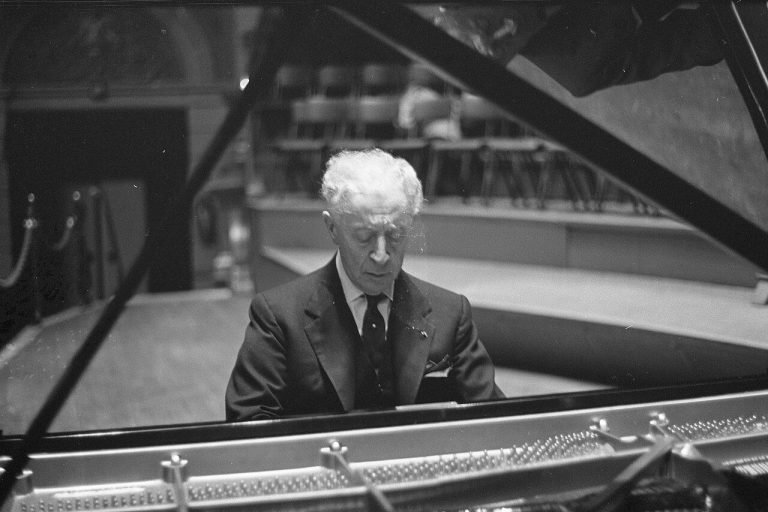
Martha Argerich is widely considered one of the greatest pianists of the 20th and 21st centuries. She stands as a singular force in the history of classical music, a performer whose name is synonymous with an almost supernatural fusion of technical precision and visceral emotional intensity. For over seven decades, this Argentine-born virtuoso has redefined the boundaries of the piano repertoire, earning titles such as the “Tigress of the Keyboard” and the “Lioness” due to her ferocious speed, massive dynamic range, and a stage presence that balances vulnerability with absolute command. Since her legendary triumph at the 1965 International Chopin Piano Competition, Argerich has navigated a career marked by spectacular successes, profound artistic crises, and a revolutionary shift away from solo recitals toward a life dedicated to chamber music and the fostering of young talent.
Martha Argerich is an Argentine-born concert pianist recognized for her extraordinary speed, power, and emotional depth. Often described as a “lioness of the keyboard,” she is famous for her interpretations of the Romantic and 20th-century repertoire, particularly works by Chopin, Liszt, Tchaikovsky, Prokofiev, and Ravel. Her career is characterized by a preference for collaborative performances (chamber music and concertos) over solo recitals, and a spontaneous, “in-the-moment” performing style that eschews rigid calculation.
1. Early Life and the Making of a Prodigy
Born in Buenos Aires on June 5, 1941, Martha Argerich demonstrated an uncanny affinity for the piano at an almost pre-linguistic age. Legend has it that she began playing after a schoolmate challenged her to play the piano, and she simply sat down and reproduced a melody she had heard.
Influential Teachers and European Relocation
- Vincenzo Scaramuzza: Her first major teacher in Argentina, who emphasized lyricism and a flexible wrist, foundations that would later support her lightning-fast technique.
- Friedrich Gulda: Perhaps her most influential mentor. After moving to Europe in 1955 with the help of the Argentine government (President Juan Perón himself met with the family – read below), she studied with Gulda in Vienna. He encouraged her independence and curiosity.
- Arturo Benedetti Michelangeli: Though her time with him was brief and shrouded in mystery, his obsession with tonal perfection left a mark on her aesthetic.
By age 16, within the span of three weeks, she won both the Geneva International Music Competition and the Busoni International Competition, signaling the arrival of a world-class talent.
The Perón Diplomatic Intervention
The most significant turning point in her early career occurred in 1955. Recognizing her potential, the Argentine government under President Juan Perón granted Argerich’s father a diplomatic post in Vienna to facilitate her studies in Europe. This move allowed her to study with Friedrich Gulda, Stefan Askenase, and Arturo Benedetti Michelangeli.
Gulda, whom she describes as her greatest influence, focused on artistic freedom and individuality. Michelangeli, conversely, demanded a rigorous discipline and precision, famously claiming he “taught her the gift of silence,” a reference to the mastery of rests and temporal space in performance. These contrasting pedagogical styles merged in Argerich to create a unique duality: a pianist capable of absolute technical control who remains perpetually open to spontaneous impulse.
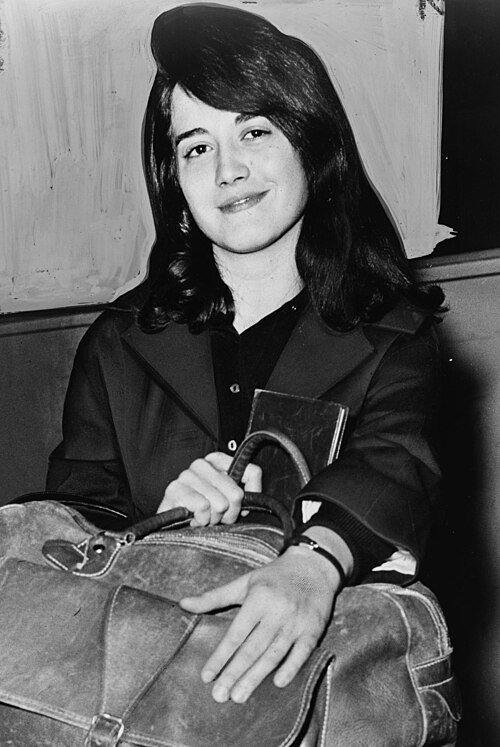
Library of Congress. New York, World-Telegram & Sun Collection. 1962
2. The Physics of the Argerich Sound
To understand the “Lioness” moniker, one must examine the specific technical and theoretical mechanisms Argerich employs. Her playing is not merely fast; it is architecturally sound, rooted in an intimate understanding of the piano’s mechanical action and the physics of sound production.
Dynamic Intensity and Timbre
The piano, as a percussive instrument, produces sound when hammers strike strings. Argerich’s ability to manipulate this mechanism is unparalleled. She utilizes a vast range of dynamics, relative degrees of volume, ranging from a pianississimo (ppp) that remains crystalline and audible in the back of a concert hall, to a fortississimo (fff) that can compete with a full symphony orchestra without coarsening the tone. Her “tonal palette” is noted by critics for its “impressionistic wealth of color,” a reference to timbre, or the specific “color” of sound produced by the harmonic content of a note.
Speed and Physical Efficiency
A common observation of Argerich’s technique is the “sustainable” nature of her skill. Many pianists suffer from physical exhaustion or injury due to tension in their hands and shoulders. Argerich, following the Scaramuzza lineage, maintains a lack of unnecessary physical tension, allowing her skills to remain sharp into her eighties. In music theory terms, this allows her to execute rapid intervalles harmoniques (harmonic intervals) and complex polyphony, layers of different melodic activity, at speeds that seem to defy human limits.
The Mastery of Tempo Rubato
Argerich’s interpretations are perhaps most famous for her use of tempo rubato (stolen time). This technique involves a flexible approach to rhythm, where the performer speeds up or slows down specific phrases to convey emotion while maintaining the overall structural integrity of the piece.
- The Breathing Phrase: She allows phrases to stretch and contract as if in response to a conversation.
- Chopin Interpretations: In her Chopin recordings, her rubato is described as so natural it becomes “indiscernible,” yet it provides a “restless energy” that mirrors the intensity of the contemporary world.
3. 1957 to 1965: Triumph, Crisis, and the “Gallons of Coffee”
After her 1957 victories in Geneva and the Busoni competition, Argerich entered a period of deep artistic and personal doubt. She felt “lonely” on the stage during solo performances, a sentiment that would eventually lead her to abandon solo recitals almost entirely in the 1980s. During this crisis, she withdrew from the stage, viewing herself as little more than a “piano-playing housewife”.
The 1965 Chopin Competition
Her return was encouraged by her teacher Stefan Askenase, who urged her to enter the VII International Chopin Piano Competition in Warsaw. Argerich arrived in London to record the recital repertoire for EMI, fortified, as producer Suvi Raj Grubb famously noted, by “gallons of strong, black coffee”.
Her playing of Chopin’s Polonaise Op. 53 and the Scherzo No. 3 stunned the engineers. Grubb reported sitting up in his chair with a “long drawn-out ‘Jee-sus’,” declaring her the most formidable player they had ever encountered. She won the competition decisively, becoming the first South American winner and a global icon of the Romantic repertoire.
Key Repertoire Highlights (1960s)
- Liszt: Hungarian Rhapsody No. 6: A demonstration of extreme octave technique and bravura.
- Chopin: Piano Sonata No. 3 in B Minor: Celebrated for its blend of fire and poetry.
- Prokofiev: Piano Concerto No. 3: One of her signature pieces, noted for its jaw-dropping finale and “artistic risk”.
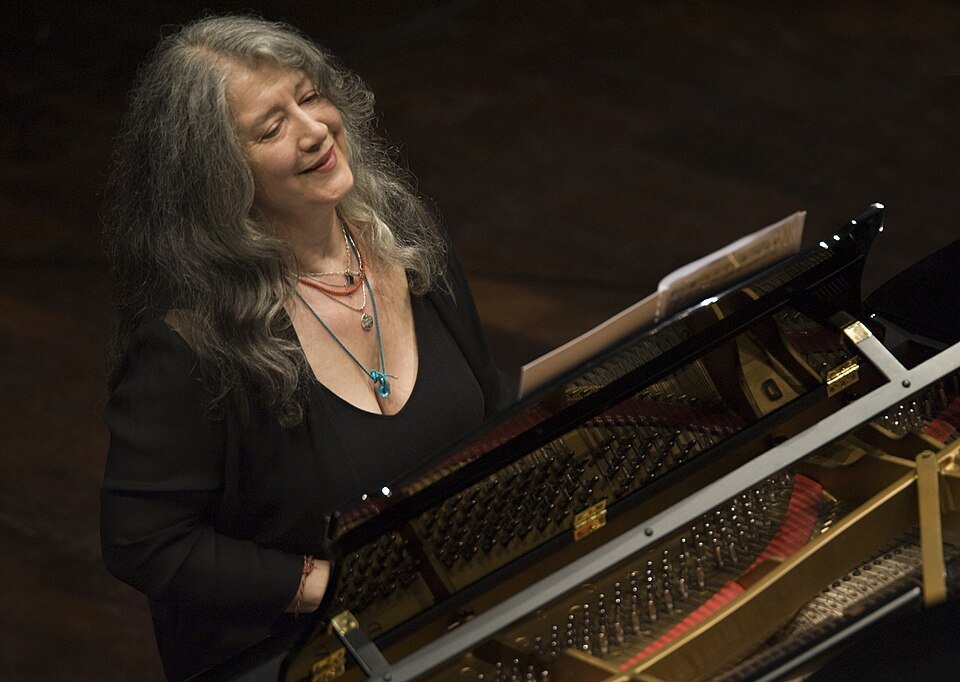
4. From Soloist to Collaborative Partner
A defining characteristic of Martha Argerich’s career is her deliberate transition away from the “lonely” solo stage. Since the late 1970s and early 1980s, she has focused almost exclusively on concertos and chamber music, music written for small ensembles where each instrument plays a unique part.
Collaborative Philosophy
Argerich describes herself as “chaotic” and headstrong, but in music, she is the ultimate team player. She thrives on the spontaneity of the concert hall and the dialogue between performers. Her ability to “listen, respond, and create music as a shared experience” has led to some of the most lauded recordings in the history of chamber music.
Legendary Partnerships
The depth of Argerich’s legacy is found in her long-term artistic relationships:
- Claudio Abbado: Their collaboration spanned decades, resulting in benchmark recordings of concertos by Prokofiev, Ravel, and Mozart.
- Mischa Maisky: Together they recorded authoritative cycles of cello sonatas by Beethoven, Bach, and Brahms.
- Gidon Kremer: Their partnership on Beethoven’s violin sonatas is noted for its “elegant, intimate, and exhilarating” energy.
- Nelson Freire: A lifelong friend and fellow South American, their piano duo performances were celebrated for their mutual intuition and “savage” rhythmic drive.
5. The “Pogorelich Affair” and Artistic Integrity
Argerich is known not only for her music but for her fierce convictions. The most famous example is the 1980 International Chopin Piano Competition controversy. Argerich, serving as a jury member, was mesmerized by the young Yugoslav pianist Ivo Pogorelich, whose phrasing and tempo choices were highly unconventional and polarizing.
When the rest of the jury eliminated Pogorelich before the final round, Argerich resigned in protest, famously declaring him a “genius”. This decision drew global attention and became a symbol of the struggle between traditionalist institutional judging and the defense of artistic individuality. It reinforced Argerich’s status as a champion for the “risky” artist, a quality she herself embodies in every performance.
6. Analyzsing the Argerich Repertoire: Theory and Form
For the student of music, Argerich’s repertoire offers a masterclass in the application of music theory to interpretation. Her selection of works, focusing heavily on Schumann, Chopin, Ravel, and Prokofiev, demonstrates a preference for complex sonata forms and highly textured polyphony.
While her repertoire is not as vast as some (she famously avoids most Mozart and late Beethoven in solo settings), what she does play, she masters absolutely.
The Russian Titans
Her recording of Tchaikovsky’s Piano Concerto No. 1 (with Claudio Abbado or Charles Dutoit) is often cited as the gold standard. Similarly, her interpretation of Prokofiev’s Concerto No. 3 is legendary for its rhythmic drive and biting wit. Argerich navigates the composer’s signature percussive style. Prokofiev’s music often utilizes “asymmetrical meters”, time signatures with irregular pulse groupings. Argerich’s “jaw-dropping” speed in the finale is matched by her ability to clarify the dissonance and complex chord structures, resolving the tension into the work’s massive, rhythmic conclusion.
Frédéric Chopin
As a Chopin Competition winner, her recordings of the 24 Preludes, Op. 28 are essential listening. She captures the mercurial nature of these miniatures, from the frantic despair of No. 16 to the lyrical beauty of No. 15.
Maurice Ravel and the French School
Argerich has a deep affinity for Ravel. Her performance of the G major Concerto highlights her ability to blend jazz-inflected rhythms with Impressionist colors. Gaspard de la Nuit, particularly the “Scarbo” movement, showcases her terrifying technical command.
In her performance, Argerich highlights the “chamber music” quality of the score. Rather than overshadowing the orchestra, she integrates the piano part into the instrumental texture, using precise articulations (staccato and legato) to define the rhythmic patterns. Her “Allegramente” movement is noted for its effervescence, while the “Adagio assai” demonstrates her mastery of long, sustained melodic lines, what theory defines as a succession of tones having an identifiable shape and meaning.
7. Legacy and Mentorship
Martha Argerich’s contribution to the piano world extends beyond her own performances. She has dedicated significant energy to the promotion of younger artists, reflecting her belief that music is a communal, rather than solitary, pursuit.
The Martha Argerich Project (Lugano)
For many years, the Lugano Festival in Switzerland served as a hub for both established and emerging artists to perform together. Under Argerich’s guidance, the festival rejected competitive atmospheres in favor of collaborative “rendez-vous”. This project resulted in a vast collection of recordings that showcase rare and unconventional repertoire, including piano duo arrangements of symphonic masterworks like Tchaikovsky’s The Nutcracker and Prokofiev’s Cinderella.
The Beppu Argerich Music Festival
In Japan, Argerich has served as the General Director of the Beppu Festival since 1996. The festival’s objective is to promote young Asian musicians and foster creativity in the next generation. Argerich frequently appears as a member of juries for international competitions, though she remains a vocal advocate for the protection of an artist’s unique voice over rigid adherence to standard techniques.
Artists Supported by Argerich
Argerich has been instrumental in the careers of several notable pianists, including:
- Gabriela Montero: Noted for her improvisational skills.
- Sergio Tiempo: An Argentine-Venezuelan virtuoso.
- Seong-Jin Cho: Who recently substituted for her in 2025.
8. Music Theory Corner
For serious piano students, Argerich’s career provides a practical roadmap for applying music theory to the physical act of playing. The following concepts are essential niche terms used by professionals to describe her specific expertise:
- Lecture à Vue (Sight Reading): Argerich is legendary for her ability to learn massive, complex works in a matter of days. This requires a mastery of reading not by individual notes, but by “patterns or groups of notes,” much like reading words instead of letters.
- Intervalles Harmoniques (Harmonic Intervals): Her ability to voice chords—highlighting specific notes within a triad or seventh chord—creates the “orchestral” sound for which she is famous.
- Polyphony: In her Bach and Schumann interpretations, she clarifies multiple melodic lines occurring simultaneously, a task that requires total independence of the hands.
- Register Designation: Argerich utilizes the entire 88-key range, often employing 8va (playing an octave higher) and 8vb (playing an octave lower) indications with total clarity across the keyboard’s eight octaves.
Recommended Gear & Media for Piano Enthusiasts
To truly appreciate and emulate the standards set by Martha Argerich, the right tools and reference materials are essential.
Essential Recordings
- The Complete Chopin Recordings: A must-have box set containing the 1965 sessions and her iconic Preludes.
As an Amazon Associate I earn from qualifying purchases.
- Prokofiev & Ravel: Piano Concertos (with Claudio Abbado): Widely considered one of the greatest classical albums of all time.
As an Amazon Associate I earn from qualifying purchases.
Piano Gear for Aspiring Virtuosos
- Professional Adjustable Piano Bench: Argerich is particular about her seating and comfort. A high-quality, heavy-duty padded bench (like the Adjustable Roland Piano Bench) allows for the correct posture and arm weight distribution.
As an Amazon Associate I earn from qualifying purchases.
- Wittner Metronome (Mechanical): For developing the rock-solid rhythmic foundation seen in her Prokofiev interpretations.
As an Amazon Associate I earn from qualifying purchases.
- Reference Headphones (Sennheiser HD 600): To hear the nuanced “tone colors” and pedal work in her Ravel and Debussy recordings.
As an Amazon Associate I earn from qualifying purchases.
Conclusion: The Eternal Flame
Martha Argerich remains an enigma, a pianist who avoids the press, dislikes the spotlight, yet commands the stage like no other. Her contribution to piano playing lies in her refusal to be “neat” or “safe.” She reminds us that music is a living, breathing, and sometimes dangerous thing.
For any student of the piano, studying Argerich is not about imitating her speed, but about emulating her courage. She plays with a total lack of inhibition, a trait that transforms a simple performance into a historic event.
Experience the fire yourself. Listen to her 1965 recording of Chopin’s Scherzo No. 3 and observe how she balances structural integrity with raw, unbridled emotion.
To Go Further
Why does Martha Argerich rarely play solo recitals?
Argerich has stated in interviews that she feels “lonely” on stage during solo recitals. She finds the collaborative nature of chamber music and concertos more fulfilling and less anxiety-inducing.
What piano does Martha Argerich play?
She is almost exclusively a Steinway & Sons artist. She typically performs on a Steinway Model D (9-foot concert grand), known for its power and tonal range.
Is Martha Argerich still performing?
Yes. Despite being in her 80s, she continues to perform globally, primarily in concertos and chamber music festivals like the Hamburg Martha Argerich Festival.
What is Martha Argerich’s most famous piece?
While she has many, her interpretation of Tchaikovsky’s Piano Concerto No. 1 and Prokofiev’s Piano Concerto No. 3 are perhaps her most celebrated “signature” works.
Why is Martha Argerich called the “Lioness of the Piano”?
The nickname refers to her ferocious intensity at the keyboard, her unparalleled technical speed, and her iconic mane of long hair (formerly dark, now grey). It encapsulates the power and “wildness” of her interpretations.
What happened at the 1980 Chopin Competition?
Argerich resigned from the jury to protest the elimination of Ivo Pogorelich, whom she called a “genius”. Her withdrawal remains one of the most famous acts of artistic protest in classical music history.