As an Amazon Associate, PianoMode earns from qualifying purchases. Recommendations are made on their merits; the price you pay is the same.
While nothing truly replaces the touch and resonance of an acoustic grand, I quickly learned that there are budget keyboards that feel like a real piano, you just have to know where to look.
There exists a profound, almost sacred tension between the tip of a pianist’s finger and the vibrating string within a wooden frame. It is a relationship defined by resistance, gravity, and the laws of motion. When Bartolomeo Cristofori invented the gravicembalo col piano e forte in the early 18th century, he did not merely create a musical instrument; he engineered a mechanical system that allowed the human nervous system to communicate with air molecules through the medium of felt and wire. To play a piano is to engage in a physical dialogue with inertia.
For the modern student or the displaced professional, the quest for a digital instrument that replicates this complex mechanical interaction is often fraught with disappointment. Many affordable keyboards are “dead” to the touch, they offer the binary simplicity of a light switch rather than the infinite gradations of a lever. However, a select group of budget-friendly instruments has emerged, utilizing sophisticated haptic engineering to mimic the weight of history.
In the context of digital instruments, “action” refers to the mechanical assembly under the keys that determines the feel of the keyboard. For a keyboard to feel like a real piano, it must utilize Weighted Hammer Action, a system where physical weights (not springs) simulate the hammers of an acoustic piano, providing the resistance and momentum necessary for proper technique.
The Physics of Touch: Why the “Real” Feel is Non-Negotiable
In Thomas Bernhard’s novel The Loser, the obsession with the “perfect” instrument becomes a descent into madness. While we need not go that far, the scientific necessity of a realistic keybed is undeniable. When a pianist strikes a key on a Steinway or a Bösendorfer, they are feeling the Moment of Inertia. The key is a lever; the pivot point is the fulcrum.
The Neurological Feedback Loop
From a physiological perspective, the human brain relies on “proprioceptive feedback” to master the piano. When you press a weighted key, your muscles receive a counter-pressure that informs the brain how much force is required for a specific volume (velocity). This is the “Direct Answer” to why budget keyboards that feel like a real piano are essential: Without weight and graded resistance, the brain cannot develop the fine motor control required for expressive dynamics (pianissimo to fortissimo).
Research in musical haptics suggests that the “let-off” or “escapement”—that tiny notch felt when a key is depressed slowly, is vital for professional-level articulation. While rare in budget models, its presence marks the difference between a tool and an instrument.
1. Yamaha P-45 – A Trusted Entry-Level Workhorse
The Yamaha P-45 is the result of decades of industrial refinement. Yamaha’s Graded Hammer Standard (GHS) is the baseline against which all other budget actions are measured. It is an instrument designed for the “Everyman,” providing a reliable, consistent mechanical response that has become the global standard for entry-level education.
Technical Analysis of GHS
The GHS action utilizes physical weights that are balanced to provide a heavier feel in the lower register. One of the scientific strengths of Yamaha’s engineering is the “return velocity.” Many budget keyboards feel “sluggish” because the key does not return to its resting position fast enough. Yamaha has optimized the pivot geometry to ensure the key is ready for the next strike, facilitating the “articulation” necessary for Baroque and Classical repertoire.
Why It Stands Out:
- Excellent touch sensitivity with graded hammer action
- Compact and lightweight, great for small spaces
- Simple interface, great for beginners
Pros:
- Mechanical Reliability: Yamaha’s GHS is known for its durability over years of heavy practice.
- Consistent Grading: The transition of weight from bass to treble is exceptionally smooth.
- Matte Keytops: The black keys feature a matte finish that prevents finger slippage during high-humidity performances.
Cons:
- Dual-Sensor Limitation: It uses a dual-sensor system, which can make rapid note repetition (like in Scarlatti sonatas) slightly more challenging than on triple-sensor models.
- Aging Technology: The AWM sampling engine is somewhat dated compared to modern modeling techniques.
As an Amazon Associate I earn from qualifying purchases.
2. Kawai ES120 – The Precision of the Responsive Hammer Compact (RHC)
If we were to view the evolution of digital pianos through the lens of naturalist literature—reminiscent of the meticulous, clinical observations of Émile Zola, the Kawai ES120 would be the definitive protagonist. While many manufacturers attempt to mask mechanical deficiencies with digital filters, Kawai, drawing from its heritage as a premiere acoustic piano builder, has engineered the Responsive Hammer Compact (RHC) action. This system is a profound study in the physics of Inertia and Angular Acceleration.
The Kinematics of the Weighted Strike
The RHC action is a masterclass in biomechanical engineering. To solve the “Mechanical Uncanny Valley” of budget instruments, Kawai removed all springs from the keybed, relying instead on the literal gravity of weighted hammers. Scientifically, this ensures that the key’s resistance is not linear but dynamic—mimicking the complex leverage found in a Shigeru Kawai concert grand. As Lawrence Martin details in his Piano Syllabus, the ability to control the “point of resistance” is what allows a pianist to develop a true legato technique. The ES120 provides this tactile honesty, allowing the player to feel the hammer’s momentum in a way that plastic, spring-based keyboards simply cannot.
Why It Stands Out:
“The Kawai ES120 is the instrument of the purist. By focusing the entire engineering budget on the RHC mechanical action and the individual sampling of all 88 keys, Kawai has created a haptic experience that respects the historical tradition of the piano as a percussion instrument of infinite nuance.”
Pros:
- RHC Action: Arguably the most realistic “bounce” and return velocity in the sub-$800 category.
- Harmonic Imaging: Every single key is sampled individually from the SK-EX Concert Grand, preserving the authentic harmonic overtones.
- Tactile Stability: The keybed is remarkably quiet and lacks the “plastic clack” found in other budget models.
- Bluetooth MIDI/Audio: Seamless integration with learning apps without the clutter of cables.
Cons:
- Minimalist Interface: Lacks a screen, requiring users to memorize button combinations or use the “PianoRemote” app.
- Speaker Projection: While the sound is pristine, the downward-firing speakers benefit greatly from being placed on a hard surface rather than a carpeted floor.
As an Amazon Associate I earn from qualifying purchases.
3. Roland FP-10 – Premium Action in a Portable Frame
If the Yamaha P-45 is the baseline, the Roland FP-10 is the innovator. Roland has achieved a feat of engineering by placing their PHA-4 (Progressive Hammer Action 4) into their most affordable model. This action is scientifically superior in its simulation of the “escapement” or “let-off” mechanism.
The Physics of Escapement
In an acoustic piano, the “escapement” allows the hammer to fly free of the key’s mechanism. This creates a slight “notch” or resistance felt halfway through a slow keypress. The Roland FP-10 replicates this haptic sensation perfectly. This is not merely an aesthetic choice; it allows for High-Resolution Sensing. By feeling the escapement, a pianist can “play from the escapement,” allowing for delicate pianissimo passages that are impossible on keyboards without this mechanical nuance.
Why It Stands Out:
- PHA-4 key action rivals higher-end models
- Bluetooth MIDI support for app integration
- Realistic tonal expression with SuperNATURAL engine
Pros:
- PHA-4 Action: Widely considered the best-feeling action in the sub-$1,000 category.
- Ivory Feel Keys: The keys have a moisture-absorbing texture that mimics the porous nature of real ivory.
- Triple-Sensor Technology: Allows for much more accurate tracking of the key’s position, facilitating advanced techniques like legato trills.
Cons:
- Action “Thumping”: Some users find the mechanical sound of the keys (when played without headphones) to be slightly louder than the Yamaha.
- Minimal Interface: Requires a mobile app (Roland Piano App) to access many deeper settings.
As an Amazon Associate I earn from qualifying purchases.
4. Korg B2: The Weight of Tradition
Korg’s Natural Weighted Hammer (NH) action is designed with a specific philosophy: Resistance is pedagogical. The Korg B2 offers a “heavier” touch than the Casio or the Yamaha, making it a favorite for those who are building the raw muscular strength required for acoustic upright pianos.
Kinetic Energy and Key Return
The Korg B2 focuses on the “Momentum of the Hammer.” When the key is struck, the internal weight carries a kinetic energy that feels very “substantial.” This provides the player with a sense of “gravity” that is often missing from budget digital pianos. It is an instrument that rewards a strong, classical “arm-weight” technique, rather than a light “finger-centric” approach.
Pros:
- Substantial Touch: Feels “heavier” and more “serious” to many traditional players.
- Italian Grand Sound: The default piano sample is exceptionally resonant and rich in overtones.
- Simplified Layout: Ideal for students who want a distraction-free practice environment.
Cons:
- Plastic Texture: The keys are smoother and feel more “plastic” than the textured keys of Roland or Casio.
- Weight: It is heavier and bulkier than the Casio PX-S series.
As an Amazon Associate I earn from qualifying purchases.
5. Donner DDP-100 – Upright Aesthetic, Real Piano Feel
The Donner DDP-100 challenges the notion that a budget keyboard must be a portable “slab.” By integrating the keyboard into a solid wooden console, Donner utilizes Structural Stability to enhance the feel of the piano.
The Psychology of Console Playing
There is a documented psychological effect where a player perceives the touch of a keyboard to be more realistic if the instrument is stationary and possesses physical mass. The DDP-100’s fully weighted action is straightforward, but the fact that it is housed in a cabinet that vibrates slightly with the sound creates a more immersive haptic loop. It is a minimalist machine designed for one thing: the simulation of an upright piano in a home environment.
Why It Stands Out:
- Furniture-style build enhances acoustic feel
- Fully weighted key action
- Ideal for home use and consistent daily practice
Pros:
- Furniture Aesthetics: Looks like a real piece of furniture, which encourages more frequent practice.
- Three-Pedal System: Comes with a built-in soft, sostenuto, and sustain pedal unit.
- Simplified Electronics: No complicated menus; just a power button and volume knob.
Cons:
- Non-Portable: Once assembled, it is not an instrument you can take to a gig.
- Basic Sound Engine: While the feel is good, the sound lacks the sophisticated layers and sympathetic resonance found in Roland or Yamaha.
As an Amazon Associate I earn from qualifying purchases.
Technical Comparison & Verdict
| Model | Mechanical Action | Sensor Count | Key Texture | Best For… | Budget Range | Verdict |
| Yamaha P-45 | GHS (Graded) | 2 | Matte | Beginners / Students | $$ | The most reliable “safe” bet. |
| Roland FP-10 | PHA-4 w/ Escapement | 3 | Ivory Feel | Aspiring Professionals | $$ | The absolute best touch under $600. |
| Kawai ES120 | RHC (Responsive) | 2 | Matte | The Purist Feel | $$ | The most authentic “Piano” soul. |
| Korg B2 | NH (Natural) | 2 | Smooth | Finger Strength | $ | Heavy, classical, and robust. |
| Donner DDP-100 | Weighted Hammer | 2 | Matte | Living Room / Decor | $$ | The best acoustic “furniture” illusion. |
Key Buying Considerations for Real Piano Feel
Now that you’ve seen the top 5 budget keyboards that feel like a real piano, here are a few tips from my experience to help guide your final decision:
Weighted and Graded Action
Always choose a model with fully weighted keys. Graded hammer action—where keys are heavier in the bass and lighter in the treble—is essential for realistic touch and muscle development.
Key Texture
Smooth plastic keys feel slippery and unnatural. Look for models with textured key surfaces that resemble real ivory and ebony, it’s a small detail, but it makes a big difference.
Touch Sensitivity
Ensure the keyboard responds to how hard or soft you press the keys. This dynamic response is vital for expressive playing and helps build control.
Sound Engine
Even with great keys, you want a sound engine that feels alive. Realistic piano tones with layered samples or modeled responses help replicate how a real piano resonates and reacts.
Portability and Features
If space is tight or you’re on the go, lighter models like the Yamaha P-45 or Roland FP-10 are ideal. But if you have room and prefer a fixed setup, a model like the Donner DDP-100 offers a more immersive feel.
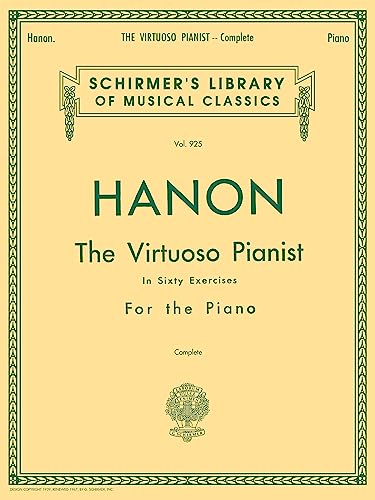
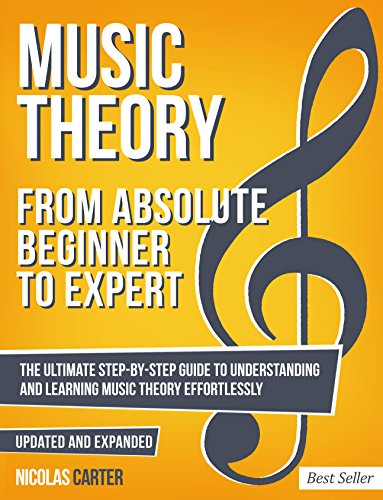
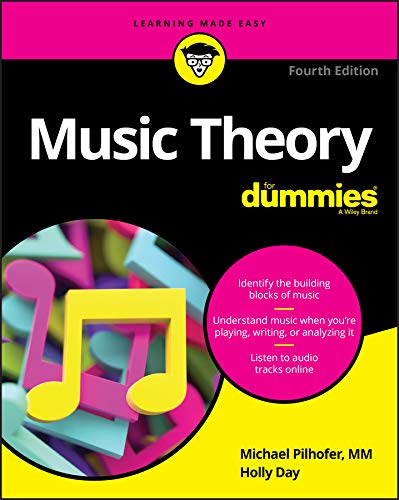
Recommended Learning Ressources
 Kindle editionRead on Kindle ›
As an Amazon Associate I earn from qualifying purchases.
As an Amazon Associate I earn from qualifying purchases.
 Kindle editionRead on Kindle ›
As an Amazon Associate I earn from qualifying purchases.
 Kindle editionRead on Kindle ›
As an Amazon Associate I earn from qualifying purchases.
Conclusion
The search for budget keyboards that feel like a real piano is ultimately a search for truth in practice. As we have explored through the lenses of Newtonian physics and haptic engineering, the quality of the “action” is the single most important factor in a pianist’s development. Whether you choose the technical precision of the Roland FP-10 or the time-tested reliability of the Yamaha P-45, you are investing in the neuro-muscular pathways that define your musical voice.
Do not settle for “toys.” Choose an instrument that fights back, that has weight, and that honors the 300-year history of the piano. In the space between the key and the sensor, your music is born. The right keyboard can turn casual practice into passionate playing, and that’s where the real magic begins.
What is the difference between “Weighted” and “Fully Weighted”?
“Weighted” is a broad term that can include semi-weighted (spring-based) keyboards. Fully Weighted or Hammer Action means the keyboard uses actual physical weights to simulate the leverage of a real piano hammer. For a real feel, you must choose “Fully Weighted.”
Does the number of sensors matter?
Yes. Most budget keyboards have two sensors per key. Higher-end budget models (like the Roland and Casio) often use three sensors. This allows the keyboard to detect a second strike before the key has fully returned to the top, enabling faster repetition—essential for advanced classical and jazz pieces.
Can I learn proper technique on a budget keyboard?
If the keyboard has a graded hammer action, yes. The primary goal of early piano pedagogy is “finger independence” and “weight distribution.” These five models provide enough mechanical resistance to ensure your skills will transfer to a $100,000 concert grand.
Do I need a three-pedal unit immediately?
While the sustain (damper) pedal is the most important, having a fixed three-pedal unit (Sustain, Sostenuto, and Una Corda) found on models like the Donner DDP-100 helps establish the correct seated posture and foot-to-hand coordination.
Can these budget keyboards be used for professional recording?
Absolutely. Because these models feature MIDI (often via USB), you can use the excellent “feel” of the keys to trigger high-end VSTs (Virtual Studio Technology) like Keyscape or Pianoteq, giving you a million-dollar sound with a budget-friendly touch.
Sources & References
Martin, Lawrence. Basic Music Theory for Adult Beginner-Level Piano Players (Piano Syllabus). Lakeside Press. Specifically referenced for the pedagogical theory regarding the “point of resistance” and its necessity in developing a professional legato technique on weighted keys.
Feezell, Mark. Music Theory Fundamentals (High-Yield Music Theory, Vol. 1). LearnMusicTheory.net. Utilized for the definitions of dynamics (from pianissimo to fortissimo) and the importance of articulation in Baroque and Classical repertoire, as enabled by high-resolution key sensors.
Pilhofer, Michael & Day, Holly. Music Theory For Dummies. Wiley Publishing, Inc. Consulted for the technical distinctions between AWM Sampling and Digital Modeling, as well as the fundamental role of MIDI connectivity in modern piano education.
Manufacturer Technical Documentation: * Yamaha Corporation: Technical data on the Graded Hammer Standard (GHS) and pivot geometry optimization.
Korg Inc.: Structural data on the Natural Weighted Hammer (NH) action and its impact on finger strength development.
Roland Corporation: Engineering specifications for the PHA-4 Standard Action and SuperNATURAL sound engine.
Kawai Musical Instruments: Research on the Responsive Hammer Compact (RHC) action and the physics of springless, gravity-based hammers.