As an Amazon Associate, PianoMode earns from qualifying purchases. Recommendations are made on their merits; the price you pay is the same.
Learning the piano in 2026 is easier than ever, but choosing the right method book can make or break your first steps. Apps and online tutorials are everywhere, but traditional books remain a cornerstone of piano education. They provide structure, build solid reading skills, and give learners something tangible to return to every day.
A method book is more than just a collection of songs. It is a guided roadmap through rhythm, note reading, hand coordination, and theory. Good books prevent you from feeling lost, help you progress in clear steps, and keep you motivated with songs that sound good even at beginner level.
The tactile connection is something an app simply cannot replicate.
In 2026, learning the piano has arguably become easier with technology, yet the “Paradox of Choice” is real. There are thousands of apps, YouTube channels, and courses. However, the most successful pianists I know, whether hobbyists or pros, all have one thing in common: they started with a structured, physical method book. A book doesn’t run out of battery, it doesn’t send you notifications, and it provides a proven pedagogical framework.
In this article, we’ll review the best piano method books for absolute beginners in 2026, examining what makes each unique, their pros and cons, expected learning time, and who they’re best suited for. Whether you are a child, an adult, or someone returning to music after years away, this guide will help you choose confidently.
1. Alfred’s Basic Adult All-in-One Course – Book 1
Why it stands out
This book is the “Swiss Army Knife” of piano education. It combines lesson material, theory exercises, and technique drills into a single volume. Its reputation has held strong for decades because it gets students playing full chords faster than almost any other method.
- Philosophy: Chord-based approach (Harmonic focus).
- Target: Absolute beginners who want to play popular songs quickly.
What’s Inside
- Isometric Theory: Explanations of intervals, chords, and scales directly on the page.
- Repertoire: Heavily focused on folk, traditional, and simplified classical standards (e.g., “The Entertainer”).
- Physiology: Clear diagrams of hand posture and finger numbering.
Pros
- All-in-One: No need to buy separate theory or technique books.
- Rapid Gratification: You will be playing recognizable harmonies within weeks.
- Huge Community: Because it’s so popular, you can find YouTube walkthroughs for every single page.
Cons
- Dated Aesthetics: The layout feels a bit 1990s.
- Left Hand Limitations: Focuses heavily on “chords” in the left hand, which can sometimes delay the development of independent left-hand melody lines.
Level & Time: Takes you from absolute beginner to solid late beginner / early intermediate. With daily practice of 30 minutes, most learners complete it in 6 to 8 months.
As an Amazon Associate I earn from qualifying purchases.
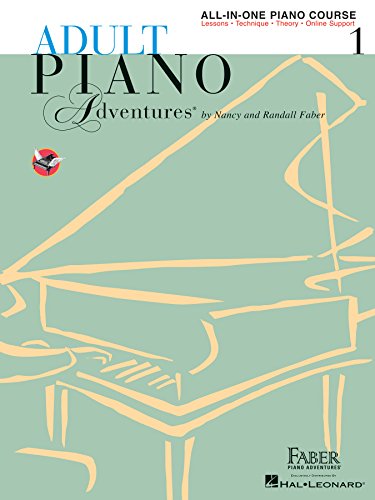
2. Faber Piano Adventures – Adult All-in-One Book 1
Why it stands out
Nancy and Randall Faber have revolutionized piano pedagogy with a focus on “pattern recognition” and musicality. Unlike Alfred’s chord-heavy approach, Faber emphasizes reading by intervals (the distance between notes) which creates stronger long-term sight-readers.
- Philosophy: Intervallic reading and artistic expression.
- Target: Adults who value musicality and a modern layout.
What’s Inside
- Diverse Genres: A blend of Classical themes, Jazz, Blues, and Spirituals.
- Creative Focus: Specific sections dedicated to improvisation and lead-sheet reading.
- QR Code Support: Access to online audio support for modeling rhythm and pitch.
Pros
- Aesthetics: Clean, spiral-bound (in some editions), and easy on the eyes.
- Holistic: Teaches you to “listen” and “create,” not just type on keys.
- Better Reading Habits: Reduces reliance on looking at your hands.
Cons
- Pacing: Some self-learners find the jump in difficulty around Unit 10 to be steep.
- Repertoire: If you hate classical music, you might find some sections tedious.
Level & Time: Beginner. With 20–30 minutes daily, expect 8–12 months to complete the first book (It is denser than Alfred’s).
 Kindle editionRead on Kindle ›
As an Amazon Associate I earn from qualifying purchases.
3. Bastien Piano for Adults – Book 1
Why it stands out
Bastien’s method focuses heavily on structure and discipline. It includes review sections, quizzes, and a range of challenge pieces that help learners test themselves.
What’s Inside
- Repertoire: Arrangements of classical works like Mozart and Chopin.
- Testing: Theory pages, quizzes, and technique reviews.
- Dual Focus: Strong emphasis on both notation and chord symbols.
Pros
- Ambitious: Great for learners who like being tested.
- Habits: Builds strong technical habits.
- Satisfaction: Song choices are motivating because they sound like “real music.”
Cons
- Intensity: Can feel overwhelming if you prefer a gentler pace.
- Vibe: Less playful and creative than Faber or Hal Leonard.
Level & Learning Time: Serious Beginners. 6–9 months (Regular practice).
As an Amazon Associate I earn from qualifying purchases.
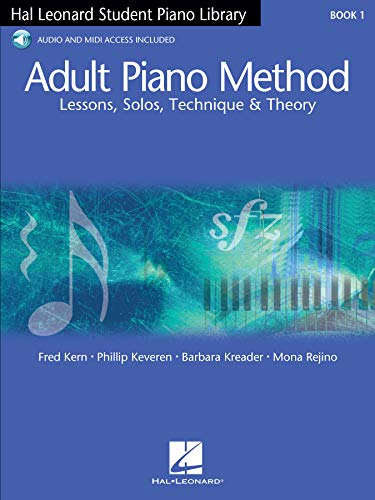
4. Hal Leonard Adult Piano Method – Book 1
Why it stands out
Hal Leonard is a publishing giant, and their method reflects a very “commercial” and pop-oriented sensibility. It is fantastic for students who want to feel like they are in a band.
- Philosophy: Sound-before-symbol (Listening and playing along).
- Target: Learners who get bored easily with strict classical drills.
What’s Inside
- Improvisation: Encourages students to experiment with black keys and open fifths immediately.
- Backing Tracks: High-quality orchestrations to play along with (prevents rhythm issues).
- Pop Style: Focuses on syncopation and modern rhythms earlier than other books.
Pros
- Fun Factor: High energy and engaging backing tracks.
- Creativity: Demystifies improvisation from day one.
Cons
- Reading Lag: The heavy reliance on playing by ear/backing tracks can sometimes mask weaknesses in note-reading.
- Visuals: Less structured than Faber.
Level & Time: Beginner. 6–10 months.
 Kindle editionRead on Kindle ›
As an Amazon Associate I earn from qualifying purchases.
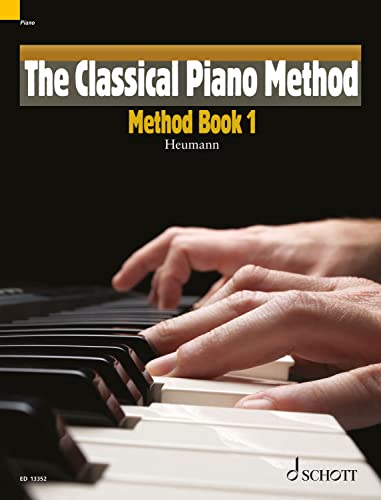
5. The Classical Piano Method – Method Book 1
Why it stands out
Created for learners who want a strong link to traditional European piano pedagogy, this book blends repertoire, technique, and history.
What’s Inside
- Repertoire: Classical pieces from composers like Beethoven and Bach.
- Context: Notes on history and musical context.
- Technique: Drills woven into lessons.
Pros
- Purity: Excellent for classical purists.
- Presentation: Beautifully presented and informative.
- Terminology: Offers both British and American terminology.
Cons
- Niche: No jazz, pop, or modern content.
- Difficulty: Pacing is faster than some other methods.
Level & Learning Time: Classical Beginner. 5–7 months.ct progress through Book 1 in about 5–7 months with focused practice.
 Kindle editionRead on Kindle ›
As an Amazon Associate I earn from qualifying purchases.
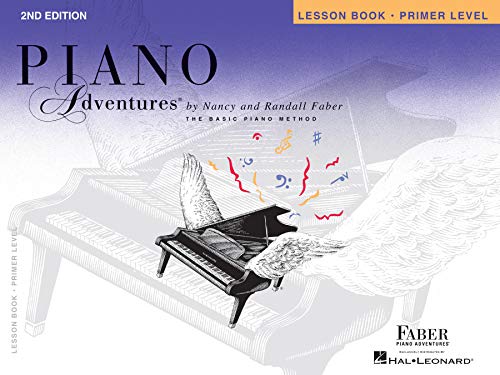
6. Faber Piano Adventures – Primer Level (Children)
Why it stands out
The go-to choice for children under 12, the Primer Level uses color, storytelling, and playful pieces to keep young learners motivated.
What’s inside
- Visuals: Cartoon illustrations and fun characters.
- Interaction: Duets with teacher or parent.
- Pacing: Gradual introduction of rhythm and reading.
Pros
- Engagement: Keeps children engaged through fun songs.
- Gradient: Step-by-step, very gradual learning curve.
- Parent-Friendly: Parents can follow along easily.
Cons
- Age Limit: Progression may feel slow for older kids (10+).
- Style: Not appealing for adults.
Level & Learning Time: Takes young children from total beginner to early elementary. With short daily sessions (15–20 minutes), most kids finish the Primer in 3–6 months.
 Kindle editionRead on Kindle ›
As an Amazon Associate I earn from qualifying purchases.
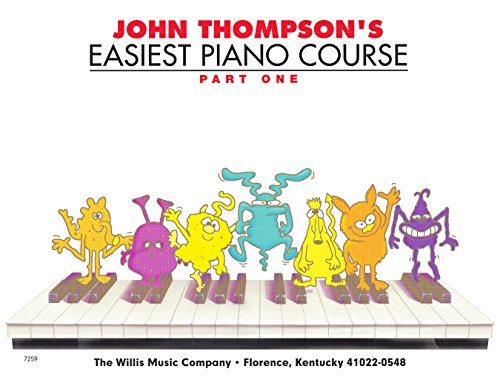
7. John Thompson’s Easiest Piano Course – Part 1
Why it stands out
This legendary series is often a child’s very first book. It’s extremely gradual and supported by cute “character guides.”
What’s inside
- Reading: Step-by-step note introduction.
- Focus: Strong focus on reading music early (“Middle C” approach).
- Visuals: Playful visuals that appeal to kids.
Pros
- Gentle: Possibly the most gradual approach available.
- Confidence: Perfect for children who need confidence at the start.
Cons
- Dated: Old-fashioned illustrations compared to newer books.
- Niche: Adults will find it too childish.
Level & Learning Time: Ideal for ages 5–9. Completion takes 2–4 months before moving on to Part 2.
 Kindle editionRead on Kindle ›
As an Amazon Associate I earn from qualifying purchases.
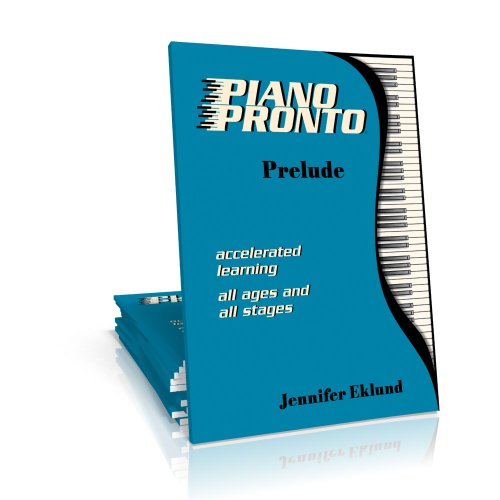
8. Piano Pronto – Prelude
Why it stands out
A more modern series aimed at both teens and adults who dislike the “cartoon” look of traditional methods.
What’s inside
- Design: Clear layout with lots of white space.
- Material: Classical and public-domain tunes.
- Pacing: Fast progression compared to Thompson or Faber.
Pros
- Aesthetics: Modern design, appealing for older beginners.
- Gratification: Repertoire sounds satisfying quickly.
Cons
- Availability: Less widely used, meaning fewer teachers know it.
- Speed: May be too quick for very young learners.
Level & Learning Time: From absolute beginner to solid late beginner. Usually completed in 5–6 months.
 Kindle editionRead on Kindle ›
As an Amazon Associate I earn from qualifying purchases.
Digital Complements in 2026
Although this article focuses on books, many learners now pair a physical book with a digital app:
- Flowkey for guided lessons with popular songs.
- Simply Piano for gamified learning.
- Piano Marvel for structured practice tracking.
These tools offer immediate feedback and huge libraries, but they work best when combined with a structured method book.
Summary Table – Quick Comparison
| Book / Method | Best For | Strengths | Completion Time |
| Alfred’s Adult All-in-One | Adults wanting theory & structure | Comprehensive lessons, theory, and technique in one volume. | 6–8 months |
| Faber Adult All-in-One | Adults seeking balance & creativity | Modern design, focus on improvisation, and wide repertoire. | 8–12 months |
| Bastien Piano for Adults | Ambitious self-learners | Includes quizzes, technical challenges, and motivating repertoire. | 6–9 months |
| Hal Leonard Adult Method | Creative explorers | Early introduction to improvisation and varied song styles. | 6–10 months |
| Classical Piano Method | Classical-oriented learners | Deep dive into composer history and high technical rigor. | 5–7 months |
| Faber Primer (Children) | Kids ages 6–12 | Colorful, playful illustrations with engaging teacher/student duets. | 3–6 months |
| John Thompson Part 1 | Kids ages 5–9 | Extremely gradual progression with helpful cartoon guides. | 2–4 months |
| Piano Pronto – Prelude | Teens and adults | Modern, clear design with rewarding and fun repertoire. | 5–6 months |
Recommended Gear to Complete the Setup
To maximize your success with these method books, having the right “Physical Infrastructure” is key.
The Piano
If you don’t have an acoustic piano, a digital one with Weighted Keys is non-negotiable.
Yamaha P-145 Digital Piano: The modern successor to the legendary P-45. It offers a “Graded Hammer Compact” action that mimics the feel of a real piano, which is essential for the technique taught in these books.
As an Amazon Associate I earn from qualifying purchases.
Roland FP-10: Known for having the best key action in its price class (PHA-4 Standard).
As an Amazon Associate I earn from qualifying purchases.
Essential Accessories
Digital Metronome Korg MA-2 Pocket: Timing is everything. While apps exist, a dedicated metronome on your piano avoids phone distractions.
As an Amazon Associate I earn from qualifying purchases.
Roland Adjustable Bench: Proper “Ergonomics” (sitting at the correct height) prevents back pain and allows for better “Arm Weight” distribution.
As an Amazon Associate I earn from qualifying purchases.
K&M 19790 Tablet Stand: If you are using a portable keyboard, you need a sturdy stand that won’t wobble when you turn the pages of your new method book.
As an Amazon Associate I earn from qualifying purchases.
Conclusion – Your Goal
The right piano method book will depend on your age, motivation, and style of learning.
- If you are an adult who wants structure and clarity, go for Alfred’s All-in-One.
- If you are an adult who prefers creativity and variety, choose Faber Adult All-in-One or Hal Leonard.
- If you are a child starting fresh, Faber Primer or John Thompson will build confidence step by step.
- If you want a rigorous challenge, Bastien or the Classical Piano Method will push you forward.
- If you want a modern design with quick results, Piano Pronto is a strong alternative.
Whichever you choose, the most important factor is consistency. Even 15–30 minutes of practice daily will let you progress from total beginner to confidently playing songs within months.
Choose your book today, sit at the piano, and let 2026 be the year your musical journey truly begins.
Can I learn piano using only a book without a teacher?
Yes, it is entirely possible to be a “Self-Taught” pianist. However, the risk is developing “Tension” in the wrists. It is highly recommended to use a method book like Alfred’s or Faber while periodically recording your hands to check for proper posture (curved fingers, relaxed wrists).
How long does it take to finish a “Book 1”?
For an adult practicing 30 minutes a day, most “Book 1” methods take between 6 to 10 months. Rushing through a book is counterproductive; “Deep Learning” of the fundamentals in the first year prevents a “Plateau” later in the journey.
Should I buy a physical book or a digital Kindle version?
For music, Physical Books are superior. They stay open on the music stand, allow for easy pencil annotations (crucial for learning theory), and don’t suffer from screen glare or battery issues. However, digital versions are excellent for traveling and “quick reviews.”