As an Amazon Associate, PianoMode earns from qualifying purchases. Recommendations are made on their merits; the price you pay is the same.
I have a soft spot for pianists who sound like they are talking to you. Not declaiming, not preaching, just talking with warmth and sparkle and a glint in the eye. Arthur Rubinstein is the gold standard for that kind of musical conversation.
He could make a Chopin mazurka feel like an evening among friends in a lamplit salon, and five minutes later he could hurl Brahms across a concert hall with leonine grandeur. He was a polyglot, a charmer, a relentless traveler, a fierce patriot, and the sort of artist who seemed to carry daylight in his pocket. Audiences adored him because he seemed to adore life itself, cigars and jokes and poetry and food and people, all folded back into a tone at the keyboard that glowed from within.
Arthur Rubinstein is widely considered the quintessential pianist of the 20th century, specifically renowned for his “Golden Tone” and his revolutionary, naturalistic approach to the music of Frédéric Chopin. His playing is characterized by a noble simplicity, a lack of sentimental exaggeration, and a singing melodic line supported by a rhythmically stable “aristocratic” rubato. Unlike the heavy-handed virtuosos of the Romantic era, Rubinstein prioritized tonal beauty and emotional directness over technical display.
We will retrace his improbable rise from Łódź to global fame, peek into salons where he traded quips with composers and painters, open his own pages for some salty and heartfelt stories, and study the technical DNA of his playing style that still shapes how pianists approach Chopin, Brahms, and Spanish repertoire. I will end with practical, musician tested tips so you can bring a little Rubinstein into your own practice room. If you love piano history and you love a good story, this one has both, in abundance.
1. The Historical Genesis: From Łódź to Global Icon
To understand the artist, one must understand the man’s trajectory through the most turbulent century in human history. Arthur Rubinstein’s life spanned the transition from the late Romantic era to the height of the digital recording age.
Early Education in Łódź and the Berlin Years
Arthur (Artur) Rubinstein was born in 1887 in Łódź, then part of the Russian Empire. His prodigious gifts were recognized early. At ten he was sent to Berlin, where the great violinist and conductor Joseph Joachim took him under his wing and placed him with the piano pedagogue Karl Heinrich Barth. That studio line traced back through Liszt and Czerny to Beethoven, a thread Rubinstein always carried with pride. He made his Berlin Philharmonic debut at thirteen and, still a teenager, moved to Paris to soak up the city’s artistic energy and befriend luminaries like Ravel and Dukas while appearing in the most glittering salons.
Despite this rigorous German training, Rubinstein’s spirit was inherently cosmopolitan. He debuted with the Berlin Philharmonic at age thirteen, but his early career was marked by a struggle between his natural facility and a lack of disciplined practice.
The Turning Point: The “Rebirth”
Rubinstein’s first American tour in 1906 did not go as planned. Critics were cool, and the money ran out. By 1908 in Berlin he was broke, humiliated, and desperate. In his memoirs he later described a dark afternoon when he tried to hang himself in his hotel room. The attempt failed. He spoke of waking into a second life, with gratitude sharpened like a blade. That “rebirth” story comes to us via his autobiography and was widely reported when the book appeared. It became the hinge in his personal legend, the moment after which he chose light, appetite, and joy with almost defiant intensity.
So, in 1908, facing financial ruin and professional stagnation in Berlin, a young Rubinstein reached a point of total despair. His subsequent attempted suicide and his “miraculous” failure to carry it out became the hinge of his legend. He emerged from that hotel room with a new philosophy: a defiant, unconditional love for life. This “joie de vivre” became the hallmark of his performances. He stopped playing for the critics and started playing for the sheer joy of existence, a shift that resonated deeply with audiences worldwide.
The Paris years forged his personality. He became the very model of the cosmopolitan artist, equally at ease in several languages, quick with a joke, generous with friends, and intensely curious about culture from painting to poetry. He fell in love with Spain and its music, championing Albéniz, Granados, and de Falla with a natural accent that made listeners forget he was Polish by birth. The image of Rubinstein that so many still carry in their minds, a handsome bon vivant with a cigar and a smile, was not an invention of publicists. It was who he became by choice after Berlin, a man who said yes to life and poured that yes into sound.
The United Nations Incident: Art as Diplomacy
During the First World War he served as an interpreter in London, a nod to his easy command of languages. The second war cut deeper. Jewish by heritage and Polish to the core, Rubinstein refused to perform in Germany, and he never wavered in his advocacy for Poland and for the Jewish people. The story that many Poles still tell with pride unfolded at the founding conference of the United Nations in San Francisco in 1945. Looking out over a hall with no Polish flag, Rubinstein stopped, asked the audience to rise, and played the Polish national anthem with a slow, thunderous dignity. Delegates stood. Applause thundered. In that instant a pianist became, very publicly, a citizen. Today a sculpture at UN Headquarters commemorates him at the keyboard from that moment, and Polish and UN sources continue to cite his act as a point of national memory.
Marriage, Family, Salons, and the Art of Living Well
In 1932 Rubinstein married Nela Młynarska, daughter of the Polish conductor Emil Młynarski. Their home life became legendary for hospitality and polish, in every sense. Nela eventually wrote Nela’s Cookbook, a vivid volume that doubled as a portrait of the couple’s world of dinners, friends, rail journeys, and backstage meals improvised with a hot plate, all shot through with her warm wit. She toured with him for decades and kept the center of gravity in a life that rarely stayed still. In his late years Rubinstein left the marriage for a younger companion, a decision that wounded his family and complicated his image, but the long arc of the Rubinstein household, with Nela as its center, remains a key part of how friends remembered him.
The Recording Artist, the Chamber Partner, the Elder Statesman
Rubinstein recorded on a grand scale for more than three decades with RCA, often returning to the same repertoire as technology improved and his interpretations deepened. He collaborated constantly, from recital partners like Henryk Szeryng to chamber trios with Jascha Heifetz and Gregor Piatigorsky. Producer Max Wilcox recalled one session in Rome where Rubinstein arrived in the evening and, four and a half hours later, had taped all of Chopin’s waltzes to satisfaction, then went out for a late party on the Via Veneto while the crew collapsed. That was Rubinstein in miniature, a mix of stamina, appetite, and unforced authority at the keyboard.
He gave farewell concerts in the mid 1970s and made his final public appearance in 1976 at London’s Wigmore Hall. He died in Geneva in 1982 at ninety five. As a final gesture of belonging, his remains were laid to rest in Jerusalem, completing a circle between his art and his allegiances.
2. Some Anecdotes
Rubinstein cultivated stories the way some people cultivate roses. Many are funny. Some are romantic. A few are searing.
The night he chose life.
The failed suicide in Berlin is the most intimate tale he ever told. In My Young Years he wrote about the attempt without hiding or melodrama, and when he spoke of it in interviews near the end of his life he framed it as the turning of a key. From then on he said he felt reborn, and people who knew him believed it because the appetite for living that followed seemed bottomless.
Emmy Destinn and the boa constrictor tattoo.
Rubinstein’s memoirs are studded with liaisons, from ballerinas to aristocrats. One of the most talked about is his affair with the great Czech soprano Emmy Destinn. In a passage quoted by Time when the book came out, he recounts with a mixture of bravado and bashfulness an evening that ended with the surprise of a snake tattoo spiraling up her leg. He admitted he was not at his best that night. She did not seem to mind. The point is not gossip. It is the tone. Rubinstein could be outrageous and self deprecating in the same breath.
The pianist who made the UN stand up.
At San Francisco in 1945 he did not ask permission. He simply asked people to stand and played Poland’s anthem. The United Nations itself preserves the memory with a sculpture and official notes. Polish media and government sources retell the moment in anniversary speeches. It remains one of those rare artistic gestures that lifts into civic courage.
Chopin’s waltzes, four and a half hours, then dinner.
Producer Max Wilcox remembered a session in Rome where Rubinstein arrived at 6:45 in the evening, played all the waltzes to the can we print that standard by 11:15, and then went out for a party. Think of the poise and stamina required to do that while still sounding spontaneous. That story, told by Wilcox and reproduced in Steinway’s profile, has become a small classic among recording geeks.
The Picasso wink.
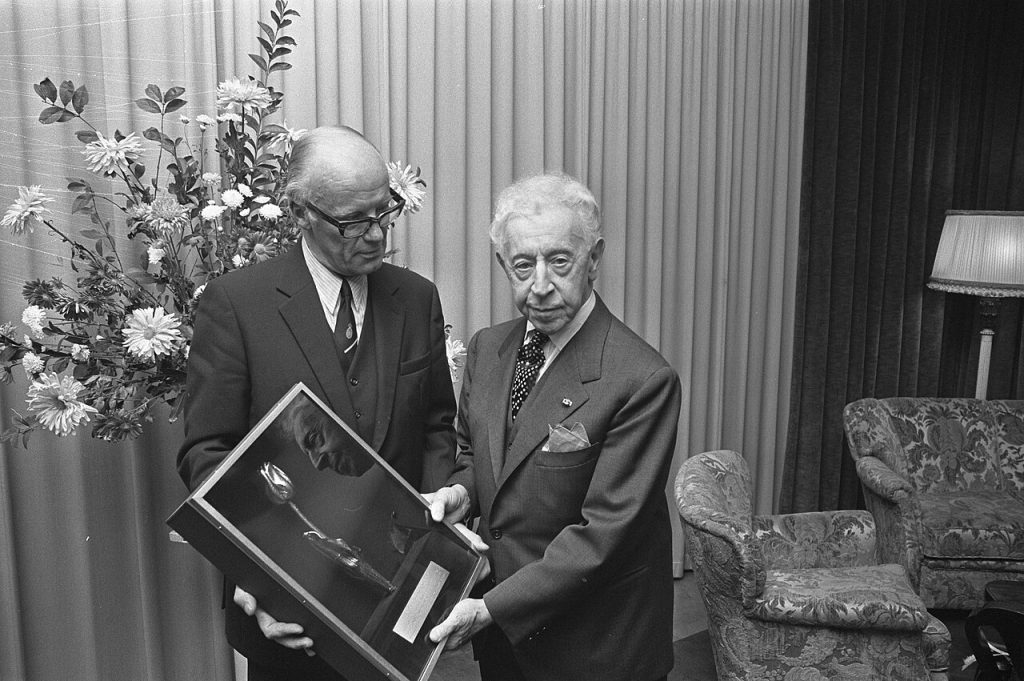
The medal for the second Arthur Rubinstein International Piano Master Competition incorporated a portrait after Picasso’s drawing. It is a tiny bridge between the salons of Rubinstein’s youth and the institutional legacy that now bears his name in Tel Aviv.
A house where dinner was an art form.
If you want to know the private side, read Nela’s Cookbook or the profiles that accompanied its release. The pages are recipes threaded with life stories. Reviewers and journalists painted her as a presence, glamorous and mischievous, who fed the great and near great and kept the Rubinstein whirlwind human.
2. Technical DNA: Decoding the Rubinstein Sound
How did Rubinstein achieve a sound that critics described as “glow-from-within”? It was a combination of physical economy and sophisticated ear training.
Tonal Production and Arm Weight
Critics and colleagues describe a warm, centered tone that bloomed without metallic glare. He sat upright and still, conserving motion, yet the sound never felt constrained. This came from contact, not force. The fingertips met the key with a rounded suppleness, arm weight flowed, and the result was color without strain. Gramophone writers and American critics across decades talk about that basic vocal quality, and Steinway’s own artist profile distills it neatly as a balance of color, lyricism, and verve.
The “True” Chopin Rubato
Rubinstein redefined Chopin rubato for the 20th century. Where 19th century tradition could slide into rhythmic anarchy, he kept the left hand as the time keeper and let the right hand speak and breathe over it, like a singer who trusts the orchestra. This made the music sound free and inevitable at once. Biographers and critics point to his avoidance of distortion for cheap effect, and German sources even credit him with restoring rhythmic poise to Chopin performance practice.
Pedaling as a Colorist
Rubinstein’s use of the damper pedal was surgical. He used it to create “shimmer” rather than “blur.” By employing half-pedaling and rapid “flutter” pedaling, he could sustain the resonance of a bass note while keeping the upper-register melodic figurations crystal clear. This allowed for the complex polyphony of Brahms and the impressionistic washes of Ravel to coexist within his repertoire.
Voicing as conversation
He gave each voice in a texture something to say. Melodies truly sang, bass lines had intention, and middle voices glinted briefly like a look across a crowded room. That habit was critical when he played Spanish repertoire by Albéniz and Granados, where guitar like inner figures need their moment without thickening the texture.
The Art of Risk
Rubinstein liked the stage because it made him feel alive. He said it himself, that he left room in every concert for the unexpected, that he wanted to risk and dare so the music could bloom anew. You can hear this in his multiple traversals of the same works across decades. The architecture stays stable, but within that shape he lets tempos settle or surge on the night. As he joked more than once, the act is the same, but each time is different.
3. Repertoire and Cultural Impact
It is easy to call Rubinstein the definitive Chopin pianist of the 20th century, and not lazy to mean it. But the truth is larger. His repertoire spanned Mozart, Beethoven, Schubert, Schumann, Brahms, Liszt, Grieg, Tchaikovsky, Saint Saëns, Rachmaninoff, Debussy, Ravel, Fauré, Franck, Albéniz, de Falla, Granados, Szymanowski, Stravinsky, Villa Lobos, Prokofiev, and more. He had that rare gift of making one composer’s world sound whole without defaulting to mannerisms that would break another’s. This is one reason Harold C. Schonberg could rank specialists higher here or there, yet still call Rubinstein “the complete pianist,” the artist who put everything together.
He was a champion of Polish composers new and old, especially Szymanowski, and he kept close ties with Spain’s moderns. He believed in chamber music as a proving ground for ears and humility. And he recorded a staggering amount, returning to favorite pieces as he matured. That cycle of recorded revisits is part of his legacy. Younger players can literally hear how a worldview evolves.
The Spanish Connection
One of Rubinstein’s most significant contributions was his advocacy for Spanish composers like Manuel de Falla, Enrique Granados, and Isaac Albéniz. He possessed a natural “Spanish accent” at the keyboard, capturing the rhythmic snap and sultry atmosphere of the Iberian Peninsula better than almost any non-Spaniard in history. His performance of Ritual Fire Dance became a legendary encore, often played with “karate-chop” chords that thrilled audiences.
The Chamber Musician
Rubinstein’s chamber partners included titans like Heifetz, Piatigorsky, Szeryng, and Fournier. He listened. That listening migrated to his solo playing, where orchestral lines and countermelodies always feel aware of one another rather than stacked..
Unlike many ego-driven soloists, Rubinstein adored collaboration. His recordings with the “Million Dollar Trio” (alongside violinist Jascha Heifetz and cellist Gregor Piatigorsky) and his collaborations with the Guarneri Quartet set the gold standard for chamber music. These recordings reveal a musician who knew how to listen, blend, and lead with humility.
The Recorded Legacy as a Masterclass in Growth
Because he rerecorded so much core repertoire as technology moved from early electrical to high fidelity stereo, you can study how interpretation matures without losing personality. For Chopin alone there are multiple cycles of waltzes, mazurkas, and nocturnes, often praised for their natural flow and inner fire rather than showy surface. Critics still send young pianists to those discs to learn how to sing a line and keep the bass honest at the same time.
A few crisp numbers to frame the legend
A namesake competition in Israel since 1974, still shaping careers and repertoire choices for young pianists worldwide.
Eight decades before the public. That span is astonishing on its face.
More than two hundred commercial recordings across his career, many rerecorded in improved sound as his concept ripened.
Ten recital marathons in Carnegie Hall in 1961 to raise charitable funds, one of many times he turned celebrity into service.
4. Pedagogical Guide
Playing tips: how to bring a little Rubinstein into your practice
Rubinstein’s charisma cannot be bottled. But many of his habits can be imitated with good results. Here is a practical roadmap if you want your playing to feel more spoken, more human, and more Rubinstein like.
Practice to Sound, not to Sweat
He did not fetishize hours in the chair. Accounts of his advice to students point to a sweet spot of focused, intelligent work rather than marathon sessions that turn the brain to sawdust. Aim for quality of attention, and stop before you begin to repeat mindlessly. Two or three laser focused hours in blocks can accomplish more than five hours of fatigue. The spirit is Rubinstein’s even if your daily number will vary with goals and deadlines.
Build Tone from the Fingertip
Find a neutral mezzo piano and sculpt it into color without adding tension. Experiment with arm weight and the release point of the key. Record a slow, simple phrase each day and listen for steadiness, evenness, and a center to the sound. The goal is warmth without blur, a Rubinstein hallmark described repeatedly by critics.
Learn the Left Hand Like a Metronome with Soul
In Chopin, the left hand carries the rhythm. Practice bass and inner notes alone until they walk with natural swing. Then let the right hand sing against that steady ground. The result is rubato that feels like a great singer leaning on a great orchestra.
Phrase Like a Storyteller
Rubinstein thought in sentences. Mark breaths in your score. Decide where a thought begins and ends. Use tiny releases, not big rallentandi, to punctuate speech like cadences. When in doubt, sing the line away from the piano and imitate your breath with the wrist and fingers when you return.
Pedal by Harmony, not by Bar Line
Change when the chord changes, not just when the measure turns. In chromatic music, test half changes and flutter pedaling to keep color without fog.
Voice with Purpose
Choose two inner notes in each page that deserve a shimmer. Bring them out gently, then put them back under the texture. This little exercise trains the ear and hand to think in layers, a vital step toward Rubinstein’s conversational textures.
Leave Room for the Night to Surprise You
Even in practice, play a piece once each day without stop or correction and allow yourself one risk. A braver pianissimo. A daring slur one key longer. A bass line with a hint more spring. Rubinstein said he needed the unexpected so the music could bloom anew. Give yourself that permission, even in the shed.
Chamber Music as Teacher
Read trios or sonatas with strings whenever you can. Nothing cures rhythmic narcissism faster than a living partner, and nothing trains your ear for balance more quickly. Rubinstein’s chamber life shaped the way he heard at the piano. Let it shape yours.
Protect Your Curiosity
Rubinstein sounded like a man who read, traveled, ate well, argued, and laughed. Do not bury your hours so deeply that you forget to live. He believed that what you express at the instrument depends on what you have taken in away from it. That is not a romantic slogan. It is practical craft.
Cultivate the “Inner Ear”
Before touching the keys, hear the color of the chord in your mind. Rubinstein’s ability to “voice” a chord (making the top note sing while the middle notes remain hushed) was a result of mental preparation.
Recommended Gear for the Aspiring Pianist
To achieve a “Rubinstein-esque” sound and maintain your instrument, we recommend the following products:
High-Fidelity Headphones (Beyerdynamic DT 770 PRO): Essential for listening to the nuances of Rubinstein’s historic recordings to analyze his pedaling and voicing.
As an Amazon Associate I earn from qualifying purchases.
Care Kit for Gloss Pianos & Piano Polish: Keep your instrument in “concert-ready” condition, reflecting the professionalism Rubinstein brought to the stage.
As an Amazon Associate I earn from qualifying purchases.
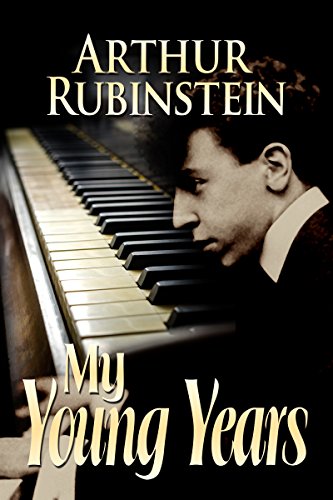
“My Young Years” by Arthur Rubinstein: The essential autobiography for understanding the mindset of the master.
 Kindle editionRead on Kindle ›
As an Amazon Associate I earn from qualifying purchases.
Korg Metronome (MA-2): To develop the “stable left hand” necessary for authentic Chopin rubato.
As an Amazon Associate I earn from qualifying purchases.
Chopin: The Ultimate Piano Collection (Sheet Music): Schirmer’s Library or Henle Urtext editions are recommended to study the scores Rubinstein made famous.
As an Amazon Associate I earn from qualifying purchases.
Conclusion
If you want to understand what audiences love about the piano, Arthur Rubinstein is a reliable guide. He is proof that refinement can be exciting and that intelligence can glow. He is proof that rhythm can be strict in the left hand and free in the right while the whole still feels like a heartbeat. He is proof that good humor and big feelings are not opposites, and that art can be public and private at the same time.
He also stands as a reminder that musicians are citizens. The gesture in San Francisco would have been dramatic even in a private hall. Doing it before the world and insisting that even the powerful stand up was something else. It said, politely and unforgettably, that art is not a luxury. It is how a community tells the truth about itself.
If you play, your goal is not to imitate Rubinstein’s sound. That would be a contradiction of what made him free. Your goal is to absorb the values that made his playing so alive and then find your own voice.
- Put tone first and develop color without tension.
- Shape rubato over a steady left hand so freedom feels grounded.
- Pedal with your ears.
- Voice textures like a conversation rather than a monologue.
- Practice smart, stop before you repeat in a daze, and leave room for a moment of risk every day.
- Play with others so the piano does not become a private echo chamber.
- And live. Read, travel when you can, cook, argue, listen to people, and bring all of that richness back to the keyboard.
Rubinstein did not win hearts because he was perfect. He won them because he was generous and brave and unmistakably himself, and because his sound told you he loved the world.
Let that be your compass. The technique you need will follow.
Which piano brand did Arthur Rubinstein prefer?
Arthur Rubinstein was a devoted Steinway Artist. He preferred the Steinway Model D for its range of tonal colors and its ability to project his signature “Golden Tone” in large concert halls.
Did Rubinstein ever teach students?
While he did not hold a formal conservatory position, he gave many masterclasses and mentored young talents like François-René Duchâble. His “teaching” was primarily done through his vast discography and his autobiographies, My Young Years and My Many Years.
How many times did Rubinstein record the Chopin Nocturnes?
Rubinstein recorded the complete Nocturnes three times (1936-37, 1949-50, and 1965). The 1965 stereo version is widely considered the definitive recording of the set.
What was Rubinstein’s stance on German music?
Despite his Berlin training, he had a complex relationship with Germany. After the horrors of World War II and the Holocaust, Rubinstein (who was Jewish) famously refused to perform in Germany for the remainder of his life, though he continued to play the music of Beethoven, Brahms, and Schumann with great reverence.
Sources & References
Rubinstein, A. (1973). My Young Years. Knopf.
Rubinstein, A. (1980). My Many Years. Knopf.
Sachs, H. (1995). Rubinstein: A Life. Grove Press.
The Arthur Rubinstein International Music Society (Tel Aviv).
RCA Red Seal Records – Historical Archives and Producer Notes (Max Wilcox).
Steinway & Sons Artist Collection.